Category Archives: pictures

What was I thinking?

stillness

12/09/08
Today on route to work (riding in the vanpool with seven other long-distance

commuters) I was listening on my mp3 player to a talk by the Dalai Lama on the

Heart Sutra. My mind wandered into some thoughts that arose during meeting for

worship at the Friends Meetinghouse on Sunday. These are some of the thoughts

that drifted through:


Stillness (or emptiness or balance) is the source of all things. Movement (or

content or imbalance) arises from stillness. The world of seperate things

arises from relative motion. Beauty, suffering and gladness are all produced by

the arising motion from the field of stillness.


The appearance of things is that the world is always in motion. Motion arises

from imbalance. For example: solar energy makes some parts of the atmosphere warmer,

creating an imbalance in pressure that creates wind, the engine of weather and

climate.


Using the same analogy (the living motion of the processes that support life on earth), water finds it’s level, seeks balance. Outside forces (e.g. the radiation produced by the sun or by the earth’s core) moves water from the bottom of the gravity well to the upper atmosphere where it eventually loses that energy, falling to the earth to make streams, waterfalls, rivers and springs on it’s journey back to the bottom of the gravity well. During this process water feeds and sustains life.


I have often thought about how it is imbalance/ imperfection that gives rise to

beauty. If things are in balance, there is no motion, no beauty and no

gladness. Through imbalance and the seeking of balance, come birth and death.

When the seeking ends, stillness reigns and emptiness replaces content. In

perfect balance motion does not arise and all things lose there seperateness.

blue_peace_sign 

Sometimes I feel like I’m in the middle of a stumble- like my imbalance is

propelling me forward into something unknown. I have the sensation of falling

into mystery. Sometimes it feels as though the world is a thin movie screen and

I am about to walk through it. It is as though balance, emptiness, stillness lies

just beyond the veil of appearances and any minute I will fall into it.

inner_peace_under_a_tree 

Sometimes when I close my eyes, I can feel the rush of time like a wind. I

sense that just behind that wind is timelessness, the flash of this moment in

perfect peace, the wholeness of myself and the world.

don__t_be_afraid_yellowman_by_voln

3 Comments

Filed under personal story, pictures, Spirituality

Now available

From The Icarus Project:

Navigating the Space Between Brilliance and Madness

Download the pdf here.

Go to The Icarus Project site here.

Click these thumbnails for Icarus related pictures/ posters-

benefit_poster_email

support_comic_poster

youarenotalone

willhallschizophreniabike_0

donotenter

Leave a comment

Filed under CS/X movement, Free E-Books, Links: Recovery, Mental health recovery, pictures, wellness and systems change

Happy Birthday, Only Daughter

butterfly

song:

predlightrunnerhappybirthday112108

Erin would be 29 years old today. Tonight we’ll have cake. We’ll blow out her candles. It’s a ritual, it’s comforting in a way. Yes: There will be tears.

grief

I am at work. I should probably not be writing in my blog. Too bad.

I’m sad, tired, but-

I’m not in a panic,

I know what day it is,

I’m not seeing dead people,

I’m not crying (right now),

I’m not throwing up…

Progress. It’s been a lot of years but it gradually gets easier or at least less dramatic.

deathcarriesachild

So, today I’ll be sad. I’ll pray. I’ll meditate. I’ll pray some more. I’ll let the wind blow through the hole in my heart. And, after a very long time, tomorrow will come.

hands_depression_grief

Leave a comment

Filed under Free Music, mp3, Music, personal story, pictures

The Gnostic Gospels

Jesus said, “I am the light that is over all things. I am all: from me all came forth, and to me all attained.
Split a piece of wood; I am there.
Lift up the stone, and you will find me there.”

-Gospel of Thomas

gospel-of-thomas

You can find all of this somewhere on the web- maybe not in the same place. The following document includes scriptures left out of the Christian Bible at the Council of Nicea. Multiple translations of the same text are presented here in order to see more clearly the intent of the writers.

gospelmary_2

This introduction is found at http://www.allaboutreligion.org/gnostic-gospels.htm

nag-hammadi

Some other links you may find useful for background and interpretation:

gnosticsoul

Some of the texts are incomplete. Some are repititious. Some appear contradictory or even just silly. All provide a fresh perspective on the early beliefs of the Jewish sect known as Christians.

To get the full text (507 pages- be warned):

the-gnostic-gospels-of-jesus

Interesting note: Gnostic art tends to look very much like Tibetan Mandala art-

Example A: Gnostic Tree of Life

cosmic_tree

Example B: Tibetan Wheel of Existence

tibetan_wheel_of_existence

Some Excerpts, particularly from the Gospel of Thomas:

The Thunder, Perfect Mind

Translated by George W. MacRae

I was sent forth from the power,
and I have come to those who reflect upon me,
and I have been found among those who seek after me.
Look upon me, you who reflect upon me,
and you hearers, hear me.
You who are waiting for me, take me to yourselves.
And do not banish me from your sight.
And do not make your voice hate me, nor your hearing.
Do not be ignorant of me anywhere or any time. Be on your guard!
Do not be ignorant of me.
For I am the first and the last.
I am the honored one and the scorned one.
I am the whore and the holy one.
I am the wife and the virgin.
I am <the mother> and the daughter.
I am the members of my mother.
I am the barren one
and many are her sons.
I am she whose wedding is great,
and I have not taken a husband.
I am the midwife and she who does not bear.
I am the solace of my labor pains.
I am the bride and the bridegroom,
and it is my husband who begot me.
I am the mother of my father
and the sister of my husband
and he is my offspring.
I am the slave of him who prepared me.
I am the ruler of my offspring.
But he is the one who begot me before the time on a birthday.
And he is my offspring in (due) time,
and my power is from him.
I am the staff of his power in his youth,
and he is the rod of my old age.
And whatever he wills happens to me.
I am the silence that is incomprehensible
and the idea whose remembrance is frequent.
I am the voice whose sound is manifold
and the word whose appearance is multiple.
I am the utterance of my name.
Why, you who hate me, do you love me,
and hate those who love me?
You who deny me, confess me,
and you who confess me, deny me.
You who tell the truth about me, lie about me,
and you who have lied about me, tell the truth about me.
You who know me, be ignorant of me,
and those who have not known me, let them know me.
For I am knowledge and ignorance.
I am shame and boldness.
I am shameless; I am ashamed.
I am strength and I am fear.
I am war and peace.
Give heed to me.
I am the one who is disgraced and the great one.
Give heed to my poverty and my wealth.
Do not be arrogant to me when I am cast out upon the earth,
and you will find me in those that are to come.
And do not look upon me on the dung-heap
nor go and leave me cast out,
and you will find me in the kingdoms.
And do not look upon me when I am cast out among those who
are disgraced and in the least places,
nor laugh at me.
And do not cast me out among those who are slain in violence.
But I, I am compassionate and I am cruel.
Be on your guard!
Do not hate my obedience
and do not love my self-control.
In my weakness, do not forsake me,
and do not be afraid of my power.
For why do you despise my fear
and curse my pride?
But I am she who exists in all fears
and strength in trembling.
I am she who is weak,
and I am well in a pleasant place.
I am senseless and I am wise.
Why have you hated me in your counsels?
For I shall be silent among those who are silent,
and I shall appear and speak,
Why then have you hated me, you Greeks?
Because I am a barbarian among the barbarians?
For I am the wisdom of the Greeks
and the knowledge of the barbarians.
I am the judgement of the Greeks and of the barbarians.
I am the one whose image is great in Egypt
and the one who has no image among the barbarians.
I am the one who has been hated everywhere
and who has been loved everywhere.
I am the one whom they call Life,
and you have called Death.
I am the one whom they call Law,
and you have called Lawlessness.
I am the one whom you have pursued,
and I am the one whom you have seized.
I am the one whom you have scattered,
and you have gathered me together.
I am the one before whom you have been ashamed,
and you have been shameless to me.
I am she who does not keep festival,
and I am she whose festivals are many.
I, I am godless,
and I am the one whose God is great.
I am the one whom you have reflected upon,
and you have scorned me.
I am unlearned,
and they learn from me.
I am the one that you have despised,
and you reflect upon me.
I am the one whom you have hidden from,
and you appear to me.
But whenever you hide yourselves,
I myself will appear.
For whenever you appear,
I myself will hide from you.
Those who have […] to it […] senselessly […].
Take me [… understanding] from grief.
and take me to yourselves from understanding and grief.
And take me to yourselves from places that are ugly and in ruin,
and rob from those which are good even though in ugliness.
Out of shame, take me to yourselves shamelessly;
and out of shamelessness and shame,
upbraid my members in yourselves.
And come forward to me, you who know me
and you who know my members,
and establish the great ones among the small first creatures.
Come forward to childhood,
and do not despise it because it is small and it is little.
And do not turn away greatnesses in some parts from the smallnesses,
for the smallnesses are known from the greatnesses.
Why do you curse me and honor me?
You have wounded and you have had mercy.
Do not separate me from the first ones whom you have known.
And do not cast anyone out nor turn anyone away

testing_thomas_2

The Gospel of Thomas:

Translated by Stephen Patterson and Marvin Meyer

These are the secret sayings that the living Jesus spoke and Didymos Judas Thomas recorded.
1. And he said, “Whoever discovers the interpretation of these sayings will not taste death.”
2. Jesus said, “Those who seek should not stop seeking until they find. When they find, they will be disturbed. When they are disturbed, they will marvel, and will reign over all. [And after they have reigned they will rest.]”
3. Jesus said, “If your leaders say to you, ‘Look, the (Father’s) kingdom is in the sky,’ then the birds of the sky will precede you. If they say to you, ‘It is in the sea,’ then the fish will precede you. Rather, the (Father’s) kingdom is within you and it is outside you.
When you know yourselves, then you will be known, and you will understand that you are children of the living Father. But if you do not know yourselves, then you live in poverty, and you are the poverty.”
4. Jesus said, “The person old in days won’t hesitate to ask a little child seven days old about the place of life, and that person will live.
For many of the first will be last, and will become a single one.”
5. Jesus said, “Know what is in front of your face, and what is hidden from you will be disclosed to you.
For there is nothing hidden that will not be revealed. [And there is nothing buried that will not be raised.]”
6. His disciples asked him and said to him, “Do you want us to fast? How should we pray? Should we give to charity? What diet should we observe?”
Jesus said, “Don’t lie, and don’t do what you hate, because all things are disclosed before heaven. After all, there is nothing hidden that will not be revealed, and there is nothing covered up that will remain undisclosed.”
7. Jesus said, “Lucky is the lion that the human will eat, so that the lion becomes human. And foul is the human that the lion will eat, and the lion still will become human.”
8. And he said, “The person is like a wise fisherman who cast his net into the sea and drew it up from the sea full of little fish. Among them the wise fisherman discovered a fine large fish. He threw all the little fish back into the sea, and easily chose the large fish. Anyone here with two good ears had better listen!”
9. Jesus said, “Look, the sower went out, took a handful (of seeds), and scattered (them). Some fell on the road, and the birds came and gathered them. Others fell on rock, and they didn’t take root in the soil and didn’t produce heads of grain. Others fell on thorns, and they choked the seeds and worms ate them. And others fell on good soil, and it produced a good crop: it yielded sixty per measure and one hundred twenty per measure.”
10. Jesus said, “I have cast fire upon the world, and look, I’m guarding it until it blazes.”
11. Jesus said, “This heaven will pass away, and the one above it will pass away.
The dead are not alive, and the living will not die. During the days when you ate what is dead, you made it come alive. When you are in the light, what will you do? On the day when you were one, you became two. But when you become two, what will you do?”
12. The disciples said to Jesus, “We know that you are going to leave us. Who will be our leader?”
Jesus said to them, “No matter where you are you are to go to James the Just, for whose sake heaven and earth came into being.”
13. Jesus said to his disciples, “Compare me to something and tell me what I am like.”
Simon Peter said to him, “You are like a just messenger.”
Matthew said to him, “You are like a wise philosopher.”
Thomas said to him, “Teacher, my mouth is utterly unable to say what you are like.”
Jesus said, “I am not your teacher. Because you have drunk, you have become intoxicated from the bubbling spring that I have tended.”
And he took him, and withdrew, and spoke three sayings to him. When Thomas came back to his friends they asked him, “What did Jesus say to you?”
Thomas said to them, “If I tell you one of the sayings he spoke to me, you will pick up rocks and stone me, and fire will come from the rocks and devour you.”
14. Jesus said to them, “If you fast, you will bring sin upon yourselves, and if you pray, you will be condemned, and if you give to charity, you will harm your spirits.
When you go into any region and walk about in the countryside, when people take you in, eat what they serve you and heal the sick among them.
After all, what goes into your mouth will not defile you; rather, it’s what comes out of your mouth that will defile you.”
15. Jesus said, “When you see one who was not born of woman, fall on your faces and worship. That one is your Father.”
16. Jesus said, “Perhaps people think that I have come to cast peace upon the world. They do not know that I have come to cast conflicts upon the earth: fire, sword, war.
For there will be five in a house: there’ll be three against two and two against three, father against son and son against father, and they will stand alone.”
17. Jesus said, “I will give you what no eye has seen, what no ear has heard, what no hand has touched, what has not arisen in the human heart.”
18. The disciples said to Jesus, “Tell us, how will our end come?”
Jesus said, “Have you found the beginning, then, that you are looking for the end? You see, the end will be where the beginning is.
Congratulations to the one who stands at the beginning: that one will know the end and will not taste death.”
19. Jesus said, “Congratulations to the one who came into being before coming into being.
If you become my disciples and pay attention to my sayings, these stones will serve you.
For there are five trees in Paradise for you; they do not change, summer or winter, and their leaves do not fall. Whoever knows them will not taste death.”
20. The disciples said to Jesus, “Tell us what Heaven’s kingdom is like.”
He said to them, “It’s like a mustard seed, the smallest of all seeds, but when it falls on prepared soil, it produces a large plant and becomes a shelter for birds of the sky.”
21. Mary said to Jesus, “What are your disciples like?”
He said, “They are like little children living in a field that is not theirs. When the owners of the field come, they will say, ‘Give us back our field.’ They take off their clothes in front of them in order to give it back to them, and they return their field to them.
For this reason I say, if the owners of a house know that a thief is coming, they will be on guard before the thief arrives and will not let the thief break into their house (their domain) and steal their possessions.
As for you, then, be on guard against the world. Prepare yourselves with great strength, so the robbers can’t find a way to get to you, for the trouble you expect will come.
Let there be among you a person who understands.
When the crop ripened, he came quickly carrying a sickle and harvested it. Anyone here with two good ears had better listen!”
22. Jesus saw some babies nursing. He said to his disciples, “These nursing babies are like those who enter the (Father’s) kingdom.”
They said to him, “Then shall we enter the (Father’s) kingdom as babies?”
Jesus said to them, “When you make the two into one, and when you make the inner like the outer and the outer like the inner, and the upper like the lower, and when you make male and female into a single one, so that the male will not be male nor the female be female, when you make eyes in place of an eye, a hand in place of a hand, a foot in place of a foot, an image in place of an image, then you will enter [the kingdom].”
23. Jesus said, “I shall choose you, one from a thousand and two from ten thousand, and they will stand as a single one.”
24. His disciples said, “Show us the place where you are, for we must seek it.”
He said to them, “Anyone here with two ears had better listen! There is light within a person of light, and it shines on the whole world. If it does not shine, it is dark.”
25. Jesus said, “Love your friends like your own soul, protect them like the pupil of your eye.”
26. Jesus said, “You see the sliver in your friend’s eye, but you don’t see the timber in your own eye. When you take the timber out of your own eye, then you will see well enough to remove the sliver from your friend’s eye.”
27. “If you do not fast from the world, you will not find the (Father’s) kingdom. If you do not observe the sabbath as a sabbath you will not see the Father.”
28. Jesus said, “I took my stand in the midst of the world, and in flesh I appeared to them. I found them all drunk, and I did not find any of them thirsty. My soul ached for the children of humanity, because they are blind in their hearts and do not see, for they came into the world empty, and they also seek to depart from the world empty.
But meanwhile they are drunk. When they shake off their wine, then they will change their ways.”
29. Jesus said, “If the flesh came into being because of spirit, that is a marvel, but if spirit came into being because of the body, that is a marvel of marvels.
Yet I marvel at how this great wealth has come to dwell in this poverty.”
30. Jesus said, “Where there are three deities, they are divine. Where there are two or one, I am with that one.”
31. Jesus said, “No prophet is welcome on his home turf; doctors don’t cure those who know them.”
32. Jesus said, “A city built on a high hill and fortified cannot fall, nor can it be hidden.”
33. Jesus said, “What you will hear in your ear, in the other ear proclaim from your rooftops.
After all, no one lights a lamp and puts it under a basket, nor does one put it in a hidden place. Rather, one puts it on a lampstand so that all who come and go will see its light.”
34. Jesus said, “If a blind person leads a blind person, both of them will fall into a hole.”
35. Jesus said, “One can’t enter a strong person’s house and take it by force without tying his hands. Then one can loot his house.”
36. Jesus said, “Do not fret, from morning to evening and from evening to morning, [about your food–what you’re going to eat, or about your clothing–] what you are going to wear. [You’re much better than the lilies, which neither card nor spin.
As for you, when you have no garment, what will you put on? Who might add to your stature? That very one will give you your garment.]”
37. His disciples said, “When will you appear to us, and when will we see you?”
Jesus said, “When you strip without being ashamed, and you take your clothes and put them under your feet like little children and trample then, then [you] will see the son of the living one and you will not be afraid.”
38. Jesus said, “Often you have desired to hear these sayings that I am speaking to you, and you have no one else from whom to hear them. There will be days when you will seek me and you will not find me.”
39. Jesus said, “The Pharisees and the scholars have taken the keys of knowledge and have hidden them. They have not entered nor have they allowed those who want to enter to do so.
As for you, be as sly as snakes and as simple as doves.”
40. Jesus said, “A grapevine has been planted apart from the Father. Since it is not strong, it will be pulled up by its root and will perish.”
41. Jesus said, “Whoever has something in hand will be given more, and whoever has nothing will be deprived of even the little they have.”
42. Jesus said, “Be passersby.”
43. His disciples said to him, “Who are you to say these things to us?”
“You don’t understand who I am from what I say to you.
Rather, you have become like the Judeans, for they love the tree but hate its fruit, or they love the fruit but hate the tree.”
44. Jesus said, “Whoever blasphemes against the Father will be forgiven, and whoever blasphemes against the son will be forgiven, but whoever blasphemes against the holy spirit will not be forgiven, either on earth or in heaven.”
45. Jesus said, “Grapes are not harvested from thorn trees, nor are figs gathered from thistles, for they yield no fruit.
Good persons produce good from what they’ve stored up; bad persons produce evil from the wickedness they’ve stored up in their hearts, and say evil things. For from the overflow of the heart they produce evil.”
46. Jesus said, “From Adam to John the Baptist, among those born of women, no one is so much greater than John the Baptist that his eyes should not be averted.
But I have said that whoever among you becomes a child will recognize the (Father’s) kingdom and will become greater than John.”
47. Jesus said, “A person cannot mount two horses or bend two bows.
And a slave cannot serve two masters, otherwise that slave will honor the one and offend the other.
Nobody drinks aged wine and immediately wants to drink young wine. Young wine is not poured into old wineskins, or they might break, and aged wine is not poured into a new wineskin, or it might spoil.
An old patch is not sewn onto a new garment, since it would create a tear.”
48. Jesus said, “If two make peace with each other in a single house, they will say to the mountain, ‘Move from here!’ and it will move.”
49. Jesus said, “Congratulations to those who are alone and chosen, for you will find the kingdom. For you have come from it, and you will return there again.”
50. Jesus said, “If they say to you, ‘Where have you come from?’ say to them, ‘We have come from the light, from the place where the light came into being by itself, established [itself], and appeared in their image.’
If they say to you, ‘Is it you?’ say, ‘We are its children, and we are the chosen of the living Father.’
If they ask you, ‘What is the evidence of your Father in you?’ say to them, ‘It is motion and rest.'”
51. His disciples said to him, “When will the rest for the dead take place, and when will the new world come?”
He said to them, “What you are looking forward to has come, but you don’t know it.”
52. His disciples said to him, “Twenty-four prophets have spoken in Israel, and they all spoke of you.”
He said to them, “You have disregarded the living one who is in your presence, and have spoken of the dead.”
53. His disciples said to him, “Is circumcision useful or not?”
He said to them, “If it were useful, their father would produce children already circumcised from their mother. Rather, the true circumcision in spirit has become profitable in every respect.”
54. Jesus said, “Congratulations to the poor, for to you belongs Heaven’s kingdom.”
55. Jesus said, “Whoever does not hate father and mother cannot be my disciple, and whoever does not hate brothers and sisters, and carry the cross as I do, will not be worthy of me.”
56. Jesus said, “Whoever has come to know the world has discovered a carcass, and whoever has discovered a carcass, of that person the world is not worthy.”
57 Jesus said, “The Father’s kingdom is like a person who has [good] seed. His enemy came during the night and sowed weeds among the good seed. The person did not let the workers pull up the weeds, but said to them, ‘No, otherwise you might go to pull up the weeds and pull up the wheat along with them.’ For on the day of the harvest the weeds will be conspicuous, and will be pulled up and burned.”
58. Jesus said, “Congratulations to the person who has toiled and has found life.”
59. Jesus said, “Look to the living one as long as you live, otherwise you might die and then try to see the living one, and you will be unable to see.”
60. He saw a Samaritan carrying a lamb and going to Judea. He said to his disciples, “that person … around the lamb.” They said to him, “So that he may kill it and eat it.” He said to them, “He will not eat it while it is alive, but only after he has killed it and it has become a carcass.”
They said, “Otherwise he can’t do it.”
He said to them, “So also with you, seek for yourselves a place for rest, or you might become a carcass and be eaten.”
61. Jesus said, “Two will recline on a couch; one will die, one will live.”
Salome said, “Who are you mister? You have climbed onto my couch and eaten from my table as if you are from someone.”
Jesus said to her, “I am the one who comes from what is whole. I was granted from the things of my Father.”
“I am your disciple.”
“For this reason I say, if one is whole, one will be filled with light, but if one is divided, one will be filled with darkness.”
62. Jesus said, “I disclose my mysteries to those [who are worthy] of [my] mysteries.
63. Jesus said, “There was a rich person who had a great deal of money. He said, ‘I shall invest my money so that I may sow, reap, plant, and fill my storehouses with produce, that I may lack nothing.’ These were the things he was thinking in his heart, but that very night he died. Anyone here with two ears had better listen!”
64. Jesus said, “A person was receiving guests. When he had prepared the dinner, he sent his slave to invite the guests.
The slave went to the first and said to that one, ‘My master invites you.’ That one said, ‘Some merchants owe me money; they are coming to me tonight. I have to go and give them instructions. Please excuse me from dinner.’
The slave went to another and said to that one, ‘My master has invited you.’ That one said to the slave, ‘I have bought a house, and I have been called away for a day. I shall have no time.’
The slave went to another and said to that one, ‘My master invites you.’ That one said to the slave, ‘My friend is to be married, and I am to arrange the banquet. I shall not be able to come. Please excuse me from dinner.’
The slave went to another and said to that one, ‘My master invites you.’ That one said to the slave, ‘I have bought an estate, and I am going to collect the rent. I shall not be able to come. Please excuse me.’
The slave returned and said to his master, ‘Those whom you invited to dinner have asked to be excused.’ The master said to his slave, ‘Go out on the streets and bring back whomever you find to have dinner.’
Buyers and merchants [will] not enter the places of my Father.”
65. He said, “A […] person owned a vineyard and rented it to some farmers, so they could work it and he could collect its crop from them. He sent his slave so the farmers would give him the vineyard’s crop. They grabbed him, beat him, and almost killed him, and the slave returned and told his master. His master said, ‘Perhaps he didn’t know them.’ He sent another slave, and the farmers beat that one as well. Then the master sent his son and said, ‘Perhaps they’ll show my son some respect.’ Because the farmers knew that he was the heir to the vineyard, they grabbed him and killed him. Anyone here with two ears had better listen!”
66. Jesus said, “Show me the stone that the builders rejected: that is the keystone.”
67. Jesus said, “Those who know all, but are lacking in themselves, are utterly lacking.”
68. Jesus said, “Congratulations to you when you are hated and persecuted; and no place will be found, wherever you have been persecuted.”
69. Jesus said, “Congratulations to those who have been persecuted in their hearts: they are the ones who have truly come to know the Father.
Congratulations to those who go hungry, so the stomach of the one in want may be filled.”
70. Jesus said, “If you bring forth what is within you, what you have will save you. If you do not have that within you, what you do not have within you [will] kill you.”
71. Jesus said, “I will destroy [this] house, and no one will be able to build it […].”
72. A [person said] to him, “Tell my brothers to divide my father’s possessions with me.”
He said to the person, “Mister, who made me a divider?”
He turned to his disciples and said to them, “I’m not a divider, am I?”
73. Jesus said, “The crop is huge but the workers are few, so beg the harvest boss to dispatch workers to the fields.”
74. He said, “Lord, there are many around the drinking trough, but there is nothing in the well.”
75. Jesus said, “There are many standing at the door, but those who are alone will enter the bridal suite.”
76. Jesus said, “The Father’s kingdom is like a merchant who had a supply of merchandise and found a pearl. That merchant was prudent; he sold the merchandise and bought the single pearl for himself.
So also with you, seek his treasure that is unfailing, that is enduring, where no moth comes to eat and no worm destroys.”
77. Jesus said, “I am the light that is over all things. I am all: from me all came forth, and to me all attained.
Split a piece of wood; I am there.
Lift up the stone, and you will find me there.”

emblem

1 Comment

Filed under Free E-Books, Mystic Poetry, pictures, poetry, Spirituality

I talk to the trees

but they never hear me.

My First week at Work at OSH

5 Days of orientation- some parts very dull (people reading from powerpoints (said PPs both displayed on screen and provided as handouts). Some presentations sort of interesting (even with dull topics, a few funny stories go a long way). The last 2 & 1/2 days was devoted to Assault Response Training (“PRO-ACT).

I’ve had assault training before, a coule different versions. I’m pretty sure that as a state employee I’m not supposed to say anything publically that would reflect badly upon the agency I work for; so I will be brief…

All the presenters were well coached to say the things that the new administration requires them to say: patients are human beings, deserve respect and dignity, have rights, etc. Still, the undercurrent of much of the orientation, especially the PRO-ACT part was one that reinforces the patients as “other”, an us-them mentality, they are dangerous, they are alien. The primary trainer could barely contain his dis-satisfaction with tjhe hospital’s move toward more humane treatment, was openly sceptical of the planned reduction and elimination of seclusion and mechanical restraints (e.g. “Staff will be injured in larger numbers”). Barely disguised contempt for the idea of switching from bed retraints with metal key-locks to sturdy velcro restraints designed to cause less injury.

The hospital is very overcrowded. Staff are burned out in many cases. The administration is committed to change toward a recovery based model, not everyone is on board with that. Some things that are on-going violation of human dignity, rights and quality of life are simply artifacts of the hospital as a model of treatment. When you congregate large numbers of people and security/ containmnet is one of your most important products, you can’t help but create situations in which a patients only rational response is violence towards his keepers.

Example: For some reason they felt it necessary to show us the diagram ofd Maslow’s Hierarchy of Needs. One of the more important needs is the human need for love. Staff are prohibited from touching patients except to restrain them. Patients are prohibited from touching each other (sexual behavior with other patients will earn you possible seclusion and restraint, general loss of privaleges).

Teacher! I have a question! If we systematically forbid people from meeting basic human needs, aren’t we asking for patients to either be better sneaks or to create violent confrontations with staff? Answer: Well, in this setting there is no way to control things if we don’t keep a lid on behaviors that may lead to… well, things that are hard to control. Teacher! Teacher! Is maybe the hospital itself the problem then? Is it maybe possible that the entire notion of controlling large numbers of miserable people in a state of tyranny is just wrong?

Next Wednesday I get to go on a tour of the facilities (a 3 hour tour…). This will be a real treat. Will I see the vacant, crumbling halls of the notorious J-Building? Will they take us down into the underground tunnels connecting the buildings on campus to the State Penitentiary? I’ll let you know.

Now for something different

Some pictures, maybe funny.

Electricity is your friend

electricity_is_your_friend

Suicide Box

suicidal

aaaaarrrgggh

Gmix- Missing Bacon

gmix-missing-bacon

-)(-

ani-frozen-in-time

Constitution-Free Zone:

Fact Sheet

by ACLU

Global Research, October 23, 2008

Fact Sheet

The problem

*
Normally under the Fourth Amendment of the U.S. Constitution, the American people are not generally subject to random and arbitrary stops and searches.
*
The border, however, has always been an exception. There, the longstanding view is that the normal rules do not apply. For example the authorities do not need a warrant or probable cause to conduct a “routine search.”
*
But what is “the border”? According to the government, it is a 100-mile wide strip that wraps around the “external boundary” of the United States.
*
As a result of this claimed authority, individuals who are far away from the border, American citizens traveling from one place in America to another, are being stopped and harassed in ways that our Constitution does not permit.
*
Border Patrol has been setting up checkpoints inland — on highways in states such as California, Texas and Arizona, and at ferry terminals in Washington State. Typically, the agents ask drivers and passengers about their citizenship. Unfortunately, our courts so far have permitted these kinds of checkpoints – legally speaking, they are “administrative” stops that are permitted only for the specific purpose of protecting the nation’s borders. They cannot become general drug-search or other law enforcement efforts.
*
However, these stops by Border Patrol agents are not remaining confined to that border security purpose. On the roads of California and elsewhere in the nation – places far removed from the actual border – agents are stopping, interrogating, and searching Americans on an everyday basis with absolutely no suspicion of wrongdoing.
*
The bottom line is that the extraordinary authorities that the government possesses at the border are spilling into regular American streets.

Much of U.S. population affected

*
Many Americans and Washington policymakers believe that this is a problem confined to the San Diego-Tijuana border or the dusty sands of Arizona or Texas, but these powers stretch far inland across the United States.
*
To calculate what proportion of the U.S. population is affected by these powers, the ACLU created a map and spreadsheet showing the population and population centers that lie within 100 miles of any “external boundary” of the United States.
*
The population estimates were calculated by examining the most recent US census numbers for all counties within 100 miles of these borders. Using numbers from the Population Distribution Branch of the US Census Bureau, we were able to estimate both the total number and a state-by-state population breakdown. The custom map was created with help from a map expert at World Sites Atlas.
*
What we found is that fully TWO-THIRDS of the United States’ population lives within this Constitution-free or Constitution-lite Zone. That’s 197.4 million people who live within 100 miles of the US land and coastal borders.
*
Nine of the top 10 largest metropolitan areas as determined by the 2000 census, fall within the Constitution-free Zone. (The only exception is #9, Dallas-Fort Worth. ) Some states are considered to lie completely within the zone: Connecticut, Delaware, Florida, Hawaii, Maine, Massachusetts, New Hampshire, New Jersey, New York, Rhode Island and Vermont.

Part of a broader problem

*
The spread of border-search powers inland is part of a broad expansion of border powers with the potential to affect the lives of ordinary Americans who have never left their own country.
*
It coincides with the development of numerous border technologies, including watch list and database systems such as the Automated Targeting System (ATS) traveler risk assessment program, identity and tracking systems such as electronic (RFID) passports, the Western Hemisphere Travel Initiative (WHTI), and intrusive technological schemes such as the Secure Border Initiative Network (SBINet) or “virtual border fence” and unmanned aerial vehicles (aka “drone aircraft”).
*
This illegitimate expansion of the extraordinary powers of agents at the border is also part of a general trend we have seen over the past 8 years of an untrammeled, heedless expansion of police and national security powers without regard to the effect on innocent Americans.
*
This trend is also typical of the Bush Administration’s dragnet approach to law enforcement and national security. Instead of intelligent, competent, targeted efforts to stop terrorism, illegal immigration, and other crimes, what we have been seeing in area after area is an approach that turns us all into suspects. This approach seeks to sift through the entire U.S. population in the hopes of encountering the rare individual whom the authorities have a legitimate interest in.

If the current generation of Americans does not challenge this creeping (and sometimes galloping) expansion of federal powers over the individual through the rationale of “border protection,” we are not doing our part to keep alive the rights and freedoms that we inherited, and will soon find that we have lost some or all of their right to go about their business, and travel around inside their own country, without interference from the authorities.

constitution-free-zone

MindFreedom News Break

Direct from MindFreedom:
MindFreedom International — 7 November 2008
Human Rights Alert: Involuntary Electroshock
http://www.mindfreedom.org – please forward

If it’s Wednesday, then Ray Sandford is Getting
Escorted from His Home for Another Forced Electroshock

Minnesota Resident Gets Involuntary Electroconvulsive
Therapy
(ECT) On A Weekly Ongoing *Outpatient* Basis

ACTION: How You Can Easily E-mail Minnesota Governor

by David W. Oaks, Director, MindFreedom International

The past Wednesday morning after the historic USA election what were
you doing?

I know what Ray Sandford, 54, was doing.

Each and every Wednesday, early in the morning, staff shows up at
Ray’s sheltered living home called Victory House in Columbia Heights,
Minnesota
, adjacent to Minneapolis.

Staff escorts Ray the 15 miles to Mercy Hospital.

There, Ray is given another of his weekly electroconvulsive therapy
(ECT) treatments, also known as electroshock. All against his will.
On an outpatient basis.

And it’s been going on for months.

Ray says the weekly forced electroshocks are “scary as hell.” He
absolutely opposes having the procedure. He says it’s causing poor
memory for names such as of friends and his favorite niece. “What am
I supposed to do, run away?” Instead, Ray phoned his local library’s
reference desk to ask about human rights groups, and the librarian
referred him to MindFreedom International.

Ray called me at our office here at MindFreedom International about
two weeks ago. At first I wasn’t sure I believed him.

Of course, MindFreedom International has documented proven cases of
electroshock against the expressed wishes of the subject all over the
world, including in the USA. MindFreedom succeeded in having the
United Nations World Health Organization call in writing for a global
ban on all involuntary electroshock.

But this is the first time I’ve been on the phone with someone
getting court-ordered forced shock while living out in the community,
on an outpatient basis.

This is the ultimate double whammy.

I confirmed Ray’s story by calling two staff at Victory House as well
as his court-appointed conservator, Tonya Wilhelm of Luthern Support
Services of Minnesota.

Ms. Wilhelm said, “We are following the letter of the law.” She said
the State of Minnesota had secured a variety of court orders that
require Ray to have forced electroshock against his expressed wishes.
Ms. Wilehlm says it’s all legal and she can’t do anything about it.

Krista Erickson, chair of MindFreedom’s Shield Campaign, sees it
differently. “This is terrible. This is a serious human rights
violation that should stop. I hope MindFreedom members and supporters
speak out. Even if Minnesota is following the letter of the current
law, the law ought to be changed. And Ray has not had the legal power
to appeal to higher courts.”

I pointed out to Conservator Wilhelm that the public — when they
find out about forced electroshock — is passionately opposed to
their taxpayer money being used to force such brutality on citizens.
Ms. Wilhelm did let slip that what is happening to Ray — involuntary
outpatient electroshock — is not that uncommon in Minnesota.

But when Ms. Wilhelm found out we at MindFreedom are issuing one of
our public human rights alert to you and others, at Ray’s repeated
request, she said something chilling.

Ms. Wilhelm claimed she had a legal right to stop MindFreedom!

Ms. Wilhelm told me, “Only I can give you permission legally to say
anything publicly about this.”

I pointed out we are not a medical facility, and that if she falsely
claims we’re doing anything illegal then this is defamation. Which
really is illegal.

Ms. Wilhelm laughed loudly in the phone, said “let our lawyers talk,”
and hung up on me. I hope she hung up to read the First Amendment.

Let’s disobey Ms. Wilhelm!

Spread Ray’s alert far and wide! Speak out against this electrical
torture, now!

Because… Remember… While the world marvels at the power of USA
democracy:

If it’s Wednesday morning, then Ray Sandford is being led from his
home — which is supposed to be his castle — to get another weekly
forced procedure that can cause brain damage and wipe out memories.

– David W. Oaks, Director, MindFreedom International

~~~~~~~~~~~~

Mind your freedom. Disobey Ray’s conservator now!

Forward this alert to all appropriate places on and off the Internet,
IMMEDIATELY!

And take the *below* actions. Thank you. Ray and I are counting on you!

~~~~~~~~~~~~

* * * ACTION * * * ACTION * * * ACTION * * *

You can do this in a moment. It’s free! DO IT NOW!

E-mail your firm but polite message to Minnesota Governor Tim Pawlenty.

SAMPLE MESSAGE — your own words are best:

“Investigate the weekly involuntary outpatient electroshock of Ray
Sandford. Every Wednesday morning, MindFreedom says Ray is brought
from Victory House in Columbia Heights, Minnesota to Mercy Hospital
for forced electroshock. Stop all forced electroshock today! Taxpayer
money should not fund torture!” [Your name/contact.]

E-mail address: tim.pawlenty@state.mn.us

Or use this handy web form:

http://www.governor.state.mn.us/contacts/Forms/askthegovernor/index.htm

or this link:

http://tinyurl.com/mn-governor

~~~~~~~~~~~~

* * * ADDITIONAL ACTIONS TO SUPPORT RAY! * * *

1) E-mail a complaint to Luthern Social Services of Minnesota (LSSMN)
about Ray’s conservator.

Sample message:

“Investigate allegations that LSSMN employee Tonya Wilhelm tried to
stop a public human rights alert by MindFreedom International about
her client, Ray Sandford, who is receiving weekly outpatient
involuntary electroshock at Mercy Hospital in Minneapolis. If
verified, please reprimand, fire and replace Ms. Wilhelm, and please
place this in her permanent personnel record. Please support human
rights.” [Your name/contact.]

Use LSSMN’s web page:

http://www.lssmn2.org/contact_lss.htm

Or phone Luthern Social Services at: (218) 726-4888

You can copy your message to headquarters of The Evangelical Lutheran
Church in America (ELCA):

info@elca.org

From ELCA’s web site about their church: “It’s a story of a powerful
and patient God who has boundless love for all people of the world,
who brings justice for the oppressed.”

More at:

http://www.elca.org/What-We-Believe.aspx

2) E-mail a complaint to Allina Hospital and Clinics, owner of Mercy
Hospital
.

Sample message:

“Investigate allegations that your patient Ray Sandford of Victory
House is receiving involuntary outpatient electroconvulsive therapy
against his will each Wednesday at Mercy Hospital.”

Use this web page:

http://www.allina.com/ahs/help.nsf/page/contact

Or phone: (763) 236-6000

3) Ray is open to visitors and supportive postal mail:

Ray Sandford
Victory House
4427 Monroe St.
Columbia Heights, MN 55421-2880 USA

MindFreedom will print out and mail to Ray some of your e-mail
messages to the Governor and others, and put some on the web. E-mail
a copy of what you write to news@mindfreedom.org.

~~~~~~~~~~~~

AND ONE MORE THING!

Say “no” to mental health system censorship!

Disobey Ray’s conservator now!

PLEASE forward this public human alert to all appropriate places on
and off the Internet, IMMEDIATELY! Thank you!

~~~~~~~~~~~~

More info:

See the latest news and updates at the MindFreedom website at:

http://www.mindfreedom.org

Plenty of data on electroshock on the MindFreedom web site, click here:

http://tinyurl.com/zapback

Watch upcoming blog entries by David W. Oaks, MFI Director:

http://www.mindfreedom.org/mfi-blog

~~~~~~~~~~~~

NONVIOLENTLY ZAP BACK against forced electroshock!

NOW are you ready for nonviolent revolution in mental health?

Join, renew, and support MindFreedom TODAY!

Be part of the MFI Fall 2008 Support Drive, click here:

http://www.mindfreedom.org/join-donate

~~~~~~~~~~~~

If you are a current MFI member you’re welcome on e-mail lists
currently discussing Ray’s support campaign. Members can ask for more
info at member@mindfreedom.org.

~~~~~~~~~~~~

MindFreedom International Office:

454 Willamette, Suite 216 – POB 11284; Eugene, OR 97440-3484 USA

web site: http://www.mindfreedom.org
e-mail: office@mindfreedom.org
MFI member services phone: (541) 345-9106
MFI member services toll free: 1-877-MAD-PRIDe or 1-877-623-7743
new fax: (480) 287-8833

More:

Quick quiz:

Did you know State of Oregon is one of the *easiest* states in the
USA to give *involuntary* electroshock? That’s electroshock over the
expresses of the subject.

In most states you at least have to get a court order for involuntary
electroshock. But Oregon still uses an antiquated “override” form.
I’ve seen one. The psychiatric institution just has to obtain an
outside physician’s signature to sign off on the forced electroshock!

True, forced electroshock is not done A LOT. This past year we bugged
our friends at Oregon’s mental health system until finally we got a
little data. It’s only one or two people who get classic forced
electroshock — over their expressed wishes — in the Oregon mental
health system.

But that’s one or two too many!

Let’s close the loophole on forced electroshock in Oregon.

In the meantime BELOW is an example of what forced electroshock is
all about. It’s about a forced electroshock on OUTPATIENT basis,
“maintenance ongoing” (every week). It’s in Minnesota, but it would
be good if people in Oregon speak out — shows there’s national
interest.

Plus it will help get you PRIMED to help BAN involuntary electroshock
FOREVER in Oregon, in the next legislative session, stay tuned.

PLEASE ACT ON ABOVE ALERT, READ IT, AND FORWARD IT!

meshspirals

Bollywood Horse-slide

ani-bollywood-horse-slide

Coincidence?

enterprise-sink

Check out this sort of interesting science trivia:

the-arecibo-message

And this, also:

x-rays

scary-christian-puppets

Bye fer now,

Rick

2 Comments

Filed under animated gif, animation, comedy relief, CS/X movement, Mental health recovery, mindfreedom news, pictures, silly, wellness and systems change

I’m Employed (and other stuff)

I was hired a couple days ago, start work on Monday (11/3/08). Peer Recovery Specialist at the Oregon State Hospital (OSH), also known as the “notorious Oregon State Hospital”.

My “Hire Letter” click for full size):

Other stuff

McCain is a hard man:

Never kick a child:

Consumer confidence (click for full size):

When I grow up:

Song sent by a friend… Let’s pretend that the Iraq war isn’t like Vietnam…okay?

for-rick-john-mccutcheon-lets-pretend

John Prine- still makes me cry….

14-sam-stone-live

Mad Radio- new links:

http://fullmoonradio.wordpress.com/

Stay up to date on mental health consumer/ survivor radio and related information.

Leave a comment

Filed under animated gif, animation, comedy relief, CS/X movement, Free Music, mp3, Music, personal story, pictures, silly, wellness and systems change

Just a note

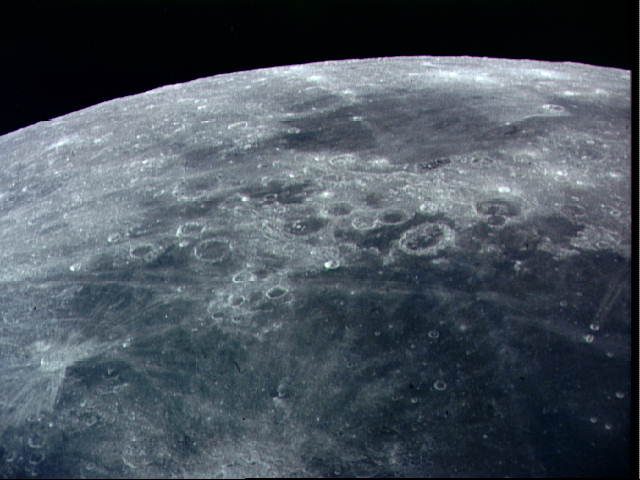
I’ve converted one of my pages to just space pictures. I have hundreds of great images from probes, telescopes and so forth. I’ll be adding them slowly, starting today. Click the page that says “Space Pictures, above.

Leave a comment

Filed under animation, pictures

The dream of lost love

A song I’ve re-recorded today. It’s been known by various names over the past 15 or so years. It is ambiguously about lost love but it’s more complicated than that. The motivation for the song was my daughter’s death but it absorbed other feelings and memories along the way.

The words, annotated:

In the years before your broke my heart I never thought that you could do it
So I never stopped to wonder if you would

[It never even crossed my mind that I could lose Erin. From when she was a baby I felt
connected to her and even though our relationship was difficult I couldn’t conceive of it being
over]

In the sunlight of that certainty I slowly fell asleep
knowing you were close beside me and that everything was good

[Ah, well, there’s a line in Carl Sandburgs poem “Little Word, Little White Bird” where he refers
to one “falling asleep in an afternoon sunfall” and waking up with their heart as “cold and dumb
as a polished stone”- It is this sleep of love forgotten that echoes in this line]


In the dream that came to visit in the time of which I speak
The storm of judgment raged across the land

[When Erin’s mom was having an affair- and I knew she was, she was gone all night much of
the time- I came across a stack of love letters from her “amour”… I slept with Erin on her little
bed…]

In a cold and barren desert we were among the only living
But we faced that road together and we walked it hand in hand

[I dreamed that she and I were survivors of some apocalyptic scenario- it underscored the way I
thought we were- that even if everything else were to go away we’d still be there]

I’m only here to tell you that it’s all right now
And that even though you took me from your will
Do you ever think about me, does it ever make you smile
Did you know I always loved you, do you know I love you still

[I wonder these things about everyone I’ve ever loved- do you?]

Even though I just assumed that you’ld be standing with me here

Still perhaps upon that desert we will gaze
I will surely be there with you, if there are survivors
I will take your hand in mine at the ending of all days


Weren’t we there when this world alive became
Do you recall the mountains rising up in praise
We’ll be there when the Lion calls the stars all home by name
We will be together at the ending of all days

[I read the Chronicles of Narnia to all my kids, starting with Erin- The first book describes how
Aslan, the great Lion, creates the world with his song, in the final book in the series Aslan calls
the stars from the sky, naming each one, and leads the heroes of the various stories on a race
through the layers of existence, to the core of reality, of which the “real” world is just a
shadow…the last part is sung several times in the style of something you’d hear at a tent revival]

Here’s the song:

pthedreamoflostlove

Here are some cute sleepy kittens-

Leave a comment

Filed under animated gif, animation, Free Music, mp3, Music, personal story, pictures

Moon-Day Soup

Buddhist Video

The Wandering Mind – Andrea Fella Audio Dharma ; Insight Meditation Center ; Andrea Fella

go here.

PORTS

This from Mike’s blog, New Directions:

Peer Operated Recovery Treatment and Support (PORTS)

A Mental Health Recovery Model

Developed by Michael Hlebechuk

PORTS is a mental health self-directed care model that combines mental health brokerage services with a peer counseling/advocacy education program and a couple of evidence based practices that actually work. There are no outcome studies to demonstrate the efficacy of PORTS. It has never been implemented. I drafted it up in response to a question for a job interview. I firmly believe, however, that if implemented this model would help people along the road to recovery in ways we haven’t seen yet through a formal program. The 2 page draft that outlines PORTS is located at:

http://www.oregon.gov/DHS/mentalhealth/consumers-families/ports.pdf

Here is an excerpt from the first page of the pdf linked above:

Recovery has become a major buzzword in the mental health community. Mental health systems are
beginning to focus seriously on assisting people with psychiatric disability to recover and move on
with their lives.i Scientific research has yielded practices that have an evidence base to support their
effectiveness in helping people recover from mental illness. People with psychiatric histories have
provided valuable input into system design, pointing to new treatment methods and principles that
foster their gaining productive roles in the community and having meaning restored to their lives.
SAMHSA’s Center for Mental Health Services has investigated treatment modalities that put
control into the hands of people receiving treatment. Self-directed care, person centered planning,
and consumer operated services along with evidence based practices have become the cornerstones
to achieving the promise of transforming mental health care in America in ways that promote the
dignity, respect, and recovery of the individual. The paragraphs that follow offer an example of how
various recovery-oriented treatment approaches can operate in concert to promote people moving
on with their lives.
The Peer Operated Recovery Treatment and Support (PORTS) Project lies at the core of the
proposed treatment delivery system. PORTS is a consumer-operated service program (COSP) that
provides treatment coordination and resource brokerage services. Individual customers who have
agreed to engage in a recovery plan that includes the goal of obtaining paid or voluntary
employment are referred to PORTS by the behavioral health organization. Customers are linked
with a Peer Advocate Mentor (PAM) and a Recovery Specialist. The PAM is supervised by the
PAM Project, a third party COSP. The PAM will work with the customer to develop recovery
strategies and ensure that services are provided in a dignified and respectful manner. The Recovery
Specialist is a PORTS employee who will coordinate the customer’s mental health and resource
brokerage services.
Customers will receive a PORTS orientation within a week of being referred. During orientation
customers will hear recovery stories from individuals with similar diagnoses who have taken firm
steps to move on with their lives. They will gain hope in learning that people can and do recover
from mental illness. Customers will also learn about PORTS’ mission, self-directed care, selfdetermination
and recovery principles during this first week.
All PORTS services are delivered through a person centered planning process. Through this process
the customer develops a person centered plan with the assistance of a PORTS Recovery Specialist,
the PAM, and any individuals the customer invites to be members of the circle of support. Circles of
support are generally composed of the family members, friends, and professionals the customer
believes are most supportive. The resulting person centered plan is more than a treatment plan. It is
a life-plan; complete with the individual’s dreams and goals and steps to make them a reality. These
steps are detailed in Action Plans.
Each PORTS customer will be allotted an individual resource budget of $2,000 for the first year of
service. Through this budget customers may purchase services and supports within the community
or from a participating mental health provider to carry out an Action Plan. Take, for example, an
Action Plan with the stated goal of obtaining employment. A step toward this goal may be the
purchase of a set of clothes to wear at job interviews. The Action Plan would detail the budgeted
amount for each of these purchases. Core mental health services such as symptom monitoring,
medication management, addictions counseling, acute care and crisis services are provided by the
behavioral healthcare organization per the person centered plan and are not purchased through the
individual resource budget. Fifty percent of the funds that remain in the individual resource budget
after an annual cycle of service are carried over into next year’s budget. An additional $500 is
added to the second and subsequent year’s budgets. All brokered community services and supports
purchased through individual resource budgets must be approved by the Recovery Specialist. All
purchases over $100 must be approved by a representative of the behavioral health organization.

So, PORTS seems to be an approach to implementing person directed, brokerage style services and supports in mental health. Sounds good!

To: Members of the Oregon Consumer/Survivor Council and Interested
Parties
From: Michael Hlebechuk, Chair
Re: Meeting announcement

The next meeting of the Oregon Consumer/Survivor Council will be held
on Wednesday, October 8, from 1:00 to 4:00 PM in meeting room HSB-352
located on the 3rd floor of the Barbara Roberts Human Services
Building (DHS main office), 500 Summer St NE, Salem, OR.

Minutes of the previous meeting: csc-minutes-081308

Why has the font on my blog gotten so tiny??

From MindFreedom News:

Our soldiers deserve better than a bag of pills

With suicide rates higher than they’ve ever been, the stress of combat and long deployments, the US Military should be doing everything it can to address the mental health needs of its soldiers.

Instead, soldiers in crisis are currently being offered little more than pills.

They deserve better.

They deserve alternatives to the one-size-fits-all, pharmaceutical approach to mental health.

On October 5, 2008 MindFreedom International will delivered signatures to the campaign headquarters of both Barack Obama and John McCain.

From Beyond Meds, a recovery oriented blog found here. For the whole post, go to the source.

When I was at my acupuncturists the other day I basically collapsed on the table after pounding on her office door when I couldn’t tolerate sitting in the office. I REALLY needed to lay down. I can sit in recliner type chairs but an upright chair I can last in only so long and I had reached my limit at the health food store where I had lunch before I went to accupuncture.

I learned that it was the acupuncture that made my endometriosis pain almost non-existent. It is, after all, the reason I went to the acupuncturist in the first place but I didn’t expect such rapid results. Almost totally pain free after two treatments.  She told me that pain is usually the easiest symptom to treat and the rest of my hormonal issues and my basic poor health would probably take much longer to deal with.

Her diagnosis of my situation in the Chinese way of interpreting things is that my liver is in serious shape. Since Chinese medicine deals with the whole being I’m really being treated for everything my body is suffering from even though I presented saying I needed help balancing my hormones.

In any case, I collapsed on her table after being out for an hour—I was sick of staying in bed and so my husband took me to lunch. But that hour was really too much and as I collapsed on her table I burst into tears.

It ended up being like a therapy session. I told her I was dealing with so much anger. And rage. My circumstances so damn frustrating. Doctor after doctor mishandling me. Making me sicker. My rage is targeted mostly at my sister who doesn’t give a shit that I’m sick and at my last doctor who seems to have no interest in admitting any fault and is therefore just as bad as any drug pushing doctor. It’s also targeted at people in the recovery movement who think that their road to recovery is the only road to recovery and they seem to dare to think that if I only followed their way I would be well by now. One thing I’ve learned on this journey is that there are as many roads to recovery as there are people. My recovery stories page on this blog gives a glimpse of this—-all different methods of recovery…I borrow from many of their journeys, but ultimately I trust my gut. And so should anyone else struggling to recover…There is nothing tried and true for every person who has been labeled. No one thing. Perhaps the only necessary ingredient is believing that one can get better and all of these people have that and I do too, in spades.

In any case I have rage. It’s probably primal rage and it’s just glomming on to whoever is an attractive target right now.

How do I clear it out? How do I forgive my sister and my doctor? How do I embrace the giant egos of some of my recovered friends when they seem to condescend on my journey? (please don’t everyone assume I’m thinking of YOU…it’s just a couple of people really)

One thing is clear. I have no mental illness, but I’m very very physically sick. The drugs made me sick. The withdrawal made me sick. My prescribing psychiatrist who is watching me go through this process agrees. My husband who knows me intimately agrees. No mental illness…nope, just sickness caused by drugs and drug withdrawal.

Mad Liberation by Moonlight

The full moon is on October 14th this time. This would make the radio show happen on Friday night, 10/17/08. I have to clear this with Dan but so far, that’s the plan.

Mad Liberation

by Moonlight

Friday! On KBOO Radio 90.7 FM

1- 2 a.m. Late Friday night

(yes, I know that it is technically Saturday morning- relax, it’s just a radio show)

October 17th, 2008

This show is dedicated to Everyone

*who has ever been given a psychiatric label, *who experiences mental health challenges and of course to *anybody who has the misfortune (or good fortune) of being awake at that hour.

You can participate!

Call in at (503) 231-8187

We also hope to have some live in-studio musical

performance by CS/X performers on this show.

(Set your alarm if you aren’t usually up at that time)

Friday nights from 1 am to 2 am usually following the full-moon, will be a segment on KBOO radio (90.7 on your fm dial, to the left of NPR), also streamed on the internet on their website, http://www.kboo.fm/index.php will be time for Mad Lib by Moonlight. The program is part of the usual Friday night show, The Outside World.

Excerpt From: The Rape of the Mind

Source material- go to

http://www.ninehundred.net/control/

The Psychology of Thought Control, Menticide, and Brainwashing

by

Joost A. M. Meerloo, M.D

NOTE: This work has been long out of print, last known publication date 1956, the World Publishing Company. Of course, the technology has advanced and the techniques have been refined, but the principles remain the same.

from the Forward:

“And fear not them which kill the body, but are not able to kill the soul.” -Matthew 10:28

This book attempts to depict the strange transformation of the free human mind into an automatically responding machine a transformation which can be bought about by some of the cultural undercurrents in our present day society as well as by deliberate experiments in the service of a political ideology.

The rape of the mind and stealthy mental coercion are among the oldest crimes of mankind. They probably began back in pre historic days wheh man first discovered that he could exploit human qualities of empathy and understanding in order to exert power over his fellow men. The word “rape” is derived from the Latin word _rapere_, to snatch, but also is related to the words to rave and raven. It means to overwhelm and to enrapture, to invade, to usurp, to pillage and to steal.

The modern words “brainwashing,” “thought control,” and “menticide” serve to provide a clearer conception of the actual methods by which man’s integrity can be violated. When a concept is given its right name, it can be more easily recognized and it is with this recognition that the opportunity for systematic correction begins.

In this book the reader will find a discussion of some of the imminent dangers which threaten free cultural interplay. It emphasizes the tremendous cultural implication of the subject of enforced mental intrusion. Not only the artificial techniques of coercion are important but even more the unobtrusive intrusion into our feeling and thinking. The danger of destruction of the spirit may be compared to the threat of total physical destruction through atomic warfare. Indeed, the two are related and intertwined…..

from the first chapter:

The first part of this book is devoted to various techniques used to make man a meek conformist. In addition to actual political occurrences, attention is called to some ideas born in the laboratory and to the drug techniques that facilitate brainwashing. The last chapter deals with the subtle psychological mechanisms of mental submission.

CHAPTER ONE — YOU TOO WOULD CONFESS

A fantastic thing is happening in our world. Today a man is no longer punished only for the crimes he has in fact committed. Now he may be compelled to confess to crimes that have been conjured up by his judges, who use his confession for political purposes. It is not enough for us to damn as evil those who sit in judgment. We must understand what impels the false admission of guilt; we must take another look at the human mind in all its frailty and vulnerability.

The Enforced Confession

During the Korean War, an officer of the United States Marine Corps, Colonel Frank H. Schwable, was taken prisoner by the Chinese Communists. After months of intense psychological pressure and physical degradation, he signed a well documented “confession” that the United States was carrying on bacteriological warfare against the enemy. The confession named names, cited missions, described meetings and strategy conferences. This was a tremendously valuable propaganda tool for the totalitarians. They cabled the news all over the world: “The United States of America is fighting the peace loving people of China by dropping bombs loaded with disease spreading bacteria, in violation of international law.”

After his repatriation, Colonel Schwable issued a sworn statement repudiating his confession, and describing his long months of imprisonment. Later, he was brought before a military court of inquiry. He testified in his own defense before that court: “I was never convinced in my own mind that we in the First Marine Air Wing had used bug warfare. I knew we hadn’t, but the rest of it was real to me the conferences, the planes, and how they would go about their missions.”

“The words were mine,” the Colonel continued, “but the thoughts were theirs. That is the hardest thing I have to explain: how a man can sit down and write something he knows is false, and yet, to sense it, to feel it, to make it seem real.”

This is the way Dr. Charles W. Mayo, a leading American physician and government representative, explained brainwashig in an official statement before the United Nations: “…the tortures used…although they include many brutal physical injuries, are not like the medieval torture of the rack and the thumb screw. They are subtler, more prolonged, and intended to be more terrible in their effect. They are calculated to disintegrate the mind of an intelligent victim, to distort his sense of values, to a point where he will not simply cry out ‘I did it!’ but will become a seemingly willing accomplice to the complete disintegration of his integrity and the production of an elaborate fiction.”

The Schwable case is but one example of a defenseless prisoner being compelled to tell a big lie. If we are to survive as free men, we must face up to this problem of politically inspired mental coercion, with all its ramifications.

It is more than twenty years [in 1956] since psychologists first began to suspect that the human mind can easily fall prey to dictatorial powers. In 1933, the German Reichstag building was burned to the ground. The Nazis arrested a Dutchman, Marinus Van der Lubbe, and accused him of the crime. Van der Lubbe was known by Dutch psychiatrists to be mentally unstable. He had been a patient in a mental institution in Holland. And his weakness and lack of mental balance became apparent to the world when he appeared before the court. Wherever news of the trial reached, men wondered: “Can that foolish little fellow be a heroic revolutionary, a man who is willing to sacrifice his life to an ideal?”

During the court sessions Van der Lubbe was evasive, dull, and apathetic. Yet the reports of the Dutch psychiatrists described him as a gay, alert, unstable character, a man whose moods changed rapidly, who liked to vagabond around, and who had all kinds of fantasies about changing the world.

On the forty second day of the trial, Van der Lubbe’s behavior changed dramatically. His apathy disappeared. It became apparent that he had been quite aware of everything that had gone on during the previous sessions. He criticized the slow course of the procedure. He demanded punishment either by imprisonment or death. He spoke about his “inner voices.” He insisted that he had his moods in check. Then he fell back into apathy. We now recognize these symptoms as a combination of behavior forms which we can call a confession syndrome. In 1933 this type of behavior was unknown to psychiatrists. Unfortunately, it is very familiar today and is frequently met in cases of extreme mental coercion.

Van der Lubbe was subsequently convicted and executed. When the trial was over, the world began to realize that he had merely been a scapegoat. The Nazis themselves had burned down the Reichstag building and had staged the crime and the trial so that they could take over Germany. Still later we realized that Van der Lubbe was the victim of a diabolically clever misuse of medical knowledge and psychologic technique, through which he had been transformed into a useful, passive, meek automaton, who replied merely yes or no to his interrogators during most of the court sessions. In a few moments he threatened to jump out of his enforced role. Even at that time there were rumors that the man had been drugged into submission, though we never became sure of that.

[NOTE: The psychiatric report about the case of Van der Lubbe is published by Bonhoeffer and Zutt. Though they were unfamiliar with the “menticide syndrome,” and not briefed by their political fuehrers, they give a good description about the pathologic, apathetic behavior, and his tremendous change of moods. They deny the use of drugs.]

This is powerful reading- I encourage you to take a closer look. The book has ramifications that are very timely both in terms of geo-politics and psychiatric politics.

From my favorite mental health blogger, Ron Unger-

(his blog, Recovery from Schizofrenia-http://recoveryfromschizophrenia.org/blog/)

Guidelines for changing the mental health system

Posted by Ron Unger on October 5th, 2008

Here in Lane County Oregon, USA, a group known as the Consumer Council, working closely with MindFreedom, has been pushing to put in place official guidelines which would hopefully change the behavior of mental health professionals. Two of the important things we are asking them to do is to quit misleading and disempowering people into believing that genetic and biological explanations of “mental illness” are fact, and to let people know they may eventually be able to live successfully without medication and that help is available to them in making that transition.

So far we have gotten the local mental health system to move forward with some vague and poorly explained guidelines, though even these have gotten the professionals stirred up as they find themselves being asked to take into account consumer concerns. What follows is a copy of an email about the concerns of the “treatment team” of the county mental health department, followed by my rebuttal. I thought it might be of interest to those of you who are pushing for change in your own mental health system.

I have changed the name of the mental health worker who wrote this email, as I didn’t ask her permission to post it here.

From: Brenda
Sent: Tuesday, September 30, 2008 9:04 AM
To: LEVINE Al; *LC H&HS 2411 MLK Mental Health
Subject: RE: attached position on consummer empowerment

Hi, Al,

Sorry for the late reply. I hope this is timely enough for consideration.

Some concerns were expressed at Wednesday Treatment Team about this, both by the LMPs and by the clinicians.

Of particular concern was the paragraph on the second page requiring that “clients be correctly informed about what is known about their mental health condition and providers do not misinform clients with explanations that are disempowering (genetics, chemical imbalance).”

The problem highlighted with this wording is the assumption that information about biological factors that contribute to mental health issues is disempowering. There was a feeling voiced that this particular wording stemmed from local political pressures rather being based on empirical information.

There was also concern stated about the phrase in the third paragraph that stated that “current treatment, including medications, may be necessary for a limited time.” (Italics mine.)

Clearly, it would be misleading for anyone to tell a client that medications may be necessary only for a limited time. For many clients, that is not the case.

Finally, There was a question of what “alternative treatment” means, and an objection to the phrase “dependence on psychiatric medications.”

There is way too much in this document that seems to make specific directives without clear definition of what that entails.

Personally, I believe LCMH needs to make a position statement on consumer empowerment. I just have my doubts that policy and practice (Expressed in the Heading “Consumer Empowerment Guidelines”) should be guided by what appears to be local political pressure rather than by a broader “Memorandum of Understanding” (or some such) of what client empowerment consists of, and which LCMH takes the time and effort to draft on its own, taking into consideration an array of current policy and practice, as well as local consumer input.

If the Consumer Council wishes to make a definitive statement such as the one above, they have every right to do so and, I believe, should be encouraged to do so. However, I do not think it serves anyone well for LCMH to adopt a hybridized version that may bind practitioners to wording that could have unintended consequences down the line.

I think much better wording could be used to express a commitment to increased consumer participation in treatment and a strengths-based recovery model. My concern is that the statement as is stands is focused less on real client empowerment than on limitations placed on what providers may and may not say. I do believe that any clinical guidelines coming from LCMH need to recognize the fact that medication is certainly not the only answer in treating any mental health condition. I just don’t think this is the way to express that reality.

I refer you to the very excellent SAMHSA statement (thanks, Gina!) that answers the question: “What is Recovery?” It has a much more encompassing–and philosophically acceptable–statement on consumer empowerment.

http://mentalhealth.samhsa.gov/publications/allpubs/sma05-4129/

Thanks,
Brenda

[then what follows is my response:]

It was very interesting to read the concerns that came out of the Wednesday treatment team meeting. I understand that many of the guidelines didn’t make much sense to you, that they seemed to unnecessarily limit how providers talk about things and they seemed to you to just be based on politics, and not on any reasoned and evidence based efforts to improve mental health care. I think the fact that you got this impression points out a definite weakness in the guidelines, and that has to do with the fact that they included inadequate explanation of the reasons for their existence.

The guidelines you saw did not come directly from the Consumer Council, though they did start as a result of recommendations for guidelines that were made there. I don’t know who put all the words together as you saw them (and they have been changed more since) but it now seems clear they don’t sufficiently explain why guidelines are necessary, and the basis for them. I think that rather than weakening them till they say less and less (which seems to be happening as they go through more committees and reviews) they need to be revised to clearly explain why they are vitally necessary to protect consumers against harm imposed by the mental health system. Let me attempt to explain here.

If a woman has a physical injury which a doctor has reason to know will leave her permanently unable to walk, and the doctor informs her that she will have to depend on a wheelchair to get around for the rest of her life, the doctor is being perfectly reasonable in telling her that. It may be depressing and initially demoralizing news to her, but it helps her face reality and prepare to get on with her life.

Now let’s consider an example where a woman has a physical injury which is more ambiguous. In the history of medical observation, most people with this sort of injury have not been able to walk again, but a sizable minority have been able to walk again. Let’s consider that in this example the doctor also tells the patient that she will have to depend on a wheelchair to get around for the rest of her life. Do you see the problem with that? If the woman believes her doctor, she will not take an interest in therapy that might get her walking and spending time outside of her wheelchair, and she may well end up permanently disabled, not because of her injury, but because of misinformation from her doctor. This would properly be classified as medical system imposed disability.

In the example above, perhaps the doctor was worried about nurturing hopes that might turn out false, or perhaps the doctor was worried that if she attempted to get out of the wheelchair and walk she would further injure herself and the doctor wanted to prevent any risk of this happening. It doesn’t really matter what the motivation of the doctor was: the patient has the right to hear that there is a possibility of recovery, and the right to pursue a course of rehabilitation therapy even if there is some risk of further injury in the course of the therapy. The doctor violated her informed consent by failing to give her critically important facts about possible treatment alternatives.

I used an example from physical medicine, but the same principles can be applied to a mental health problem. Brenda’s message stated that “There was also concern stated about the phrase in the third paragraph that stated that “current treatment, including medications, may be necessary for a limited time.” (Italics mine.) Clearly, it would be misleading for anyone to tell a client that medications may be necessary only for a limited time. For many clients, that is not the case.” Following the reasoning in Brenda’s message, the doctor in the physical injury example might have stated that he could not tell his patient that she might walk again and not have to depend on a wheelchair, because clearly for many of his patients with such injuries, they were not able to do that! I hope it is obvious to all of you that the doctor’s logic would be flawed. When we say a person “may” recover and walk again, or recover and no longer need medications, that is very different from saying the person “will” recover in that way. All we need to say that a person “may” recover is examples of some people with the given condition who do recover.

(One might also ask how many of this doctor’s patients weren’t able to walk again just because they had been misled by the doctor into not trying to recover. Predictions of failure can make failure more likely, which is why it is critical not to exaggerate the likelihood of failure, or especially critical not to make it appear inevitable.)

Some of you may feel that the above example does not apply, because you are sure that some of your clients definitely have no chance of getting off medications and doing well. I would challenge you though, to find empirical evidence that shows that mental health professionals are able to reliably predict who has no chance of making such a recovery. Harding did a long term study in Vermont of the people with the worst prognosis in psychiatry, people with a diagnosis of schizophrenia who had been hospitalized for years in the so-called “back wards.” She found that decades later, a third or more of these people were off medications, showing no symptoms of schizophrenia, and living lives that involved work and relationships. Similar studies elsewhere also show many recovering (though percentages vary: a similar study in Maine showed a lower rate of recovery, probably because Maine did not offer the same assistance in rehabilitation offered in Vermont.) It seems to me that when we do not objectively know who will recover and who will not, we should just say we don’t know, and let people know they have a chance.

Some of you may claim that you know certain people cannot ever live successfully off medication, because they have already tried a number of times and failed. But the fact that a person had even multiple relapses after quitting medications is still not proof that medications will always be necessary: it is also possible to find stories of people with such multiple relapses who eventually got off the medications successfully and then had decades or the rest of their lives living successfully without any medications. So again, where we don’t have the ability to make a reliable prediction, we would do better to back off, and admit that either outcome is possible, including the possibility that the need for medication may still be for just a limited time, even though there have already been multiple relapses. (Of course, if competent help is provided to a person attempting to get off, which includes not just medical oversight in withdrawing slowly but also development of a relapse prevention plan and assistance in shifting to alternative coping, then it is much more likely that a future attempt to get off the medication will succeed, or at least not end in disaster.)

The mental health system has traditionally been afraid to tell people they might eventually not need medications, because they worry this will make clients quit medications while they are in fact still necessary for that person. But when clients are told that they will need medications for the rest of their lives, or even subtly led to believe they will always need medications just by never discussing with them the possibility that they will recover to a point where they won’t need medications, then the effect is to misinform them in a way that is disempowering (which violates the principle of informed consent). We don’t have a right to do that, and it isn’t adequate mental health treatment. It is much more honest, and it works well, to simply discuss openly the danger of quitting medications abruptly while they are still perhaps needed, and to introduce instead the option of gradually reducing medications while shifting to other forms of coping, always knowing one can resume more medications if it is decided that is necessary. This allows facing the uncertainty squarely, in an honest and transparent manner, with the consumer having a choice about how much risk to take, without the professional attempting to make that choice for the consumer.

Another problem with telling people they will always need to stay on medications, when we really don’t know for sure this is true, has to do with the risks of the medications. If we tell 100 people that they will always have to stay on medications, when in reality 10 of those people could have gotten off successfully if they knew this was possible, then we are responsible for keeping those ten people on highly risky medications for no reason whatsoever. If some of these people die early because of the effects of the medications, then we are responsible for their deaths. We might argue that, if we told all 100 people that they might be able to get off medications then lots of people might try getting off them who can’t handle it and that would cause more trouble overall than would be caused by keeping some people on medications unnecessarily, etc. But my point is, we don’t have any ethical right to make these kinds of decisions for people, or to make the 10 who could get off suffer or even die unnecessarily because it is more convenient for us to not disclose the possibility that some can get off medications successfully.

Another issue: there is also a danger of mental health system imposed disability when people are convinced of explanations of their problem which have a greater sense of permanence and which are less likely to be controllable by the person. That is, when people are convinced that they are mentally ill because of their genes, or because there is some kind of problem in their brain which is strictly biological and has nothing to do with how they are choosing to react to things, such as a “chemical imbalance,” they naturally feel less able to do anything about recovery, other than perhaps depend on taking pills for the rest of one’s life (with usually only partial success at most.) If I have a brain tumor, I’m not going to believe I can get rid of the problems it causes by changing my thoughts and behavior. I think this should be obvious enough to not require research backing, but in fact, for schizophrenia at least, there is research that shows that genetic and strictly biological explanations are disempowering and increase stigma. One article that summarizes this research is attached. [Well it’s not attached in this post, but if you post a comment and request a copy I can email it to you at the address you registered with.]

I have a friend who was in the mental health system for years, where he received both many medications including neuroleptics, as well as electroshock. He described to me how he recovered by reconsidering all his ways of thinking and processing information, in a process that took years. He is now a college professor with national recognition for his work, and of course has not taken any medication for many years. He could not have done this had he believed that he would be inevitably mentally ill due to his genes or some strictly biological process in his brain. Fortunately, he was able to reject the misinformation he got from the mental health system, but I don’t think recovery should have to depend on consumers figuring out how to reject our misinformation: they shouldn’t be misinformed to start out with.

The truth is, we don’t know that any consumer we see has even a genetic predisposition toward a mental illness, much less a genetic “cause” because there are no genetic tests. (You may believe that the evidence that genetic differences contribute to mental illness is strong – some others differ with this – but one thing that definitely doesn’t exist is evidence to show that everyone with a particular mental illness has a genetic difference. For example, there is evidence that genetic differences create a predisposition to PTSD, but for any given person with PTSD, we cannot say that there is a particular genetic difference. There could be many other reasons why that particular person has a mental health problem.) We also don’t know that any consumer we see has any specific brain difference that is causing the illness: there is no brain test for mental illness specifically because there are no brain differences that reliably always show up in people with a given diagnosis and never in people without the diagnosis (nor are there any brain differences that even come close to meeting this criteria.) This means that genetic and biological explanations are simply unproven theories. (They are also rather dubious theories if one attempts to take them as a complete explanation, because no one has ever explained how a mental illness caused by genes or a biologically based brain difference could go away over time in the cases of people who get off medication and go on to live highly successful lives.)

What is essential to maximizing chances for recovery is that consumers be given explanations that suggest a role for the consumer in his or her own recovery. (These explanations do not need to be presented as fact, but just as theories or possibilities that offer hope.) For example, consumers can be told that their mental problem may result from a reaction to life events, reactions which over time they could learn to shift. This conveys the belief that complete recovery is possible and that the consumer has a role in it, which are beliefs that are cited by those who do recover as being essential in their journey.

Just a couple more issues: I was curious about the objection to the phrase “dependence on psychiatric medications.” Was this a purely political objection, or was it based on some kind of reasoning or evidence? It seems to me that from every objective criteria, this is an appropriate use of the term “dependence.” Dependence on something is not necessarily a bad thing: for example if I had an irreparable spinal cord injury, I would happily depend on a wheelchair, and I wouldn’t object to anyone calling it a “dependence.” Clearly, when a person cannot successfully get through a week or a month without taking a bunch of psychiatric medications, they are depending on them. The use of the word “dependence” might also bring up associations with dependence on other substances that have withdrawal effects, but even then this associations cannot be successfully argued to be misleading, because all classes of psychiatric medications have been shown to have withdrawal effects, or “discontinuation syndromes” or whatever you want to call them, at least in many people.

I agree that it would be helpful for the guidelines to go into more detail about what alternatives are and which ones might be accessed through LaneCare services. I think one of the best ways that LaneCare services can actually help is in having a therapist and/or case manager or peer support person guiding people in accessing things that are already available in the community for free, but which are ordinarily not accessed by people caught up in mental health problems. This includes everything from social groups, spirituality, family support, nature, building social support networks, free educational opportunities, exercise options, dietary and substance consumption changes, and other lifestyle changes. Of course, for a consumer to even see these as relevant, they often need to see the possibility of a broader understanding of mental health problems than that which they have often learned in the mental health system.

To sum all this up: I understand very much that the proposed guidelines would just seem an encumbrance on the everyday practice of mental health workers, if the justification for them is not well known. However, I hope I have made the case that there is a very strong justification for these guidelines, in that they contain suggestions which are necessary to avoid mental health system caused disability and even unnecessary death, to fully comply with the principle of informed consent, and to create the strongest possible assistance in recovery. It’s fine to have nice definitions of recovery, such as that found in the ten principles on the SAMHSA site, but it’s also important to have guidelines to insure that mental health workers don’t unnecessarily make such recovery less likely or impossible. I hope what I’ve written here makes apparent the reasons for these guidelines, and I hope in the future we will be able to include a better explanation for the guidelines within the guidelines themselves.

In many respects, these guidelines are a companion piece to the trauma guidelines, which also attempt to make mental health providers more aware of, and avoid, the possibility of mental health system imposed harm. I think we all have a lot to gain from such guidelines. They may temporarily make our work a little more difficult as we learn new things, but what we gain is increased competence in doing what we really care about, which is helping people. That’s a goal we can all agree on.

Ron Unger

Audio Dharma-

(for more talks like this, go here.)

recorded at the

Insight Retreat Center

eugenecash_anger

Insight Meditation Center began in 1986 as a small group meditating together once a week. Today, hundreds of people participate in events at the center throughout the week. Talks are shared with a world-wide audience through the online Audio Dharma program.

(Click the picture below- it makes a nice wallpaper)

Wei Yingwu

A POEM TO A TAOIST HERMIT
CHUANJIAO MOUNTAIN


My office has grown cold today;
And I suddenly think of my mountain friend
Gathering firewood down in the valley
Or boiling white stones for potatoes in his hut….
I wish I might take him a cup of wine
To cheer him through the evening storm;
But in fallen leaves that have heaped the bare slopes,
How should I ever find his footprints!

Bye for now!

-Rick

1 Comment

Filed under animation, buddhism, Chinese poetry, CS/X movement, Links: Recovery, Mad Radio, Mental health recovery, mindfreedom news, mp3, pictures, poetry, silly, sound bite, Spirituality, wellness and systems change

Three Books by Rabindranath Tagore

Tagore has had a profound influence on my life.

I have provided excerpts before from works by Tagore. Today I would like to offer these 3 complete books for you to download, free. These are all in the public domain since 1992. They are:

Gitanjali,

Stray Birds and

The Hungry Stones

If you are new to his work, you are in for a treat, also I am providing the following excerpts with the download for the entire book at the end of each section. I think you will want to read all of these, from the first word to the last.

(Note: I have already provided a download of the e-book Sadhana- The Realization of Life here. Also, I have included a free audio book of Sadhana at the end of this post.)

Gitanjali- Song Offerings

If thou speakest not I will fill my heart with thy silence and endure it. I will keep still and wait like the night with starry vigil and its head bent low with patience.

The morning will surely come, the darkness will vanish, and thy voice pour down in golden streams breaking through the sky.

Then thy words will take wing in songs from every one of my birds’ nests, and thy melodies will break forth in flowers in all my forest groves.

On the day when the lotus bloomed, alas, my mind was straying, and I knew it not. My basket was empty and the flower remained unheeded.

Only now and again a sadness fell upon me, and I started up from my dream and felt a sweet trace of a strange fragrance in the south wind.

That vague sweetness made my heart ache with longing and it seemed to me that is was the eager breath of the summer seeking for its completion.

I knew not then that it was so near, that it was mine, and that this perfect sweetness had blossomed in the depth of my own heart.

I must launch out my boat. The languid hours pass by on the shore—Alas for me!

The spring has done its flowering and taken leave. And now with the burden of faded futile flowers I wait and linger.

The waves have become clamorous, and upon the bank in the shady lane the yellow leaves flutter and fall.

What emptiness do you gaze upon! Do you not feel a thrill passing through the air with the notes of the far-away song floating from the other shore?

In the deep shadows of the rainy July, with secret steps, thou walkest, silent as night, eluding all watchers.

Today the morning has closed its eyes, heedless of the insistent calls of the loud east wind, and a thick veil has been drawn over the ever-wakeful blue sky.

The woodlands have hushed their songs, and doors are all shut at every house. Thou art the solitary wayfarer in this deserted street. Oh my only friend, my best beloved, the gates are open in my house—do not pass by like a dream.

Art thou abroad on this stormy night on thy journey of love, my friend? The sky groans like one in despair.

I have no sleep tonight. Ever and again I open my door and look out on the darkness, my friend!

I can see nothing before me. I wonder where lies thy path!

By what dim shore of the ink-black river, by what far edge of the frowning forest, through what mazy depth of gloom art thou threading thy course to come to me, my friend?

If the day is done, if birds sing no more, if the wind has flagged tired, then draw the veil of darkness thick upon me, even as thou hast wrapt the earth with the coverlet of sleep and tenderly closed the petals of the drooping lotus at dusk.

From the traveller, whose sack of provisions is empty before the voyage is ended, whose garment is torn and dustladen, whose strength is exhausted, remove shame and poverty, and renew his life like a flower under the cover of thy kindly night.

In the night of weariness let me give myself up to sleep without struggle, resting my trust upon thee.

Let me not force my flagging spirit into a poor preparation for thy worship.

It is thou who drawest the veil of night upon the tired eyes of the day to renew its sight in a fresher gladness of awakening.

He came and sat by my side but I woke not. What a cursed sleep it was, O miserable me!

He came when the night was still; he had his harp in his hands, and my dreams became resonant with its melodies.

Download:

gitanjali-by-rabindranath-tagore

The verses in Stray Birds are short but full. Each one is a meditation. Read them slowly, savor their images and find the meaning they call out from your own heart.

Stray Birds

THE mist, like love, plays upon the heart of the hills and brings out surprises of beauty.


75

WE read the world wrong and say that it deceives us.


76

THE poet wind is out over the sea and the forest to seek his own voice.


77

EVERY child comes with the message that God is not yet discouraged of man.


78

THE grass seeks her crowd in the earth.

The tree seeks his solitude of the sky.


79

MAN barricades against himself.


80

YOUR voice, my friend, wanders in my heart, like the muffled sound of the sea among these listening pines.


81

WHAT is this unseen flame of darkness whose sparks are the stars?


82

LET life be beautiful like summer flowers and death like autumn leaves.


88

HE who wants to do good knocks at the gate; he who loves finds the gate open.


84

IN death the many becomes one; in life the one becomes many.

Download:

stray-birds-by-rabindranath-tagore

The Hungry Stones and other stories

this story is titled

THE DEVOTEE

I

AT a time, when my unpopularity with a part of my readers had reached the nadir of its glory, and my name had become the central orb of the journals, to be attended through space with a perpetual rotation of revilement, I felt the necessity to retire to some quiet place and endeavour to forget my own existence.

I have a house in the country some miles away from Calcutta, where I can remain unknown and unmolested. The villagers there have not, as yet, come to any conclusion about me. They know I am no mere holiday-maker or pleasure-seeker; for I never outrage the silence of the village nights with the riotous noises of the city. Nor do they regard me as an ascetic, because the little acquaintance they have of me carries the savour of comfort about it. I am not, to them, a traveller; for, though I am a vagabond by nature, my wandering through the village fields is aimless. They are hardly even quite certain whether I am married or single; for they have never seen me with my children. So, not being able to classify me in any animal or vegetable kingdom that they know, they have long since given me up and left me stolidly alone.

But quite lately I have come to know that there is one person in the village who is deeply interested in me. Our acquaintance began on a sultry afternoon in July. There had been rain all the morning, and the air was still wet and heavy with mist, like eyelids when weeping is over.

I sat lazily watching a dappled cow grazing on the high bank of the river. The afternoon sun was playing on her glossy hide. The simple beauty of this dress of light made me wonder idly at man’s deliberate waste of money in setting up tailors’ shops to deprive his own skin of its natural clothing.

While I was thus watching and lazily musing, a woman of middle age came and prostrated herself before me, touching the ground with her forehead. She carried in her robe some bunches of flowers, one of which she offered to me with folded hands. She said to me, as she offered it: “This is an offering to my God.”

She went away. I was so taken aback as she uttered these words, that I could hardly catch a glimpse of her before she was gone. The whole incident was entirely simple, but it left a deep impression on my mind; and as I turned back once more to look at the cattle in the field, the zest of life in the cow, who was munching the lush grass with deep breaths, while she whisked off the flies, appeared to me fraught with mystery. My readers may laugh at my foolishness, but my heart was full of adoration. I offered my worship to the pure joy of living, which is God’s own life. Then, plucking a tender shoot from the mango tree, I fed the cow with it from my own hand, and as I did this I had the satisfaction of having pleased my God.

The next year when I returned to the village it was February. The cold season still lingered on. The morning sun came into my room, and I was grateful for its warmth. I was writing, when the servant came to tell me that a devotee, of the Vishnu cult, wanted to see me. I told him, in an absent way, to bring her upstairs, and went on with my writing. The Devotee came in, and bowed to me, touching my feet. I found that she was the same woman whom I had met, for a brief moment, a year ago.

I was able now to examine her more closely. She was past that age when one asks the question whether a woman is beautiful or not. Her stature was above the ordinary height, and she was strongly built; but her body was slightly bent owing to her constant attitude of veneration. Her manner had nothing shrinking about it. The most remarkable of her features were her two eyes. They seemed to have a penetrating power which could make distance near.

With those two large eyes of hers, she seemed to push me as she entered.

“What is this?” she asked. “Why have you brought me here before your throne, my God? I used to see you among the trees; and that was much better. That was the true place to meet you.”

She must have seen me walking in the garden without my seeing her. For the last few days, however, I had suffered from a cold, and had been prevented from going out. I had, perforce, to stay indoors and pay my homage to the evening sky from my terrace. After a silent pause the Devotee said to me: “O my God, give me some words of good.”

I was quite unprepared for this abrupt request, and answered her on the spur of the moment:

Good words I neither give nor receive. I simply open my eyes and keep silence, and then I can at once both hear and see, even when no sound is uttered. Now, while I am looking at you, it is as good as listening to your voice.

The Devotee became quite excited as I spoke, and exclaimed: “God speaks to me, not only with His mouth, but with His whole body.”

I said to her: “When I am silent I can listen with my whole body. I have come away from Calcutta here to listen to that sound.”

The Devotee said: “Yes, I know that, and therefore I have come here to sit by you.”

Before taking her leave, she again bowed to me, and touched my feet. I could see that she was distressed, because my feet were covered. She wished them to be bare.

Early next morning I came out, and sat on my terrace on the roof. Beyond the line of trees southward I could see the open country chill and desolate. I could watch the sun rising over the sugar-cane in the East, beyond the clump of trees at the side of the village. Out of the deep shadow of those dark trees the village road suddenly appeared. It stretched forward, winding its way to some distant villages on the horizon, till it was lost in the grey of the mist.

That morning it was difficult to say whether the sun had risen or not. A white fog was still clinging to the tops of the trees. I saw the Devotee walking through the blurred dawn, like a mist-wraith of the morning twilight. She was singing her chant to God, and sounding her cymbals.

The thick haze lifted at last; and the sun, like the kindly grandsire of the village, took his seat amid all the work that was going on in home and field.

When I had just settled down at my writing-table, to appease the hungry appetite of my editor in Calcutta, there came a sound of footsteps on the stair, and the Devotee, humming a tune to herself, entered. and bowed before me. I lifted my head from my papers.

She said to me: “My God, yesterday I took as sacred food what was left over from your meal.”

I was startled, and asked her how she could do that.

“Oh,” she said, “I waited at your door in the evening, while you were at dinner, and took some food from your plate when it was carried out.”

This was a surprise to me, for every one in the village knew that I had been to Europe, and had eaten with Europeans. I was a vegetarian, no doubt, but the sanctity of my cook would not bear investigation, and the orthodox regarded my food as polluted.

The Devotee, noticing my sign of surprise, said: “My God, why should I come to you at all, if I could not take your food?”

I asked her what her own caste people would say. She told me she had already spread the news far and wide all over the village. The caste people had shaken their heads, but agreed that she must go her own way.

I found out that the Devotee came from a good family in the country, and that her mother was well-to-do, and desired to keep her daughter. But she preferred to be a mendicant. I asked her how she made her living. She told me that her followers had given her a piece of land, and that she begged her food from door to door. She said to me: “The food which I get by begging is divine.”

After I had thought over what she said, I understood her meaning. When we get our food precariously as alms, we remember God the giver. But when we receive our food regularly at home, as a matter of course, we are apt to regard it as ours by right.

I had a great desire to ask her about her husband. But as she never mentioned him even indirectly, I did not question her.

I found out very soon that the Devotee had no respect at all for that part of the village where the people of the higher castes lived.

“They never give,” she said, “a single farthing to God’s service; and yet they have the largest share of God’s glebe. But the poor worship and starve.”

I asked her why she did not go and live among these godless people, and help them towards a better life. “That,” I said with some unction, “would be the highest form of divine worship.”

I had heard sermons of this kind from time to time, and I am rather fond of copying them myself for the public benefit, when the chance comes.

But the Devotee was not at all impressed. She raised her big round eyes, and looked straight into mine, and said:

“You mean to say that because God is with the sinners, therefore when you do them any service you do it to God? Is that so?”

“Yes,” I replied, “that is my meaning.”

“Of course,” she answered almost impatiently, “of course, God is with them: otherwise, how could they go on living at all? But what is that to me? My God is not there. My God cannot be worshipped among them; because I do not find Him there. I seek Him where I can find Him.”

As she spoke, she made obeisance to me. What she meant to say was really this. A mere doctrine of God’s omnipresence does not help us. That God is all-pervading,–this truth may be a mere intangible abstraction, and therefore unreal to ourselves. Where I can see Him, there is His reality in my soul.

I need not explain that all the while she showered her devotion on me she did it to me not as an individual. I was simply a vehicle of her divine worship. It was not for me either to receive it or to refuse it: for it was not mine, but God’s.

When the Devotee came again, she found me once more engaged with my books and papers.

“What have you been doing,” she said, with evident vexation, “that my God should make you undertake such drudgery? Whenever I come, I find you reading and writing.”

“God keeps his useless people busy,” I answered; “otherwise they would be bound to get into mischief. They have to do all the least necessary things in life. It keeps them out of trouble.”

The Devotee told me that she could not bear the encumbrances, with which, day by day, I was surrounded. If she wanted to see me, she was not allowed by the servants to come straight upstairs. If she wanted to touch my feet in worship, there were my socks always in the way. And when she wanted to have a simple talk with me, she found my mind lost in a wilderness of letters.

This time, before she left me, she folded her hands, and said: “My God! I felt your feet in my breast this morning. Oh, how cool! And they were bare, not covered. I held them upon my head for a long time in worship. That filled my very being. Then, after that, pray what was the use of my coming to you yourself? Why did I come? My Lord, tell me truly,–wasn’t it a mere infatuation?”

There were some flowers in my vase on the table. While she was there, the gardener brought some new flowers to put in their place. The Devotee saw him changing them.

“Is that all?” she exclaimed. “Have you done with the flowers? Then give them to me.”

She held the flowers tenderly in the cup of her hands, and began to gaze at them with bent head. After a few moments’ silence she raised her head again, and said to me: “You never look at these flowers; therefore they become stale to you. If you would only look into them, then your reading and writing would go to the winds.”

She tied the flowers together in the end of her robe, and placed them, in an attitude of worship, on the top of her head, saying reverently: “Let me carry my God with me.”

While she did this, I felt that flowers in our rooms do not receive their due meed of loving care at our hands. When we stick them in vases, they are more like a row of naughty schoolboys standing on a form to be punished.

The Devotee came again the same evening, and sat by my feet on the terrace of the roof.

“I gave away those flowers,” she said, “as I went from house to house this morning, singing God’s name. Beni, the head man of our village, laughed at me for my devotion, and said: ‘Why do you waste all this devotion on Him? Don’t you know He is reviled up and down the countryside?’ Is that true, my God? Is it true that they are hard upon you?”

For a moment I shrank into myself. It was a shock to find that the stains of printers’ ink could reach so far.

The Devotee went on: “Beni imagined that he could blow out the flame of my devotion at one breath! But this is no mere tiny flame: it is a burning fire. Why do they abuse you, my God?”

I said: “Because I deserved it. I suppose in my greed I was loitering about to steal people’s hearts in secret.”

The Devotee said: “Now you see for yourself how little their hearts are worth. They are full of poison, and this will cure you of your greed.”

“When a man,” I answered, “has greed in his heart, he is always on the verge of being beaten. The greed itself supplies his enemies with poison.”

“Our merciful God,” she replied, “beats us with His own hand, and drives away all the poison. He who endures God’s beating to the end is saved.”

II

That evening the Devotee told me the story of her life. The stars of evening rose and set behind the trees, as she went on to the end of her tale.

“My husband is very simple. Some people think that he is a simpleton; but I know that those who understand simply, understand truly. In business and household management he was able to hold his own. Because his needs were small, and his wants few, he could manage carefully on what we had. He would never meddle in other matters, nor try to understand them.

“Both my husband’s parents died before we had been married long, and we were left alone. But my husband always needed some one to be over him. I am ashamed to confess that he had a sort of reverence for me, and looked upon me as his superior. But I am sure that he could understand things better than I, though I had greater powers of talking.

“Of all the people in the world he held his Guru Thakur (spiritual master) in the highest veneration. Indeed it was not veneration merely but love; and such love as his is rare.

“Guru Thakur was younger than my husband. Oh! how beautiful he was!

“My husband had played games with him when he was a boy; and from that time forward he had dedicated his heart and soul to this friend of his early days. Thakur knew how simple my husband was, and used to tease him mercilessly.

“He and his comrades would play jokes upon him for their own amusement; but he would bear them all with long-suffering.

“When I married into this family, Guru Thakur was studying at Benares. My husband used to pay all his expenses. I was eighteen years old when he returned home to our village.

“At the age of fifteen I had my child. I was so young I did not know how to take care of him. I was fond of gossip, and liked to be with my village friends for hours together. I used to get quite cross with my boy when I was compelled to stay at home and nurse him. Alas! my child-God came into my life, but His playthings were not ready for Him. He came to the mother’s heart, but the mother’s heart lagged behind. He left me in anger; and ever since I have been searching for Him up and down the world.

“The boy was the joy of his father’s life. My careless neglect used to pain my husband. But his was a mute soul. He has never been able to give expression to his pain.

“The wonderful thing was this, that in spite of my neglect the child used to love me more than any one else. He seemed to have the dread that I would one day go away and leave him. So even when I was with him, he would watch me with a restless look in his eyes. He had me very little to himself, and therefore his desire to be with me was always painfully eager. When I went each day to the river, he used to fret and stretch out his little arms to be taken with me. But the bathing ghat was my place for meeting my friends, and I did not care to burden myself with the child.

“It was an early morning in August. Fold after fold of grey clouds had wrapped the mid-day round with a wet clinging robe. I asked the maid to take care of the boy, while I went down to the river. The child cried after me as I went away.

“There was no one there at the bathing ghat when I arrived. As a swimmer, I was the best among all the village women. The river was quite full with the rains. I swam out into the middle of the stream some distance from the shore.

“Then I heard a cry from the bank, ‘Mother!’ I turned my head and saw my boy coming down the steps, calling me as he came. I shouted to him to stop, but he went on, laughing and calling. My feet and hands became cramped with fear. I shut my eyes, afraid to see. When I opened them, there, at the slippery stairs, my boy’s ripple of laughter had disappeared for ever.

“I got back to the shore. I raised him from the water. I took him in my arms, my boy, my darling, who had begged so often in vain for me to take him. I took him now, but he no more looked in my eyes and called ‘Mother.’

“My child-God had come. I had ever neglected Him. I had ever made Him cry. And now all that neglect began to beat against my own heart, blow upon blow, blow upon blow. When my boy was with me, I had left him alone. I had refused to take him with me. And now, when he is dead, his memory clings to me and never leaves me.

“God alone knows all that my husband suffered. If he had only punished me for my sin, it would have been better for us both. But he knew only how to endure in silence, not how to speak.

“When I was almost mad with grief, Guru Thakur came back. In earlier days, the relation between him and my husband had been that of boyish friendship. Now, my husband’s reverence for his sanctity and learning was unbounded. He could hardly speak in his presence, his awe of him was so great.

“My husband asked his Guru to try to give me some consolation. Guru Thakur began to read and explain to me the scriptures. But I do not think they had much effect on my mind. All their value for me lay in the voice that uttered them. God makes the draught of divine life deepest in the heart for man to drink, through the human voice. He has no better vessel in His hand than that; and He Himself drinks His divine draught out of the same vessel.

“My husband’s love and veneration for his Guru filled our house, as incense fills a temple shrine. I showed that veneration, and had peace. I saw my God in the form of that Guru. He used to come to take his meal at our house every morning. The first thought that would come to my mind on waking from sleep was that of his food as a sacred gift from God. When I prepared the things for his meal, my fingers would sing for joy.

“When my husband saw my devotion to his Guru, his respect for me greatly increased. He noticed his Guru’s eager desire to explain the scriptures to me. He used to think that he could never expect to earn any regard from his Guru himself, on account of his stupidity; but his wife had made up for it.

“Thus another five years went by happily, and my whole life would have passed like that; but beneath the surface some stealing was going on somewhere in secret. I could not detect it; but it was detected by the God of my heart. Then came a day when, in a moment our whole life was turned upside down.

“It was a morning in midsummer. I was returning home from bathing, my clothes all wet, down a shady lane. At the bend of the road, under the mango tree, I met my Guru Thakur. He had his towel on his shoulder and was repeating some Sanskrit verses as he was going to take his bath. With my wet clothes clinging all about me I was ashamed to meet him. I tried to pass by quickly, and avoid being seen. He called me by my name.

“I stopped, lowering my eyes, shrinking into myself. He fixed his gaze upon me, and said: ‘How beautiful is your body!’

“All the universe of birds seemed to break into song in the branches overhead. All the bushes in the lane seemed ablaze with flowers. It was as though the earth and sky and everything had become a riot of intoxicating joy.

“I cannot tell how I got home. I only remember that I rushed into the room where we worship God. But the room seemed empty. Only before my eyes those same gold spangles of light were dancing which had quivered in front of me in that shady lane on my way back from the river.

“Guru Thakur came to take his food that day, and asked my husband where I had gone. He searched for me, but could not find me anywhere.

“Ah! I have not the same earth now any longer. The same sunlight is not mine. I called on my God in my dismay, and He kept His face turned away from me.

“The day passed, I know not how. That night I had to meet my husband. But the night is dark and silent. It is the time when my husband’s mind comes out shining, like stars at twilight. I had heard him speak things in the dark, and I had been surprised to find how deeply he understood.

“Sometimes I am late in the evening in going to rest on account of household work. My husband waits for me, seated on the floor, without going to bed. Our talk at such times had often begun with something about our Guru.

“That night, when it was past midnight, I came to my room, and found my husband sleeping on the floor. Without disturbing him I lay down on the ground at his feet, my head towards him. Once he stretched his feet, while sleeping, and struck me on the breast. That was his last bequest.

“Next morning, when my husband woke up from his sleep, I was already sitting by him. Outside the window, over the thick foliage of the jack-fruit tree, appeared the first pale red of the dawn at the fringe of the night. It was so early that the crows had not yet begun to call.

“I bowed, and touched my husband’s feet with my forehead. He sat up, starting as if waking from a dream, and looked at my face in amazement. I said:

“‘I have made up my mind. I must leave the world. I cannot belong to you any longer. I must leave your home.’

“Perhaps my husband thought that he was still dreaming. He said not a word.

‘Ah! do hear me!’ I pleaded with infinite pain. ‘Do hear me and understand! You must marry another wife. I must take my leave.’

“My husband said: ‘What is all this wild, mad talk? Who advises you to leave the world?’

“I said: ‘My Guru Thakur.’

“My husband looked bewildered. ‘Guru Thakur!’ he cried. ‘When did he give you this advice?’

“‘In the morning,’ I answered, ‘yesterday, when I met him on my way back from the river.’

His voice trembled a little. He turned, and looked in my face, and asked me: ‘Why did he give you such a behest?’

“‘I do not know,’ I answered. ‘Ask him! He will tell you himself, if he can.’

“My husband said: ‘It is possible to leave the world, even when continuing to live in it. You need not leave my home. I will speak to my Guru about it.’

‘Your Guru,’ I said, ‘may accept your petition; but my heart will never give its consent. I must leave your home. From henceforth, the world is no more to me.’

“My husband remained silent, and we sat there on the floor in the dark. When it was light, he said to me: ‘Let us both come to him.’

“I folded my hands and said: ‘I shall never meet him again.’

“He looked into my face. I lowered my eyes. He said no more. I knew that, somehow, he had seen into my mind, and understood what was there. In this world of mine, there were only two who loved me best–my boy and my husband. That love was my God, and therefore it could brook no falsehood. One of these two left me, and I left the other. Now I must have truth, and truth alone.”

She touched the ground at my feet, rose and bowed to me, and departed.

Download:

the-hungry-stones-and-other-stories-by-rabindranath-tagore

More Tagore pictures (click small pictures for full size) –

Two pictures of Tagore with Gandhi
Tagore- Gandhi

Two pictures of Tagore with Albert Einstein

A letter Tagore wrote from the Netherlands
Tagore Portrait (click for full size)

Hand written page from Gitanjali

Extra Special Treat!

For your listening pleasure- Free Download of the Audio-Book of

sadhana-the-realization-of-life



2 Comments

Filed under Free Audio Books, Free E-Books, mp3, Mystic Poetry, pictures, poetry, Spirituality