Tag Archives: poetry

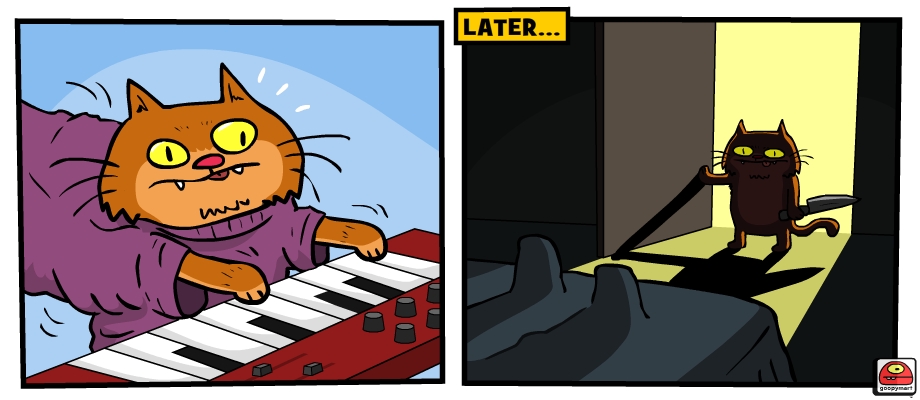
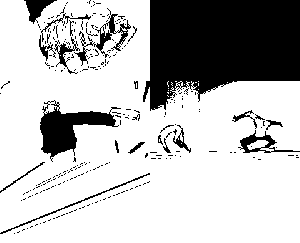
Makin’ Biscuits

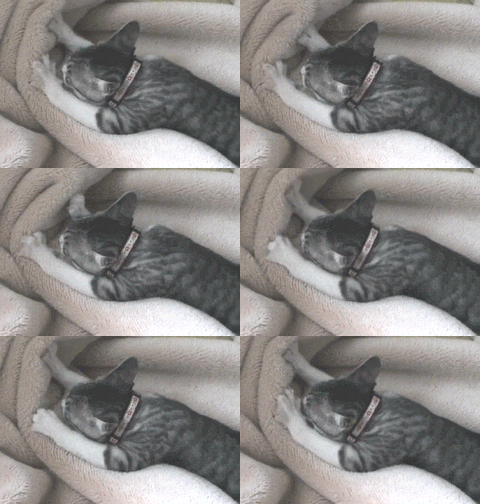
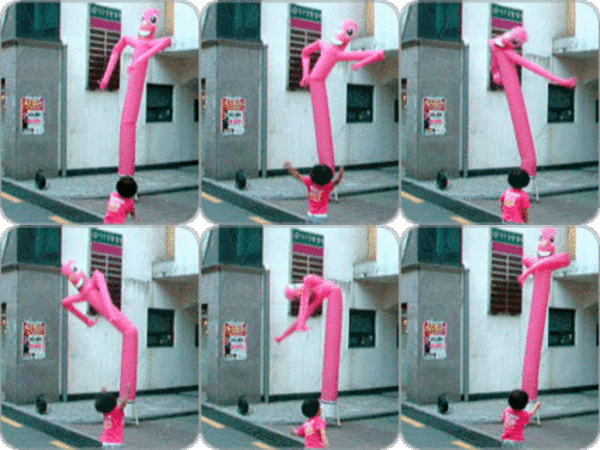
… not makin biscuits…

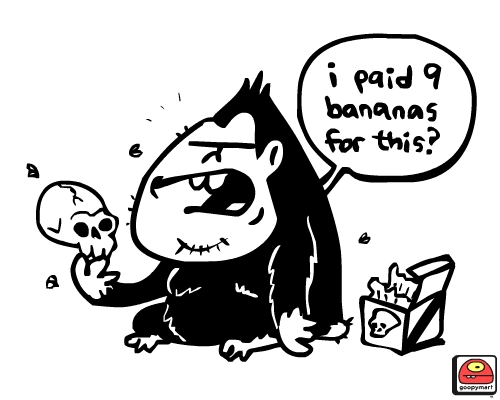
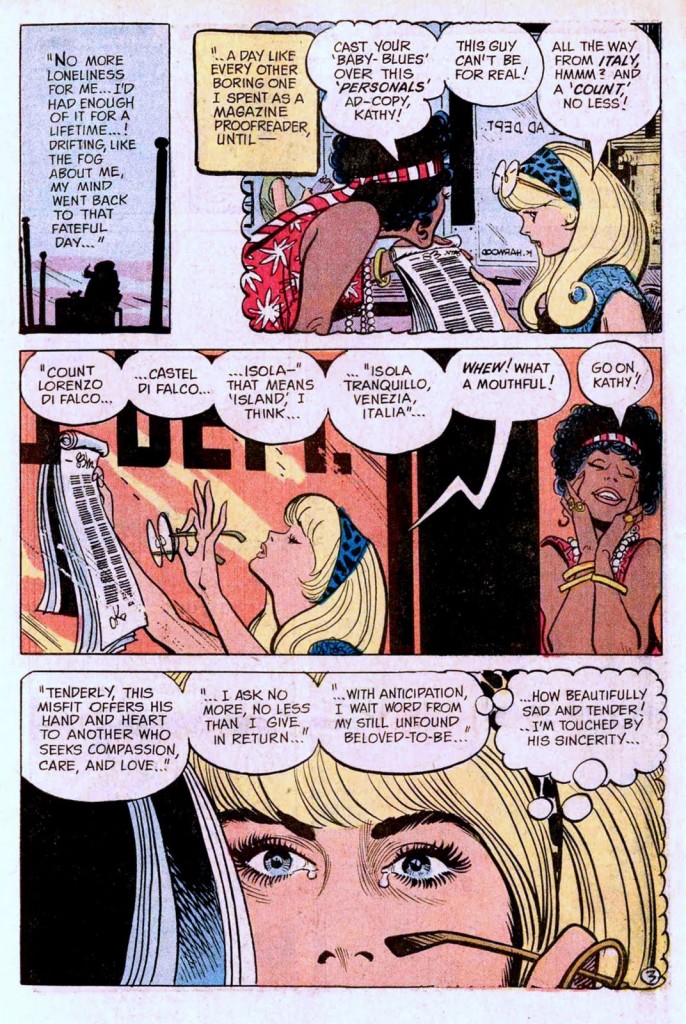
click for full size:

by cartoonmonkey- go here for more and gooder

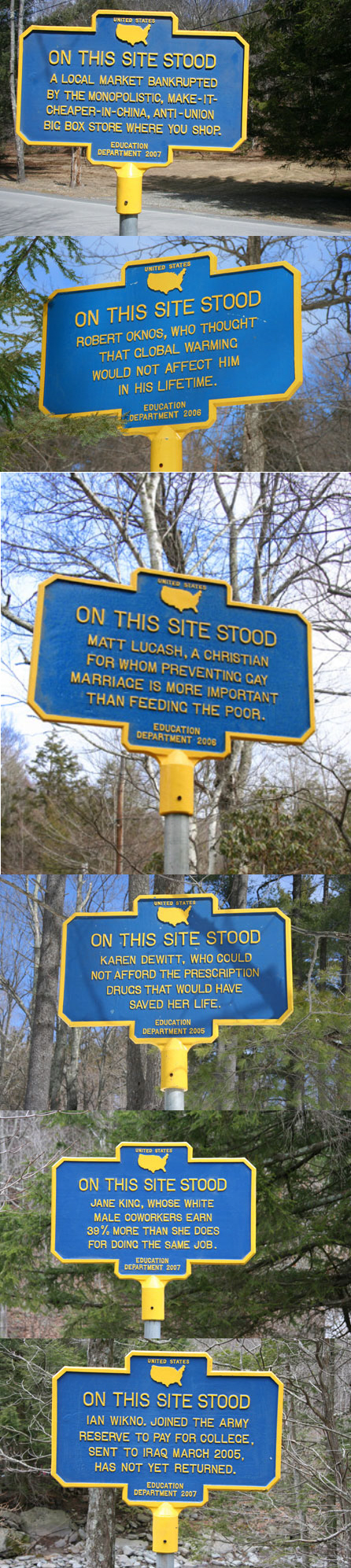
Below: public art by Norm Magnussen- The I-75 Project

About the project, Magnusson writes:
…unlike most artworks on social or political themes, these markers don’t merely speak to the small group of viewers that seek out such work in galleries and museums; instead, they gently insert themselves into the public realm.  ”Are they real?” is a question viewers frequently ask, meaning “are they state-sponsored?”  I love this confusion and hope to slip a message in while people are mulling it over.
These markers are just the kind of public art I really enjoy: gently assertive and non-confrontational, firmly thought-provoking and pretty to look at and just a little bit subversive.
Don Waisanen, in his article here, concludes:
That the project is as much about the use of wide-open public spaces as it is about the carefully crafted messages speaks volumes about how innovation may best work in our age. With so little room to communicate messages of social conscience in our message-dense environment, these signs are apt demonstrations of how to pick and choose a context for sociological critique.

below- poet Diane Wakoski-

“I have had to learn to live with my face”

Bye bye for now, stay happy (unless that’s not on your list today).

Leave a comment

Filed under animated gif, animation, cats, mp3, pictures, poetry

Ache Song

Oh where is the one I seek?

the night is lonely and

when the daylight comes

I am still yearning

my journey not done

I ask for your patience

I have run

out of time

there will be no debate

and I will

not arrive

so I cannot be late

Everything

I have learned

in this world

has been wrong

When this breath

blows away

there will be no one

here singing

this song

I have been smoke

I have been rain

I am a thread

that waits to be pulled

I have no words

that are true

no name that is mine

along with all things

under the sky

joined be the stars

moved by the wind

a ripple

on the ocean of time

heartbroken

I will wait

this vast pain

of separation

unbearable

I will bear it

this ache

is all I have

to offer you

Leave a comment

Filed under personal story, poetry, Spirituality

cream of lunapalooza soup

Audiopalooza:

poetry/ e. e. cummings/ from librivox.org

wheres_madge_then_cummings_cz_64kb

this_is_the_garden_cummings_cz_64kb

Cummings younger-

sky_was_cummings_cz_64kb

it_may_not_always_cummings_cz_64kb

i_have_found_cummings_cz_64kb

Cummings older-

all_in_green_cummings_cz_64kb

o_sweet_spontaneous_cummings_cz_64kb

sounds/ miscellaneous/ ringtones?

25cents ansMilitary ansRoy Apollo11Final2 baboons babyCry hard

accesscode yourdiscovery worry Womansneezing Traffic toolong

ansIcanthear better BeverlyHillbillies cancel carhorntwice

children_laugh cows error feelit FLY Gilligans info knocking

stars silly Revenge on Telemarketers beer removeMe MeowMix

puzzlin People talking officeParty NasaSaturn myCatIsUpset

moment morehuman Homer Simpson Whispering Im_a_good_girl

Psychosis NOS/ not otherwise specified/ {parental warning:

LISTENING TO SOME OF THESE MAY MAKE YOU STERILE}

Cookie Monster – ‘C’ is for Cookie (Larry Levan Disco Remix)

[acoustic] George Harrison – Art of Dying

[1928] Blind Willie McTell – Statesboro Blues

Firesign Theater-Pass the Indian, Please

1934_US_Fascist_Coup_BBC4_Radio

Bob Newhart – Driving Instructor

Donovan – Codiene (Demo)

dj format – 3 feet deep

ISMAMATHEPRESIDENT

Mickey Mouse – Happy Mouse

Monkees_-_Circle_Sky

Mountain Goats – Dilaudid (demo from vinyl)

Penn Jillette – The Monkey and the Dwarf – April 12, 2006

People Are Strange (The Chipmunks)

ralph wiggum – viking

Puff the Magic Dragon – Peter Paul and mary

Saddam Hussein – I Can Change

Sesame Street – Martians yipyip

strongbad on npr

the_nooooos_of_Star_Wars

the raunchy young lepers – they ripped up my mind

Tthat’s All Folks

No it’s not/ we’re just getting started

Goopypalooza!

(go to Goopymart.com)

(go to Goopy’s photostream on Flikr)

Anipalooza:

repost:

Lunapalooza NOS (not otherwise specified):

TheSlickers-JohnnyTooBad

Being Kind to All- Nawang Khechog

072401 LMB – Kyabje Lama Zopa Rinpoche – Diamond Cutter Sutra pt1

072401 LMB – Kyabje Lama Zopa Rinpoche – Diamond Cutter Sutra pt2

072401 LMB – Kyabje Lama Zopa Rinpoche – Diamond Cutter Sutra pt3


Leave a comment

Filed under animated gif, animation, Free Music, mp3, Music, pictures, poetry, silly, sound bite

Note that last week’s show…

is posted on the MLBM tab above. It was a good show with lots of discussion between our two main callers; stimulating.

Roxie and I are talking about setting up an internet radio site that would include both talk and original music. Talk, mostly probably on mental health (or it’s absence- ah, makes the heart grow fonder, eh?). Music by me, Rox,, others who care to join in. Will keep y’all postered.

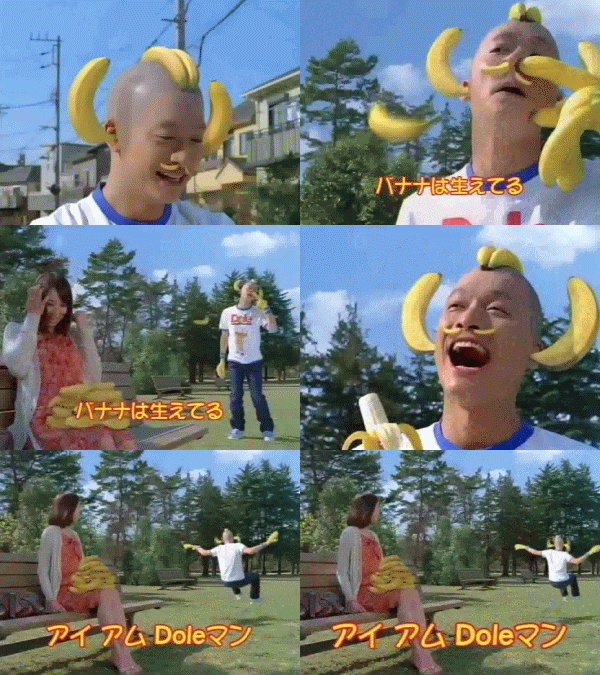
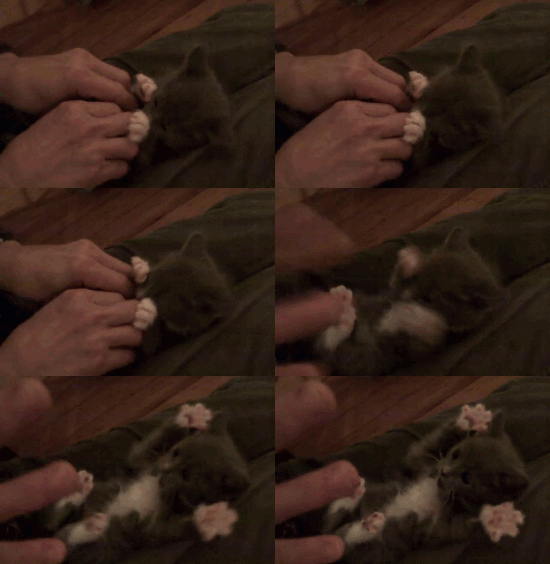
Alrighty then. Here’s a picture or few:

and some audio:

The Youngbloods – Get Together; The Essential Youngbloods – 16 – Beautiful

A Century of Recorded Poetry, Vol 1, 01, Walt Whitman – America

[Tom Lehrer] 03 A Christmas Carol

owlpussycat_lear_sjs_64kb

Leave a comment

Filed under animated gif, comedy relief, kittens, mp3, Music, pictures, silly, sound bite

Sunday Brunch

Appetizer

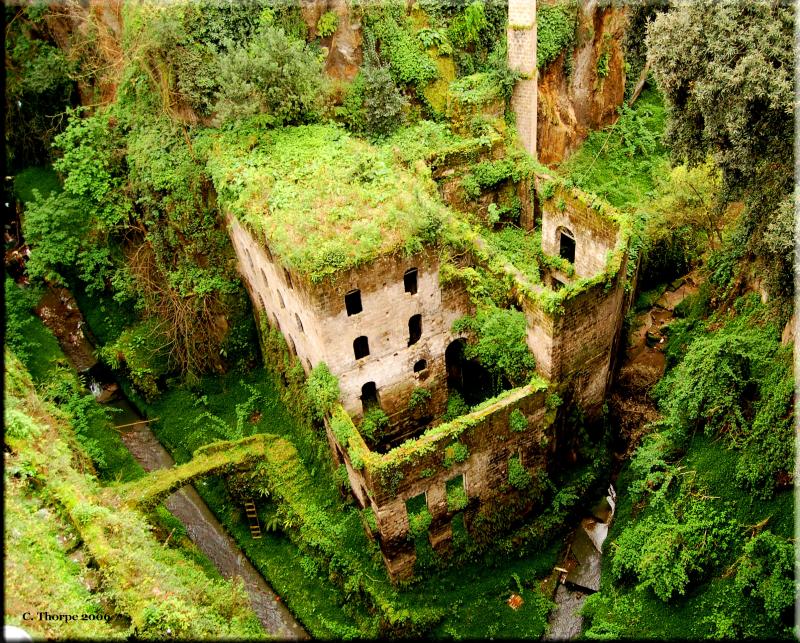
SorrentoRuins

layers

Playing with Hugh

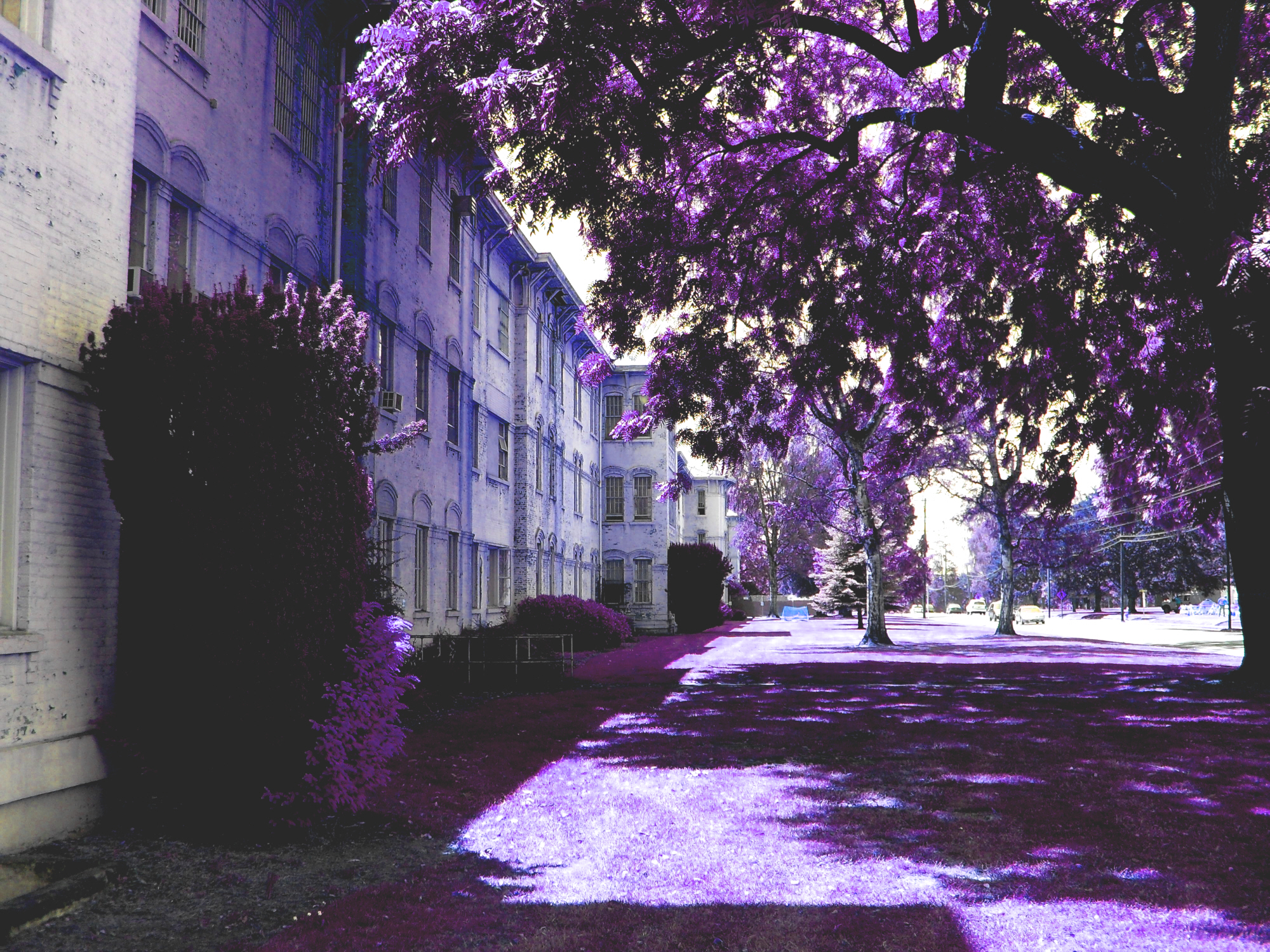
Or, rather, hue (and contrast, and saturation etc.). All these taken in the past week or two. Click for real size, which is big, btw.

I call this one “very close to fall”.

near_fall

Oregon Rainforest- Silver Creek trail

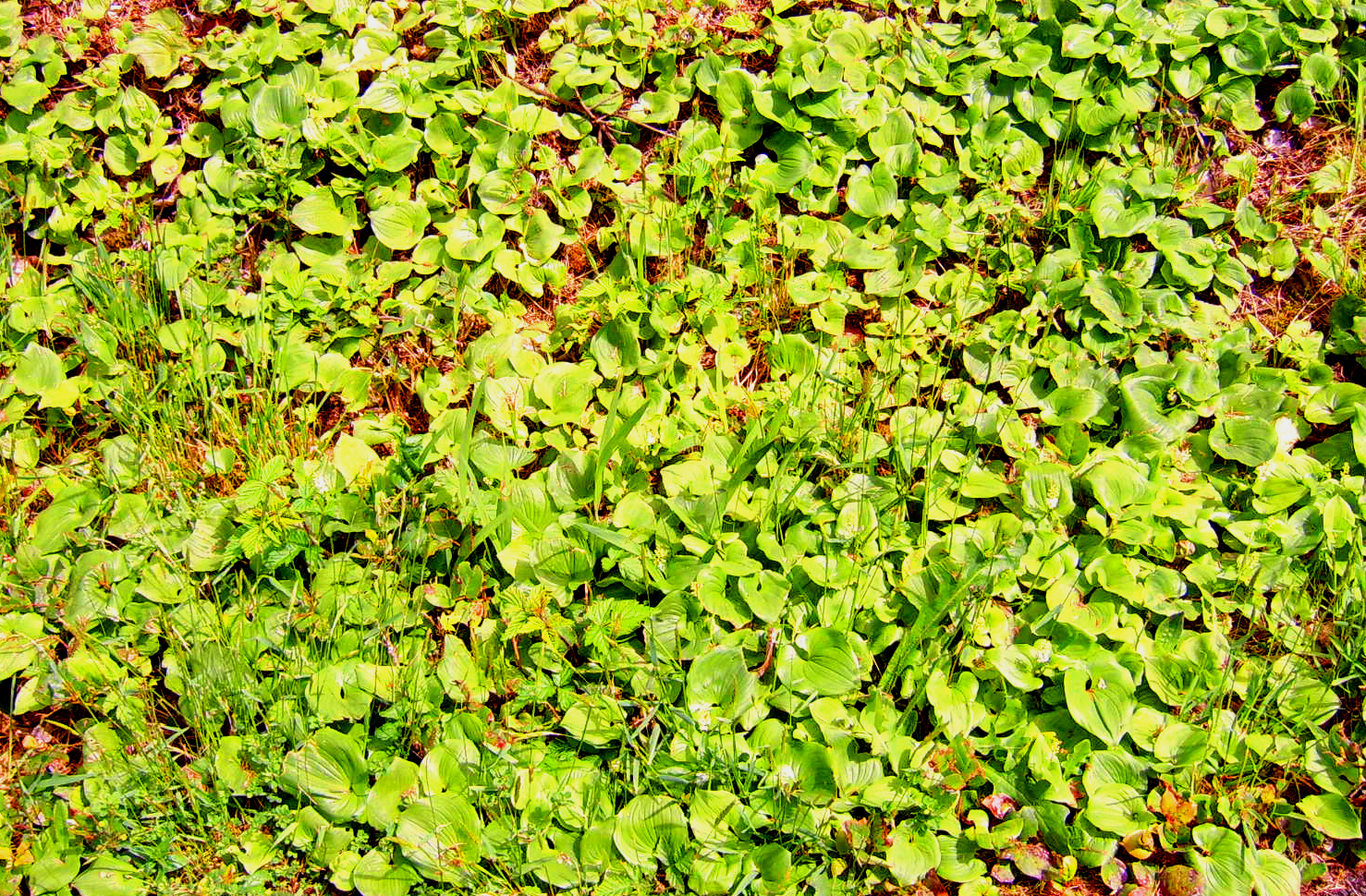
Ground Foliage
Ground Foliage
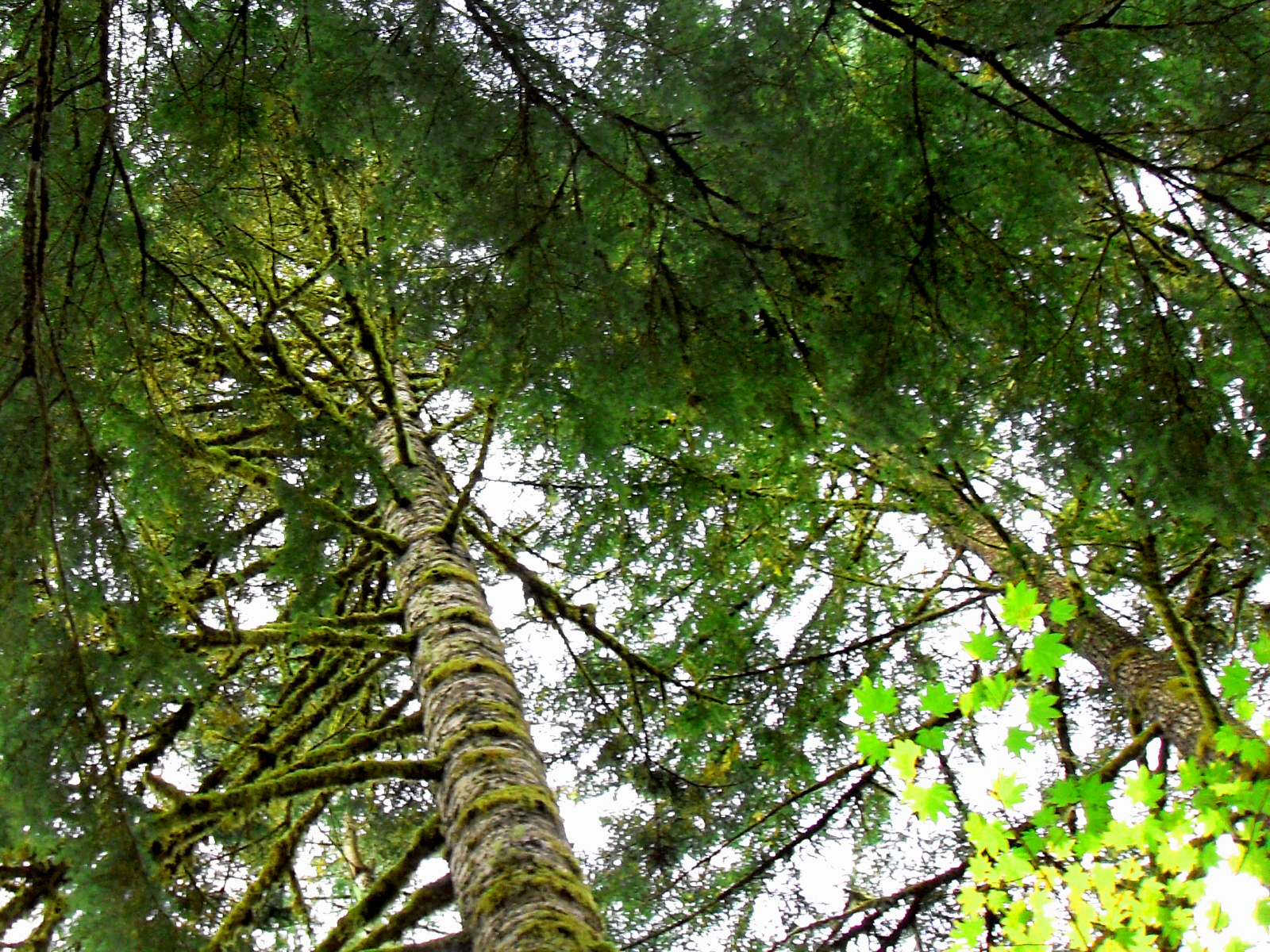
Looking Up

Looking Up

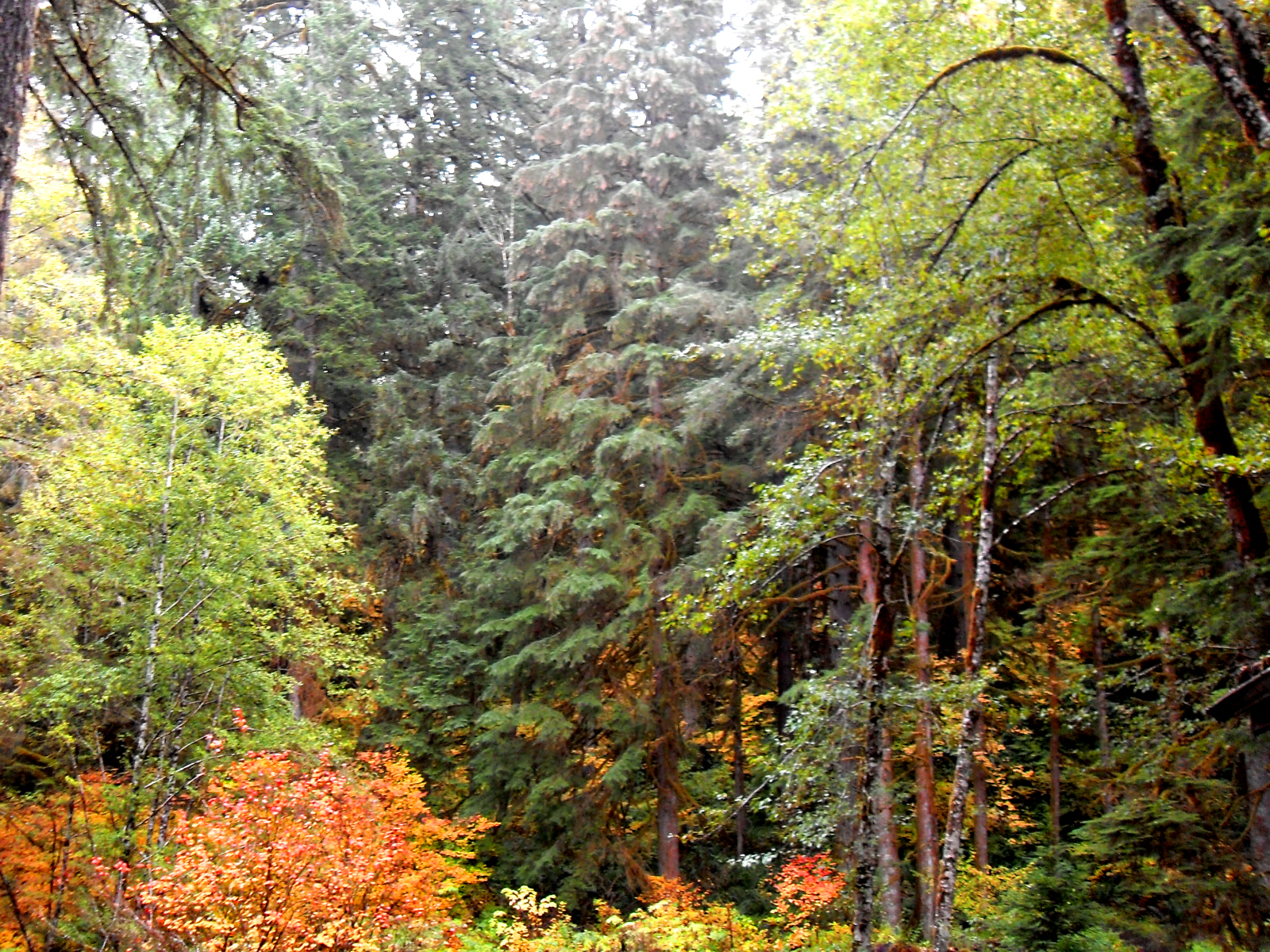
More woods in rain

More woods in rain

Bird, tower, moon- composit of several pictures

Bird, tower, moon- composit of several pictures

The J Complex (what's left of it) as envisioned by Prince

The J Complex (what's left of it) as envisioned by Prince

“General Pictures, Sir!”

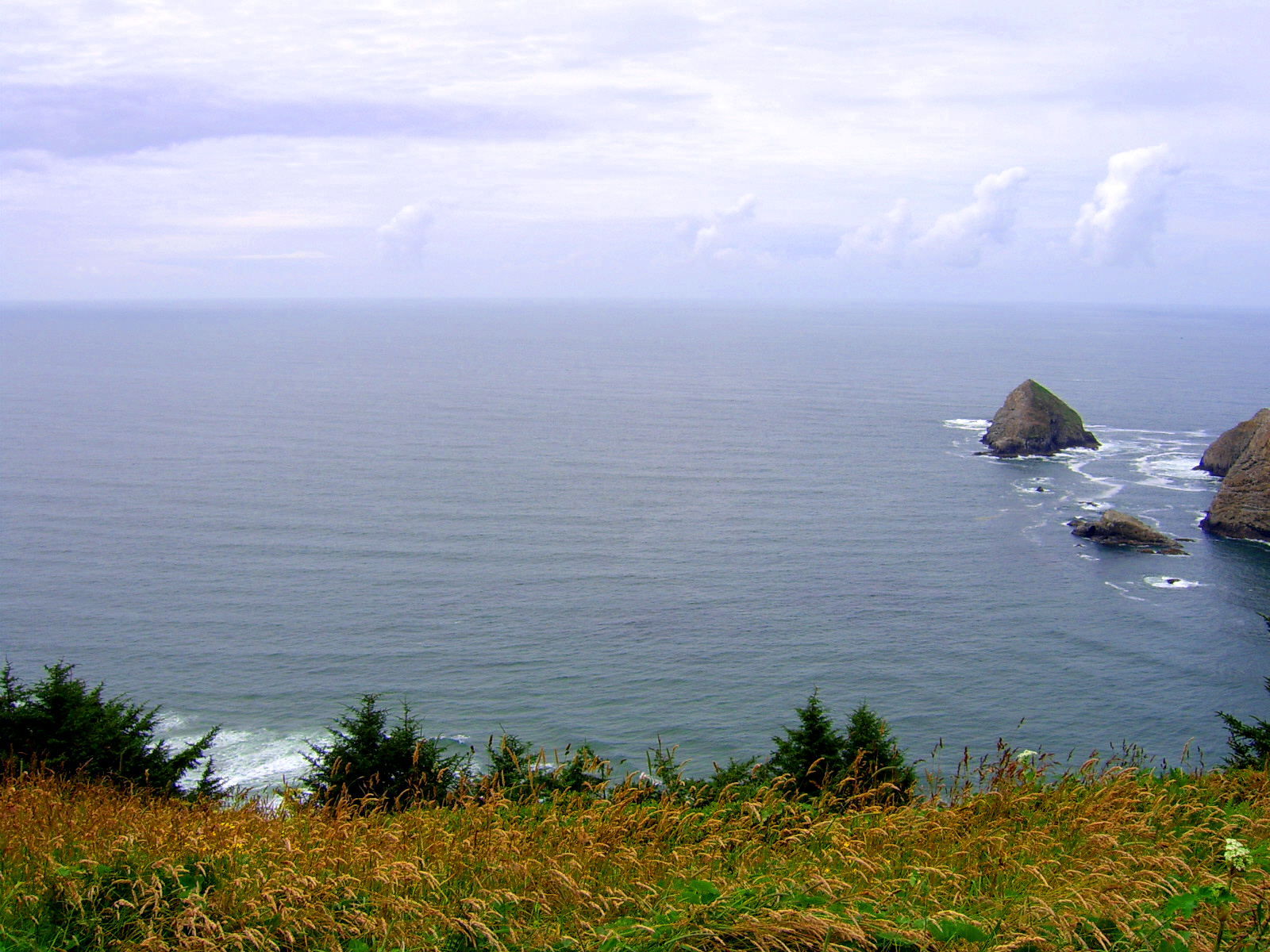
above Oceanside near Tillamook

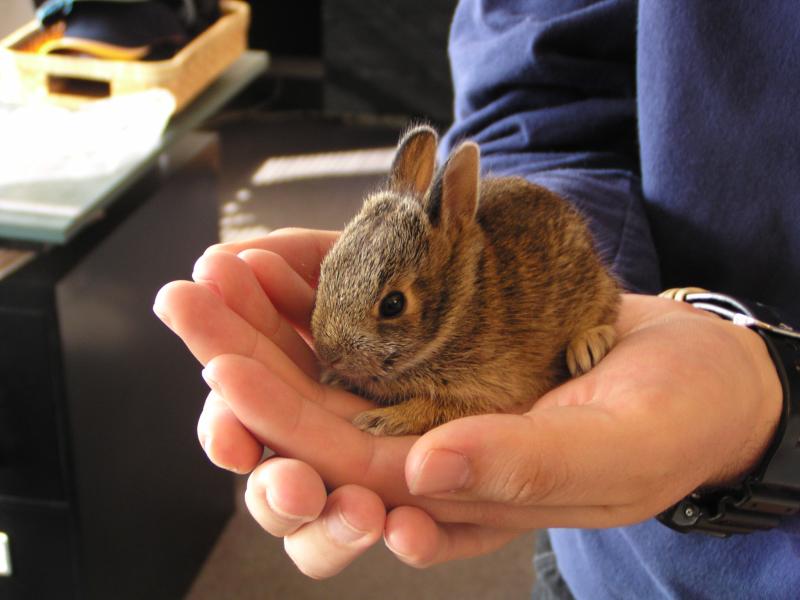
Palm.Bunny

pirate_storm-drain

baby

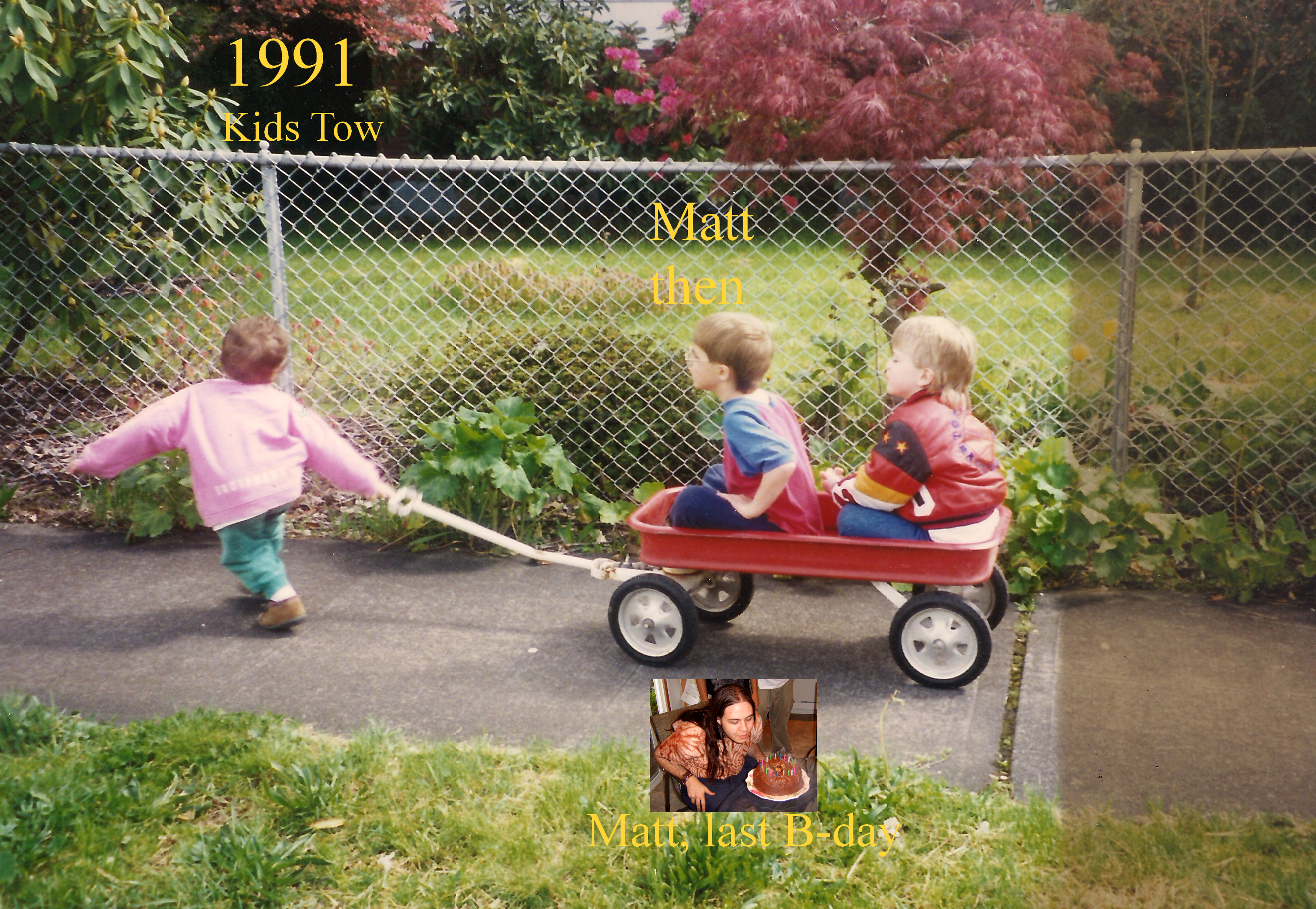
1991-kids_tow

kids_row

35 year old picture of me

35 year old picture of me

earth-sea-sky

sexyflower

I_am_Legion

From:

MindFreedom Oregon News Alert – Please Forward
http://www.mindfreedom.org/oregon

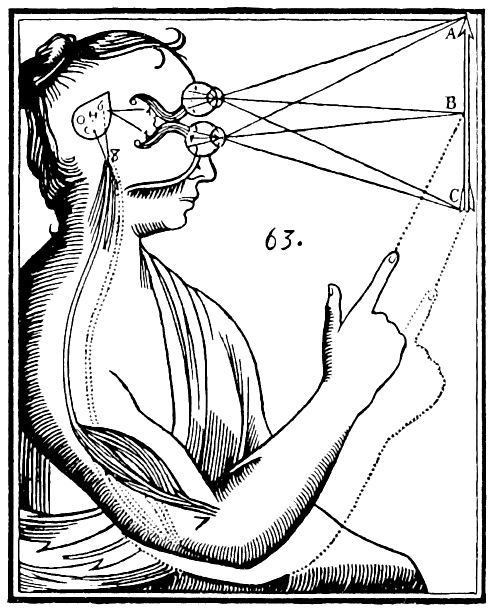
Descartes_mind_and_body

MindFreedom International News – 22 October 2009
Ray Alert #22 – Unite for Real
Mental Health Advocacy
http://www.mindfreedom.org/ray – please forward

Today is Victory Day for Ray Sandford!

No More Forced Electroshock for Ray, Ever!

Today, Ray Sandford of Minnesota phoned the MindFreedom office with
some very good news:

It is official.

After more than 40 involuntary, outpatient electroshocks (also known
as electroconvulsive therapy or ECT), Ray has won.

The court agreed to his change of guardianship. Ray’s new guardians
support his right to say “no” to intrusive procedures such as
electroshock.

Ray made this comment for MindFreedom International members and
supporters, who have backed his campaign for almost exactly one year.

“I’m a bit overwhelmed. This is wonderful! I’m very thankful. Without
your help I probably would still be sitting somewhere getting more
forced electroshock. So thanks a lot to and your group. Praise and
thank the Lord, amen!”

Said David Oaks, Director of MindFreedom International, “Ray’s courage
and laser focus led to a campaign that proves the ‘mad movement’ is
alive and well. The sheer level of people power had to break through.
I know some feel discouraged by the immense oppression of sanism.
Think of Ray. There is an ancient Persian saying: ‘No one is tired on
victory day!'”

THE SHORT STORY OF RAY’S VICTORY DAY

MindFreedom is encouraging all of Ray’s supporters to celebrate this
week, especially this Tuesday, 27 October 2009.

One year ago this week, on 27 October 2008, Ray Sandford first phoned
up the MindFreedom office. He had asked his local library about
organizations that support human rights in mental health. The
reference librarian gave him MindFreedom’s phone number.

Ray phoned up the MindFreedom office. He said that every Wednesday
morning
he was escorted from his group home to a hospital for another
involuntary forced electroshock, under court order.

MindFreedom International investigated and kicked off a public
campaign
that became global. Issuing 21 alerts, MindFreedom’s campaign
activated thousands of people who peacefully but passionately
contacted elected officials, held protests, mailed Ray stationery
supplies, won extensive media coverage, visited him, and much, much
more. At least one elected official said they felt ‘inundated.’

But MindFreedom also found that Ray’s oppression was systemic and deep.

MindFreedom volunteers identified and listed on the MFI web site more
than 30 agencies and individuals receiving taxpayer money to
supposedly help Ray. Only a few agencies helped Ray, and most actually
opposed his rights. Because MFI’s web site is so popular, many of
those who oppressed Ray can “Google themselves” and discover their MFI
listing near the top.

Ray’s last forced electroshock was on USA tax day, 15 April 2009.

By coincidence the 15th of April was also the date of the very first
forced electroshock, back in 1938 in Italy, when the subject cried out:

“Non una seconda! Mortifierel” which means in Italian, “Not another!
It’s deadly!”

On 13 May 2009, Ray was escorted all the way to a hospital bed. He was
prepped for another forced electroshock. Because of outrage, hospital
authorities
cancelled Ray’s shock at the last second, and he was sent
home.

More victories quickly followed.

Ray’s psychiatrist quit because he said his insurance company was
concerned about all the public attention. MindFreedom helped Ray find
a new psychiatrist supportive of Ray’s human rights.

Ray’s family joined in the campaign. MindFreedom organized a YouTube
video
with Ray and his Mom, begging for the shock to end. Ray’s
guardians, an agency under the Evangelical Lutheran Church in America
(
ELCA), tried to stop the video from going public, but it got ought.

Ray’s family found a better attorney. Ray found great pleasure in
firing his ineffective court-appointed attorney.

Several concerned Minnesota agencies formed an “ECT Work Group” to
change the law in Minnesota. Two MindFreedom representatives serve on
the committee, but are asking for more than just minor reform.

“SINGLE, SMALL VOICE IN THE FACE OF A MEDICAL GIANT.”

And today, Ray’s final victory is in place: Ray successfully replaced
his general guardians who had supported his forced electroshock.

One of Ray’s new guardians, Daryl Trones, announced:

“MindFreedom has just won a substantial victory! Today I received an
‘Acceptance of Appointment” from Ramsey County District Court
regarding the changing of guardianship for Ray Sandford. Ray no longer
will be subject to ECT treatments. The powers of Successor
Guardianship include the power to ‘withhold consent for treatment of
service, including  neuroleptic / psychotropic medications,’ under
Minnesota Statute 524.5-314.”

Daryl, Ray and his family want to thank all of Ray’s many supporters.

Said Daryl, “My appreciation to all the MindFreedom members and
volunteers and especially to David Oaks who orchestrated requisite
forces and passions to pull Ray Sandford from harm’s way. MindFreedom
now bas a successful case study outlining the necessary steps to
extricate persons subject to forced electroconvulsive therapy (ECT).
Congratulation to MindFreedom Staff and Members and most of all to Ray
Sandford who one year ago was just a single, small voice in the face
of a medical giant.”

Supporters should finally be able to postal mail to Ray Sandford
directly without delay.

You may postal mail your congratulations to Ray here:

Ray Sandford
Victory House
4427 Monroe St.
Columbia Heights, MN 55421-2880 USA

You can read the history of Ray’s successful campaign at:
http://www.mindfreedom.org/ray

free_your_mind_02_big

Utne Reader magazine periodically names “50 Visionaries Who Are
Changing Your World.”

A psychiatric survivor activist is named as one of these visionaries
in Utne’s November/December 2009 issue, which hits the stands now:

David W. Oaks, Director of MindFreedom International, an independent
nonprofit for human rights and alternatives in mental health.

Utne’s listing of David Oaks also zings ABC-TV’s recent national news
coverage of the “mad pride movement,” which has been widely criticized
by activists.

~~~~~~~~~~~

For Utne’s listing of David Oaks, and to make a public comment, go here:

http://www.utne.com/Science-Technology/David-Oaks-Director-MindFreedom-International.aspx

or use this link:

http://bit.ly/utne-oaks

~~~~~~~~~~~

For Utne’s entire list of 2009 visionaries, starting with the Dalai
Lama
who is on the cover, go here:

http://www.utne.com/Politics/50-Visionaries-Changing-Your-World-Hope-2009.aspx

or use this link:

http://bit.ly/utne-vision

~~~~~~~~~~~

Said David Oaks, “Utne is one of the few media leaders to acknowledge
the ‘mad movement’ to deeply change the mental health system. Utne’s
recognition is really of our whole movement’s vision. This shows we
are still connected to all the other movements for social and
environmental justice, just as when our movement first started. Can we
have a
nonviolent revolution now?”

eclipse_corona

Another Suspicious Death Inside Oregon State Hospital

According to the below MindFreedom Oregon Exclusive Report, another
psychiatric patient died inside Oregon State Hospital in
Salem, Oregon
under suspicious circumstances on Saturday, 17 October 2009.

The man — known here as “Patient M” — had apparently been
complaining repeatedly for a month about chest pain, which staff had
allegedly dismissed because of his psychiatric diagnosis. Instead of
medical care, staff reportedly just gave him more
psychiatric drugs.

After the patient died, the report says he was left undiscovered all
day by staff who were supposed to be checking on him regularly.

The below is based on several anonymous reports from patients on ward
50F with access to telephones, who took great risk to speak out.
Because of a long pattern of abuse and neglect in Oregon State
Hospital
(OSH), this information is offered immediately in the public
interest, but has not yet been investigated by authorities. Each
allegation needs to be investigated before confirmation.

At the bottom are ways you can speak out to demand an investigation,
and also demand support for a state-wide voice for Oregon’s mental
health consumers
and psychiatric survivors.

Patients supplying this news did not ask to be anonymous but patients
at OSH have reported retaliation for getting information out in
public. For example, this past week a minimum security patient was
allegedly moved, in shackles, to a more restricted area after he spoke
with Salem reporters about his lawsuit against Oregon State Hospital.

MindFreedom calls on the Governor, the US Dept. of Justice and the
media to immediately investigate the below allegations, especially the
RED FLAGS marked in this report.

~~~~~~~~~~~~

EXCLUSIVE REPORT to MindFreedom Oregon

“The medicine is not working.”

The Passing of “Patient M” on Ward 50F in Oregon State Hospital
(OSH)

Over one month ago, “Patient M” had a fellow patient — “R” — help
him write a special letter to the ward medical officer.

In the letter Patient M complained of his chest pain, stomach pain and
trouble breathing.

Instead of medical treatment for the chest pain, because of his
psychiatric diagnosis Patient M was given more psychiatric drugs as
staff felt he needed them, known in medicine as “PRN.” These
psychiatric drugs were often minor tranquilizers, usually Ativan
(lorazepam) or Klonopin (clonazepam). The psychiatric drugs were
administered whenever he complained of pain.

Two weeks ago, Patient M spoke directly to the Ward Medical Officer
and said that, “The medicine is not working.” He continued to complain
of chest and stomach pain with difficulty breathing. [RED FLAG] He
continued to be given “PRNs.” He was not given a pain reliever, heart
medication or any cardiac testing.

This past week, Patient M has told everyone on the ward who would
listen that he was in serious pain. Other patients were already very
worried about his health. He continued to receive tranquilizers when
he complained.

Last Thursday and Friday — 15th and 16th of October — were
particularly bad. [RED FLAG]

Patients say it’s important to know that it is policy that all
patients be checked for “location and condition every hour.” For
example, in a widely-publicized escape a month ago, staff had not been
checking on the patient.

Saturday morning, 17 October 2009, Patient M got up for breakfast, and
he was known as a man who never misses a meal. Some said eating seemed
to be his greatest enjoyment, and he was always the first person to
get his food. Because he is sloppy, he got his food delivered to him
outside the kitchen.

At 8:30 am he was given his morning meds. He told the nurse that his
chest hurt “really bad” and he had trouble breathing. He was given his
usual psychiatric drug PRN.

Patient M went to lay down.

A nurse checked at 9:30 am and saw he was lying down. He seemed okay.

Patient M resided in a very over-crowded room typical of the “50
building” at OSH. A short time later one of his roommates said his
eyes were rolled back. “But sometimes he sleeps like that” because of
the PRNs, said one roommate.

No staff checked his condition for the rest of the morning. [RED FLAG]

Lunch on 50F is served between 11 am and 11:30 am. Staff brought his
tray down to his room. They called his name and there was no response,
even though it is well known that he always eats. [RED FLAG] Staff
left, and took his lunch back to the kitchen.

Mid-afternoon a roommate shook his foot to see if he’d wake up. There
was no response. No staff looked in on him to check his condition all
afternoon. [RED FLAG]

Dinner time, 4:30 pm, staff called into his room to announce the meal.
No response. Patient M did not get up for food. Staff did not bother
to bring a tray down for him. No staff checked him.

His roommates complained of the stench of “shit” in the room. This
odor was probably from the natural course of a person who is lying
dead for hours as their bowels evacuate. Staff still stayed out. [RED
FLAG]

Finally, at 7:45 pm OSH medication staff went to his room to give him
his evening pills. This time he was checked. He was so dead cold, no
attempt was made at resuscitation. Some patients believe he was in or
past rigor mortis at this point.

Between 7:45 and 8 pm, patient eye-witnesses allege several things
happened. The room was sealed. Staff were called into what one person
called a “bubble” to speak privately.

Based on patient reports: “It was quiet for a few minutes. Then the
staff became very active. We could see through the nurses’ station
windows that they were handling documents, making photocopies. We
heard one staff say, ‘We’ll need six more of those.’ Then we could see
staff shredding originals of documents they had just photocopied. By 8
pm things had returned to normal. The body was carried out later.”

Over the weekend Patient M’s soiled bed and personal area were left as
is in the crowded room. “The smell was unbelievable,” said one witness.

On Monday morning, 19 October 2009, two days after the death, at the
ward meeting, patients complained about the unsanitary conditions in
this room. Staff took out the bed, bedding and sanitized the area. As
of that evening there was no counseling about the death, and no extra
help provided to other patients on that ward.

No memorial was suggested until patients brought it up at the ward
meeting.

Patients were questioned at the meeting about “What do you know?” and
“What will you report?” One patient referred to the meeting as an
“inquisition.”

Patients around the hospital heard about the death only by word of
mouth.

Many are reportedly saddened.

Because of the request by patients, a memorial is planned.

– end –

~~~~~~~~~~

ACTIONS * ACTIONS * ACTIONS

Please forward this alert to others who support human rights in mental
health.

The Governor has not responded to e-mails. Please telephone.

PHONE GOVERNOR TED KULONGOSKI AT (503) 378-3111

In a civil but strong way, in your own words:

1) Ask the Governor to personally investigate suspicious deaths at
Oregon State Hospital.

2) Ask the Governor to support the state-wide voice of mental health
consumers
and psychiatric survivors.

~~~~~~~~~~

BACKGROUND on OSH & MORTALITY:

Oregon State Hospital has a long history of suspicious deaths.

OSH is nationally famous when its secret discolored copper canisters
were revealed that contain the ashes of some 5,121 patients who died
between 1913 and 1971. The identification of many of the patients is
lost.

See the Time Magazine article on Jan. 2009 about OSH ash cans here:

http://www.time.com/time/arts/article/0,8599,1869177,00.html

For more photos of the canisters go to this web site from July 2009:

http://thephotobook.wordpress.com/2009/07/06/david-maisel-library-of-dust/

or use this link:

http://bit.ly/osh-ashes

Mortality and people in the mental health system continues to be a
national controversy today in the USA.

A major study by the National Association of State Mental Health
Program Directors showed that people who use the US
public mental
health system
die about 25 years earlier than the general public:

http://www.mindfreedom.org/kb/psychiatric-drugs/death

One possible reason provided in the study is the over-use of
psychiatric drugs, including multiple prescriptions, but this factor
is often omitted or downplayed by those in the mental health system
discussing these deaths.

Instead, the mental health system today is promoting “integration” of
physical and mental health as the answer to this mortality rate.
“Integration” is now a major buzz word in mental health.

Sound good?

Unfortunately, there’s no definition of this “integration.” Is this
the “integration” of psychiatric institutions into the community, as
mandated by the Olmstead Supreme Court decision? A draft of Oregon’s
plan to implement Olmstead does not emphasize the importance of
supporting the voice of
mental health consumers and psychiatric
survivors.

In some places this “integration” buzz word has simply meant increased
prescription rates of psychiatric drugs in clinics that had previously
focused on physical health. Sad about your heart condition? There may
be a
psychiatric drug prescription waiting for you, too.

People with psychiatric labels continue to be among the most
disempowered Oregonians.

How can this “power imbalance” change without a voice?

Since the exact month Governor Ted Kulongoski took office, Oregon
became one of the few USA states to provide zero — 0 — funding for
the state-wide voice of mental health consumers and psychiatric
survivors.  For more than seven years, there has been zero state
funding for any of those activities — a newsletter, conference,
office of mental health consumer affairs.

Nothing.

During tough times, people with psychiatric labels are supposedly hit
hardest. That’s when we should be supporting the voice of mental
health consumers
and psychiatric survivors the most.

However, apparently based on advice from his closest staff, Governor
Kulongoski continues to recommend zero for this state-wide voice each
budget.

You can read about the Governor’s legacy of “zero” for mental health
consumers and psychiatric survivors here:

http://www.mindfreedom.org/zero

~~~~~~~~~~

TWO ACTIONS:

1) PLEASE forward this covered-up news to all interested people.

2) PHONE GOVERNOR TED KULONGOSKI AT (503) 378-3111

Be civil and strong, ask for investigation of deaths at OSH, and for
his support of a state-wide voice for mental health consumers and
psychiatric survivors.

~~~~~~~~~~

ADDITIONAL ACTIONS:

US Department of Justice (DOJ) is supposed to be investigating Oregon
State Hospital
.

In your own words, ask that all appropriate results of investigations
by DOJ of OSH be made public, and also be provided to you.

You can e-mail DOJ here:

AskDOJ@usdoj.gov

Or for more DOJ contact info, go here:

http://www.usdoj.gov/contact-us.html

You can also e-mail or postal mail Governor Kulongoski, contact info
is here:

http://governor.oregon.gov/Gov/contact_us.shtml

Please also bring this to the attention of any interested media.

If you did not receive this alert directly from mindfreedom-oregon
news service, you can get on this free, public alert system here:

http://www.intenex.net/lists/listinfo/mindfreedom-oregon-news

For more info about MindFreedom Oregon go here:

http://www.mindfreedom.org/oregon

Update:

Autopsy was supposed to be done Friday- I have heard nothing. Key information would be stomach contents, since the hospital claimed he had all his meals that day (whereas eyewitnesses say he was left dead in his room all day).

Titan atmosphere

From Librivox- free audio books

(click to play)

A Century of Recorded Poetry, Vol 1, 01, Walt Whitman – America

A Century of Recorded Poetry, Vol 1, 02, William Butler Yeats – The Lake Isle Of Innisfree

A Century of Recorded Poetry, Vol 1, 03, William Butler Yeats – The Song Of The Old Mother

A Century of Recorded Poetry, Vol 1, 04, Robert Frost – The Road Not Taken

A Century of Recorded Poetry, Vol 1, 05, Robert Frost – Birches

A Century of Recorded Poetry, Vol 1, 06, Robert Frost – The Gift Outright

A Century of Recorded Poetry, Vol 1, 07, Gertrude Stein – If I Had Told Him A Completed Portrait of Picasso

A Century of Recorded Poetry, Vol 1, 09, William Carlos Williams – The Red Wheelbarrow

A Century of Recorded Poetry, Vol 1, 19, Langston Hughes – The Negro Speaks Of Rivers

communist_party

Have fun, be safe, eat as much candy as you want.

Leave a comment

Filed under CS/X movement, mindfreedom news, mp3, pictures, poetry

Announcement First, Then Truth

Announcement: The Mad Liberation by Moonlight radio program for this month is cancelled- pre-empted actually. Our radio station, KBOO (90.7 FM in Portland, OR, or at kboo.fm on your internet dial). The annual John Lennon Birthday Marathon is happening on Friday, 10/9/09; coinciding with John’s birthday. KBOO will be playing (and streaming) Lennon music from 9 pm Friday evening to 8 am Saturday morning, thereby taking our slot for October.

Sadly, this is the Harvest Moon, here in the US and it’s a doozy. Ah, but I don’t care. John L. deserves our respect if for no other reason than John Lennon – Working Class Hero. Or even this: John Lennon – Beatles Breakup Interview 1970.

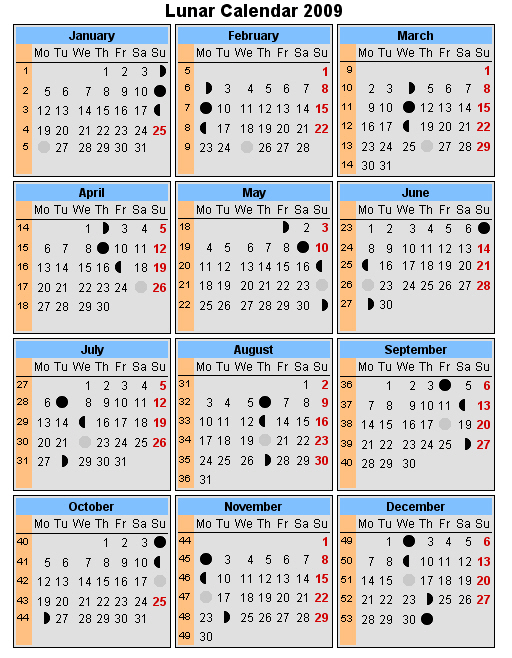
We will be back on the air next month on the Friday night following the full-moon. Consult your looner calendar for showtimes (looks sorta like the dark night of November 6th at 1 am, or really the morning of 11/7 if you want to be picky; you don’t want to be picky do you??)

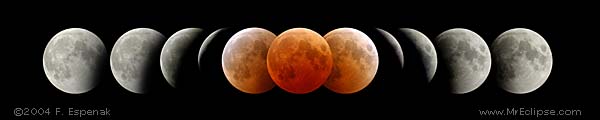
lunareclipsesequence

Truth

Lots of things are true. Maybe everything, depending on perspective. These are some sources of perspective I would like to share.

truuthy

First from my own personal spiritual tradition- the Society of Friends. Following are excerpts from a pamphlet by Thomas S. Brown, what we would call a “weighty Friend”. After the short excerpt is a complete download of the publication, free to share. I had to convert from PDF because, well, WordPress doesn’t seem to like PDF and the formatting becomes a bit jerky. Thomas Brown:

To know the Truth is not to accept it by an act of the

intellect, as a man may know the Greek alphabet, or as a

man may know his neighbor across the street. To know

the Truth is, rather, like the way in which man and wife

know each other, a life of wholly shared commitment, of

utter trust, of freedom from fear. Indeed, there is no

knowledge of the Truth where there is no commitment

which results in significant action, for the living root

produces living fruit after its own kind. We know the

presence of love, not by sighs and simpers, nor even by

desire, but by its power to lift men and women outside

themselves and to live beyond themselves. Honor is known

by honorable actions. Beauty is known by its creation among

us. Truth is not a group of intellectual concepts to be

manipulated at will like the symbols in mathematics or

the notes in music: Truth is living and life-giving, and those

who have welcomed the Truth have life.

This is crucial: it is not that we discover the Truth

and make it our own for our own purposes as men might

harness a mountain stream to light their houses or run

their machines. We are, rather, discovered by the Truth,

and are given power by the Truth to light our souls. We are

besieged by the Truth, who stands knocking at the door,

the Hound of Heaven, our Imperious Lover and Tyrannical

Servant, who would give us our hearts’ desire if we would

only throw our selfish desires away, and who longs to release

us from the folly of the “freedom of choice” we seem to think

so important even on matters of life and death.

Download: ThePersonalRelevanceOfTruth

Dalai_Lama_pointing (1)

Not exactly on the same page but an interesting find: Words of Truth by HH Dalai Lama. This is more of a prayer for Tibet and all others who suffer.  Excerpt follows:

               O Buddhas, Bodhisattvas, and disciples
                  of the past, present, and future:
                     Having remarkable qualities
                   immeasurably vast as the ocean,
               Who regard all helpless sentient beings
                         as your only child;
          Please consider the truth of my anguished pleas.
                                        
                                        
         Buddha's full teachings dispel the pain of worldly
                 existence and self-oriented peace;
   May they flourish, spreading prosperity and happiness through-
                      out this spacious world.
                  O holders of the Dharma: scholars
                     and realized practitioners;
            May your ten fold virtuous practice prevail.
                                        
                                        
                  Humble sentient beings, tormented
                    by sufferings without cease,
             Completely suppressed by seemingly endless
                and terribly intense, negative deeds,
          May all their fears from unbearable war, famine,
                      and disease be pacified,
       To freely breathe an ocean of happiness and well-being.
                  And particularly the pious people
          of the Land of Snows who, through various means,
            Are mercilessly destroyed by barbaric hordes
                      on the side of darkness,
           Kindly let the power of your compassion arise,
            To quickly stem the flow of blood and tears.
Download (with legal rights to share included): WORDS OF TRUTH
I apologize for the tiny font. Dagnabbit! 
I can't get the post editor to make 'em bigger. Get out your spectacles.
Rumi chimes in here:
Christian, Jew, Muslim, shaman, Zoroastrian, stone, ground, mountain, river, each has a secret way of being with the mystery, unique and not to be judged.
Cross_and_Crescent_of_light Everyone is so afraid of death, but the real sufis just laugh: 
nothing tyrannizes their hearts. What strikes the oyster shell 
does not damage the pearl.

If in thirst you drink water from a cup, you see God in it. 
Those who are not in love with God will see only their own faces in it.

He is a letter to everyone. You open it. It says, 'Live!'

In truth everything and everyone
Is a shadow of the Beloved,
And our seeking is His seeking
And our words are His words...
We search for Him here and there,
while looking right at Him.
Sitting by His side, we ask:
'O Beloved, where is the Beloved?'

God turns you from one feeling to another and teaches you 
by means of opposites, so that you will have two wings to fly - not one.

Remember, the entrance door to the sanctuary is inside you.
For more Rumi, go here: http://www.scribd.com/doc/18791792/THE-MATHNAWI-Book-1-2-RUMI or look around my blog.
magnetic_field
Miscellaneous Truth:
Peace and Nonviolence 01
text of above: peace
God offers to every mind its choice between truth and repose.  Take which you please - you can never have both.  ~Ralph Waldo Emerson

Ye shall know the truth, and the truth shall make you mad.  ~Aldous Huxley

Truth, like milk, arrives in the dark
But even so, wise dogs don't bark.
Only mongrels make it hard
For the milkman to come up the yard.
~Christopher Morley, Dogs Don't Bark at the Milkman

It is error alone which needs the support of government.  Truth can stand by itself.  ~Thomas Jefferson, Notes on Virginia

I never dreamed of being Shakespeare or Goethe, and I never expected to hold the great mirror of truth up before the world; I dreamed only of being a little pocket mirror, the sort that a woman can carry in her purse; one that reflects small blemishes, and some great beauties, when held close enough to the heart.  ~Peter Altenberg

The greatest enemy of any one of our truths may be the rest of our truths.  ~William James

Men ardently pursue truth, assuming it will be angels' bread when found.  ~W. MacNeile Dixon

There is no god higher than truth.  ~Mahatma Gandhi
Just for the heck of it:
A Century of Recorded Poetry, Vol 4, 32, Li-Young Lee - My Father, in Heaven, Is Reading Out Loud

2 Comments

Filed under Free Audio Books, Mad Radio, mp3, Mystic Poetry, pictures, Spirituality

Mixed Buddhist Poetry

Mostly a collection of poems that I find to be inspirational. Let ‘er rip!

Hui Yung (332-414 )

71meterbudha-chinaTranslating Sutras

We go on unwinding the woof
from the web of their meaning :
words of the Sutras
day by day leap forth .
Head on we’ve
chased the miracle
of Dharma :
here are no mere scholars .
Moon Sitting
High mountain cascades froth .
This wild temple owns few lamps .
Sit facing the glitter
of the moon: out of season
heart of ice .

Wind and Waterblue-sun

a steady wind scours the autumn moon

from a stagnant pool, from the crystal spring

every place pure now . . . just as it is .

why, then, does karma yet coil and bind?

Hui K’o (4th-5th Century)
No me : Dharmas all empty

Death, Life, small
difference .
Heart of mystery’ s
transformation:
know, and see.
The Truth cries out
where the arrow strikes the target .

The Absolute

selfless dharmas are all empty
life and death about alike
the transformed heart knows it all at a glance
truth is in the middle of things .

518873437_f32b4e5d2c_o

Seng Ts’an (d 606)
Verses on the Faith-Mind

The Great Way is not difficult
for those who have no preferences .
When love and hate are both absent
everything becomes clear and undisguised .
Make the smallest distinction, however,
and heaven and earth are set infinitely apart .
If you wish to see the truth
then hold no opinions for or against anything.
To set up what you like against what you dislike
is the disease of the mind.
When the deep meaning of things is not understood
the mind’s essential peace is disturbed to no avail.
The Way is perfect like vast space
where nothing is lacking and nothing is in excess.
Indeed, it is due to our choosing to accept or reject
that we do not see the true nature of things.
Live neither in the entanglements of outer things,
nor in inner feelings of emptiness .
Be serene in the oneness of thing s
and such erroneous views will disappear by themselves .
When you try to stop activity to achieve passivity
your very effort fills you with activity .
As long as you remain in one extreme or the othe r
you will never know Oneness .
Those who do not live in the single Way
fail in both activity and passivity ,
assertion and denial.
To deny the reality of thing s
is to miss their reality ;
to assert the emptiness of things
is to miss their reality .

*

The more you talk and think about it ,
the further astray you wander from the truth .
Stop talking and thinking ,
and there is nothing you will not be able to know .
To return to the root is to find the meaning ,
but to pursue appearances is to miss the source .
At the moment of inner enlightenment
there is a going beyond appearance and emptiness .
The changes that appear to occur in the empty world
we call real only because of our ignorance .
Do not search for the truth ;
only cease to cherish opinions .
Do not remain in the dualistic state ;
avoid such pursuits carefully .
If there is even a trace
of this and that, of right and wrong ,
the Mind-essence will be lost in confusion .
Although all dualities come from the One ,
do not be attached even to this One .
When the mind exists undisturbed in the Way ,
nothing in the world can offend ,
and when a thing can no longer offend ,
it ceases to exist in the old way .
When no discriminating thoughts arise ,
the old mind ceases to exist .
When thought objects vanish ,
the thinking-subject vanishes,
as when the mind vanishes, objects vanish .
Things are objects because of the subject [mind] ;
the mind [subject] is such because of things [objects] .
Understand the relativity of these two
and the basic reality : the unity of emptiness .
In this Emptiness the two are indistinguishable
and each contains in itself the whole world.
If you do not discriminate between coarse and fine
you will not be tempted to prejudice and opinion.

*

If the eye never sleeps,
all dreams will naturally cease.
If the mind makes no discrimination,
the ten thousand things
are as they are, of single essence .
To understand the mystery of this One-essence
is to be released from all entanglements.
When all things are seen equally
the timeless Self-essence is reached.
No comparisons or analogies are possible
in this causeless, relationless state.
Consider movement stationary
and the stationary in motion,
both movement and rest disappear.
When such dualities cease to exist
Oneness itself cannot exist.
To this ultimate finality
no law or description applies.
For the unified mnd in accord with the Way
all self-centered striving ceases .
Doubts and irresolutions vanish
and life in true faith is possible .
With a single stroke we are freed from bondage;
nothing clings to us and we hold to nothing.
All is empty, clear, self-illuminating
with no exertion of the mind’s power.
Here thought, feeling, knowledge, and imagination
are of no value.
In this world of Suchness
there is neither self nor other-than-self .
To come directly into harmony with this reality
just simply say when doubt arises, `Not two. ‘
In this `not two ‘ nothing is separate,
nothing is excluded.
No matter when or where,
enlightenment means entering this truth .

Shill Te (Legendarv, c . 730)

Since I came to this T ‘ien T ‘ai temple
how many Winters and Springs have passed
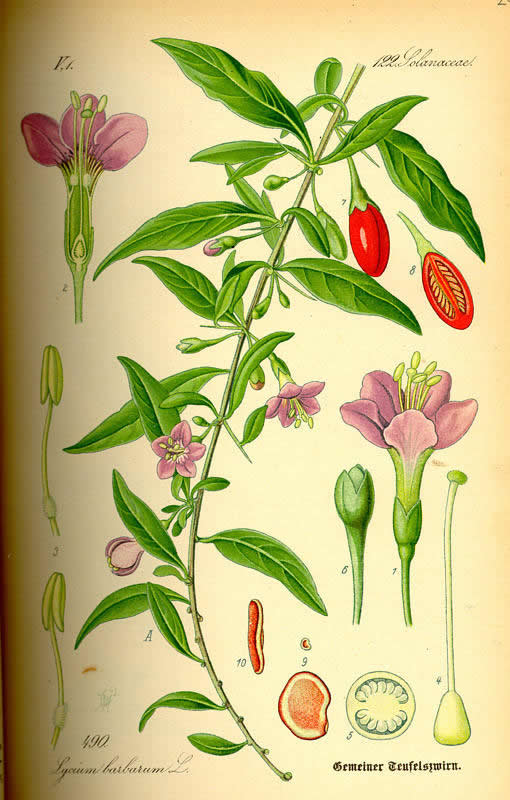
Otto draws goji 1885the mountains and the waters are unchanged
the man’s grown older
how many other men will watch those mountains stand
see the moon’s bright blaze of light
a shining lamp, above the world
full glistening and hanging in vast void
that brilliant jewel, its brightness, through the mist
some people say it waxes, wanes
their’s may but mine remains
as steady as the Mani Pearl
this light knows neither day or night
sermons there are, must be a million
too many to read in a hurry
if you want a friend just come to T’ien T’ai mountain
sit deep among the crags
we’ll talk about the Principle s
and chat about dark Mysterie s
if you don’t come to my mountain
your view will be blocke d
by the others

green Island

why sympathize with men like these?
I can remember the taste of that dirt.
cloudy mountains, fold on fold,
how many thousands of them?
shady valley road runs deep, all trace of man is gone
green torrents, pure clear flow, no place more full of beauty
and time, and time, birds sing
my own heart’s harmony .
if you want to be happy
there’s no other way than the hermit’ s
flowers in the grove, endless brocade
every single season’s colors new
just sit beside the chasm
turn your head, as the moon rolls by
yet though I ought to be at joyous ease
I can’t stop thinking of the others.
far, far, the mountain path is steep
thousands of feet up, the pass is dangerous and narrow
on the stone bridge the moss and lichen green
from time to time, a sliver of cloud flying
cascades hang like skeins of silk
image of the moon from the deep pool shining
once more to the top of Flowering Peak

Shih Shu (c . 1703 )

sch_g_tao
the human body is a little universe
its chill tears, so much windblown sleet
beneath our skins, mountains bulge, brooks flow,
within our chests lurk lost cities, hidden tribes.
wisdom quarters itself in our tiny hearts.
liver and gall peer out, scrutinize a thousand miles.
follow the path back to its source, or else be
a house vacant save for swallows in the eave.
as flowing waters disappear into the mist
we lose all track of their passage.
every heart is its own Buddha;
to become a saint, do nothing.
enlightenment: the world is a mote of dust ,
you can look right through heaven’s round mirror
slip past all form, all shape
and sit side by side with nothing, save Tao.

Hsu Yun (1940-195~ )

Sound of the Wind in the Pine s
an Afternoon and Night on Mount Lu
1 .
Courtyard-covering white dew
Moistens hidden orchids .
Leaves fade; a few flower s
Half retain their scent .
The cold Moon hangs alone ;
Nothing happening with people.
Pine wind blows right through :
Night waves cold .
II .
Swell after swell of pinewin d
Comb like waves at sea :
Beat after beat of heavenly musi c
Strummed on cloudy strings .
Midnight, Tao folk
Purify their hearing
And rise alone to burn incense:
Moon full
Just overhead.
Zen heart peaceful and stil l
Inside white clouds .
Autumn floods and spring mountains
Aren’t the same yet .
It’s just the pine wind
Whistles another tune .
Deep night white moon ,
Drizzling already .
Iv.
The mountain is empty ; flute still .
Thought uninvolved.
A pine wind circling the cabin
Calls right through the ear.
Here’s a monk with a talking habit ;
Midnight, the eternal teaching
Preaching `No Birth .’
Brooks in torrent untiring ;
People’s words more and more rare .
Where schemes calm heart ?
Sitting in the lotus,
Wrapped in robes of Zen .
At a Thatched Hut on the Flower Peak of Mount T’ien-t’a i
Sitting with Dharma Master Jung Ching During a Long Rai n
Hard rain, our gathered firewood scant;
Lamp frozen, glimmers not at night .
In the cave, wind blows stones and mud .
Moss engravings weatherstrip rickety door .

outlaw
Written for the Zen Man Te-jun
at the Great Assembly at Fo-yen

Days long ago do you remember
Making circuits of the Buddha halls?
How could we know the age of Earth,
The Boundless steppes of Heaven?
Chariots of wind I have ridden
And caught tigers on cloud-sprung feet.
Undersea I snared a dragon,
Moonlight streaming through the window.
Outside of time, flowers of wonder bloom,
Stamens touching space.
At sky’s edge moon trees
Breathe laurel perfume.
Again I walk the pure, cool, earth;
Form-taking life thrives in the web,
Upholding the Dharma-king.
Feelings on Remembering the Day
I First Produced the Mind
Drawn some sixty years ago by karma
I turned life upside down
And climbed straight on to lofty summits .
Between my eyes a hanging sword,
The Triple World is pure.
Empty-handed, I hold a hoe, clearing a galaxy.
As the `Ocean of Knowing-mind’ dries up,
Pearls shine forth by themselves;
Space smashed to dust, a moon hangs independent.
I threw my net through Heaven,
Caught the dragon and the phoenix;
Alone I walk through the cosmos,
Connecting the past and its people .

sometrees

Leave a comment

Filed under buddhism, Chinese poetry, Mystic Poetry, pictures, poetry, Spirituality

Upanishads, Part 2

Scroll down a ways for Part 1.

Max Muller Translation, mostly. I just finished cleaning up the text tonight- eliminating some verbose debris, removing the original page numbers and fixing weird paragraph splits. This is a 19th century translation and they tend to run on and on. The upside is that it is public domain.

This is it (the full 262 pages): UpanishadsPt2MaxMuller

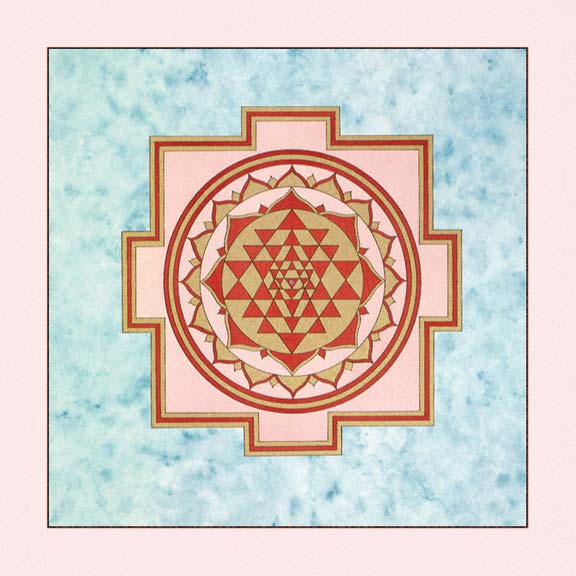
sri_yantra

Excerpt from Part 2, complete with Muller’s notes:

BRIHADARANYAKA-UPANISHAD

FIRST ADHYAYA [*1].

FIRST BRAHMANA.

1. Verily [*2] the dawn is the head of the horse which is fit for sacrifice, the sun its eye, the wind its breath, the mouth the Vaisvanara [*3] fire, the year the body of the sacrificial horse. Heaven is the back, the sky the belly, the earth the chest [*4], the quarters the two sides, the intermediate quarters the ribs, the members the seasons, the joints the months and half-months, the feet days and nights, the bones the stars, the flesh the clouds. The half-digested food is the sand, the rivers the bowels [*1], the liver and the lungs [*2] the mountains, the hairs the herbs and trees. As the sun rises, it is the forepart, as it sets, the hindpart of the horse. When the horse shakes itself [*3], then it lightens; when it kicks, it thunders; when it makes water, it rains; voice [*4] is its voice.

2. Verily Day arose after the horse as the (golden) vessel [*5], called Mahiman (greatness), which (at the sacrifice) is placed before the horse. Its place is in the Eastern sea. The Night arose after the horse as the (silver) vessel, called Mahiman, which (at the sacrifice) is placed behind the horse. Its place is in the Western sea. Verily, these two vessels (or greatnesses) arose to be on each side of the horse.

As a racer he carried the Devas, as a stallion the Gandharvas, as a runner the Asuras, as a horse men. The sea is its kin, the sea is its birthplace.

Footnotes

^73:1 It is the third Adhyaya of the Aranyaka, but the first of the Upanishad.

^73:2 This Brahmana is found in the Madhyandina text of the Satapatha, ed. Weber, X, 6, 4. Its object is there explained by the commentary to be the meditative worship of Virag, as represented metaphorically in the members of the horse. Sayana dispenses with its explanation, because, as part of the Brihadaranyaka-upanishad, according to the Kanva-sakha, it had been enlarged on by the Varttikakara and explained.

^73:3 Agni or fire, as pervading everything, as universally present in nature.

^73:4 Pagasya is doubtful. The commentator suggests pad-asya, the place of the feet, i.e. the hoof The Greek Pegasos, or ippoi peloi, throws no light on the word. The meaning of hoof would hardly be appropriate here, and I prefer chest on account of uras in I, 2, 3. Deussen (Vedanta, p. 8) translates, die Erde seiner Fusse Schemel; but we want some part of the horse.

^74:1 Guda, being in the plural, is explained by nadi, channel, and sirah; for we ought to read sira or hiragrahane for sira, p. 22, l. 16.

^74:2 Klomanah is explained as a plurale tantum (nityam bahuvakanam ekasmin), and being described as a lump below the heart, on the opposite side of the liver, it is supposed to be the lungs.

^74:3 ‘When it yawns.’ Anandagiri.

^74:4 Voice is sometimes used as a personified power of thunder and other aerial sounds, and this is identified with the voice of the horse.

^74:5 Two vessels, to hold the sacrificial libations, are placed at the Asvamedha before and behind the horse, the former made of gold, the latter made of silver. They are called Mahiman in the technical language of the ceremonial. The place in which these vessels are set, is called their yoni. Cf. Vagas. Samhita XXIII, 2.

Hindu-shiva

SECOND BRAHMANA [*6].

1. In the beginning there was nothing (to be perceived) here whatsoever. By Death indeed all this was concealed,–by hunger; for death is hunger. Death (the first being) thought, ‘Let me have a body.’ Then he moved about, worshipping. From him thus worshipping water was produced. And he said: ‘Verily, there appeared to me, while I worshipped (arkate), water (ka).’ This is why water is called ar-ka [*1]. Surely there is water (or pleasure) for him who thus knows the reason why water is called arka.

2. Verily water is arka. And what was there as the froth of the water, that was hardened, and became the earth. On that earth he (Death) rested, and from him, thus resting and heated, Agni (Virag) proceeded, full of light.

3. That being divided itself threefold, Aditya (the sun) as the third, and Vayu (the air) as the third [*2]. That spirit (prana) [*3] became threefold. The head was the Eastern quarter, and the arms this and that quarter (i. e. the N. E. and S. E., on the left and right sides). Then the tail was the Western quarter, and the two legs this and that quarter (i. e. the N. W. and S. W.) The sides were the Southern and Northern quarters, the back heaven, the belly the sky, the dust the earth. Thus he (Mrityu, as arka) stands firm in the water, and he who knows this stands firm wherever he goes.

4. He desired [*1], ‘Let a second body be born of me,’ and he (Death or Hunger) embraced Speech in his mind. Then the seed became the year. Before that time there was no year. Speech [*2] bore him so long as a year, and after that time sent him forth. Then when he was born, he (Death) opened his mouth, as if to swallow him. He cried Bhan! and that became speech [*3].

5. He thought, ‘If I kill him, I shall have but little food.’ He therefore brought forth by that speech and by that body (the year) all whatsoever exists, the Rik, the Yagus, the Saman, the metres, the sacrifices, men, and animals.

And whatever he (Death) brought forth, that he resolved to eat (ad). Verily because he eats everything, therefore is Aditi (Death) called Aditi. He who thus knows why Aditi is called Aditi, becomes an eater of everything, and everything becomes his food [*4].

6. He desired to sacrifice again with a greater sacrifice. He toiled and performed penance. And while he toiled and performed penance, glorious power [*1] went out of him. Verily glorious power means the senses (prana). Then when the senses had gone out, the body took to swelling (sva-yitum), and mind was in the body.

7. He desired that this body should be fit for sacrifice (medhya), and that he should be embodied by it. Then he became a horse (asva), because it swelled (asvat), and was fit for sacrifice (medhya); and this is why the horse-sacrifice is called Asva-medha.

Verily he who knows him thus, knows the Asvamedha. Then, letting the horse free, he thought [*2], and at the end of a year he offered it up for himself, while he gave up the (other) animals to the deities. Therefore the sacrificers offered up the purified horse belonging to Pragapati, (as dedicated) to all the deities.

Verily the shining sun is the Asvamedha-sacrifice, and his body is the year; Agni is the sacrificial fire (arka), and these worlds are his bodies. These two are the sacrificial fire and the Asvamedha-sacrifice, and they are again one deity, viz. Death. He (who knows this) overcomes another death, death does not reach him, death is his Self, he becomes one of those deities.

Aum_Om_Hinduism_symbol_Aum_5

THIRD BRAHMANA [*1].

1. There were two kinds of descendants of Pragapati, the Devas and the Asuras [*2]. Now the Devas were indeed the younger, the Asuras the elder ones [*3]. The Devas, who were struggling in these worlds, said: ‘Well, let us overcome the Asuras at the sacrifices (the Gyotishtoma) by means of the udgitha.’

2. They said to speech (Vak): ‘Do thou sing out for us (the udgitha).’ ‘Yes,’ said speech, and sang (the udgitha). Whatever delight there is in speech, that she obtained for the Devas by singing (the three pavamanas); but that she pronounced well (in the other nine pavamanas), that was for herself. The Asuras knew: ‘Verily, through this singer they will overcome us.’ They therefore rushed at the singer and pierced her with evil. That evil which consists in saying what is bad, that is that evil.

3. Then they (the Devas) said to breath (scent): ‘Do thou sing out for us.’ ‘Yes,’ said breath, and sang. Whatever delight there is in breath (smell), that he obtained for the Devas by singing; but that he smelled well, that was for himself. The Asuras knew: ‘Verily, through this singer they will overcome us.’ They therefore rushed at the singer, and pierced him with evil. That evil which consists in smelling what is bad, that is that evil.

4. Then they said to the eye: ‘Do thou sing out for us.’ ‘Yes,’ said the eye, and sang. Whatever delight there is in the eye, that he obtained for the Devas by singing; but that he saw well, that was for himself The Asuras knew: ‘Verily, through this singer they will overcome us.’ They therefore rushed at the singer, and pierced him with evil. That evil which consists in seeing what is bad, that is that evil.

5. Then they said to the ear: ‘Do thou sing out for us.’ ‘Yes,’ said the ear, and sang. Whatever delight there is in the ear, that he obtained for the Devas by singing; but that he heard well, that was for himself. The Asuras knew: ‘Verily, through this singer they will overcome us.’ They therefore rushed at the singer, and pierced him with evil. That evil which consists in hearing what is bad, that is that evil.

6. Then they said to the mind: ‘Do thou sing out for us.’ ‘Yes,’ said the mind, and sang. Whatever delight there is in the mind, that he obtained for the Devas by singing; but that he thought well, that was for himself. The Asuras knew: ‘Verily, through this singer they will overcome us.’ They therefore rushed at the singer, and pierced him with evil. That evil which consists in thinking what is bad, that is that evil.

Thus they overwhelmed these deities with evils, thus they pierced them with evil.

7. Then they said to the breath in the mouth [*1]: ‘Do thou sing for us.’ ‘Yes,’ said the breath, and sang. The Asuras knew: ‘Verily, through this singer they will overcome us.’ They therefore rushed at him and pierced him with evil. Now as a ball of earth will be scattered when hitting a stone, thus they perished, scattered in all directions. Hence the Devas rose, the Asuras fell. He who knows this, rises by his self, and the enemy who hates him falls.

8. Then they (the Devas) said: ‘Where was he then who thus stuck to us [*1]?’ It was (the breath) within the mouth (asye ‘ntar [*2]), and therefore called Ayasya; he was the sap (rasa) of the limbs (anga), and therefore called Angirasa.

9. That deity was called Dur, because Death was far (duran) from it. From him who knows this, Death is far off.

10. That deity, after having taken away the evil of those deities, viz. death, sent it to where the end of the quarters of the earth is. There he deposited their sins. Therefore let no one go to a man, let no one go to the end (of the quarters of the earth [*3]), that he may not meet there with evil, with death.

11. That deity, after having taken away the evil of those deities, viz. death, carried them beyond death.

12. He carried speech across first. When speech had become freed from death, it became (what it had been before) Agni (fire). That Agni, after having stepped beyond death, shines.

13. Then he carried breath (scent) across. When breath had become freed from death, it became Vayu (air). That Vayu, after having stepped beyond death, blows.

14. Then he carried the eye across. When the eye had become freed from death, it became Aditya (the sun). That Aditya, after having stepped beyond death, burns.

15. Then he carried the ear across. When the ear had become freed from death, it became the quarters (space). These are our quarters (space), which have stepped beyond death.

16. Then he carried the mind across. When the mind had become freed from death, it became the moon (Kandramas). That moon, after having stepped beyond death, shines. Thus does that deity carry him, who knows this, across death.

17. Then breath (vital), by singing, obtained for himself eatable food. For whatever food is eaten, is eaten by breath alone, and in it breath rests [*1].

The Devas said: ‘Verily, thus far, whatever food there is, thou hast by singing acquired it for thyself. Now therefore give us a share in that food.’ He said: ‘You there, enter into me.’ They said Yes, and entered all into him. Therefore whatever food is eaten by breath, by it the other senses are satisfied.

18. If a man knows this, then his own relations come to him in the same manner; he becomes their supporter, their chief leader, their strong ruler [*2]. And if ever anyone tries to oppose [*3] one who is possessed of such knowledge among his own relatives, then he will not be able to support his own belongings. But he who follows the man who is possessed of such knowledge, and who with his permission wishes to support those whom he has to support, he indeed will be able to support his own belongings.

19. He was called Ayasya Angirasa, for he is the sap (rasa) of the limbs (anga). Verily, breath is the sap of the limbs. Yes, breath is the sap of the limbs. Therefore from whatever limb breath goes away, that limb withers, for breath verily is the sap of the limbs.

20. He (breath) is also Brihaspati, for speech is Brihati (Rig-veda), and he is her lord; therefore he is Brihaspati.

2 1. He (breath) is also Brahmanaspati, for speech is Brahman (Yagur-veda), and he is her lord; therefore he is Brahmanaspati.

He (breath) is also Saman (the Udgitha), for speech is Saman (Sama-veda), and that is both speech (sa) and breath (ama) [*1]. This is why Saman is called Saman.

22. Or because he is equal (sama) to a grub, equal to a gnat, equal to an elephant, equal to these three worlds, nay, equal to this universe, therefore he is Saman. He who thus knows this Saman, obtains union and oneness with Saman.

23. He (breath) is Udgitha [*2]. Breath verily is Ut, for by breath this universe is upheld (uttabdha); and speech is Githa, song. And because he is ut and githa, therefore he (breath) is Udgitha.

24. And thus Brahmadatta Kaikitaneya (the grandson of Kikitana), while taking Soma (ragan), said: ‘May this Soma strike my head off, if Ayasya Angirasa sang another Udgitha than this. He sang it indeed as speech and breath.’

25. He who knows what is the property of this Saman, obtains property. Now verily its property is tone only. Therefore let a priest, who is going to perform the sacrificial work of a Sama-singer, desire that his voice may have a good tone, and let him perform the sacrifice with a voice that is in good tone. Therefore people (who want a priest) for a sacrifice, look out for one who possesses a good voice, as for one who possesses property. He who thus knows what is the property of that Saman, obtains property.

26. He who knows what is the gold of that Saman, obtains gold. Now verily its gold. is tone only. He who thus knows what is the gold of that Saman, obtains gold.

27. He who knows what is the support of that Saman, he is supported. Now verily its support is speech only. For, as supported in speech, that breath is sung as that Saman. Some say the support is in food.

Next follows the Abhyaroha [*1] (the ascension) of the Pavamana verses. Verily the Prastotri begins to sing the Saman, and when he begins, then let him (the sacrificer) recite these (three Yagus-verses):

‘Lead me from the unreal to the real! Lead me from darkness to light! Lead me from death to immortality!’

Now when he says, ‘Lead me from the unreal to the real,’ the unreal is verily death, the real immortality. He therefore says, ‘Lead me from death to immortality, make me immortal.’

When he says, ‘Lead me from darkness to light,’ darkness is verily death, light immortality. He therefore says, ‘Lead me from death to immortality, make me immortal.’

When he says, ‘Lead me from death to immortality,’ there is nothing there, as it were, hidden (obscure, requiring explanation) [*1].

28. Next come the other Stotras with which the priest may obtain food for himself by singing them. Therefore let the sacrificer, while these Stotras are being sung, ask for a boon, whatever desire he may desire. An Udgatri priest who knows this obtains by his singing whatever desire he may desire either for himself or for the sacrificer. This (knowledge) indeed is called the conqueror of the worlds. He who thus knows this Saman [*2], for him there is no fear of his not being admitted to the worlds [*3].

Footnotes

^74:6 Called the Agni-brahmana, and intended to teach the origin of [p. 75] Agni, the fire, which is here used for the Horse-sacrifice. It is found in the Satapatha-brahmana, Madhyandina-sakha X, 6, 5, and there explained as a description of Hiranyagarbha.

^75:1 We ought to read arkasyarkatvam, as in Poley’s edition, or ark-kasyarkkatvam, to make the etymology still clearer. The commentator takes arka in the sense of fire, more especially the sacrificial fire employed at the Horse-sacrifice. It may be so, but the more natural interpretation seems to me to take arka here as water, from which indirectly fire is produced. From water springs the earth; on that earth he (Mrityu or Pragapati) rested, and from him, while resting there, fire (Virag) was produced. That fire assumed three forms, fire, sun, and air, and in that threefold form it is called prana, spirit.

^75:2 As Agni, Vayu, and Aditya.

^75:3 Here Agni (Virag) is taken as representing the fire of the altar at the Horse-sacrifice, which is called Arka. The object of the whole Brahmana was to show the origin and true character of that fire (arka).

^76:1 He is the same as what was before called mrityu, death, who, after becoming self-conscious, produced water, earth, fire, &c. He now wishes for a second body, which is the year, or the annual sacrifice, the year being dependent on the sun (Aditya).

^76:2 The commentator understands the father, instead of Speech, the mother.

^76:3 The interjectional theory.

^76:4 All these are merely fanciful etymologies of asvamedha and arka.

^77:1 Or glory (senses) and power. Comm.

^77:2 He considered himself as the horse. Roer.

^78:1 Called the Udgitha-brahmana. In the Madhyandina-sakha, the Upanishad, which consists of six adhyayas, begins with this Brahmana (cf. Weber’s edition, p. 104 7; Commentary, p. 1109).

^78:2 The Devas and Asuras are explained by the commentator as the senses, inclining either to sacred or to worldly objects, to good or evil.

^78:3 According to the commentator, the Devas were the less numerous and less strong, the Asuras the more numerous and more powerful.

^79:1 This is the chief or vital breath, sometimes called mukhya.

^80:1 Asakta from sang, to embrace; cf. Rig-veda I, 33, 3. Here it corresponds to the German anhanglich.

^80:2 See Deussen, Vedanta, p. 359.

^80:3 To distant people.

^81:1 This is done by the last nine Pavamanas, while the first three were used for obtaining the reward common to all the pranas.

^81:2 Here annada is well explained by anamayavin, and vyadhirahita, free from sickness, strong.

^81:3 Read pratipratih; see Poley, and Weber, p. 1180.

^82:1 Cf. Khand. Up. V, 2, 6.

^82:2 Not used here in the sense of song or hymn, but as an act of worship connected with the Saman. Comm.

^83:1 The ascension is a ceremony by which the performer reaches the gods, or becomes a god. It consists in the recitation of three Yagus, and is here enjoined to take place when the Prastotri priest begins to sing his hymn.

^84:1 See Deussen, Vedanta, p. 86.

^84:2 He knows that he is the Prana, which Prana is the Saman. That Prana cannot be defeated by the Asuras, i.e. by the senses which are addicted to evil; it is pure, and the five senses finding refuge in him, recover there their original nature, fire, &c. The Prana is the Self of all things, also of speech (Rig-yaguh-samodgitha), and of the Saman that has to be sung and well sung. The Prana pervades all creatures, and he who identifies himself with that Prana, obtains the rewards mentioned in the Brahmana. Comm.

^84:3 In connection with lokagit, lokyata is here explained, and may probably have been intended, as worthiness to be admitted to the highest world. Originally lokyata and alokyata meant right and wrong. See also I, 5, 17.

BRASS0004NATR

FOURTH BRAHMANA [*1].

1. In the beginning this was Self alone, in the shape of a person (purusha). He looking round saw nothing but his Self. He first said, ‘This is I;’ therefore he became I by name. Therefore even now, if a man is asked, he first says, ‘This is I,’ and then pronounces the other name which he may have. And because before (purva) all this, he (the Self) burnt down (ush) all evils, therefore he was a person (pur-usha). Verily he who knows this, burns down every one who tries to be before him.

2. He feared, and therefore any one who is lonely fears. He thought, ‘As there is nothing but myself, why should I fear?’ Thence his fear passed away. For what should he have feared? Verily fear arises from a second only.

3. But he felt no delight. Therefore a man who is lonely feels no delight. He wished for a second. He was so large as man and wife together. He then made this his Self to fall in two (pat), and thence arose husband (pati) and wife (patni). Therefore Yagnavalkya said: ‘We two [*2] are thus (each of us) like half a shell [*3].’ Therefore the void which was there, is filled by the wife. He embraced her, and men were born.

4. She thought, ‘How can he embrace me, after having produced me from himself? I shall hide myself.’

She then became a cow, the other became a bull and embraced her, and hence cows were born. The one became a mare, the other a stallion; the one a male ass, the other a female ass. He embraced her, and hence one-hoofed animals were born. The one became a she-goat, the other a he-goat; the one became a ewe [*1], the other a ram. He embraced her, and hence goats and sheep were born. And thus he created everything that exists in pairs, down to the ants.

5. He knew, ‘I indeed am this creation, for I created all this.’ Hence he became the creation, and he who knows this lives in this his creation.

6. Next he thus produced fire by rubbing. From the mouth, as from the fire-hole, and from the hands he created fire [*2]. Therefore both the mouth and the hands are inside without hair, for the fire-hole is inside without hair.

And when they say, ‘Sacrifice to this or sacrifice to that god,’ each god is but his manifestation, for he is all gods.

Now, whatever there is moist, that he created from seed; this is Soma. So far verily is this universe either food or eater. Soma indeed is food, Agni eater. This is the highest creation of Brahman, when he created the gods from his better part [*1], and when he, who was (then) mortal [*2], created the immortals. Therefore it was the highest creation. And he who knows this, lives in this his highest creation.

7. Now all this was then undeveloped. It became developed by form and name, so that one could say, ‘He, called so and so, is such a one [*3].’ Therefore at present also all this is developed by name and form, so that one can say, ‘He, called so and so, is such a one.’

He (Brahman or the Self) entered thither, to the very tips of the finger-nails, as a razor might be fitted in a razor-case, or as fire in a fire-place [*4].

He cannot be seen, for, in part only, when breathing, he is breath by name; when speaking, speech by name; when seeing, eye by name; when hearing, ear by name; when thinking, mind by name. All these are but the names of his acts. And he who worships (regards) him as the one or the other, does not know him, for he is apart from this (when qualified) by the one or the other (predicate). Let men worship him as Self, for in the Self all these are one. This Self is the footstep of everything, for through it one knows everything [*5]. And as one can find again by footsteps what was lost, thus he who knows this finds glory and praise.

8. This, which is nearer to us than anything, this Self, is dearer than a son, dearer than wealth, dearer than all else.

And if one were to say to one who declares another than the Self dear, that he will lose what is dear to him, very likely it would be so. Let him worship the Self alone as dear. He who worships the Self alone as dear, the object of his love will never perish [*1].

9. Here they say: ‘If men think that by knowledge of Brahman they will become everything, what then did that Brahman know, from whence all this sprang?’

10. Verily in the beginning this was Brahman, that Brahman knew (its) Self only, saying, ‘I am Brahman.’ From it all this sprang. Thus, whatever Deva was awakened (so as to know Brahman), he indeed became that (Brahman); and the same with Rishis and men. The Rishi Vamadeva saw and understood it, singing, ‘I was Manu (moon), I was the sun.’ Therefore now also he who thus knows that he is Brahman, becomes all this, and even the Devas cannot prevent it, for he himself is their Self.

Now if a man worships another deity, thinking the deity is one and he another, he does not know. He is like a beast for the Devas. For verily, as many beasts nourish a man, thus does every man nourish the Devas. If only one beast is taken away, it is not pleasant; how much more when many are taken! Therefore it is not pleasant to the Devas that men should know this.

11. Verily in the beginning this was Brahman, one only. That being one, was not strong enough. It created still further the most excellent Kshatra (power), viz. those Kshatras (powers) among the Devas,–Indra, Varuna, Soma, Rudra, Parganya, Yama, Mrityu, Isana. Therefore there is nothing beyond the Kshatra, and therefore at the Ragasuya sacrifice the Brahmana sits down below the Kshatriya. He confers that glory on the Kshatra alone. But Brahman is (nevertheless) the birth-place of the Kshatra. Therefore though a king is exalted, he sits down at the end (of the sacrifice) below the Brahman, as his birth-place. He who injures him, injures his own birth-place. He becomes worse, because he has injured one better than himself.

12. He [*1] was not strong enough. He created the Vis (people), the classes of Devas which in their different orders are called Vasus, Rudras, Adityas, Visve Devas, Maruts.

13. He was not strong enough. He created the Sudra colour (caste), as Pushan (as nourisher). This earth verily is Pushan (the nourisher); for the earth nourishes all this whatsoever.

14. He was not strong enough. He created still further the most excellent Law (dharma). Law is the Kshatra (power) of the Kshatra [*2], therefore there is nothing higher than the Law. Thenceforth even a weak man rules a stronger with the help of the Law, as with the help of a king. Thus the Law is what is called the true. And if a man declares what is true, they say he declares the Law; and if he declares the Law, they say he declares what is true. Thus both are the same.

15. There are then this Brahman, Kshatra, Vis, and Sudra. Among the Devas that Brahman existed as Agni (fire) only, among men as Brahmana, as Kshatriya through the (divine) Kshatriya, as Vaisya through the (divine) Vaisya, as Sudra through the (divine) Sudra. Therefore people wish for their future state among the Devas through Agni (the sacrificial fire) only; and among men through the Brahmana, for in these two forms did Brahman exist.

Now if a man departs this life without having seen his true future life (in the Self), then that Self, not being known, does not receive and bless him, as if the Veda had not been read, or as if a good work had not been done. Nay, even if one who does not know that (Self), should perform here on earth some great holy work, it will Perish for him in the end. Let a man worship the Self only as his true state. If a man worships the Self only as his true state, his work does not Perish, for whatever he desires that he gets from that Self.

16. Now verily this Self (of the ignorant man) is the world [*1] of all creatures. In so far as man sacrifices and pours out libations, he is the world of the Devas; in so far as he repeats the hymns, &c., he is the world of the Rishis; in so far as he offers cakes to the Fathers and tries to obtain offspring, he is the world of the Fathers; in so far as he gives shelter and food to men, he is the world of men; in so far as he finds fodder and water for the animals, he is the world of the animals; in so far as quadrupeds, birds, and even ants live in his houses, he is their world. And as every one wishes his own world not to be injured, thus all beings wish that he who knows this should not be injured. Verily this is known and has been well reasoned.

17. In the beginning this was Self alone, one only. He desired, ‘Let there be a wife for me that I may have offspring, and let there be wealth for me that I may offer sacrifices.’ Verily this is the whole desire, and, even if wishing for more, he would not find it. Therefore now also a lonely person desires, ‘Let there be a wife for me that I may have offspring, and let there be wealth for me that I may offer sacrifices.’ And so long as he does not obtain either of these things, he thinks he is incomplete. Now his completeness (is made up as follows): mind is his self (husband); speech the wife; breath the child; the eye all worldly wealth, for he finds it with the eye; the ear his divine wealth, for he hears it with the ear. The body (atman) is his work, for with the body he works. This is the fivefold [*1] sacrifice, for fivefold is the animal, fivefold man, fivefold all this whatsoever. He who knows this, obtains all this.

Footnotes

^85:1 Called Purushavidhabrahmana (Madhyandina-sakha, p. 1050). See Muir, Original Sanskrit Texts, vol. i, p. 24.

^85:2 The Comm. explains svah by atmanah, of himself. But see Boehtlingk, Sanskrit Chrestomathie, p. 357.

^85:3 Roer translates: ‘Therefore was this only one half of himself, as a split pea is of a whole.’ Brigala is a half of anything. Muir (Orig. Sansk. Texts, vol. i, p. 25) translates: ‘Yagnavalkya has said that this one’s self is like the half of a split pea.’ I have translated the sentence according to Professor Boehtlingk’s conjecture (Chrestomathie, 2nd ed. p. 357), though the singular after the dual (svah) is irregular.

^86:1 The reading avir itaro, i.e. itara u, is not found in the Kanva text. See Boehtlingk, Chrestomathie, p. 357.

^86:2 He blew with the mouth while he rubbed with the hands.

^87:1 Or, when he created the best gods.

^87:2 As man and sacrificer. Comm.

^87:3 The Comm. takes asau-nama as a compound, instead of idam-nama. I read asau nama, he is this by name, viz. Devadatta, &c. Dr. Boehtlingk, who in his Chrestomathie (2nd ed. p. 31) had accepted the views of the Commentator, informs me that he has changed his view, and thinks that we should read asau na’ma.

^87:4 Cf. Kaush. Br. Up. VI, 19.

^87:5 As one finds lost cattle again by following their footsteps, thus one finds everything, if one has found out the Self.’ Comm.

^88:1 On rudh, to lose, see Taitt. Samh. II, 6, 8, 5, pp. 765, 771, as pointed out by Dr. Boehtlingk. On isvaro (yat) tathaiva syat, see Boehtlingk, s. v.

^89:1 Observe the change from tad, it, to sa, he.

^89:2 More powerful than the Kshatra or warrior caste. Comm.

^90:1 Is enjoyed by them all. Comm.

^91:1 Fivefold, as consisting of mind, speech, breath, eye, and ear. See Taitt. Up. I, 7, 1.

Upanishad-001

Leave a comment

Filed under Free E-Books, Mystic Poetry, Spirituality

Poems of the Tang Dynasty, Part 7 (or so)

I think this brings me just about right up to the 350-400 poems I said I would post.

Anyway, it’s close enough. It is getting harder for me to be sure I’m not re-posting ones I’ve already done. So, this’ll be it. Unless I decide to do a few more sometime, which could happen.

Before that happens, though, I’ll be working on putting all the previous postings in this category and making a Word .doc file out of them, all in one place. Not today, though, not today.

Without further ado (always click images for full size):
tanghorses

Meng Jiao

A SONG OF A PURE-HEARTED GIRL


Lakka-trees ripen two by two
And mandarin-ducks die side by side.
If a true-hearted girl will love only her husband,
In a life as faithfully lived as theirs,
What troubling wave can arrive to vex
A spirit like water in a timeless well?

Meng Jiao

A TRAVELLER’S SONG


The thread in the hands of a fond-hearted mother
Makes clothes for the body of her wayward boy;
Carefully she sews and thoroughly she mends,
Dreading the delays that will keep him late from home.
But how much love has the inch-long grass
For three spring months of the light of the sun?

Chen Ziang

ON A GATE-TOWER AT YUZHOU


Where, before me, are the ages that have gone?
And where, behind me, are the coming generations?
I think of heaven and earth, without limit, without end,
And I am all alone and my tears fall down.

Li Qi

AN OLD AIR


There once was a man, sent on military missions,
A wanderer, from youth, on the You and Yan frontiers.
Under the horses’ hoofs he would meet his foes
And, recklessly risking his seven-foot body,
Would slay whoever dared confront
Those moustaches that bristled like porcupinequills.
…There were dark clouds below the hills, there were white clouds above them,
But before a man has served full time, how can he go back?
In eastern Liao a girl was waiting, a girl of fifteen years,
Deft with a guitar, expert in dance and song.
…She seems to be fluting, even now, a reed-song of home,
Filling every soldier’s eyes with homesick tears.

Li Qi

A FAREWELL TO MY FRIEND CHEN ZHANGFU


In the Fourth-month the south wind blows plains of yellow barley,
Date-flowers have not faded yet and lakka-leaves are long.
The green peak that we left at dawn we still can see at evening,
While our horses whinny on the road, eager to turn homeward.
…Chen, my friend, you have always been a great and good man,
With your dragon’s moustache, tiger’s eyebrows and your massive forehead.
In your bosom you have shelved away ten thousand volumes.
You have held your head high, never bowed it in the dust.
…After buying us wine and pledging us, here at the eastern gate,
And taking things as lightly as a wildgoose feather,
Flat you lie, tipsy, forgetting the white sun;
But now and then you open your eyes and gaze at a high lone cloud.
…The tide-head of the lone river joins the darkening sky.
The ferryman beaches his boat. It has grown too late to sail.
And people on their way from Cheng cannot go home,
And people from Loyang sigh with disappointment.
…I have heard about the many friends around your wood land dwelling.
Yesterday you were dismissed. Are they your friends today?

Li Qi

A LUTE SONG


Our host, providing abundant wine to make the night mellow,
Asks his guest from Yangzhou to play for us on the lute.
Toward the moon that whitens the city-wall, black crows are flying,
Frost is on ten thousand trees, and the wind blows through our clothes;
But a copper stove has added its light to that of flowery candles,
And the lute plays The Green Water, and then The Queen of Chu.
Once it has begun to play, there is no other sound:
A spell is on the banquet, while the stars grow thin….
But three hundred miles from here, in Huai, official duties await him,
And so it’s farewell, and the road again, under cloudy mountains.

Li Qi

ON HEARING DONG PLAY THE FLAGEOLET
A POEM TO PALACE-ATTENDANT FANG


When this melody for the flageolet was made by Lady Cai,
When long ago one by one she sang its eighteen stanzas,
Even the Tartars were shedding tears into the border grasses,
And the envoy of China was heart-broken, turning back home with his escort.
…Cold fires now of old battles are grey on ancient forts,
And the wilderness is shadowed with white new-flying snow.
…When the player first brushes the Shang string and the Jue and then the Yu,
Autumn-leaves in all four quarters are shaken with a murmur.
Dong, the master,
Must have been taught in heaven.
Demons come from the deep pine-wood and stealthily listen
To music slow, then quick, following his hand,
Now far away, now near again, according to his heart.
A hundred birds from an empty mountain scatter and return;
Three thousand miles of floating clouds darken and lighten;
A wildgoose fledgling, left behind, cries for its flock,
And a Tartar child for the mother he loves.
Then river waves are calmed
And birds are mute that were singing,
And Wuzu tribes are homesick for their distant land,
And out of the dust of Siberian steppes rises a plaintive sorrow.
…Suddenly the low sound leaps to a freer tune,
Like a long wind swaying a forest, a downpour breaking tiles,
A cascade through the air, flying over tree-tops.
…A wild deer calls to his fellows. He is running among the mansions
In the corner of the capital by the Eastern Palace wall….
Phoenix Lake lies opposite the Gate of Green Jade;
But how can fame and profit concern a man of genius?
Day and night I long for him to bring his lute again.

Li Qi

ON HEARING AN WANSHAN PLAY THE REED-PIPE


Bamboo from the southern hills was used to make this pipe.
And its music, that was introduced from Persia first of all,
Has taken on new magic through later use in China.
And now the Tartar from Liangzhou, blowing it for me,
Drawing a sigh from whosoever hears it,
Is bringing to a wanderer’s eyes homesick tears….
Many like to listen; but few understand.
To and fro at will there’s a long wind flying,
Dry mulberry-trees, old cypresses, trembling in its chill.
There are nine baby phoenixes, outcrying one another;
A dragon and a tiger spring up at the same moment;
Then in a hundred waterfalls ten thousand songs of autumn
Are suddenly changing to The Yuyang Lament;
And when yellow clouds grow thin and the white sun darkens,
They are changing still again to Spring in the Willow Trees.
Like Imperial Garden flowers, brightening the eye with beauty,
Are the high-hall candles we have lighted this cold night,
And with every cup of wine goes another round of music.

Meng Haoran

RETURNING AT NIGHT TO LUMEN MOUNTAIN


A bell in the mountain-temple sounds the coming of night.
I hear people at the fishing-town stumble aboard the ferry,
While others follow the sand-bank to their homes along the river.
…I also take a boat and am bound for Lumen Mountain —
And soon the Lumen moonlight is piercing misty trees.
I have come, before I know it, upon an ancient hermitage,
The thatch door, the piney path, the solitude, the quiet,
Where a hermit lives and moves, never needing a companion.


Li Bai

A SONG OF LU MOUNTAIN TO CENSOR LU XUZHOU


I am the madman of the Chu country
Who sang a mad song disputing Confucius.
…Holding in my hand a staff of green jade,
I have crossed, since morning at the Yellow Crane Terrace,
All five Holy Mountains, without a thought of distance,
According to the one constant habit of my life.
Lu Mountain stands beside the Southern Dipper
In clouds reaching silken like a nine-panelled screen,
With its shadows in a crystal lake deepening the green water.
The Golden Gate opens into two mountain-ranges.
A silver stream is hanging down to three stone bridges
Within sight of the mighty Tripod Falls.
Ledges of cliff and winding trails lead to blue sky
And a flush of cloud in the morning sun,
Whence no flight of birds could be blown into Wu.
…I climb to the top. I survey the whole world.
I see the long river that runs beyond return,
Yellow clouds that winds have driven hundreds of miles
And a snow-peak whitely circled by the swirl of a ninefold stream.
And so I am singing a song of Lu Mountain,
A song that is born of the breath of Lu Mountain.
…Where the Stone Mirror makes the heart’s purity purer
And green moss has buried the footsteps of Xie,
I have eaten the immortal pellet and, rid of the world’s troubles,
Before the lute’s third playing have achieved my element.
Far away I watch the angels riding coloured clouds
Toward heaven’s Jade City, with hibiscus in their hands.
And so, when I have traversed the nine sections of the world,
I will follow Saint Luao up the Great Purity.

Li Bai

TIANMU MOUNTAIN ASCENDED IN A DREAM


A seafaring visitor will talk about Japan,
Which waters and mists conceal beyond approach;
But Yueh people talk about Heavenly Mother Mountain,
Still seen through its varying deeps of cloud.
In a straight line to heaven, its summit enters heaven,
Tops the five Holy Peaks, and casts a shadow through China
With the hundred-mile length of the Heavenly Terrace Range,
Which, just at this point, begins turning southeast.
…My heart and my dreams are in Wu and Yueh
And they cross Mirror Lake all night in the moon.
And the moon lights my shadow
And me to Yan River —
With the hermitage of Xie still there
And the monkeys calling clearly over ripples of green water.
I wear his pegged boots
Up a ladder of blue cloud,
Sunny ocean half-way,
Holy cock-crow in space,
Myriad peaks and more valleys and nowhere a road.
Flowers lure me, rocks ease me. Day suddenly ends.
Bears, dragons, tempestuous on mountain and river,
Startle the forest and make the heights tremble.
Clouds darken with darkness of rain,
Streams pale with pallor of mist.
The Gods of Thunder and Lightning
Shatter the whole range.
The stone gate breaks asunder
Venting in the pit of heaven,
An impenetrable shadow.
…But now the sun and moon illumine a gold and silver terrace,
And, clad in rainbow garments, riding on the wind,
Come the queens of all the clouds, descending one by one,
With tigers for their lute-players and phoenixes for dancers.
Row upon row, like fields of hemp, range the fairy figures.
I move, my soul goes flying,
I wake with a long sigh,
My pillow and my matting
Are the lost clouds I was in.
…And this is the way it always is with human joy:
Ten thousand things run for ever like water toward the east.
And so I take my leave of you, not knowing for how long.
…But let me, on my green slope, raise a white deer
And ride to you, great mountain, when I have need of you.
Oh, how can I gravely bow and scrape to men of high rank and men of high office
Who never will suffer being shown an honest-hearted face!

Li Bai

PARTING AT A WINE-SHOP IN NANJING


A wind, bringing willow-cotton, sweetens the shop,
And a girl from Wu, pouring wine, urges me to share it
With my comrades of the city who are here to see me off;
And as each of them drains his cup, I say to him in parting,
Oh, go and ask this river running to the east
If it can travel farther than a friend’s love!

Li Bai

A FAREWELL TO SECRETARY SHUYUN
AT THE XIETIAO VILLA IN XUANZHOU


Since yesterday had to throw me and bolt,
Today has hurt my heart even more.
The autumn wildgeese have a long wind for escort
As I face them from this villa, drinking my wine.
The bones of great writers are your brushes, in the School of Heaven,
And I am a Lesser Xie growing up by your side.
We both are exalted to distant thought,
Aspiring to the sky and the bright moon.
But since water still flows, though we cut it with our swords,
And sorrows return, though we drown them with wine,
Since the world can in no way answer our craving,
I will loosen my hair tomorrow and take to a fishingboat.

Cen Can

A SONG OF RUNNING-HORSE RIVER IN FAREWELL
TO GENERAL FENG OF THE WESTERN EXPEDITION


Look how swift to the snowy sea races Running-Horse River! —
And sand, up from the desert, flies yellow into heaven.
This Ninth-month night is blowing cold at Wheel Tower,
And valleys, like peck measures, fill with the broken boulders
That downward, headlong, follow the wind.
…In spite of grey grasses, Tartar horses are plump;
West of the Hill of Gold, smoke and dust gather.
O General of the Chinese troops, start your campaign!
Keep your iron armour on all night long,
Send your soldiers forward with a clattering of weapons!
…While the sharp wind’s point cuts the face like a knife,
And snowy sweat steams on the horses’ backs,
Freezing a pattern of five-flower coins,
Your challenge from camp, from an inkstand of ice,
Has chilled the barbarian chieftain’s heart.
You will have no more need of an actual battle! —
We await the news of victory, here at the western pass!

Cen Can

A SONG OF WHEEL TOWER IN FAREWELL TO GENERAL
FENG OF THE WESTERN EXPEDITION


On Wheel Tower parapets night-bugles are blowing,
Though the flag at the northern end hangs limp.
Scouts, in the darkness, are passing Quli,
Where, west of the Hill of Gold, the Tartar chieftain has halted
We can see, from the look-out, the dust and black smoke
Where Chinese troops are camping, north of Wheel Tower.
…Our flags now beckon the General farther west-
With bugles in the dawn he rouses his Grand Army;
Drums like a tempest pound on four sides
And the Yin Mountains shake with the shouts of ten thousand;
Clouds and the war-wind whirl up in a point
Over fields where grass-roots will tighten around white bones;
In the Dagger River mist, through a biting wind,
Horseshoes, at the Sand Mouth line, break on icy boulders.
…Our General endures every pain, every hardship,
Commanded to settle the dust along the border.
We have read, in the Green Books, tales of old days-
But here we behold a living man, mightier than the dead.
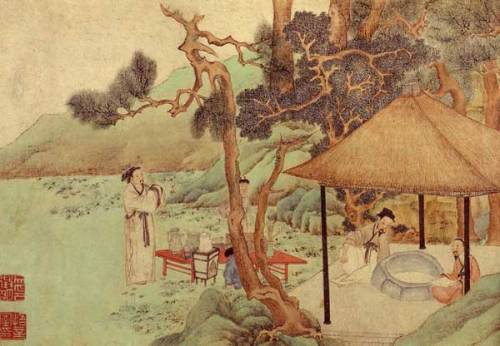
undertree

Cen Can

A SONG OF WHITE SNOW IN FAREWELL
TO FIELD-CLERK WU GOING HOME


The north wind rolls the white grasses and breaks them;
And the Eighth-month snow across the Tartar sky
Is like a spring gale, come up in the night,
Blowing open the petals of ten thousand peartrees.
It enters the pearl blinds, it wets the silk curtains;
A fur coat feels cold, a cotton mat flimsy;
Bows become rigid, can hardly be drawn
And the metal of armour congeals on the men;
The sand-sea deepens with fathomless ice,
And darkness masses its endless clouds;
But we drink to our guest bound home from camp,
And play him barbarian lutes, guitars, harps;
Till at dusk, when the drifts are crushing our tents
And our frozen red flags cannot flutter in the wind,
We watch him through Wheel-Tower Gate going eastward.
Into the snow-mounds of Heaven-Peak Road….
And then he disappears at the turn of the pass,
Leaving behind him only hoof-prints.

yangzi

Du Fu

A DRAWING OF A HORSE BY GENERAL CAO
AT SECRETARY WEI FENG’S HOUSE


Throughout this dynasty no one had painted horses
Like the master-spirit, Prince Jiangdu —
And then to General Cao through his thirty years of fame
The world’s gaze turned, for royal steeds.
He painted the late Emperor’s luminous white horse.
For ten days the thunder flew over Dragon Lake,
And a pink-agate plate was sent him from the palace-
The talk of the court-ladies, the marvel of all eyes.
The General danced, receiving it in his honoured home
After this rare gift, followed rapidly fine silks
From many of the nobles, requesting that his art
Lend a new lustre to their screens.
…First came the curly-maned horse of Emperor Taizong,
Then, for the Guos, a lion-spotted horse….
But now in this painting I see two horses,
A sobering sight for whosoever knew them.
They are war- horses. Either could face ten thousand.
They make the white silk stretch away into a vast desert.
And the seven others with them are almost as noble
Mist and snow are moving across a cold sky,
And hoofs are cleaving snow-drifts under great trees-
With here a group of officers and there a group of servants.
See how these nine horses all vie with one another-
The high clear glance, the deep firm breath.
…Who understands distinction? Who really cares for art?
You, Wei Feng, have followed Cao; Zhidun preceded him.
…I remember when the late Emperor came toward his Summer Palace,
The procession, in green-feathered rows, swept from the eastern sky —
Thirty thousand horses, prancing, galloping,
Fashioned, every one of them, like the horses in this picture….
But now the Imperial Ghost receives secret jade from the River God,
For the Emperor hunts crocodiles no longer by the streams.
Where you see his Great Gold Tomb, you may hear among the pines
A bird grieving in the wind that the Emperor’s horses are gone.

Du Fu

A SONG OF A PAINTING TO GENERAL CAO


O General, descended from Wei’s Emperor Wu,
You are nobler now than when a noble….
Conquerors and their velour perish,
But masters of beauty live forever.
…With your brush-work learned from Lady Wei
And second only to Wang Xizhi’s,
Faithful to your art, you know no age,
Letting wealth and fame drift by like clouds.
…In the years of Kaiyuan you were much with the Emperor,
Accompanied him often to the Court of the South Wind.
When the spirit left great statesmen, on walls of the Hall of Fame
The point of your brush preserved their living faces.
You crowned all the premiers with coronets of office;
You fitted all commanders with arrows at their girdles;
You made the founders of this dynasty, with every hair alive,
Seem to be just back from the fierceness of a battle.
…The late Emperor had a horse, known as Jade Flower,
Whom artists had copied in various poses.
They led him one day to the red marble stairs
With his eyes toward the palace in the deepening air.
Then, General, commanded to proceed with your work,
You centred all your being on a piece of silk.
And later, when your dragon-horse, born of the sky,
Had banished earthly horses for ten thousand generations,
There was one Jade Flower standing on the dais
And another by the steps, and they marvelled at each other….
The Emperor rewarded you with smiles and with gifts,
While officers and men of the stud hung about and stared.
…Han Gan, your follower, has likewise grown proficient
At representing horses in all their attitudes;
But picturing the flesh, he fails to draw the bone-
So that even the finest are deprived of their spirit.
You, beyond the mere skill, used your art divinely-
And expressed, not only horses, but the life of a good man….
Yet here you are, wandering in a world of disorder
And sketching from time to time some petty passerby
People note your case with the whites of their eyes.
There’s nobody purer, there’s nobody poorer.
…Read in the records, from earliest times,
How hard it is to be a great artist.

Liu Zongyuan

AN OLD FISHERMAN


An old fisherman spent the night here, under the western cliff;
He dipped up water from the pure Hsiang and made a bamboo fire;
And then, at sunrise, he went his way through the cloven mist,
With only the creak of his paddle left, in the greenness of mountain and river.
…I turn and see the waves moving as from heaven,
And clouds above the cliffs coming idly, one by one.


Bai Juyi

A SONG OF UNENDING SORROW


China’s Emperor, craving beauty that might shake an empire,
Was on the throne for many years, searching, never finding,
Till a little child of the Yang clan, hardly even grown,
Bred in an inner chamber, with no one knowing her,
But with graces granted by heaven and not to be concealed,
At last one day was chosen for the imperial household.
If she but turned her head and smiled, there were cast a hundred spells,
And the powder and paint of the Six Palaces faded into nothing.
…It was early spring. They bathed her in the FlowerPure Pool,
Which warmed and smoothed the creamy-tinted crystal of her skin,
And, because of her languor, a maid was lifting her
When first the Emperor noticed her and chose her for his bride.
The cloud of her hair, petal of her cheek, gold ripples of her crown when she moved,
Were sheltered on spring evenings by warm hibiscus curtains;
But nights of spring were short and the sun arose too soon,
And the Emperor, from that time forth, forsook his early hearings
And lavished all his time on her with feasts and revelry,
His mistress of the spring, his despot of the night.
There were other ladies in his court, three thousand of rare beauty,
But his favours to three thousand were concentered in one body.
By the time she was dressed in her Golden Chamber, it would be almost evening;
And when tables were cleared in the Tower of Jade, she would loiter, slow with wine.
Her sisters and her brothers all were given titles;
And, because she so illumined and glorified her clan,
She brought to every father, every mother through the empire,
Happiness when a girl was born rather than a boy.
…High rose Li Palace, entering blue clouds,
And far and wide the breezes carried magical notes
Of soft song and slow dance, of string and bamboo music.
The Emperor’s eyes could never gaze on her enough-
Till war-drums, booming from Yuyang, shocked the whole earth
And broke the tunes of The Rainbow Skirt and the Feathered Coat.
The Forbidden City, the nine-tiered palace, loomed in the dust
From thousands of horses and chariots headed southwest.
The imperial flag opened the way, now moving and now pausing- –
But thirty miles from the capital, beyond the western gate,
The men of the army stopped, not one of them would stir
Till under their horses’ hoofs they might trample those moth- eyebrows….
Flowery hairpins fell to the ground, no one picked them up,
And a green and white jade hair-tassel and a yellowgold hair- bird.
The Emperor could not save her, he could only cover his face.
And later when he turned to look, the place of blood and tears
Was hidden in a yellow dust blown by a cold wind.
… At the cleft of the Dagger-Tower Trail they crisscrossed through a cloud-line
Under Omei Mountain. The last few came.
Flags and banners lost their colour in the fading sunlight….
But as waters of Shu are always green and its mountains always blue,
So changeless was His Majesty’s love and deeper than the days.
He stared at the desolate moon from his temporary palace.
He heard bell-notes in the evening rain, cutting at his breast.
And when heaven and earth resumed their round and the dragon car faced home,
The Emperor clung to the spot and would not turn away
From the soil along the Mawei slope, under which was buried
That memory, that anguish. Where was her jade-white face?
Ruler and lords, when eyes would meet, wept upon their coats
As they rode, with loose rein, slowly eastward, back to the capital.
…The pools, the gardens, the palace, all were just as before,
The Lake Taiye hibiscus, the Weiyang Palace willows;
But a petal was like her face and a willow-leaf her eyebrow —
And what could he do but cry whenever he looked at them?
…Peach-trees and plum-trees blossomed, in the winds of spring;
Wutong-foliage fell to the ground, after autumn rains;
The Western and Southern Palaces were littered with late grasses,
And the steps were mounded with red leaves that no one swept away.
Her Pear-Garden Players became white-haired
And the eunuchs thin-eyebrowed in her Court of PepperTrees;
Over the throne flew fire-flies, while he brooded in the twilight.
He would lengthen the lamp-wick to its end and still could never sleep.
Bell and drum would slowly toll the dragging nighthours
And the River of Stars grow sharp in the sky, just before dawn,
And the porcelain mandarin-ducks on the roof grow thick with morning frost
And his covers of kingfisher-blue feel lonelier and colder
With the distance between life and death year after year;
And yet no beloved spirit ever visited his dreams.
…At Lingqiong lived a Taoist priest who was a guest of heaven,
Able to summon spirits by his concentrated mind.
And people were so moved by the Emperor’s constant brooding
That they besought the Taoist priest to see if he could find her.
He opened his way in space and clove the ether like lightning,
Up to heaven, under the earth, looking everywhere.
Above, he searched the Green Void, below, the Yellow Spring;
But he failed, in either place, to find the one he looked for.
And then he heard accounts of an enchanted isle at sea,
A part of the intangible and incorporeal world,
With pavilions and fine towers in the five-coloured air,
And of exquisite immortals moving to and fro,
And of one among them-whom they called The Ever True-
With a face of snow and flowers resembling hers he sought.
So he went to the West Hall’s gate of gold and knocked at the jasper door
And asked a girl, called Morsel-of-Jade, to tell The Doubly- Perfect.
And the lady, at news of an envoy from the Emperor of China,
Was startled out of dreams in her nine-flowered, canopy.
She pushed aside her pillow, dressed, shook away sleep,
And opened the pearly shade and then the silver screen.
Her cloudy hair-dress hung on one side because of her great haste,
And her flower-cap was loose when she came along the terrace,
While a light wind filled her cloak and fluttered with her motion
As though she danced The Rainbow Skirt and the Feathered Coat.
And the tear-drops drifting down her sad white face
Were like a rain in spring on the blossom of the pear.
But love glowed deep within her eyes when she bade him thank her liege,
Whose form and voice had been strange to her ever since their parting —
Since happiness had ended at the Court of the Bright Sun,
And moons and dawns had become long in Fairy-Mountain Palace.
But when she turned her face and looked down toward the earth
And tried to see the capital, there were only fog and dust.
So she took out, with emotion, the pledges he had given
And, through his envoy, sent him back a shell box and gold hairpin,
But kept one branch of the hairpin and one side of the box,
Breaking the gold of the hairpin, breaking the shell of the box;
“Our souls belong together,” she said, ” like this gold and this shell —
Somewhere, sometime, on earth or in heaven, we shall surely
And she sent him, by his messenger, a sentence reminding him
Of vows which had been known only to their two hearts:
“On the seventh day of the Seventh-month, in the Palace of Long Life,
We told each other secretly in the quiet midnight world
That we wished to fly in heaven, two birds with the wings of one,
And to grow together on the earth, two branches of one tree.”
Earth endures, heaven endures; some time both shall end,
While this unending sorrow goes on and on for ever.


Bai Chuyi

THE SONG OF A GUITAR


In the tenth year of Yuanhe I was banished and demoted to be assistant official in Jiujiang. In the summer of the next year I was seeing a friend leave Penpu and heard in the midnight from a neighbouring boat a guitar played in the manner of the capital. Upon inquiry, I found that the player had formerly been a dancing-girl there and in her maturity had been married to a merchant. I invited her to my boat to have her play for us. She told me her story, heyday and then unhappiness. Since my departure from the capital I had not felt sad; but that night, after I left her, I began to realize my banishment. And I wrote this long poem — six hundred and twelve characters.


I was bidding a guest farewell, at night on the Xunyang River,
Where maple-leaves and full-grown rushes rustled in the autumn.
I, the host, had dismounted, my guest had boarded his boat,
And we raised our cups and wished to drink-but, alas, there was no music.
For all we had drunk we felt no joy and were parting from each other,
When the river widened mysteriously toward the full moon —
We had heard a sudden sound, a guitar across the water.
Host forgot to turn back home, and guest to go his way.
We followed where the melody led and asked the player’s name.
The sound broke off…then reluctantly she answered.
We moved our boat near hers, invited her to join us,
Summoned more wine and lanterns to recommence our banquet.
Yet we called and urged a thousand times before she started toward us,
Still hiding half her face from us behind her guitar.
…She turned the tuning-pegs and tested several strings;
We could feel what she was feeling, even before she played:
Each string a meditation, each note a deep thought,
As if she were telling us the ache of her whole life.
She knit her brows, flexed her fingers, then began her music,
Little by little letting her heart share everything with ours.
She brushed the strings, twisted them slow, swept them, plucked them —
First the air of The Rainbow Skirt, then The Six Little Ones.
The large strings hummed like rain,
The small strings whispered like a secret,
Hummed, whispered-and then were intermingled
Like a pouring of large and small pearls into a plate of jade.
We heard an oriole, liquid, hidden among flowers.
We heard a brook bitterly sob along a bank of sand…
By the checking of its cold touch, the very string seemed broken
As though it could not pass; and the notes, dying away
Into a depth of sorrow and concealment of lament,
Told even more in silence than they had told in sound….
A silver vase abruptly broke with a gush of water,
And out leapt armored horses and weapons that clashed and smote —
And, before she laid her pick down, she ended with one stroke,
And all four strings made one sound, as of rending silk
There was quiet in the east boat and quiet in the west,
And we saw the white autumnal moon enter the river’s heart.
…When she had slowly placed the pick back among the strings,
She rose and smoothed her clothing and, formal, courteous,
Told us how she had spent her girlhood at the capital,
Living in her parents’ house under the Mount of Toads,
And had mastered the guitar at the age of thirteen,
With her name recorded first in the class-roll of musicians,
Her art the admiration even of experts,
Her beauty the envy of all the leading dancers,
How noble youths of Wuling had lavishly competed
And numberless red rolls of silk been given for one song,
And silver combs with shell inlay been snapped by her rhythms,
And skirts the colour of blood been spoiled with stains of wine….
Season after season, joy had followed joy,
Autumn moons and spring winds had passed without her heeding,
Till first her brother left for the war, and then her aunt died,
And evenings went and evenings came, and her beauty faded —
With ever fewer chariots and horses at her door;
So that finally she gave herself as wife to a merchant
Who, prizing money first, careless how he left her,
Had gone, a month before, to Fuliang to buy tea.
And she had been tending an empty boat at the river’s mouth,
No company but the bright moon and the cold water.
And sometimes in the deep of night she would dream of her triumphs
And be wakened from her dreams by the scalding of her tears.
Her very first guitar-note had started me sighing;
Now, having heard her story, I was sadder still.
“We are both unhappy — to the sky’s end.
We meet. We understand. What does acquaintance matter?
I came, a year ago, away from the capital
And am now a sick exile here in Jiujiang —
And so remote is Jiujiang that I have heard no music,
Neither string nor bamboo, for a whole year.
My quarters, near the River Town, are low and damp,
With bitter reeds and yellowed rushes all about the house.
And what is to be heard here, morning and evening? —
The bleeding cry of cuckoos, the whimpering of apes.
On flowery spring mornings and moonlit autumn nights
I have often taken wine up and drunk it all alone,
Of course there are the mountain songs and the village pipes,
But they are crude and-strident, and grate on my ears.
And tonight, when I heard you playing your guitar,
I felt as if my hearing were bright with fairymusic.
Do not leave us. Come, sit down. Play for us again.
And I will write a long song concerning a guitar.”
…Moved by what I said, she stood there for a moment,
Then sat again to her strings-and they sounded even sadder,
Although the tunes were different from those she had played before….
The feasters, all listening, covered their faces.
But who of them all was crying the most?
This Jiujiang official. My blue sleeve was wet.

Li Shangyin

THE HAN MONUMENT


The Son of Heaven in Yuanhe times was martial as a god
And might be likened only to the Emperors Xuan and Xi.
He took an oath to reassert the glory of the empire,
And tribute was brought to his palace from all four quarters.
Western Huai for fifty years had been a bandit country,
Wolves becoming lynxes, lynxes becoming bears.
They assailed the mountains and rivers, rising from the plains,
With their long spears and sharp lances aimed at the Sun.
But the Emperor had a wise premier, by the name of Du,
Who, guarded by spirits against assassination,
Hong at his girdle the seal of state, and accepted chief command,
While these savage winds were harrying the flags of the Ruler of Heaven.
Generals Suo, Wu, Gu, and Tong became his paws and claws;
Civil and military experts brought their writingbrushes,
And his recording adviser was wise and resolute.
A hundred and forty thousand soldiers, fighting like lions and tigers,
Captured the bandit chieftains for the Imperial Temple.
So complete a victory was a supreme event;
And the Emperor said: “To you, Du, should go the highest honour,
And your secretary, Yu, should write a record of it.”
When Yu had bowed his head, he leapt and danced, saying:
“Historical writings on stone and metal are my especial art;
And, since I know the finest brush-work of the old masters,
My duty in this instance is more than merely official,
And I should be at fault if I modestly declined.”
The Emperor, on hearing this, nodded many times.
And Yu retired and fasted and, in a narrow workroom,
His great brush thick with ink as with drops of rain,
Chose characters like those in the Canons of Yao and Xun,
And a style as in the ancient poems Qingmiao and Shengmin.
And soon the description was ready, on a sheet of paper.
In the morning he laid it, with a bow, on the purple stairs.
He memorialized the throne: “I, unworthy,
Have dared to record this exploit, for a monument.”
The tablet was thirty feet high, the characters large as dippers;
It was set on a sacred tortoise, its columns flanked with ragons….
The phrases were strange with deep words that few could understand;
And jealousy entered and malice and reached the Emperor —
So that a rope a hundred feet long pulled the tablet down
And coarse sand and small stones ground away its face.
But literature endures, like the universal spirit,
And its breath becomes a part of the vitals of all men.
The Tang plate, the Confucian tripod, are eternal things,
Not because of their forms, but because of their inscriptions….
Sagacious is our sovereign and wise his minister,
And high their successes and prosperous their reign;
But unless it be recorded by a writing such as this,
How may they hope to rival the three and five good rulers?
I wish I could write ten thousand copies to read ten thousand times,
Till spittle ran from my lips and calluses hardened my fingers,
And still could hand them down, through seventy-two generations,
As corner-stones for Rooms of Great Deeds on the Sacred Mountains.

Gao Shi

A SONG OF THE YAN COUNTRY


In the sixth year of Kaiyuan, a friend returned from the border and showed me the Yan Song. Moved by what he told me of the expedition, I have written this poem to the same rhymes.


The northeastern border of China was dark with smoke and dust.
To repel the savage invaders, our generals, leaving their families,
Strode forth together, looking as heroes should look;
And having received from the Emperor his most gracious favour,
They marched to the beat of gong and drum through the Elm Pass.
They circled the Stone Tablet with a line of waving flags,
Till their captains over the Sea of Sand were twanging feathered orders.
The Tartar chieftain’s hunting-fires glimmered along Wolf Mountain,
And heights and rivers were cold and bleak there at the outer border;
But soon the barbarians’ horses were plunging through wind and rain.
Half of our men at the front were killed, but the other half are living,
And still at the camp beautiful girls dance for them and sing.
…As autumn ends in the grey sand, with the grasses all withered,
The few surviving watchers by the lonely wall at sunset,
Serving in a good cause, hold life and the foeman lightly.
And yet, for all that they have done, Elm Pass is still unsafe.
Still at the front, iron armour is worn and battered thin,
And here at home food-sticks are made of jade tears.
Still in this southern city young wives’ hearts are breaking,
While soldiers at the northern border vainly look toward home.
The fury of the wind cuts our men’s advance
In a place of death and blue void, with nothingness ahead.
Three times a day a cloud of slaughter rises over the camp;
And all night long the hour-drums shake their chilly booming,
Until white swords can be seen again, spattered with red blood.
…When death becomes a duty, who stops to think of fame?
Yet in speaking of the rigours of warfare on the desert
We name to this day Li, the great General, who lived long ago.

Li Qi

AN OLD WAR-SONG


Through the bright day up the mountain, we scan the sky for a war-torch;
At yellow dusk we water our horses in the boundaryriver;
And when the throb of watch-drums hangs in the sandy wind,
We hear the guitar of the Chinese Princess telling her endless woe….
Three thousand miles without a town, nothing but camps,
Till the heavy sky joins the wide desert in snow.
With their plaintive calls, barbarian wildgeese fly from night to night,
And children of the Tartars have many tears to shed;
But we hear that the Jade Pass is still under siege,
And soon we stake our lives upon our light warchariots.
Each year we bury in the desert bones unnumbered,
Yet we only watch for grape-vines coming into China.


Wang Wei

A SONG OF A GIRL FROM LOYANG


There’s a girl from Loyang in the door across the street,
She looks fifteen, she may be a little older.
…While her master rides his rapid horse with jade bit an bridle,
Her handmaid brings her cod-fish in a golden plate.
On her painted pavilions, facing red towers,
Cornices are pink and green with peach-bloom and with willow,
Canopies of silk awn her seven-scented chair,
And rare fans shade her, home to her nine-flowered curtains.
Her lord, with rank and wealth and in the bud of life,
Exceeds in munificence the richest men of old.
He favours this girl of lowly birth, he has her taught to dance;
And he gives away his coral-trees to almost anyone.
The wind of dawn just stirs when his nine soft lights go out,
Those nine soft lights like petals in a flying chain of flowers.
Between dances she has barely time for singing over the songs;
No sooner is she dressed again than incense burns before her.
Those she knows in town are only the rich and the lavish,
And day and night she is visiting the hosts of the gayest mansions.
…Who notices the girl from Yue with a face of white jade,
Humble, poor, alone, by the river, washing silk?

Wang Wei

SONG OF AN OLD GENERAL


When he was a youth of fifteen or twenty,
He chased a wild horse, he caught him and rode him,
He shot the white-browed mountain tiger,
He defied the yellow-bristled Horseman of Ye.
Fighting single- handed for a thousand miles,
With his naked dagger he could hold a multitude.
…Granted that the troops of China were as swift as heaven’s thunder
And that Tartar soldiers perished in pitfalls fanged with iron,
General Wei Qing’s victory was only a thing of chance.
And General Li Guang’s thwarted effort was his fate, not his fault.
Since this man’s retirement he is looking old and worn:
Experience of the world has hastened his white hairs.
Though once his quick dart never missed the right eye of a bird,
Now knotted veins and tendons make his left arm like an osier.
He is sometimes at the road-side selling melons from his garden,
He is sometimes planting willows round his hermitage.
His lonely lane is shut away by a dense grove,
His vacant window looks upon the far cold mountains
But, if he prayed, the waters would come gushing for his men
And never would he wanton his cause away with wine.
…War-clouds are spreading, under the Helan Range;
Back and forth, day and night, go feathered messages;
In the three River Provinces, the governors call young men —
And five imperial edicts have summoned the old general.
So he dusts his iron coat and shines it like snow-
Waves his dagger from its jade hilt in a dance of starry steel.
He is ready with his strong northern bow to smite the Tartar chieftain —
That never a foreign war-dress may affront the Emperor.
…There once was an aged Prefect, forgotten and far away,
Who still could manage triumph with a single stroke.

Wang Wei

A SONG OF PEACH-BLOSSOM RIVER


A fisherman is drifting, enjoying the spring mountains,
And the peach-trees on both banks lead him to an ancient source.
Watching the fresh-coloured trees, he never thinks of distance
Till he comes to the end of the blue stream and suddenly- strange men!
It’s a cave-with a mouth so narrow that he has to crawl through;
But then it opens wide again on a broad and level path —
And far beyond he faces clouds crowning a reach of trees,
And thousands of houses shadowed round with flowers and bamboos….
Woodsmen tell him their names in the ancient speech of Han;
And clothes of the Qin Dynasty are worn by all these people
Living on the uplands, above the Wuling River,
On farms and in gardens that are like a world apart,
Their dwellings at peace under pines in the clear moon,
Until sunrise fills the low sky with crowing and barking.
…At news of a stranger the people all assemble,
And each of them invites him home and asks him where he was born.
Alleys and paths are cleared for him of petals in the morning,
And fishermen and farmers bring him their loads at dusk….
They had left the world long ago, they had come here seeking refuge;
They have lived like angels ever since, blessedly far away,
No one in the cave knowing anything outside,
Outsiders viewing only empty mountains and thick clouds.
…The fisherman, unaware of his great good fortune,
Begins to think of country, of home, of worldly ties,
Finds his way out of the cave again, past mountains and past rivers,
Intending some time to return, when he has told his kin.
He studies every step he takes, fixes it well in mind,
And forgets that cliffs and peaks may vary their appearance.
…It is certain that to enter through the deepness of the mountain,
A green river leads you, into a misty wood.
But now, with spring-floods everywhere and floating peachpetals —
Which is the way to go, to find that hidden source?

Meng Haoran

A MESSAGE FROM LAKE DONGTIN
TO PREMIER ZHANG


Here in the Eighth-month the waters of the lake
Are of a single air with heaven,
And a mist from the Yun and Meng valleys
Has beleaguered the city of Youzhou.
I should like to cross, but I can find no boat.
…How ashamed I am to be idler than you statesmen,
As I sit here and watch a fisherman casting
And emptily envy him his catch.


Meng Haoran

ON CLIMBING YAN MOUNTAIN WITH FRIENDS


While worldly matters take their turn,
Ancient, modern, to and fro,
Rivers and mountains are changeless in their glory
And still to be witnessed from this trail.
Where a fisher-boat dips by a waterfall,
Where the air grows colder, deep in the valley,
The monument of Yang remains;
And we have wept, reading the words.

tangbirds

Meng Haoran

AT A BANQUET IN THE HOUSE
OF THE TAOIST PRIEST MEI


In my bed among the woods, grieving that spring must end,
I lifted up the curtain on a pathway of flowers,
And a flashing bluebird bade me come
To the dwelling-place of the Red Pine Genie.
…What a flame for his golden crucible —
Peach-trees magical with buds ! —
And for holding boyhood in his face,
The rosy-flowing wine of clouds!

Meng Haoran

ON RETURNING AT THE YEAR’S END TO
ZHONGNAN MOUNTAIN


I petition no more at the north palace-gate.
…To this tumble-down hut on Zhongnan Mountain
I was banished for my blunders, by a wise ruler.
I have been sick so long I see none of my friends.
My white hairs hasten my decline,
Like pale beams ending the old year.
Therefore I lie awake and ponder
On the pine-shadowed moonlight in my empty window.

Meng Haoran

STOPPING AT A FRIEND’S FARM-HOUSE


Preparing me chicken and rice, old friend,
You entertain me at your farm.
We watch the green trees that circle your village
And the pale blue of outlying mountains.
We open your window over garden and field,
To talk mulberry and hemp with our cups in our hands.
…Wait till the Mountain Holiday —
I am coming again in chrysanthemum time.

Meng Haoran

FROM QIN COUNTRY TO THE BUDDHIST PRIEST YUAN


How gladly I would seek a mountain
If I had enough means to live as a recluse!
For I turn at last from serving the State
To the Eastern Woods Temple and to you, my master.
…Like ashes of gold in a cinnamon-flame,
My youthful desires have been burnt with the years-
And tonight in the chilling sunset-wind
A cicada, singing, weighs on my heart.

Meng Haoran

FROM A MOORING ON THE TONGLU
TO A FRIEND IN YANGZHOU


With monkeys whimpering on the shadowy mountain,
And the river rushing through the night,
And a wind in the leaves along both banks,
And the moon athwart my solitary sail,
I, a stranger in this inland district,
Homesick for my Yangzhou friends,
Send eastward two long streams of tears
To find the nearest touch of the sea.

Meng Haoran

TAKING LEAVE OF WANG WEI


Slow and reluctant, I have waited
Day after day, till now I must go.
How sweet the road-side flowers might be
If they did not mean good-bye, old friend.
The Lords of the Realm are harsh to us
And men of affairs are not our kind.
I will turn back home, I will say no more,
I will close the gate of my old garden.

Meng Haoran

MEMORIES IN EARLY WINTER


South go the wildgesse, for leaves are now falling,
And the water is cold with a wind from the north.
I remember my home; but the Xiang River’s curves
Are walled by the clouds of this southern country.
I go forward. I weep till my tears are spent.
I see a sail in the far sky.
Where is the ferry? Will somebody tell me?
It’s growing rough. It’s growing dark.

Liu Changqing

CLIMBING IN AUTUMN FOR A VIEW FROM THE TEMPLE
ON THE TERRACE OF GENERAL WU


So autumn breaks my homesick heart….
Few pilgrims venture climbing to a temple so wild,
Up from the lake, in the mountain clouds.
…Sunset clings in the old defences,
A stone gong shivers through the empty woods.
…Of the Southern Dynasty, what remains?
Nothing but the great River.


Li Shangyin

TO THE MOON GODDESS


Now that a candle-shadow stands on the screen of carven marble
And the River of Heaven slants and the morning stars are low,
Are you sorry for having stolen the potion that has set you
Over purple seas and blue skies, to brood through the long nights?

Li Shangyin

JIASHENG


When the Emperor sought guidance from wise men, from exiles,
He found no calmer wisdom than that of young Jia
And assigned him the foremost council-seat at midnight,
Yet asked him about gods, instead of about people.

Wen Tingyun

SHE SIGHS ON HER JADE LUTE


A cool-matted silvery bed; but no dreams….
An evening sky as green as water, shadowed with tender clouds;
But far off over the southern rivers the calling of a wildgoose,
And here a twelve-story building, lonely under the moon.

Zheng Tian

ON MAWEI SLOPE


When the Emperor came back from his ride they had murdered Lady Yang —
That passion unforgettable through all the suns and moons
They had led him to forsake her by reminding him
Of an emperor slain with his lady once, in a well at Jingyang Palace.
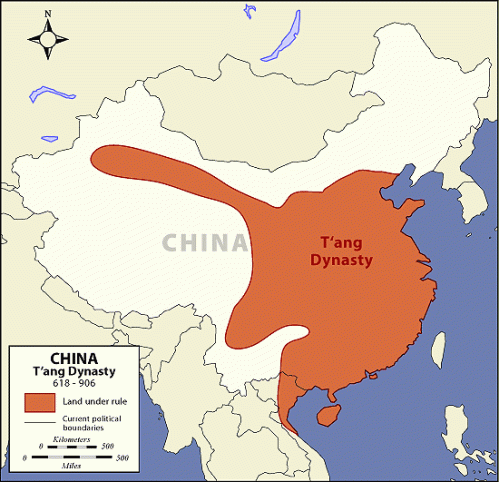
china-tang-large

Han Wu

COOLER WEATHER


Her jade-green alcove curtained thick with silk,
Her vermilion screen with its pattern of flowers,
Her eight- foot dragon-beard mat and her quilt brocaded in squares
Are ready now for nights that are neither warm nor cold.

Seven-character-quatrain

Wei Zhuang

A NANJING LANDSCAPE


Though a shower bends the river-grass, a bird is singing,
While ghosts of the Six Dynasties pass like a dream
Around the Forbidden City, under weeping willows
Which loom still for three miles along the misty moat.


Chen Tao

TURKESTAN


Thinking only of their vow that they would crush the Tartars- –
On the desert, clad in sable and silk, five thousand of them fell….
But arisen from their crumbling bones on the banks of the river at the border,
Dreams of them enter, like men alive, into rooms where their loves lie sleeping.

Zhang Bi

A MESSAGE


I go in a dream to the house of Xie
Through a zigzag porch with arching rails
To a court where the spring moon lights for ever
Phantom flowers and a single figure.

Wumingshi

THE DAY OF NO FIRE


As the holiday approaches, and grasses are bright after rain,
And the causeway gleams with willows, and wheatfields wave in the wind,
We are thinking of our kinsfolk, far away from us.
O cuckoo, why do you follow us, why do you call us home?

horse

Wang Wei

A SONG AT WEICHENG


A morning-rain has settled the dust in Weicheng;
Willows are green again in the tavern dooryard….
Wait till we empty one more cup —
West of Yang Gate there’ll be no old friends.


Wang Wei

A SONG OF AN AUTUMN NIGHT


Under the crescent moon a light autumn dew
Has chilled the robe she will not change —
And she touches a silver lute all night,
Afraid to go back to her empty room.

Wang Changling

A SIGH IN THE COURT OF PERPETUAL FAITH


She brings a broom at dawn to the Golden Palace doorway
And dusts the hall from end to end with her round fan,
And, for all her jade-whiteness, she envies a crow
Whose cold wings are kindled in the Court of the Bright Sun.

Wang Changling

OVER THE BORDER


The moon goes back to the time of Qin, the wall to the time of Han,
And the road our troops are travelling goes back three hundred miles….
Oh, for the Winged General at the Dragon City —
That never a Tartar horseman might cross the Yin Mountains!

Wang Zhihuan

BEYOND THE BORDER


Where a yellow river climbs to the white clouds,
Near the one city-wall among ten-thousand-foot mountains,
A Tartar under the willows is lamenting on his flute
That spring never blows to him through the Jade Pass

Li Bai

A SONG OF PURE HAPPINESS I


Her robe is a cloud, her face a flower;
Her balcony, glimmering with the bright spring dew,
Is either the tip of earth’s Jade Mountain
Or a moon- edged roof of paradise.

Li Bai

A SONG OF PURE HAPPINESS II


There’s a perfume stealing moist from a shaft of red blossom,
And a mist, through the heart, from the magical Hill of Wu- –
The palaces of China have never known such beauty-
Not even Flying Swallow with all her glittering garments.

Li Bai

A SONG OF PURE HAPPINESS III


Lovely now together, his lady and his flowers
Lighten for ever the Emperor’s eye,
As he listens to the sighing of the far spring wind
Where she leans on a railing in the Aloe Pavilion.

Du Qiuniang

THE GOLD-THREADED ROBE


Covet not a gold-threaded robe,
Cherish only your young days!
If a bud open, gather it —
Lest you but wait for an empty bough.

Li Shangyin

TO ONE UNNAMED V


There are many curtains in your care-free house,
Where rapture lasts the whole night long.
…What are the lives of angels but dreams
If they take no lovers into their rooms?
…Storms are ravishing the nut-horns,
Moon- dew sweetening cinnamon-leaves
I know well enough naught can come of this union,
Yet how it serves to ease my heart!

Wen Tingyun

NEAR THE LIZHOU FERRY


The sun has set in the water’s clear void,
And little blue islands are one with the sky.
On the bank a horse neighs. A boat goes by.
People gather at a willow- clump and wait for the ferry.
Down by the sand-bushes sea-gulls are circling,
Over the wide river-lands flies an egret.
…Can you guess why I sail, like an ancient wise lover,
Through the misty Five Lakes, forgetting words?

Wen Tingyun

THE TEMPLE OF SU WU


Though our envoy, Su Wu, is gone, body and soul,
This temple survives, these trees endure….
Wildgeese through the clouds are still calling to the moon there
And hill-sheep unshepherded graze along the border.
…Returning, he found his country changed
Since with youthful cap and sword he had left it.
His bitter adventures had won him no title….
Autumn-waves endlessly sob in the river.

Xue Feng

A PALACE POEM


In twelve chambers the ladies, decked for the day,
Peer afar for their lord from their Fairy-View Lodge;
The golden toad guards the lock on the door-chain,
And the bronze-dragon water-clock drips through the morning
Till one of them, tilting a mirror, combs her cloud of hair
And chooses new scent and a change of silk raiment;
For she sees, between screen-panels, deep in the palace,
Eunuchs in court-dress preparing a bed.

Qin Taoyu

A POOR GIRL


Living under a thatch roof, never wearing fragrant silk,
She longs to arrange a marriage, but how could she dare?
Who would know her simple face the loveliest of them all
When we choose for worldliness, not for worth?
Her fingers embroider beyond compare,
But she cannot vie with painted brows;
And year after year she has sewn gold thread
On bridal robes for other girls.

Shen Quanqi

BEYOND SEEING


A girl of the Lu clan who lives in Golden-Wood Hall,
Where swallows perch in pairs on beams of tortoiseshell,
Hears the washing-mallets’ cold beat shake the leaves down.
…The Liaoyang expedition will be gone ten years,
And messages are lost in the White Wolf River.
…Here in the City of the Red Phoenix autumn nights are long,
Where one who is heart-sick to see beyond seeing,
Sees only moonlight on the yellow-silk wave of her loom.

Wang Wei

DEER-PARK HERMITAGE


There seems to be no one on the empty mountain….
And yet I think I hear a voice,
Where sunlight, entering a grove,
Shines back to me from the green moss.

Wang Wei

IN A RETREAT AMONG BAMBOOS


Leaning alone in the close bamboos,
I am playing my lute and humming a song
Too softly for anyone to hear —
Except my comrade, the bright moon.

Wang Wei

A PARTING


Friend, I have watched you down the mountain
Till now in the dark I close my thatch door….
Grasses return again green in the spring,
But O my Prince of Friends, do you?

Wang Wei

ONE-HEARTED


When those red berries come in springtime,
Flushing on your southland branches,
Take home an armful, for my sake,
As a symbol of our love.


He Zhizhang

COMING HOME


I left home young. I return old;
Speaking as then, but with hair grown thin;
And my children, meeting me, do not know me.
They smile and say: “Stranger, where do you come from?”
from-the-painting-e2809cbanquets-at-a-frontier-fortresse2809d-the-painting-is-currently-housed-in-beijing-forbidden-city-museum

Zhang Xu

PEACH-BLOSSOM RIVER


A bridge flies away through a wild mist,
Yet here are the rocks and the fisherman’s boat.
Oh, if only this river of floating peach-petals
Might lead me at last to the mythical cave!

Wang Wei

ON THE MOUNTAIN HOLIDAY
THINKING OF MY BROTHERS IN SHANDONG


All alone in a foreign land,
I am twice as homesick on this day
When brothers carry dogwood up the mountain,
Each of them a branch-and my branch missing.

Wang Changling

AT HIBISCUS INN
PARTING WITH XIN JIAN


With this cold night-rain hiding the river, you have come into Wu.
In the level dawn, all alone, you will be starting for the mountains of Chu.
Answer, if they ask of me at Loyang:
“One-hearted as ice in a crystal vase.”

Wang Changling

IN HER QUIET WINDOW


Too young to have learned what sorrow means,
Attired for spring, she climbs to her high chamber….
The new green of the street-willows is wounding her heart —
Just for a title she sent him to war.

Wang Changling

A SONG OF THE SPRING PALACE


Last night, while a gust blew peach-petals open
And the moon shone high on the Palace Beyond Time,
The Emperor gave Pingyang, for her dancing,
Brocades against the cold spring-wind.
greatwall

Wang Han

A SONG OF LIANGZHOU


They sing, they drain their cups of jade,
They strum on horseback their guitars.
…Why laugh when they fall asleep drunk on the sand ? —
How many soldiers ever come home?

Li Bai

A FAREWELL TO MENG HAORAN
ON HIS WAY TO YANGZHOU


You have left me behind, old friend, at the Yellow Crane Terrace,
On your way to visit Yangzhou in the misty month of flowers;
Your sail, a single shadow, becomes one with the blue sky,
Till now I see only the river, on its way to heaven.

Li Bai

THROUGH THE YANGZI GORGES


From the walls of Baidi high in the coloured dawn
To Jiangling by night-fall is three hundred miles,
Yet monkeys are still calling on both banks behind me
To my boat these ten thousand mountains away.

Cen Can

ON MEETING A MESSENGER TO THE CAPITAL


It’s a long way home, a long way east.
I am old and my sleeve is wet with tears.
We meet on horseback. I have no means of writing.
Tell them three words: “He is safe.”

Du Fu

ON MEETING LI GUINIAN DOWN THE RIVER


I met you often when you were visiting princes
And when you were playing in noblemen’s halls.
…Spring passes…. Far down the river now,
I find you alone under falling petals.

Wei Yingwu

AT CHUZHOU ON THE WESTERN STREAM


Where tender grasses rim the stream
And deep boughs trill with mango-birds,
On the spring flood of last night’s rain
The ferry-boat moves as though someone were poling.

Zhang Ji

A NIGHT-MOORING NEAR MAPLE BRIDGE


While I watch the moon go down, a crow caws through the frost;
Under the shadows of maple-trees a fisherman moves with his torch;
And I hear, from beyond Suzhou, from the temple on Cold Mountain,
Ringing for me, here in my boat, the midnight bell.

Han Hong

AFTER THE DAY OF NO FIRE


Petals of spring fly all through the city
From the wind in the willows of the Imperial River.
And at dusk, from the palace, candles are given out
To light first the mansions of the Five Great Lords.

Liu Fangping

A MOONLIGHT NIGHT


When the moon has coloured half the house,
With the North Star at its height and the South Star setting,
I can fed the first motions of the warm air of spring
In the singing of an insect at my green-silk window.

Liu Fangping

SPRING HEART-BREAK


With twilight passing her silken window,
She weeps alone in her chamber of gold
For spring is departing from a desolate garden,
And a drift of pear-petals is closing a door.

Liu Zhongyong

A TROOPER’S BURDEN


For years, to guard the Jade Pass and the River of Gold,
With our hands on our horse-whips and our swordhilts,
We have watched the green graves change to snow
And the Yellow Stream ring the Black Mountain forever.

Gu Kuang

A PALACE POEM


High above, from a jade chamber, songs float half-way to heaven,
The palace-girls’ gay voices are mingled with the wind —
But now they are still, and you hear a water-clock drip in the Court of the Moon….
They have opened the curtain wide, they are facing the River of Stars.
chinese-painting-in-the-forbidden-city-of-beijing

Li Yi

ON HEARING A FLUTE AT NIGHT
FROM THE WALL OF SHOUXIANG


The sand below the border-mountain lies like snow,
And the moon like frost beyond the city-wall,
And someone somewhere, playing a flute,
Has made the soldiers homesick all night long.

Liu Yuxi

BLACKTAIL ROW


Grass has run wild now by the Bridge of Red-Birds;
And swallows’ wings, at sunset, in Blacktail Row
Where once they visited great homes,
Dip among doorways of the poor.

Liu Yuxi

A SPRING SONG


In gala robes she comes down from her chamber
Into her courtyard, enclosure of spring….
When she tries from the centre to count the flowers,
On her hairpin of jade a dragon-fly poises.

Bai Juyi

A SONG OF THE PALACE


Her tears are spent, but no dreams come.
She can hear the others singing through the night.
She has lost his love. Alone with her beauty,
She leans till dawn on her incense-pillow.

Zhang Hu

OF ONE IN THE FORBIDDEN CITY


When the moonlight, reaching a tree by the gate,
Shows her a quiet bird on its nest,
She removes her jade hairpins and sits in the shadow
And puts out a flame where a moth was flying.

Forbidden City Painting

5 Comments

Filed under Chinese poetry, pictures, poetry

Sunday Soup May 3rd 2009

First, some poetry readings compliments of Librivox:

lesel-mueller-monet-refuses-the-operation

gary-snyder-how-poetry-comes-to-me

charles-simic-i-was-stolen-by-the-gypsies

sylvia-plath-daddy

sylvia-plath-ariel

david-ray-the-greatest-poem-in-the-world

Not cleaned up, so formatting is weird, from Project Gutenberg, The Life of St. Francis by Paul Sabatier:
lifeofstfrancis

By HH Shamar Rinpoche, The Seven Points of Mind Training, Dharma Teachings:

dharma-teachings

Big Pictures (click for full size):

antelope_canyon

antelopecanyonarizona

the_wave-arizona

Beautiful creatures:

camelspider

orchid_mantis-hymenopus_coronatu

silkmoth-eupackardiacalleta

dasychirapudibundaBye for now

1 Comment

Filed under buddhism, Free E-Books, mp3, pictures, poetry, sound bite