Category Archives: Spirituality

Dance Party Breaks Out at Friends Meeting

Go here.

Fun. Yeah. That Friend speaks my mind.

be kind

Oh, yes. And it’s time to announce

Mad Liberation Radio 8/7/09

Mental Health consumer-talk-radio
Tonight, 1 a.m. to 2 a.m.-
August 7th, 2009
KBOO 90.7 FM or streamed on the web: kboo.fm
Call in at 503-231-8187 to be on the radio (or show up at the studio).

Please set your alarm if you aren’t up at that time- we need your voice.
There are people listening
(all over the world, by internet)
Call in at 503-231-8187

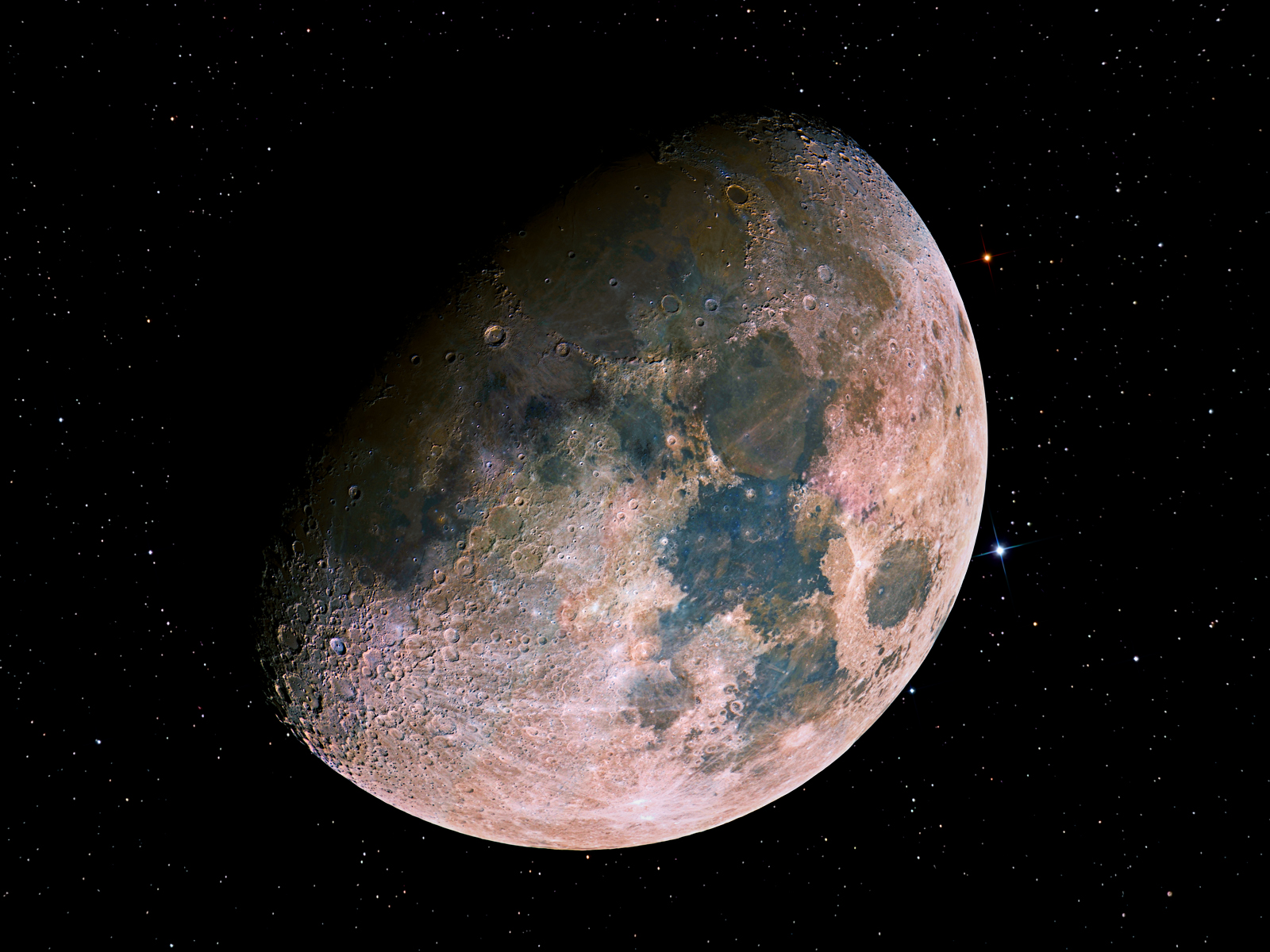
Moon_Hypersaturated

Extra Special Announcement!
Stay up until 11 the next morning and you
can take part in Internet Madness Radio!
Click http://www.blogtalkradio.com/davidwoaks
and/ or call in at (646) 595-2125.
MATTHEW MORRISSEY will co-host a special 
live free Internet call-in show on humane,
empowering alternatives to 
the conventional mental health system.
All three guests are actively involved in providing mental health 
alternatives:
JESSICA ARNELLA, JAYME LYNCH, LYLE MURPHY

low-moon

But I digress…
Mad Liberation by Moonlight
This Friday night, 1 a.m. to 2 a.m.-
August 7th, 2009
(yes, it’s really Saturday morning; relax, it’s only radio)
KBOO 90.7 FM or streamed on the web: kboo.fm
Call in at 503-231-8187

Archived shows are available at
https://rickpdx.wordpress.com/mad-liberation-by-moonlight-archives/

KBOO 90.7 FM or on the web at kboo.fm (note the repetition)

Be well,
Rick

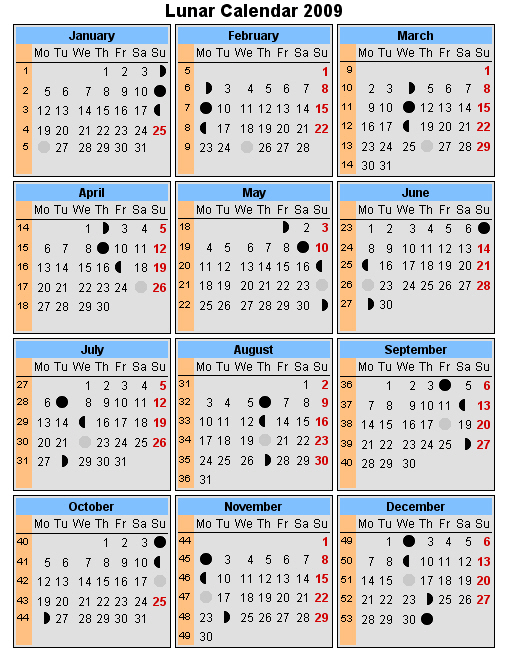
(click below for full-size)

lunar2009

Leave a comment

Filed under Mad Radio, Spirituality

Mixed Buddhist Poetry

Mostly a collection of poems that I find to be inspirational. Let ‘er rip!

Hui Yung (332-414 )

71meterbudha-chinaTranslating Sutras

We go on unwinding the woof
from the web of their meaning :
words of the Sutras
day by day leap forth .
Head on we’ve
chased the miracle
of Dharma :
here are no mere scholars .
Moon Sitting
High mountain cascades froth .
This wild temple owns few lamps .
Sit facing the glitter
of the moon: out of season
heart of ice .

Wind and Waterblue-sun

a steady wind scours the autumn moon

from a stagnant pool, from the crystal spring

every place pure now . . . just as it is .

why, then, does karma yet coil and bind?

Hui K’o (4th-5th Century)
No me : Dharmas all empty

Death, Life, small
difference .
Heart of mystery’ s
transformation:
know, and see.
The Truth cries out
where the arrow strikes the target .

The Absolute

selfless dharmas are all empty
life and death about alike
the transformed heart knows it all at a glance
truth is in the middle of things .

518873437_f32b4e5d2c_o

Seng Ts’an (d 606)
Verses on the Faith-Mind

The Great Way is not difficult
for those who have no preferences .
When love and hate are both absent
everything becomes clear and undisguised .
Make the smallest distinction, however,
and heaven and earth are set infinitely apart .
If you wish to see the truth
then hold no opinions for or against anything.
To set up what you like against what you dislike
is the disease of the mind.
When the deep meaning of things is not understood
the mind’s essential peace is disturbed to no avail.
The Way is perfect like vast space
where nothing is lacking and nothing is in excess.
Indeed, it is due to our choosing to accept or reject
that we do not see the true nature of things.
Live neither in the entanglements of outer things,
nor in inner feelings of emptiness .
Be serene in the oneness of thing s
and such erroneous views will disappear by themselves .
When you try to stop activity to achieve passivity
your very effort fills you with activity .
As long as you remain in one extreme or the othe r
you will never know Oneness .
Those who do not live in the single Way
fail in both activity and passivity ,
assertion and denial.
To deny the reality of thing s
is to miss their reality ;
to assert the emptiness of things
is to miss their reality .

*

The more you talk and think about it ,
the further astray you wander from the truth .
Stop talking and thinking ,
and there is nothing you will not be able to know .
To return to the root is to find the meaning ,
but to pursue appearances is to miss the source .
At the moment of inner enlightenment
there is a going beyond appearance and emptiness .
The changes that appear to occur in the empty world
we call real only because of our ignorance .
Do not search for the truth ;
only cease to cherish opinions .
Do not remain in the dualistic state ;
avoid such pursuits carefully .
If there is even a trace
of this and that, of right and wrong ,
the Mind-essence will be lost in confusion .
Although all dualities come from the One ,
do not be attached even to this One .
When the mind exists undisturbed in the Way ,
nothing in the world can offend ,
and when a thing can no longer offend ,
it ceases to exist in the old way .
When no discriminating thoughts arise ,
the old mind ceases to exist .
When thought objects vanish ,
the thinking-subject vanishes,
as when the mind vanishes, objects vanish .
Things are objects because of the subject [mind] ;
the mind [subject] is such because of things [objects] .
Understand the relativity of these two
and the basic reality : the unity of emptiness .
In this Emptiness the two are indistinguishable
and each contains in itself the whole world.
If you do not discriminate between coarse and fine
you will not be tempted to prejudice and opinion.

*

If the eye never sleeps,
all dreams will naturally cease.
If the mind makes no discrimination,
the ten thousand things
are as they are, of single essence .
To understand the mystery of this One-essence
is to be released from all entanglements.
When all things are seen equally
the timeless Self-essence is reached.
No comparisons or analogies are possible
in this causeless, relationless state.
Consider movement stationary
and the stationary in motion,
both movement and rest disappear.
When such dualities cease to exist
Oneness itself cannot exist.
To this ultimate finality
no law or description applies.
For the unified mnd in accord with the Way
all self-centered striving ceases .
Doubts and irresolutions vanish
and life in true faith is possible .
With a single stroke we are freed from bondage;
nothing clings to us and we hold to nothing.
All is empty, clear, self-illuminating
with no exertion of the mind’s power.
Here thought, feeling, knowledge, and imagination
are of no value.
In this world of Suchness
there is neither self nor other-than-self .
To come directly into harmony with this reality
just simply say when doubt arises, `Not two. ‘
In this `not two ‘ nothing is separate,
nothing is excluded.
No matter when or where,
enlightenment means entering this truth .

Shill Te (Legendarv, c . 730)

Since I came to this T ‘ien T ‘ai temple
how many Winters and Springs have passed
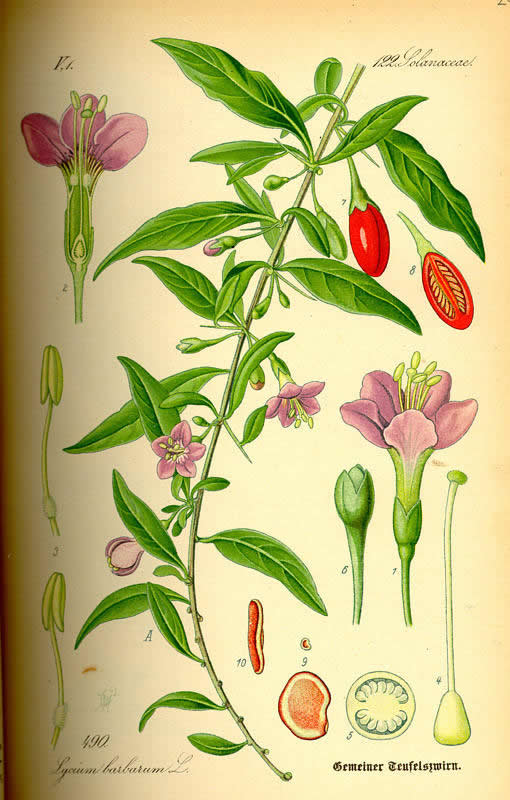
Otto draws goji 1885the mountains and the waters are unchanged
the man’s grown older
how many other men will watch those mountains stand
see the moon’s bright blaze of light
a shining lamp, above the world
full glistening and hanging in vast void
that brilliant jewel, its brightness, through the mist
some people say it waxes, wanes
their’s may but mine remains
as steady as the Mani Pearl
this light knows neither day or night
sermons there are, must be a million
too many to read in a hurry
if you want a friend just come to T’ien T’ai mountain
sit deep among the crags
we’ll talk about the Principle s
and chat about dark Mysterie s
if you don’t come to my mountain
your view will be blocke d
by the others

green Island

why sympathize with men like these?
I can remember the taste of that dirt.
cloudy mountains, fold on fold,
how many thousands of them?
shady valley road runs deep, all trace of man is gone
green torrents, pure clear flow, no place more full of beauty
and time, and time, birds sing
my own heart’s harmony .
if you want to be happy
there’s no other way than the hermit’ s
flowers in the grove, endless brocade
every single season’s colors new
just sit beside the chasm
turn your head, as the moon rolls by
yet though I ought to be at joyous ease
I can’t stop thinking of the others.
far, far, the mountain path is steep
thousands of feet up, the pass is dangerous and narrow
on the stone bridge the moss and lichen green
from time to time, a sliver of cloud flying
cascades hang like skeins of silk
image of the moon from the deep pool shining
once more to the top of Flowering Peak

Shih Shu (c . 1703 )

sch_g_tao
the human body is a little universe
its chill tears, so much windblown sleet
beneath our skins, mountains bulge, brooks flow,
within our chests lurk lost cities, hidden tribes.
wisdom quarters itself in our tiny hearts.
liver and gall peer out, scrutinize a thousand miles.
follow the path back to its source, or else be
a house vacant save for swallows in the eave.
as flowing waters disappear into the mist
we lose all track of their passage.
every heart is its own Buddha;
to become a saint, do nothing.
enlightenment: the world is a mote of dust ,
you can look right through heaven’s round mirror
slip past all form, all shape
and sit side by side with nothing, save Tao.

Hsu Yun (1940-195~ )

Sound of the Wind in the Pine s
an Afternoon and Night on Mount Lu
1 .
Courtyard-covering white dew
Moistens hidden orchids .
Leaves fade; a few flower s
Half retain their scent .
The cold Moon hangs alone ;
Nothing happening with people.
Pine wind blows right through :
Night waves cold .
II .
Swell after swell of pinewin d
Comb like waves at sea :
Beat after beat of heavenly musi c
Strummed on cloudy strings .
Midnight, Tao folk
Purify their hearing
And rise alone to burn incense:
Moon full
Just overhead.
Zen heart peaceful and stil l
Inside white clouds .
Autumn floods and spring mountains
Aren’t the same yet .
It’s just the pine wind
Whistles another tune .
Deep night white moon ,
Drizzling already .
Iv.
The mountain is empty ; flute still .
Thought uninvolved.
A pine wind circling the cabin
Calls right through the ear.
Here’s a monk with a talking habit ;
Midnight, the eternal teaching
Preaching `No Birth .’
Brooks in torrent untiring ;
People’s words more and more rare .
Where schemes calm heart ?
Sitting in the lotus,
Wrapped in robes of Zen .
At a Thatched Hut on the Flower Peak of Mount T’ien-t’a i
Sitting with Dharma Master Jung Ching During a Long Rai n
Hard rain, our gathered firewood scant;
Lamp frozen, glimmers not at night .
In the cave, wind blows stones and mud .
Moss engravings weatherstrip rickety door .

outlaw
Written for the Zen Man Te-jun
at the Great Assembly at Fo-yen

Days long ago do you remember
Making circuits of the Buddha halls?
How could we know the age of Earth,
The Boundless steppes of Heaven?
Chariots of wind I have ridden
And caught tigers on cloud-sprung feet.
Undersea I snared a dragon,
Moonlight streaming through the window.
Outside of time, flowers of wonder bloom,
Stamens touching space.
At sky’s edge moon trees
Breathe laurel perfume.
Again I walk the pure, cool, earth;
Form-taking life thrives in the web,
Upholding the Dharma-king.
Feelings on Remembering the Day
I First Produced the Mind
Drawn some sixty years ago by karma
I turned life upside down
And climbed straight on to lofty summits .
Between my eyes a hanging sword,
The Triple World is pure.
Empty-handed, I hold a hoe, clearing a galaxy.
As the `Ocean of Knowing-mind’ dries up,
Pearls shine forth by themselves;
Space smashed to dust, a moon hangs independent.
I threw my net through Heaven,
Caught the dragon and the phoenix;
Alone I walk through the cosmos,
Connecting the past and its people .

sometrees

Leave a comment

Filed under buddhism, Chinese poetry, Mystic Poetry, pictures, poetry, Spirituality

Upanishads, Part 2

Scroll down a ways for Part 1.

Max Muller Translation, mostly. I just finished cleaning up the text tonight- eliminating some verbose debris, removing the original page numbers and fixing weird paragraph splits. This is a 19th century translation and they tend to run on and on. The upside is that it is public domain.

This is it (the full 262 pages): UpanishadsPt2MaxMuller

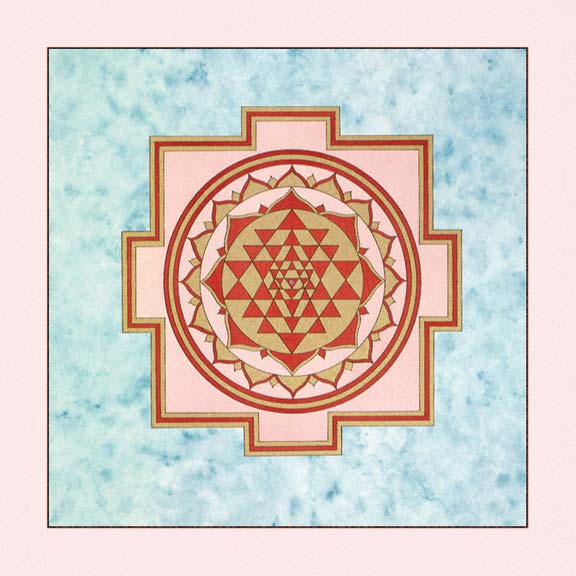
sri_yantra

Excerpt from Part 2, complete with Muller’s notes:

BRIHADARANYAKA-UPANISHAD

FIRST ADHYAYA [*1].

FIRST BRAHMANA.

1. Verily [*2] the dawn is the head of the horse which is fit for sacrifice, the sun its eye, the wind its breath, the mouth the Vaisvanara [*3] fire, the year the body of the sacrificial horse. Heaven is the back, the sky the belly, the earth the chest [*4], the quarters the two sides, the intermediate quarters the ribs, the members the seasons, the joints the months and half-months, the feet days and nights, the bones the stars, the flesh the clouds. The half-digested food is the sand, the rivers the bowels [*1], the liver and the lungs [*2] the mountains, the hairs the herbs and trees. As the sun rises, it is the forepart, as it sets, the hindpart of the horse. When the horse shakes itself [*3], then it lightens; when it kicks, it thunders; when it makes water, it rains; voice [*4] is its voice.

2. Verily Day arose after the horse as the (golden) vessel [*5], called Mahiman (greatness), which (at the sacrifice) is placed before the horse. Its place is in the Eastern sea. The Night arose after the horse as the (silver) vessel, called Mahiman, which (at the sacrifice) is placed behind the horse. Its place is in the Western sea. Verily, these two vessels (or greatnesses) arose to be on each side of the horse.

As a racer he carried the Devas, as a stallion the Gandharvas, as a runner the Asuras, as a horse men. The sea is its kin, the sea is its birthplace.

Footnotes

^73:1 It is the third Adhyaya of the Aranyaka, but the first of the Upanishad.

^73:2 This Brahmana is found in the Madhyandina text of the Satapatha, ed. Weber, X, 6, 4. Its object is there explained by the commentary to be the meditative worship of Virag, as represented metaphorically in the members of the horse. Sayana dispenses with its explanation, because, as part of the Brihadaranyaka-upanishad, according to the Kanva-sakha, it had been enlarged on by the Varttikakara and explained.

^73:3 Agni or fire, as pervading everything, as universally present in nature.

^73:4 Pagasya is doubtful. The commentator suggests pad-asya, the place of the feet, i.e. the hoof The Greek Pegasos, or ippoi peloi, throws no light on the word. The meaning of hoof would hardly be appropriate here, and I prefer chest on account of uras in I, 2, 3. Deussen (Vedanta, p. 8) translates, die Erde seiner Fusse Schemel; but we want some part of the horse.

^74:1 Guda, being in the plural, is explained by nadi, channel, and sirah; for we ought to read sira or hiragrahane for sira, p. 22, l. 16.

^74:2 Klomanah is explained as a plurale tantum (nityam bahuvakanam ekasmin), and being described as a lump below the heart, on the opposite side of the liver, it is supposed to be the lungs.

^74:3 ‘When it yawns.’ Anandagiri.

^74:4 Voice is sometimes used as a personified power of thunder and other aerial sounds, and this is identified with the voice of the horse.

^74:5 Two vessels, to hold the sacrificial libations, are placed at the Asvamedha before and behind the horse, the former made of gold, the latter made of silver. They are called Mahiman in the technical language of the ceremonial. The place in which these vessels are set, is called their yoni. Cf. Vagas. Samhita XXIII, 2.

Hindu-shiva

SECOND BRAHMANA [*6].

1. In the beginning there was nothing (to be perceived) here whatsoever. By Death indeed all this was concealed,–by hunger; for death is hunger. Death (the first being) thought, ‘Let me have a body.’ Then he moved about, worshipping. From him thus worshipping water was produced. And he said: ‘Verily, there appeared to me, while I worshipped (arkate), water (ka).’ This is why water is called ar-ka [*1]. Surely there is water (or pleasure) for him who thus knows the reason why water is called arka.

2. Verily water is arka. And what was there as the froth of the water, that was hardened, and became the earth. On that earth he (Death) rested, and from him, thus resting and heated, Agni (Virag) proceeded, full of light.

3. That being divided itself threefold, Aditya (the sun) as the third, and Vayu (the air) as the third [*2]. That spirit (prana) [*3] became threefold. The head was the Eastern quarter, and the arms this and that quarter (i. e. the N. E. and S. E., on the left and right sides). Then the tail was the Western quarter, and the two legs this and that quarter (i. e. the N. W. and S. W.) The sides were the Southern and Northern quarters, the back heaven, the belly the sky, the dust the earth. Thus he (Mrityu, as arka) stands firm in the water, and he who knows this stands firm wherever he goes.

4. He desired [*1], ‘Let a second body be born of me,’ and he (Death or Hunger) embraced Speech in his mind. Then the seed became the year. Before that time there was no year. Speech [*2] bore him so long as a year, and after that time sent him forth. Then when he was born, he (Death) opened his mouth, as if to swallow him. He cried Bhan! and that became speech [*3].

5. He thought, ‘If I kill him, I shall have but little food.’ He therefore brought forth by that speech and by that body (the year) all whatsoever exists, the Rik, the Yagus, the Saman, the metres, the sacrifices, men, and animals.

And whatever he (Death) brought forth, that he resolved to eat (ad). Verily because he eats everything, therefore is Aditi (Death) called Aditi. He who thus knows why Aditi is called Aditi, becomes an eater of everything, and everything becomes his food [*4].

6. He desired to sacrifice again with a greater sacrifice. He toiled and performed penance. And while he toiled and performed penance, glorious power [*1] went out of him. Verily glorious power means the senses (prana). Then when the senses had gone out, the body took to swelling (sva-yitum), and mind was in the body.

7. He desired that this body should be fit for sacrifice (medhya), and that he should be embodied by it. Then he became a horse (asva), because it swelled (asvat), and was fit for sacrifice (medhya); and this is why the horse-sacrifice is called Asva-medha.

Verily he who knows him thus, knows the Asvamedha. Then, letting the horse free, he thought [*2], and at the end of a year he offered it up for himself, while he gave up the (other) animals to the deities. Therefore the sacrificers offered up the purified horse belonging to Pragapati, (as dedicated) to all the deities.

Verily the shining sun is the Asvamedha-sacrifice, and his body is the year; Agni is the sacrificial fire (arka), and these worlds are his bodies. These two are the sacrificial fire and the Asvamedha-sacrifice, and they are again one deity, viz. Death. He (who knows this) overcomes another death, death does not reach him, death is his Self, he becomes one of those deities.

Aum_Om_Hinduism_symbol_Aum_5

THIRD BRAHMANA [*1].

1. There were two kinds of descendants of Pragapati, the Devas and the Asuras [*2]. Now the Devas were indeed the younger, the Asuras the elder ones [*3]. The Devas, who were struggling in these worlds, said: ‘Well, let us overcome the Asuras at the sacrifices (the Gyotishtoma) by means of the udgitha.’

2. They said to speech (Vak): ‘Do thou sing out for us (the udgitha).’ ‘Yes,’ said speech, and sang (the udgitha). Whatever delight there is in speech, that she obtained for the Devas by singing (the three pavamanas); but that she pronounced well (in the other nine pavamanas), that was for herself. The Asuras knew: ‘Verily, through this singer they will overcome us.’ They therefore rushed at the singer and pierced her with evil. That evil which consists in saying what is bad, that is that evil.

3. Then they (the Devas) said to breath (scent): ‘Do thou sing out for us.’ ‘Yes,’ said breath, and sang. Whatever delight there is in breath (smell), that he obtained for the Devas by singing; but that he smelled well, that was for himself. The Asuras knew: ‘Verily, through this singer they will overcome us.’ They therefore rushed at the singer, and pierced him with evil. That evil which consists in smelling what is bad, that is that evil.

4. Then they said to the eye: ‘Do thou sing out for us.’ ‘Yes,’ said the eye, and sang. Whatever delight there is in the eye, that he obtained for the Devas by singing; but that he saw well, that was for himself The Asuras knew: ‘Verily, through this singer they will overcome us.’ They therefore rushed at the singer, and pierced him with evil. That evil which consists in seeing what is bad, that is that evil.

5. Then they said to the ear: ‘Do thou sing out for us.’ ‘Yes,’ said the ear, and sang. Whatever delight there is in the ear, that he obtained for the Devas by singing; but that he heard well, that was for himself. The Asuras knew: ‘Verily, through this singer they will overcome us.’ They therefore rushed at the singer, and pierced him with evil. That evil which consists in hearing what is bad, that is that evil.

6. Then they said to the mind: ‘Do thou sing out for us.’ ‘Yes,’ said the mind, and sang. Whatever delight there is in the mind, that he obtained for the Devas by singing; but that he thought well, that was for himself. The Asuras knew: ‘Verily, through this singer they will overcome us.’ They therefore rushed at the singer, and pierced him with evil. That evil which consists in thinking what is bad, that is that evil.

Thus they overwhelmed these deities with evils, thus they pierced them with evil.

7. Then they said to the breath in the mouth [*1]: ‘Do thou sing for us.’ ‘Yes,’ said the breath, and sang. The Asuras knew: ‘Verily, through this singer they will overcome us.’ They therefore rushed at him and pierced him with evil. Now as a ball of earth will be scattered when hitting a stone, thus they perished, scattered in all directions. Hence the Devas rose, the Asuras fell. He who knows this, rises by his self, and the enemy who hates him falls.

8. Then they (the Devas) said: ‘Where was he then who thus stuck to us [*1]?’ It was (the breath) within the mouth (asye ‘ntar [*2]), and therefore called Ayasya; he was the sap (rasa) of the limbs (anga), and therefore called Angirasa.

9. That deity was called Dur, because Death was far (duran) from it. From him who knows this, Death is far off.

10. That deity, after having taken away the evil of those deities, viz. death, sent it to where the end of the quarters of the earth is. There he deposited their sins. Therefore let no one go to a man, let no one go to the end (of the quarters of the earth [*3]), that he may not meet there with evil, with death.

11. That deity, after having taken away the evil of those deities, viz. death, carried them beyond death.

12. He carried speech across first. When speech had become freed from death, it became (what it had been before) Agni (fire). That Agni, after having stepped beyond death, shines.

13. Then he carried breath (scent) across. When breath had become freed from death, it became Vayu (air). That Vayu, after having stepped beyond death, blows.

14. Then he carried the eye across. When the eye had become freed from death, it became Aditya (the sun). That Aditya, after having stepped beyond death, burns.

15. Then he carried the ear across. When the ear had become freed from death, it became the quarters (space). These are our quarters (space), which have stepped beyond death.

16. Then he carried the mind across. When the mind had become freed from death, it became the moon (Kandramas). That moon, after having stepped beyond death, shines. Thus does that deity carry him, who knows this, across death.

17. Then breath (vital), by singing, obtained for himself eatable food. For whatever food is eaten, is eaten by breath alone, and in it breath rests [*1].

The Devas said: ‘Verily, thus far, whatever food there is, thou hast by singing acquired it for thyself. Now therefore give us a share in that food.’ He said: ‘You there, enter into me.’ They said Yes, and entered all into him. Therefore whatever food is eaten by breath, by it the other senses are satisfied.

18. If a man knows this, then his own relations come to him in the same manner; he becomes their supporter, their chief leader, their strong ruler [*2]. And if ever anyone tries to oppose [*3] one who is possessed of such knowledge among his own relatives, then he will not be able to support his own belongings. But he who follows the man who is possessed of such knowledge, and who with his permission wishes to support those whom he has to support, he indeed will be able to support his own belongings.

19. He was called Ayasya Angirasa, for he is the sap (rasa) of the limbs (anga). Verily, breath is the sap of the limbs. Yes, breath is the sap of the limbs. Therefore from whatever limb breath goes away, that limb withers, for breath verily is the sap of the limbs.

20. He (breath) is also Brihaspati, for speech is Brihati (Rig-veda), and he is her lord; therefore he is Brihaspati.

2 1. He (breath) is also Brahmanaspati, for speech is Brahman (Yagur-veda), and he is her lord; therefore he is Brahmanaspati.

He (breath) is also Saman (the Udgitha), for speech is Saman (Sama-veda), and that is both speech (sa) and breath (ama) [*1]. This is why Saman is called Saman.

22. Or because he is equal (sama) to a grub, equal to a gnat, equal to an elephant, equal to these three worlds, nay, equal to this universe, therefore he is Saman. He who thus knows this Saman, obtains union and oneness with Saman.

23. He (breath) is Udgitha [*2]. Breath verily is Ut, for by breath this universe is upheld (uttabdha); and speech is Githa, song. And because he is ut and githa, therefore he (breath) is Udgitha.

24. And thus Brahmadatta Kaikitaneya (the grandson of Kikitana), while taking Soma (ragan), said: ‘May this Soma strike my head off, if Ayasya Angirasa sang another Udgitha than this. He sang it indeed as speech and breath.’

25. He who knows what is the property of this Saman, obtains property. Now verily its property is tone only. Therefore let a priest, who is going to perform the sacrificial work of a Sama-singer, desire that his voice may have a good tone, and let him perform the sacrifice with a voice that is in good tone. Therefore people (who want a priest) for a sacrifice, look out for one who possesses a good voice, as for one who possesses property. He who thus knows what is the property of that Saman, obtains property.

26. He who knows what is the gold of that Saman, obtains gold. Now verily its gold. is tone only. He who thus knows what is the gold of that Saman, obtains gold.

27. He who knows what is the support of that Saman, he is supported. Now verily its support is speech only. For, as supported in speech, that breath is sung as that Saman. Some say the support is in food.

Next follows the Abhyaroha [*1] (the ascension) of the Pavamana verses. Verily the Prastotri begins to sing the Saman, and when he begins, then let him (the sacrificer) recite these (three Yagus-verses):

‘Lead me from the unreal to the real! Lead me from darkness to light! Lead me from death to immortality!’

Now when he says, ‘Lead me from the unreal to the real,’ the unreal is verily death, the real immortality. He therefore says, ‘Lead me from death to immortality, make me immortal.’

When he says, ‘Lead me from darkness to light,’ darkness is verily death, light immortality. He therefore says, ‘Lead me from death to immortality, make me immortal.’

When he says, ‘Lead me from death to immortality,’ there is nothing there, as it were, hidden (obscure, requiring explanation) [*1].

28. Next come the other Stotras with which the priest may obtain food for himself by singing them. Therefore let the sacrificer, while these Stotras are being sung, ask for a boon, whatever desire he may desire. An Udgatri priest who knows this obtains by his singing whatever desire he may desire either for himself or for the sacrificer. This (knowledge) indeed is called the conqueror of the worlds. He who thus knows this Saman [*2], for him there is no fear of his not being admitted to the worlds [*3].

Footnotes

^74:6 Called the Agni-brahmana, and intended to teach the origin of [p. 75] Agni, the fire, which is here used for the Horse-sacrifice. It is found in the Satapatha-brahmana, Madhyandina-sakha X, 6, 5, and there explained as a description of Hiranyagarbha.

^75:1 We ought to read arkasyarkatvam, as in Poley’s edition, or ark-kasyarkkatvam, to make the etymology still clearer. The commentator takes arka in the sense of fire, more especially the sacrificial fire employed at the Horse-sacrifice. It may be so, but the more natural interpretation seems to me to take arka here as water, from which indirectly fire is produced. From water springs the earth; on that earth he (Mrityu or Pragapati) rested, and from him, while resting there, fire (Virag) was produced. That fire assumed three forms, fire, sun, and air, and in that threefold form it is called prana, spirit.

^75:2 As Agni, Vayu, and Aditya.

^75:3 Here Agni (Virag) is taken as representing the fire of the altar at the Horse-sacrifice, which is called Arka. The object of the whole Brahmana was to show the origin and true character of that fire (arka).

^76:1 He is the same as what was before called mrityu, death, who, after becoming self-conscious, produced water, earth, fire, &c. He now wishes for a second body, which is the year, or the annual sacrifice, the year being dependent on the sun (Aditya).

^76:2 The commentator understands the father, instead of Speech, the mother.

^76:3 The interjectional theory.

^76:4 All these are merely fanciful etymologies of asvamedha and arka.

^77:1 Or glory (senses) and power. Comm.

^77:2 He considered himself as the horse. Roer.

^78:1 Called the Udgitha-brahmana. In the Madhyandina-sakha, the Upanishad, which consists of six adhyayas, begins with this Brahmana (cf. Weber’s edition, p. 104 7; Commentary, p. 1109).

^78:2 The Devas and Asuras are explained by the commentator as the senses, inclining either to sacred or to worldly objects, to good or evil.

^78:3 According to the commentator, the Devas were the less numerous and less strong, the Asuras the more numerous and more powerful.

^79:1 This is the chief or vital breath, sometimes called mukhya.

^80:1 Asakta from sang, to embrace; cf. Rig-veda I, 33, 3. Here it corresponds to the German anhanglich.

^80:2 See Deussen, Vedanta, p. 359.

^80:3 To distant people.

^81:1 This is done by the last nine Pavamanas, while the first three were used for obtaining the reward common to all the pranas.

^81:2 Here annada is well explained by anamayavin, and vyadhirahita, free from sickness, strong.

^81:3 Read pratipratih; see Poley, and Weber, p. 1180.

^82:1 Cf. Khand. Up. V, 2, 6.

^82:2 Not used here in the sense of song or hymn, but as an act of worship connected with the Saman. Comm.

^83:1 The ascension is a ceremony by which the performer reaches the gods, or becomes a god. It consists in the recitation of three Yagus, and is here enjoined to take place when the Prastotri priest begins to sing his hymn.

^84:1 See Deussen, Vedanta, p. 86.

^84:2 He knows that he is the Prana, which Prana is the Saman. That Prana cannot be defeated by the Asuras, i.e. by the senses which are addicted to evil; it is pure, and the five senses finding refuge in him, recover there their original nature, fire, &c. The Prana is the Self of all things, also of speech (Rig-yaguh-samodgitha), and of the Saman that has to be sung and well sung. The Prana pervades all creatures, and he who identifies himself with that Prana, obtains the rewards mentioned in the Brahmana. Comm.

^84:3 In connection with lokagit, lokyata is here explained, and may probably have been intended, as worthiness to be admitted to the highest world. Originally lokyata and alokyata meant right and wrong. See also I, 5, 17.

BRASS0004NATR

FOURTH BRAHMANA [*1].

1. In the beginning this was Self alone, in the shape of a person (purusha). He looking round saw nothing but his Self. He first said, ‘This is I;’ therefore he became I by name. Therefore even now, if a man is asked, he first says, ‘This is I,’ and then pronounces the other name which he may have. And because before (purva) all this, he (the Self) burnt down (ush) all evils, therefore he was a person (pur-usha). Verily he who knows this, burns down every one who tries to be before him.

2. He feared, and therefore any one who is lonely fears. He thought, ‘As there is nothing but myself, why should I fear?’ Thence his fear passed away. For what should he have feared? Verily fear arises from a second only.

3. But he felt no delight. Therefore a man who is lonely feels no delight. He wished for a second. He was so large as man and wife together. He then made this his Self to fall in two (pat), and thence arose husband (pati) and wife (patni). Therefore Yagnavalkya said: ‘We two [*2] are thus (each of us) like half a shell [*3].’ Therefore the void which was there, is filled by the wife. He embraced her, and men were born.

4. She thought, ‘How can he embrace me, after having produced me from himself? I shall hide myself.’

She then became a cow, the other became a bull and embraced her, and hence cows were born. The one became a mare, the other a stallion; the one a male ass, the other a female ass. He embraced her, and hence one-hoofed animals were born. The one became a she-goat, the other a he-goat; the one became a ewe [*1], the other a ram. He embraced her, and hence goats and sheep were born. And thus he created everything that exists in pairs, down to the ants.

5. He knew, ‘I indeed am this creation, for I created all this.’ Hence he became the creation, and he who knows this lives in this his creation.

6. Next he thus produced fire by rubbing. From the mouth, as from the fire-hole, and from the hands he created fire [*2]. Therefore both the mouth and the hands are inside without hair, for the fire-hole is inside without hair.

And when they say, ‘Sacrifice to this or sacrifice to that god,’ each god is but his manifestation, for he is all gods.

Now, whatever there is moist, that he created from seed; this is Soma. So far verily is this universe either food or eater. Soma indeed is food, Agni eater. This is the highest creation of Brahman, when he created the gods from his better part [*1], and when he, who was (then) mortal [*2], created the immortals. Therefore it was the highest creation. And he who knows this, lives in this his highest creation.

7. Now all this was then undeveloped. It became developed by form and name, so that one could say, ‘He, called so and so, is such a one [*3].’ Therefore at present also all this is developed by name and form, so that one can say, ‘He, called so and so, is such a one.’

He (Brahman or the Self) entered thither, to the very tips of the finger-nails, as a razor might be fitted in a razor-case, or as fire in a fire-place [*4].

He cannot be seen, for, in part only, when breathing, he is breath by name; when speaking, speech by name; when seeing, eye by name; when hearing, ear by name; when thinking, mind by name. All these are but the names of his acts. And he who worships (regards) him as the one or the other, does not know him, for he is apart from this (when qualified) by the one or the other (predicate). Let men worship him as Self, for in the Self all these are one. This Self is the footstep of everything, for through it one knows everything [*5]. And as one can find again by footsteps what was lost, thus he who knows this finds glory and praise.

8. This, which is nearer to us than anything, this Self, is dearer than a son, dearer than wealth, dearer than all else.

And if one were to say to one who declares another than the Self dear, that he will lose what is dear to him, very likely it would be so. Let him worship the Self alone as dear. He who worships the Self alone as dear, the object of his love will never perish [*1].

9. Here they say: ‘If men think that by knowledge of Brahman they will become everything, what then did that Brahman know, from whence all this sprang?’

10. Verily in the beginning this was Brahman, that Brahman knew (its) Self only, saying, ‘I am Brahman.’ From it all this sprang. Thus, whatever Deva was awakened (so as to know Brahman), he indeed became that (Brahman); and the same with Rishis and men. The Rishi Vamadeva saw and understood it, singing, ‘I was Manu (moon), I was the sun.’ Therefore now also he who thus knows that he is Brahman, becomes all this, and even the Devas cannot prevent it, for he himself is their Self.

Now if a man worships another deity, thinking the deity is one and he another, he does not know. He is like a beast for the Devas. For verily, as many beasts nourish a man, thus does every man nourish the Devas. If only one beast is taken away, it is not pleasant; how much more when many are taken! Therefore it is not pleasant to the Devas that men should know this.

11. Verily in the beginning this was Brahman, one only. That being one, was not strong enough. It created still further the most excellent Kshatra (power), viz. those Kshatras (powers) among the Devas,–Indra, Varuna, Soma, Rudra, Parganya, Yama, Mrityu, Isana. Therefore there is nothing beyond the Kshatra, and therefore at the Ragasuya sacrifice the Brahmana sits down below the Kshatriya. He confers that glory on the Kshatra alone. But Brahman is (nevertheless) the birth-place of the Kshatra. Therefore though a king is exalted, he sits down at the end (of the sacrifice) below the Brahman, as his birth-place. He who injures him, injures his own birth-place. He becomes worse, because he has injured one better than himself.

12. He [*1] was not strong enough. He created the Vis (people), the classes of Devas which in their different orders are called Vasus, Rudras, Adityas, Visve Devas, Maruts.

13. He was not strong enough. He created the Sudra colour (caste), as Pushan (as nourisher). This earth verily is Pushan (the nourisher); for the earth nourishes all this whatsoever.

14. He was not strong enough. He created still further the most excellent Law (dharma). Law is the Kshatra (power) of the Kshatra [*2], therefore there is nothing higher than the Law. Thenceforth even a weak man rules a stronger with the help of the Law, as with the help of a king. Thus the Law is what is called the true. And if a man declares what is true, they say he declares the Law; and if he declares the Law, they say he declares what is true. Thus both are the same.

15. There are then this Brahman, Kshatra, Vis, and Sudra. Among the Devas that Brahman existed as Agni (fire) only, among men as Brahmana, as Kshatriya through the (divine) Kshatriya, as Vaisya through the (divine) Vaisya, as Sudra through the (divine) Sudra. Therefore people wish for their future state among the Devas through Agni (the sacrificial fire) only; and among men through the Brahmana, for in these two forms did Brahman exist.

Now if a man departs this life without having seen his true future life (in the Self), then that Self, not being known, does not receive and bless him, as if the Veda had not been read, or as if a good work had not been done. Nay, even if one who does not know that (Self), should perform here on earth some great holy work, it will Perish for him in the end. Let a man worship the Self only as his true state. If a man worships the Self only as his true state, his work does not Perish, for whatever he desires that he gets from that Self.

16. Now verily this Self (of the ignorant man) is the world [*1] of all creatures. In so far as man sacrifices and pours out libations, he is the world of the Devas; in so far as he repeats the hymns, &c., he is the world of the Rishis; in so far as he offers cakes to the Fathers and tries to obtain offspring, he is the world of the Fathers; in so far as he gives shelter and food to men, he is the world of men; in so far as he finds fodder and water for the animals, he is the world of the animals; in so far as quadrupeds, birds, and even ants live in his houses, he is their world. And as every one wishes his own world not to be injured, thus all beings wish that he who knows this should not be injured. Verily this is known and has been well reasoned.

17. In the beginning this was Self alone, one only. He desired, ‘Let there be a wife for me that I may have offspring, and let there be wealth for me that I may offer sacrifices.’ Verily this is the whole desire, and, even if wishing for more, he would not find it. Therefore now also a lonely person desires, ‘Let there be a wife for me that I may have offspring, and let there be wealth for me that I may offer sacrifices.’ And so long as he does not obtain either of these things, he thinks he is incomplete. Now his completeness (is made up as follows): mind is his self (husband); speech the wife; breath the child; the eye all worldly wealth, for he finds it with the eye; the ear his divine wealth, for he hears it with the ear. The body (atman) is his work, for with the body he works. This is the fivefold [*1] sacrifice, for fivefold is the animal, fivefold man, fivefold all this whatsoever. He who knows this, obtains all this.

Footnotes

^85:1 Called Purushavidhabrahmana (Madhyandina-sakha, p. 1050). See Muir, Original Sanskrit Texts, vol. i, p. 24.

^85:2 The Comm. explains svah by atmanah, of himself. But see Boehtlingk, Sanskrit Chrestomathie, p. 357.

^85:3 Roer translates: ‘Therefore was this only one half of himself, as a split pea is of a whole.’ Brigala is a half of anything. Muir (Orig. Sansk. Texts, vol. i, p. 25) translates: ‘Yagnavalkya has said that this one’s self is like the half of a split pea.’ I have translated the sentence according to Professor Boehtlingk’s conjecture (Chrestomathie, 2nd ed. p. 357), though the singular after the dual (svah) is irregular.

^86:1 The reading avir itaro, i.e. itara u, is not found in the Kanva text. See Boehtlingk, Chrestomathie, p. 357.

^86:2 He blew with the mouth while he rubbed with the hands.

^87:1 Or, when he created the best gods.

^87:2 As man and sacrificer. Comm.

^87:3 The Comm. takes asau-nama as a compound, instead of idam-nama. I read asau nama, he is this by name, viz. Devadatta, &c. Dr. Boehtlingk, who in his Chrestomathie (2nd ed. p. 31) had accepted the views of the Commentator, informs me that he has changed his view, and thinks that we should read asau na’ma.

^87:4 Cf. Kaush. Br. Up. VI, 19.

^87:5 As one finds lost cattle again by following their footsteps, thus one finds everything, if one has found out the Self.’ Comm.

^88:1 On rudh, to lose, see Taitt. Samh. II, 6, 8, 5, pp. 765, 771, as pointed out by Dr. Boehtlingk. On isvaro (yat) tathaiva syat, see Boehtlingk, s. v.

^89:1 Observe the change from tad, it, to sa, he.

^89:2 More powerful than the Kshatra or warrior caste. Comm.

^90:1 Is enjoyed by them all. Comm.

^91:1 Fivefold, as consisting of mind, speech, breath, eye, and ear. See Taitt. Up. I, 7, 1.

Upanishad-001

Leave a comment

Filed under Free E-Books, Mystic Poetry, Spirituality

Wednesday Book Club

Ye shall know the truth, and the truth shall make you mad.

-Aldous Huxley

huxleypainting1

First-

Someone said something the other day and used a phrase I remember from reading Brave New World by Aldous Huxley. I don’t remember the phrase but it had to do with Ford (and other US auto companies). I was reminded of how Our Ford was an equivalent of Our Father (who art in heaven, etc.). Anyway, so I got to thinking about Huxley.

brave-new-world-aldous-huxley-poster

And here is the complete Brave New World by Aldous Huxley, now public Domain, for you to download:

Brave New World

And here are some interesting links related to Mr. Huxley- for fans and not-yet fans. The guy was a genius. So check out:

Download Brave New World- The movie shown originally on BBC in the UK in 1980 (it’s a long download- the Movie is 184 minutes, file size about 550 megs:

mystical

Also on my mind this week,

The Upanishads.

When I was about 10 I started reading through the religion section of the library. Many of the texts I found there opened my mind as I read through Christianity, Islam, Hinduism, Buddhism, Taoism etc. A couple of books entered my life at that time that especially resonated with me.

One was the Dhammapada. The other was the Upanishads.

Sounds like…. mahanyaasam1-upanishads

Chakras

Some excerpts:

TWELFTH KHANDA.

1. ‘Maghavat, this body is mortal and always held by death. It is the abode of that Self which is immortal and without body [*1]. When in the body (by thinking this body is I and I am this body) the Self is held by pleasure and pain. So long as he is in the body, he cannot get free from pleasure and pain. But when he is free of the body (when he knows himself different from the body), then neither pleasure nor pain touches him.

2. ‘The wind is without body, the cloud, lightning, and thunder are without body (without hands, feet, &c.) Now as these, arising from this heavenly ether (space), appear in their own form, as soon as they have approached the highest light,

3. ‘Thus does that serene being, arising from this body, appear in its own form, as soon as it has approached the highest light (the knowledge of Self [*3]) He (in that state) is the highest person (uttama purusha). He moves about there laughing (or eating), playing, and rejoicing (in his mind), be it with women, carriages, or relatives, never minding that body into which he was born.

‘Like as a horse attached to a cart, so is the spirit [*1] (prana, pragnatman) attached to this body.

4. ‘Now where the sight has entered into the void (the open space, the black pupil of the eye), there is the person of the eye, the eye itself is the instrument of seeing. He who knows, let me smell this, he is the Self, the nose is the instrument of smelling. He who knows, let me say this, he is the Self, the tongue is the instrument of saying. He who knows, let me hear this, he is the Self, the ear is the instrument of hearing.

5. ‘He who knows, let me think this, he is the Self, the mind is his divine eye. He, the Self, seeing these pleasures (which to others are hidden like a buried treasure of gold) through his divine eye, i. e. the mind, rejoices.

‘The Devas who are in the world of Brahman meditate on that Self (as taught by Pragapati to Indra, and by Indra to the Devas). Therefore all worlds belong to them, and all desires. He who knows that Self and understands it, obtains all worlds and all desires.’ Thus said Pragapati, yea, thus said Pragapati.

isaUpanishad1

rishi

boldbeggar

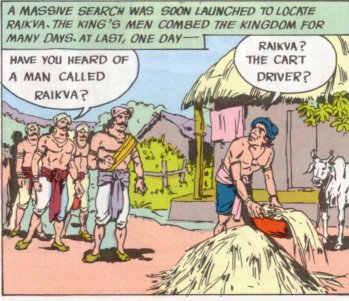
raikva

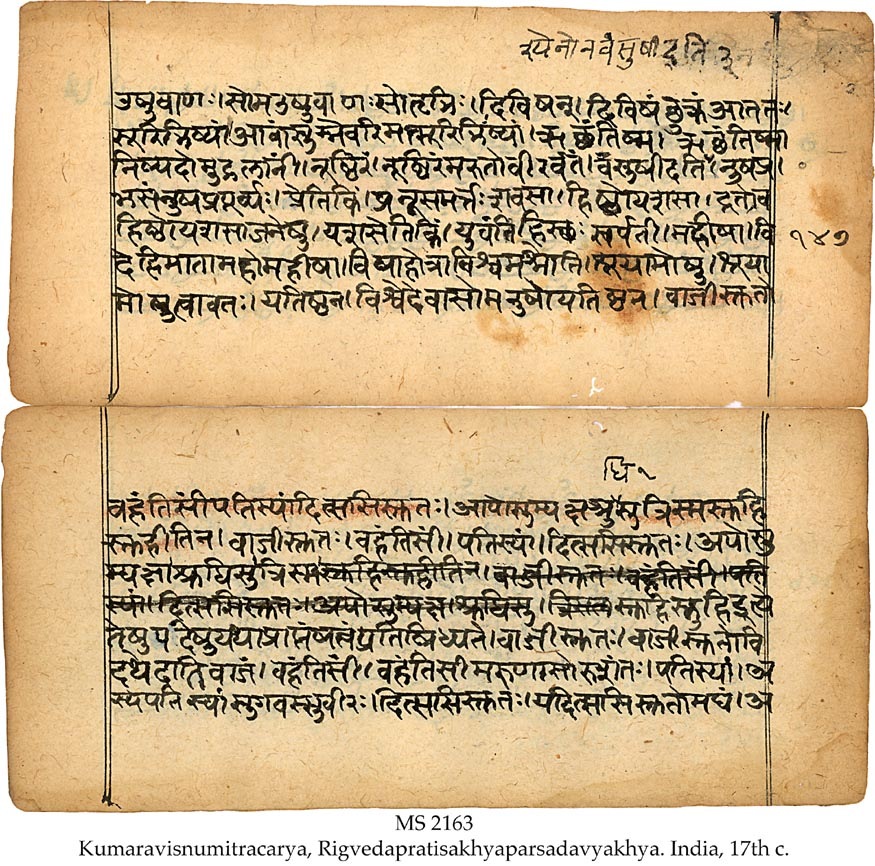
ms2163

1upanishads99-1

I have the complete Upanishads in 2 parts-

Part one

of the Max Muller translation, in Word document form,

(with copius notes and other debris) can be downlaoded here:

upanishadspt1

I have not finished cleaning up Part 2.

1 Comment

Filed under Free E-Books, mp3, pictures, poetry, Spirituality

Hear before you die, then after

Tibetan Book of the Dead-

Or, more correctly, the Bardo Thodol,

Liberation Through Hearing During the Intermediate State

tibetanbookdead

The Bardo Thödol (Tibetan: bardo “liminality”; thödol as “liberation”), Liberation through Hearing in the Intermediate State, is a funerary text that describes, and intends to guide one through, the experiences of the consciousness after death during the interval known as bardo between death and rebirth. It also includes chapters on the signs of death and rituals to undertake when death is closing in or has taken place.

01

02

03

04

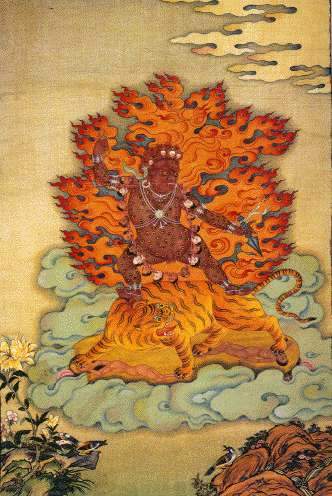
padma-dordje-drolo

Something else:

Tibetan incantations – Om Mani Padme Hum

Or, you can read the comic:

bardothodol-pg1-11bardothodol-pgs12-endbye for now,

Rick

Leave a comment

Filed under buddhism, Free Audio Books, Spirituality

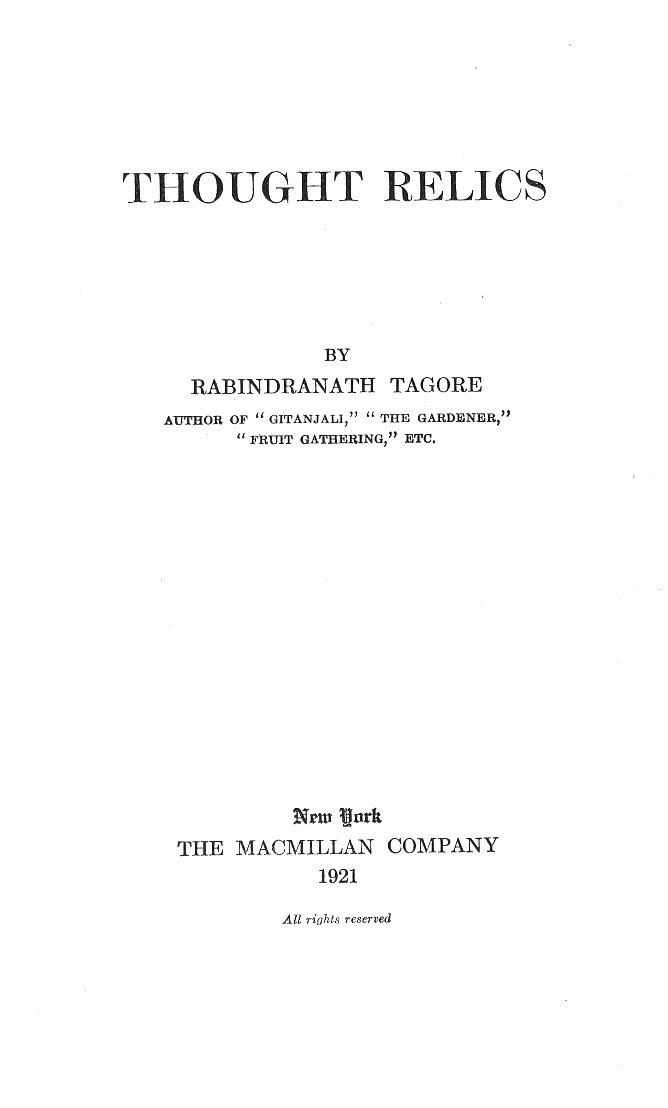
Thought Relics- Tagore

Today’s offering is another book by Rabindranath Tagore, Thought Relics, which he also translated into English.

cover-thoughtrelics

It is in the public domain and the full download is at the bottom of this post as a Word Document.

title-thoughtrelics

First, some excerpts:

SPIRITUAL life is the emancipation of consciousness. Through it we find immediate response of soul everywhere. Before we attain this life, we see men through the medium of self-interest, prejudice or classification, because of the perpetual remoteness around us which we cannot cross over. When the veil is removed, we not only see the fleeting forms of the world, but come close to its eternal being, which is ineffable beauty.

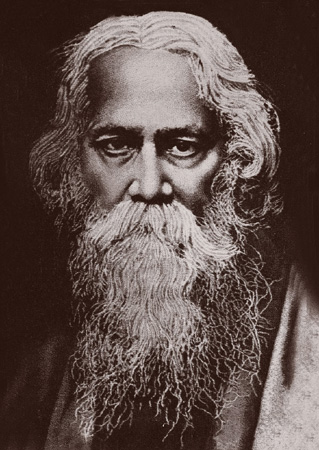
rabindranath-tagore

THE day breaks in the east, like a bud bursting its sheath to come out in flower. But if this fact belonged only to the outside world of events, however could we find our entrance into it? It is a sunrise in the sky of our consciousness; it is a new creation, fresh in bloom, in our life.

Open your eyes and see. Feel this world as a living flute might feel the breath of music passing through it, feel the meeting of creative joy in the depth of your consciousness. Meet this morning light in the majesty of your existence, where it is one with you. But if you sit with your face turned away, you build a separating barrier in the undivided sphere of creation, where events and the creative consciousness meet.

DARKNESS is that which isolates our consciousness within our own self. It hides the great truth of our unity with the world, giving rise to doubt and contention. Groping in the dark, we stumble against objects to which we cling, believing them to be the only things we have. When light comes we slacken our hold, finding them to be mere parts of the all to which we are related. This is freedom–freedom from the isolation of self, from the isolation of things which impart fierce intensity to our sense of possession. Our God is that freedom, for He is Light, and in that light we find out truth, which is our perfect relationship with all.

FEAR assumes unlimited dimensions in the dark, because it is the shadow of the self which has lost its foothold in the all; the self which is a doubter, an unbeliever, which puts its emphasis upon negation, exaggerating detached facts into fearful distortions. In the light we find the harmony of things and know that our world is great and therefore we are great; we know that, with more and more extensive realization of truth, conflicts will vanish, for existence itself is harmony.

Here is the download:

thought-relics

2 Comments

Filed under Free E-Books, Spirituality

Rig Veda

The best place I’ve found on the web for Vedic scriptures with both English translations and Sanskrit originals, access to commentary, etc. is http://www.sacred-texts.com/hin/index.htm

For a taste, offered here are the first 30 hymns of the Rig Veda, the oldest written scripture in the world.

om

Rig Veda Book 1


Hymn 1

1 I Laud Agni, the chosen Priest, God, minister of sacrifice,
The hotar, lavishest of wealth.
2 Worthy is Agni to be praised by living as by ancient seers.
He shall bring hitherward the Gods.
3 Through Agni man obtaineth wealth, yea, plenty waxing day by day,
Most rich in heroes, glorious.
4 Agni, the perfect sacrifice which thou encompassest about
Verily goeth to the Gods.
5 May Agni, sapient-minded Priest, truthful, most gloriously great,
The God, come hither with the Gods.
6 Whatever blessing, Agni, thou wilt grant unto thy worshipper,
That, A
giras, is indeed thy truth.
7 To thee, dispeller of the night, O Agni, day by day with prayer
Bringing thee reverence, we come
8 Ruler of sacrifices, guard of Law eternal, radiant One,
Increasing in thine own abode.
9 Be to us easy of approach, even as a father to his son:
Agni, be with us for our weal.

Hymn 2

1 BEAUTIFUL Vāyu, come, for thee these Soma drops have been prepared:
Drink of them, hearken to our call.
2 Knowing the days, with Soma juice poured forth, the singers glorify
Thee, Vāyu, with their hymns of praise.
3 Vāyu, thy penetrating stream goes forth unto the worshipper,
Far-spreading for the Soma draught.
4 These, Indra-Vāyu, have been shed; come for our offered dainties’ sake:
The drops are yearning for you both.
5 Well do ye mark libations, ye Vāyu and Indra, rich in spoil!
So come ye swiftly hitherward.
6 Vāyu and Indra, come to what the Soma-presser hath prepared:
Soon, Heroes, thus I make my prayer.
7 Mitra, of holy strength, I call, and foe-destroying Varu
a,
Who make the oil-fed rite complete.
8 Mitra and Varu
a, through Law, lovers and cherishers of Law,
Have ye obtained your might power
9 Our Sages, Mitra-Varu
a, wide dominion, strong by birth,
Vouchsafe us strength that worketh well.

Hymn 3

1 YE Aśvins, rich in treasure, Lords of splendour, having nimble hands,
Accept the sacrificial food.
2 Ye Aśvins, rich in wondrous deeds, ye heroes worthy of our praise,
Accept our songs with mighty thought.
3 Nāsatyas, wonder-workers, yours are these libations with clipt grass:
Come ye whose paths are red with flame.
4 O Indra marvellously bright, come, these libations long for thee,
Thus by fine fingers purified.
5 Urged by the holy singer, sped by song, come, Indra, to the prayers,
Of the libation-pouring priest.
6 Approach, O Indra, hasting thee, Lord of Bay Horses, to the prayers.
In our libation take delight.
7 Ye Viśvedevas, who protect, reward, and cherish men, approach
Your worshipper’s drink-offering.
8 Ye Viśvedevas, swift at work, come hither quickly to the draught,
As milch-kine hasten to their stalls.
9 The Viśvedevas, changing shape like serpents, fearless, void of guile,
Bearers, accept the sacred draught
10 Wealthy in spoil, enriched with hymns, may bright
Sarasvatī desire,
With eager love, our sacrifice.
11 Inciter of all pleasant songs, inspirer of all gracious thought,
Sarasvatī accept our rite
12 Sarasvatī, the mighty flood,—she with her light illuminates,
She brightens every pious thought.

Hymn 4

1 As a good cow to him who milks, we call the doer of fair deeds,
To our assistance day by day.
2 Come thou to our libations, drink of Soma; Soma-drinker thou!
The rich One’s rapture giveth kine.
3 So may we be acquainted with thine innermost benevolence:
Neglect us not, come hitherward.
4 Go to the wise unconquered One, ask thou of Indra, skilled in song,
Him who is better than thy friends.
5 Whether the men who mock us say, Depart unto another place,
Ye who serve Indra and none else;
6 Or whether, God of wondrous deeds, all our true people call us blest,
Still may we dwell in Indra’s care.
7 Unto the swift One bring the swift, man-cheering, grace of sacrifice,
That to the Friend gives wings and joy.
8 Thou, Śatakratu, drankest this and wast the V
tras’ slayer; thou
Helpest the warrior in the fray.
9 We strengthen, Śatakratu, thee, yea, thee the powerful in fight,
That, Indra, we may win us wealth.
10 To him the mighty stream of wealth, prompt friend of him who pours the juice,
Yea, to this Indra sing your song.

Hymn 5

1 O COME ye hither, sit ye down: to Indra sing ye forth, your song,
companions, bringing hymns of praise.
2 To him the richest of the rich, the Lord of treasures excellent,
Indra, with Soma juice outpoured.
3 May he stand by us in our need and in abundance for our wealth:
May he come nigh us with his strength.
4 Whose pair of tawny horses yoked in battles foemen challenge not:
To him, to Indra sing your song.
5 Nigh to the Soma-drinker come, for his enjoyment, these pure drops,
The Somas mingled with the curd.
6 Thou, grown at once to perfect strength, wast born to drink the Soma juice,
Strong Indra, for preëminence.
7 O Indra, lover of the song, may these quick Somas enter thee:
May they bring bliss to thee the Sage.
8 Our chants of praise have strengthened thee, O Śatakratu, and our lauds
So strengthen thee the songs we sing.
9 Indra, whose succour never fails, accept these viands thousandfold,
Wherein all manly powers abide.
10 O Indra, thou who lovest song, let no man hurt our bodies, keep
Slaughter far from us, for thou canst.

Hymn 6

1 They who stand round him as he moves harness the bright, the ruddy Steed
The lights are shining in the sky.
2 On both sides to the car they yoke the two bay coursers dear to him,
Bold, tawny, bearers of the Chief.
3 Thou, making light where no light was, and form, O men: where form was not,
Wast born together with the Dawns.
4 Thereafter they, as is their wont, threw off the state of babes unborn,
Assuming sacrificial names.
5 Thou, Indra, with the Tempest-Gods, the breakers down of what is firm,
Foundest the kine even in the cave.
6 Worshipping even as they list, singers laud him who findeth wealth,
The far-renowned, the mighty One.
7 Mayest thou verily be seen coming by fearless Indra’s side:
Both joyous, equal in your sheen.
8 With Indra’s well beloved hosts, the blameless, hastening to heaven,
The sacrificer cries aloud.
9 Come from this place, O Wanderer, or downward from the light of heaven:
Our songs of praise all yearn for this.
10 Indra we seek to give us help, from here, from heaven above the earth,
Or from the spacious firmament.

Hymn 7

1 INDRA the singers with high praise, Indra reciters with their lauds,
Indra the choirs have glorified.
2 Indra hath ever close to him his two bay steeds and word-yoked car,
Indra the golden, thunder-armed.
3 Indra hath raised the Sun on high in heaven, that he may see afar:
He burst the mountain for the kine.
4 Help us, O Indra, in the frays, yea, frays, where thousand spoils are gained,
With awful aids, O awful One.
5 In mighty battle we invoke Indra, Indra in lesser fight,
The Friend who bends his bolt at fiends.
6 Unclose, our manly Hero, thou for ever bounteous, yonder cloud,
For us, thou irresistible.
7 Still higher, at each strain of mine, thunder-armed Indra’s praises rise:
I find no laud worthy of him.
8 Even as the bull drives on the herds, he drives the people with his might,
The Ruler irresistible:
9 Indra who rules with single sway men, riches, and the fivefold race
Of those who dwell upon the earth.
10 For your sake from each side we call Indra away from other men:
Ours, and none others’, may he be.

Hymn 8

1 INDRA, bring wealth that gives delight, the victor’s ever-conquering wealth,
Most excellent, to be our aid;
2 By means of which we may repel our foes in battle hand to hand,
By thee assisted with the car.
3 Aided by thee, the thunder-armed, Indra, may we lift up the bolt,
And conquer all our foes in fight.
4 With thee, O India, for ally with missile-darting heroes, may
We conquer our embattled foes.
5 Mighty is Indra, yea supreme; greatness be his, the Thunderer:
Wide as the heaven extends his power
6 Which aideth those to win them sons, who come as heroes to the fight,
Or singers loving holy thoughts.
7 His belly, drinking deepest draughts of Soma, like an ocean swells,
Like wide streams from the cope of heaven.
8 So also is his excellence, great, vigorous, rich in cattle, like
A ripe branch to the worshipper.
9 For verily thy mighty powers, Indra, are saving helps at once
Unto a worshipper like me.
10 So are his lovely gifts; let lauds and praises be to Indra sung,
That he may drink the Soma juice.

Hymn 9

1 COME, Indra, and delight thee with the juice at all the Soma feasts,
Protector, mighty in thy strength.
2 To Indra pour ye forth the juice, the active gladdening juice to him
The gladdening, omnific God.
3 O Lord of all men, fair of cheek, rejoice thee in the gladdening lauds,
Present at these drink-offerings.
4 Songs have outpoured themselves to thee, Indra, the strong, the guardian Lord,
And raised themselves unsatisfied.
5 Send to us bounty manifold, O Indra, worthy of our wish,
For power supreme is only thine.
6 O Indra, stimulate thereto us emulously fain for wealth,
And glorious, O most splendid One.
7 Give, Indra, wide and lofty fame, wealthy in cattle and in strength,
Lasting our life-time, failing not.
8 Grant us high fame, O Indra, grant riches bestowing thousands, those
Fair fruits of earth borne home in wains.
9 Praising with songs the praise-worthy who cometh to our aid, we call
Indra, the Treasure-Lord of wealth.
10 To lofty Indra, dweller by each libation, the pious man
Sings forth aloud a strengthening hymn.

Hymn 10

1 THE chanters hymn thee, they who say the word of praise magnify thee.
The priests have raised thee up on high, O Śatakratu, like a pole.
2 As up he clomb from ridge to ridge and looked upon the toilsome task,
Indra observes this wish of his, and the Rain hastens with his troop.
3 Harness thy pair of strong bay steeds, long-maned, whose bodies fill the girths,
And, Indra, Soma-drinker, come to listen to our songs of praise.
4 Come hither, answer thou the song, sing in approval, cry aloud.
Good Indra, make our prayer succeed, and prosper this our sacrifice.
5 To Indra must a laud be said, to strengthen him who freely gives,
That Śakra may take pleasure in our friendship and drink-offerings.
6 Him, him we seek for friendship, him for riches and heroic might.
For Indra, he is Śakra, he shall aid us while he gives us wealth.
7 Easy to turn and drive away, Indra, is spoil bestowed by thee.
Unclose the stable of the kine, and give us wealth O Thunder-armed
8 The heaven and earth contain thee not, together, in thy wrathful mood.
Win us the waters of the sky, and send us kine abundantly.
9 Hear, thou whose ear is quick, my call; take to thee readily my songs
O Indra, let this laud of mine come nearer even than thy friend.
10 We know thee mightiest of all, in battles hearer of our cry.
Of thee most mighty we invoke the aid that giveth thousandfold.
11 O Indra, Son of Kuśika, drink our libation with delight.
Prolong our life anew, and cause the seer to win a thousand gifts.
12 Lover of song, may these our songs on every side encompass thee:
Strengthening thee of lengthened life, may they be dear delights to thee.

Hymn 11

1 ALL sacred songs have magnified Indra expansive as the sea,
The best of warriors borne on cars, the Lord, the very Lord of strength.
2 Strong in thy friendship, Indra, Lord of power and might, we have no fear.
We glorify with praises thee, the never-conquered conqueror.
3 The gifts of Indra from of old, his saving succours, never fail,
When to the praise-singers he gives the boon of substance rich in kine.
4 Crusher of forts, the young, the wise, of strength unmeasured, was he born
Sustainer of each sacred rite, Indra, the Thunderer, much-extolled.
5 Lord of the thunder, thou didst burst the cave of Vala rich in cows.
The Gods came pressing to thy side, and free from terror aided thee,
6 I, Hero, through thy bounties am come to the flood addressing thee.
Song-lover, here the singers stand and testify to thee thereof.
7 The wily Śu
ṣṇa, Indra! thou o’erthrewest with thy wondrous powers.
The wise beheld this deed of thine: now go beyond their eulogies.
8 Our songs of praise have glorified Indra who ruleth by his might,
Whose precious gifts in thousands come, yea, even more abundantly.

Hymn 12

1 WE choose Agni the messenger, the herald, master of all wealth,
Well skilled in this our sacrifice.
2 With callings ever they invoke Agni, Agni, Lord of the House,
Oblation-bearer, much beloved.
3 Bring the Gods hither, Agni, born for him who strews the sacred grass:
Thou art our herald, meet for praise.
4 Wake up the willing Gods, since thou, Agni, performest embassage:
Sit on the sacred grass with Gods.
5 O Agni, radiant One, to whom the holy oil is poured, burn up
Our enemies whom fiends protect.
6 By Agni Agni is inflamed, Lord of the House, wise, young, who bears
The gift: the ladle is his mouth.
7 Praise Agni in the sacrifice, the Sage whose ways are ever true,
The God who driveth grief away.
8 God, Agni, be his strong defence who lord of sacrificial gifts,
Worshippeth thee the messenger.
9 Whoso with sacred gift would fain call Agni to the feast of Gods,
O Purifier, favour him.
10 Such, Agni, Purifier, bright, bring hither to our sacrifice,
To our oblation bring the Gods.
11 So lauded by our newest song of praise bring opulence to us,
And food, with heroes for our sons.
12 O Agni, by effulgent flame, by all invokings of the Gods,
Show pleasure in this laud of ours.

Hymn 13

1 AGNI, well-kindled, bring the Gods for him who offers holy gifts.
Worship them, Purifier, Priest.
2 Son of Thyself, present, O Sage, our sacrifice to the Gods today.
Sweet to the taste, that they may feast.
3 Dear Narāśa
sa, sweet of tongue, the giver of oblations, I
Invoke to this our sacrifice.
4 Agni, on thy most easy car, glorified, hither bring the Gods:
Manu appointed thee as Priest.
5 Strew, O ye wise, the sacred grass that drips with oil, in order due,
Where the Immortal is beheld.
6 Thrown open be the Doors Divine, unfailing, that assist the rite,
For sacrifice this day and now.
7 I call the lovely Night and Dawn to seat them on the holy grass
At this our solemn sacrifice.
8 The two Invokers I invite, the wise, divine and sweet of tongue,
To celebrate this our sacrifice.
9 I
ā, Sarasvatī, Mahī, three Goddesses who bring delight,
Be seated, peaceful, on the grass.
10 Tva
ṣṭar I call, the earliest born, the wearer of all forms at will:
May he be ours and ours alone.
11 God, Sovran of the Wood, present this our oblation to the Gods,
And let the giver be renowned.
12 With Svāhā pay the sacrifice to Indra in the offerer’s house:
Thither I call the Deities.

Hymn 14

1 To drink the Soma, Agni, come, to our service and our songs.
With all these Gods; and worship them.
2 The Ka
vas have invoked thee; they, O Singer, sing thee songs of praise
Agni, come hither with the Gods;
3 Indra, Vāyu, B
haspati, Mitra, Agni, Pū
an, Bhaga,
Ādityas, and the Marut host.
4 For you these juices are poured forth that gladden and exhilarate,
The meath-drops resting in the cup.
5 The sons of Ka
va fain for help adore thee, having strewn the grass,
With offerings and all things prepared.
6 Let the swift steeds who carry thee, thought-yoked and dropping holy oil,
Bring the Gods to the Soma draught.
7 Adored, the strengtheners of Law, unite them, Agni, with their Dames:
Make them drink meath, O bright of tongue.
8 Let them, O Agni, who deserve worship and praise drink with thy tongue
The meath in solemn sacrifice.
9 Away, from the Sun’s realm of light, the wise invoking Priest shall bring
All Gods awaking with the dawn.
10 With all the Gods, with Indra, with Vāyu, and Mitra’s splendours, drink,
Agni, the pleasant Soma juice.
11 Ordained by Manu as our Priest, thou sittest, Agni, at each rite:
Hallow thou this our sacrifice.
12 Harness the Red Mares to thy car, the Bays, O God, the flaming ones:
With those bring hitherward the Gods.

Hymn 15

1 O INDRA drink the Soma juice with tu; let the cheering drops
Sink deep within, which settle there.
2 Drink from the Purifier’s cup, Maruts, with
tu; sanctify
The rite, for ye give precious gifts.
3 O Ne
ṣṭar, with thy Dame accept our sacrifice; with
tu drink,
For thou art he who giveth wealth.
4 Bring the Gods, Agni; in the three appointed places set them down:
Surround them, and with
tu drink.
5 Drink Soma after the
tus, from the Brāhma
a’s bounty: undissolved,
O Indra, is thy friendship’s bond.
6 Mitra, Varu
a, ye whose ways are firm—a Power that none deceives—,
With
tu ye have reached the rite.
7 The Soma-pressers, fain for wealth, praise the Wealth-giver in the rite,
In sacrifices praise the God.
8 May the Wealth-giver grant to us riches that shall be far renowned.
These things we gain, among the Gods.
9 He with the
tu fain would drink, Wealth-giver, from the Neṣṭ
ar’s bowl.
Haste, give your offering, and depart.
10 As we this fourth time, Wealth-giver, honour thee with the
tus, be
A Giver bountiful to us.
11 Drink ye the meath, O Aśvins bright with flames, whose acts are pure, who with
tus accept the sacrifice.
12 With
tu, through the house-fire, thou, kind Giver, guidest sacrifice:
Worship the Gods for the pious man.

Hymn 16

1 LET thy Bay Steeds bring thee, the Strong, hither to drink the Soma draught—
Those, Indra, who are bright as suns.
2 Here are the grains bedewed with oil: hither let the Bay Coursers bring
Indra upon his easiest car.
3 Indra at early morn we call, Indra in course of sacrifice,
Indra to drink the Soma juice.
4 Come hither, with thy long-maned Steeds, O Indra, to he draught we pour
We call thee when the juice is shed.
5 Come thou to this our song of praise, to the libation poured for thee
Drink of it like a stag athirst.
6 Here are the drops of Soma juice expressed on sacred grass: thereof
Drink, Indra, to increase thy might.
7 Welcome to thee be this our hymn, reaching thy heart, most excellent:
Then drink the Soma juice expressed.
8 To every draught of pressed-out juice Indra, the V
tra-slayer, comes,
To drink the Soma for delight.
9 Fulfil, O Śatakratu, all our wish with horses and with kine:
With holy thoughts we sing thy praise.

Hymn 17

1 I CRAVE help from the Imperial Lords, from Indra-Varua; may they
Both favour one of us like me.
2 Guardians of men, ye ever come with ready succour at the call
Of every singer such as I.
3 Sate you, according to your wish, O Indra-Varu
a, with wealth:
Fain would we have you nearest us.
4 May we be sharers of the powers, sharers of the benevolence
Of you who give strength bounteously.
5 Indra and Varu
a, among givers of thousands, meet for praise,
Are Powers who merit highest laud.
6 Through their protection may we gain great store of wealth, and heap it up
Enough and still to spare, be ours.
7 O Indra-Varu
a, on you for wealth in many a form I call:
Still keep ye us victorious.
8 O Indra-Varu
a, through our songs that seek to win you to ourselves,
Give us at once your sheltering help.
9 O Indra-Varu
a, to you may fair praise which I offer come,
Joint eulogy which ye dignify.

Hymn 18

1 O BRĀHMAASPATI, make him who presses Soma glorious,
Even Kak
īvān Auśija.
2 The rich, the healer of disease, who giveth wealth, increaseth store,
The prompt,—may he be with us still.
3 Let not the foeman’s curse, let not a mortal’s onslaught fall on us
Preserve us, Brahma
aspati.
4 Ne’er is the mortal hero harmed whom Indra, Brahma
aspati,
And Soma graciously inspire.
5 Do, thou, O Brahma
aspati, and Indra, Soma, Daki
ā,
Preserve that mortal from distress.
6 To the Assembly’s wondrous Lord, to Indra’s lovely Friend who gives
Wisdom, have I drawn near in prayer.
7 He without whom no sacrifice, e’en of the wise man, prospers; he
Stirs up the series of thoughts.
8 He makes the oblation prosper, he promotes the course of sacrifice:
Our voice of praise goes to the Gods.
9 I have seen Narāśasa, him most resolute, most widely famed,
As ’twere the Household Priest of heaven.

Hymn 19

1 To this fair sacrifice to drink the milky draught thou art invoked:
O Agni, with the Maruts come.
2 No mortal man, no God exceeds thy mental power, O Mighty one:
O Agni, with the Maruts come:
3 All Gods devoid of guile, who know the mighty region of mid-air:
O Agni, with those Maruts come.
4 The terrible, who sing their song, not to be overcome by might:
O Agni, with those Maruts come.
5 Brilliant, and awful in their form, mighty, devourers of their foes:
O Agni, with those Maruts come.
6 Who sit as Deities in heaven, above the sky-vault’s luminous sphere:
O Agni, with those Maruts come.
7 Who scatter clouds about the sky, away over the billowy sea:
O Agni, with those Maruts come.
8 Who with their bright beams spread them forth over the ocean in their might
O Agni, with those Maruts come.
9 For thee, to be thine early draught, I pour the Soma-mingled meath:
O Agni, with the Maruts come.

Hymn 20

1 FOR the Celestial Race this song of praise which gives wealth lavishly
Was made by singers with their lips.
2 They who for Indra, with their mind, formed horses harnessed by a word,
Attained by works to sacrifice.
3 They for the two Nāsatyas wrought a light car moving every way:
They formed a nectar-yielding cow.
4 The
bhus with effectual prayers, honest, with constant labour, made
Their Sire and Mother young again.
5 Together came your gladdening drops with Indra by the Maruts girt,
With the Ādityas, with the Kings.
6 The sacrificial ladle, wrought newly by the God Tva
ṣṭar’s hand—
Four ladles have ye made thereof.
7 Vouchsafe us wealth, to him who pours thrice seven libations, yea, to each
Give wealth, pleased with our eulogies.
8 As ministering Priests they held, by pious acts they won themselves,
A share in sacrifice with Gods.

Hymn 21

1 INDRA and Agni I invoke fain are we for their song of praise:
Chief Soma-drinkers are they both.
2 Praise ye, O men, and glorify Indra-Agni in the holy rites:
Sing praise to them in sacred songs.
3 Indra and Agni we invite, the Soma-drinkers, for the fame
Of Mitra, to the Soma-draught.
4 Strong Gods, we bid them come to this libation that stands ready here:
Indra and Agni, come to us.
5 Indra and Agni, mighty Lords of our assembly, crush the fiends:
Childless be the devouring ones.
6 Watch ye, through this your truthfulness, there in the place of spacious view
Indra and Agni, send us bliss.

Hymn 22

1 WAKEN the Aśvin Pair who yoke their car at early morn: may they
Approach to drink this Soma juice.
2 We call the Aśvins Twain, the Gods borne in a noble car, the best
Of charioteers, who reach the heavens.
3 Dropping with honey is your whip, Aśvins, and full of pleasantness
Sprinkle therewith the sacrifice.
4 As ye go thither in your car, not far, O Aśvins, is the home
Of him who offers Soma juice.
5 For my protection I invoke the golden-handed Savitar.
He knoweth, as a God, the place.
6 That he may send us succour, praise the Waters’ Offspring Savitar:
Fain are we for his holy ways.
7 We call on him, distributer of wondrous bounty and of wealth,
On Savitar who looks on men.
8 Come hither, friends, and seat yourselves Savitar, to be praised by us,
Giving good gifts, is beautiful.
9 O Agni, hither bring to us the willing Spouses of the Gods,
And Tva
ṣṭ
ar, to the Soma draught.
10 Most youthful Agni, hither bring their Spouses, Hotrā, Bhāratī,
Varūtrī, Dhi
a
ā, for aid.
11 Spouses of Heroes, Goddesses, with whole wings may they come to us
With great protection and with aid.
12 Indrāī, Varu
ānī, and Agnāyī hither I invite,
For weal, to drink the Soma juice.
13 May Heaven and Earth, the Mighty Pair, bedew for us our sacrifice,
And feed us full with nourishments.
14 Their water rich with fatness, there in the Gandharva’s steadfast place,
The singers taste through sacred songs.
15 Thornless be thou, O Earth, spread wide before us for a dwelling-place:
Vouchsafe us shelter broad and sure.
16 The Gods be gracious unto us even from the place whence Vi
ṣṇ
u strode
Through the seven regions of the earth!
17 Through all this world strode Vi
ṣṇ
u; thrice his foot he planted, and the whole
Was gathered in his footstep’s dust.
18 Vi
ṣṇ
u, the Guardian, he whom none deceiveth, made three steps; thenceforth
Establishing his high decrees.
19 Look ye on Vi
ṣṇ
u’s works, whereby the Friend of Indra, close-allied,
Hath let his holy ways be seen.
20 The princes evermore behold that loftiest place where Vi
ṣṇ
u is,
Laid as it were an eye in heaven.
21 This, Vi
ṣṇu’s station most sublime, the singers, ever vigilant,
Lovers of holy song, light up.

Hymn 23

1 STRONG are the Somas; come thou nigh; these juices have been mixt with milk:
Drink, Vāyu, the presented draughts.
2 Both Deities who touch the heaven, Indra and Vāyu we invoke
To drink of this our Soma juice.
3 The singers’ for their aid, invoke Indra and Vāyu, swift as mind,
The thousand-eyed, the Lords of thought.
4 Mitra and Varu
a, renowned as Gods of consecrated might,
We call to drink the Soma juice.
5 Those who by Law uphold the Law, Lords of the shining light of Law,
Mitra I call, and Varu
a.
6 Let Varu
a be our chief defence, let Mitra guard us with all aids
Both make us rich exceedingly.
7 Indra, by Maruts girt, we call to drink the Soma juice: may he
Sate him in union with his troop.
8 Gods, Marut hosts whom Indra leads, distributers of Pū
an’s gifts,
Hearken ye all unto my cry.
9 With conquering Indra for ally, strike V
tra down, ye bounteous Gods
Let not the wicked master us.
10 We call the Universal Gods, and Maruts to the Soma draught,
For passing strong are P
śni’s Sons.
11 Fierce comes the Maruts’ thundering voice, like that of conquerors, when ye go
Forward to victory, O Men.
12 Born of the laughing lightning. may the Maruts guard us everywhere
May they be gracious unto Us.
13 Like some lost animal, drive to us, bright Pū
an, him who bears up heaven,
Resting on many-coloured grass.
14 Pū
an the Bright has found the King, concealed and hidden in a cave,
Who rests on grass of many hues.
15 And may he. duly bring to me the six bound closely, through these drops,
As one who ploughs with steers brings corn.
16 Along their paths the Mothers go, Sisters of priestly ministrants,
Mingling their sweetness with the milk.
17 May Waters gathered near the Sun, and those wherewith the Sun is joined,
Speed forth this sacrifice of ours.
18 I call the Waters, Goddesses, wherein our cattle quench their thirst;
Oblations to the Streams be given.
19 Amrit is in the Waters in the Waters there is healing balm
Be swift, ye Gods, to give them praise.
20 Within the Waters—Soma thus hath told me—dwell all balms that heal,
And Agni, he who blesseth all. The Waters hold all medicines.
21 O Waters, teem with medicine to keep my body safe from harm,
So that I long may see the Sun.
22 Whatever sin is found in me, whatever evil I have wrought.
If I have lied or falsely sworn, Waters, remove it far from me.
23 The Waters I this day have sought, and to their moisture have we come:
O Agni, rich in milk, come thou, and with thy splendour cover me.
24 Fill me with splendour, Agni; give offspring and length of days; the Gods
Shall know me even as I am, and Indra with the
Ṛṣis, know.

Hymn 24

1 WHO now is he, what God among Immortals, of whose auspicious name we may bethink us?
Who shall to mighty Aditi restore us, that I may see my Father and my Mother?
2 Agni the God the first among the Immortals,—of his auspicious name let us bethink us.
He shall to mighty Aditi restore us, that I may see my Father and my Mother.
3 To thee, O Savitar, the Lord of precious things, who helpest us
Continually, for our share we come—
4 Wealth, highly lauded ere reproach hath fallen on it, which is laid,
Free from all hatred, in thy hands
5 Through thy protection may we come to even the height of affluence
Which Bhaga hath dealt out to us.
6 Ne’er have those birds that fly through air attained to thy high dominion or thy might or spirit;
Nor these the waters that flow on for ever, nor hills, abaters of the wind’s wild fury.
7 Varu
a, King, of hallowed might, sustaineth erect the Tree’s stem in the baseless region.
Its rays, whose root is high above, stream downward. Deep may they sink within us, and be hidden.
8 King Varu
a hath made a spacious pathway, a pathway for the Sun wherein to travel.
Where no way was he made him set his footstep, and warned afar whate’er afflicts the spirit.
9 A hundred balms are thine, O King, a thousand; deep and wide-reaching also be thy favours.
Far from us, far away drive thou Destruction. Put from us e’en the sin we have committed.
10 Whither by day depart the constellations that shine at night, set high in heaven above us?
Varu
a’s holy laws remain unweakened, and through the night the Moon moves on in splendor
11 I ask this of thee with my prayer adoring; thy worshipper craves this with his oblation.
Varu
a, stay thou here and be not angry; steal not our life from us, O thou Wide-Ruler.
12 Nightly and daily this one thing they tell me, this too the thought of mine own heart repeateth.
May he to whom prayed fettered Śuna
śepa, may he the Sovran Varu
a release us.
13 Bound to three pillars captured Śuna
śepa thus to the Āditya made his supplication.
Him may the Sovran Varu
a deliver, wise, ne’er deceived, loosen the bonds that bind him.
14 With bending down, oblations, sacrifices, O Varu
a, we deprecate thine anger:
Wise Asura, thou King of wide dominion, loosen the bonds of sins by us committed.
15 Loosen the bonds, O Varu
a, that hold me, loosen the bonds above, between, and under.
So in thy holy law may we made sinless belong to Aditi, O thou Āditya.

Hymn 25

1 WHATEVER law of thine, O God, O Varua, as we are men,
Day after day we violate.
2 give us not as a prey to death, to be destroyed by thee in wrath,
To thy fierce anger when displeased.
3 To gain thy mercy, Varu
a, with hymns we bind thy heart, as binds
The charioteer his tethered horse.
4 They flee from me dispirited, bent only on obtaining wealth,
As to their nests the birds of air.
5 When shall we bring, to be appeased, the Hero, Lord of warrior might,
Him, the far-seeing Varu
a?
6 This, this with joy they both accept in common: never do they fail
The ever-faithful worshipper.
7 He knows the path of birds that fly through heaven, and, Sovran of the sea,
He knows the ships that are thereon.
8 True to his holy law, he knows the twelve moons with their progeny:
He knows the moon of later birth.
9 He knows the pathway of the wind, the spreading, high, and mighty wind:
He knows the Gods who dwell above.
10 Varu
a, true to holy law, sits down among his people; he,
Most wise, sits there to govern all.
11 From thence
perceiving he beholds all wondrous things, both what hath been,
And what hereafter will be done.
12 May that Āditya, very wise, make fair paths for us all our days:
May he prolong our lives for us.
13 Varu
a, wearing golden mail, hath clad him in a shining robe.
His spies are seated found about.
14 The God whom enemies threaten not, nor those who tyrannize o’er men,
Nor those whose minds are bent on wrong.
15 He who gives glory to mankind, not glory that is incomplete,
To our own bodies giving it.
16 Yearning for the wide-seeing One, my thoughts move onward unto him,
As kine unto their pastures move.
17 Once more together let us speak, because my meath is brought: priest-like
Thou eatest what is dear to thee.
18 Now saw I him whom all may see, I saw his car above the earth:
He hath accepted these my songs.
19 Varu
a, hear this call of mine: be gracious unto us this day
Longing for help I cried to thee.
20 Thou, O wise God, art Lord of all, thou art the King of earth and heaven
Hear, as thou goest on thy way.
21 Release us from the upper bond, untie the bond between, and loose
The bonds below, that I may live.

Hymn 26

1 O WORTHY of oblation, Lord of prospering powers, assume thy robes,
And offer this our sacrifice.
2 Sit ever to be chosen, as our Priest, most youthful, through our hymns,
O Agni, through our heavenly word.
3 For here a Father for his son, Kinsman for kinsman worshippeth,
And Friend, choice-worthy, for his friend.
4 Here let the foe-destroyers sit, Varu
a, Mitra, Aryaman,
Like men, upon our sacred grass.
5 O ancient Herald, be thou glad in this our rite and fellowship:
Hearken thou well to these our songs.
6 Whate’er in this perpetual course we sacrifice to God and God,
That gift is offered up in thee
7 May he be our dear household Lord, Priest, pleasant and, choice-worthy may
We, with bright fires, be dear to him.
8 The Gods, adored with brilliant fires. have granted precious wealth to us
So, with bright fires, we pray to thee.
9 And, O Immortal One, so may the eulogies of mortal men
Belong to us and thee alike.
10 With all thy fires, O Agni, find pleasure in this our sacrifice,
And this our speech, O Son of Strength.

Hymn 27

1 WITH worship will I glorify thee, Agni, like a long-tailed steed,
Imperial Lord of sacred rites.
2 May the far-striding Son of Strength, bringer of great felicity,
Who pours his gifts like rain, be ours.
3 Lord of all life, from near; from far, do thou, O Agni evermore
Protect us from the sinful man.
4 O Agni, graciously announce this our oblation to the Gods,
And this our newest song of praise.
5 Give us a share of strength most high, a share of strength that is below,
A share of strength that is between.
6 Thou dealest gifts, resplendent One; nigh, as with waves of Sindhu, thou
Swift streamest to the worshipper.
7 That man is lord of endless strength whom thou protectest in the fight,
Agni, or urgest to the fray.
8 Him, whosoever he may be, no man may vanquish, mighty One:
Nay, very glorious power is his.
9 May he who dwells with all mankind bear us with war-steeds through the fight,
And with the singers win the spoil.
10 Help, thou who knowest lauds, this work, this eulogy to Rudra, him
Adorable in every house.
11 May this our God, great, limitless, smoke-bannered excellently bright,
Urge us to strength and holy thought.
12 Like some rich Lord of men may he, Agni the banner of the Gods,
Refulgent, hear us through our lauds.
13 Glory to Gods, the mighty and the lesser glory to Gods the younger and the elder!
Let us, if we have power, pay the God worship: no better prayer than this, ye Gods, acknowledge.

Hymn 28

yatra ghrāvā pthubudhna ūrdhvo bhavati sotave |
ulūkhalasutānāmaved vindra jalghula
||
yatra dvāviva jaghanādhi
avayā k
tā |
ulū… ||
yatra nāryapacyavamupacyava
ca śik
ate |
ulū… ||
yatra manthā
vibadhnate raśmīn yamitavā iva |
ulū… ||
yaccid dhi tva
ghhegh
ha ulūkhalaka yujyase |
iha dyumattama
vada yajatāmiva dundubhi
||
uta sma te vanaspate vāto vi vātyaghramit |
atho indrāya pātave sunu somamulūkhala ||
āyajī vājasātamā tā hyuccā vijarbh
ta
|
harī ivāndhā
si bapsatā ||
tā no adya vanaspatī ṛṣvāv ṛṣvebhi sotbhi
|
indrāya madhumat sutam ||
ucchi
ṣṭa camvorbhara soma pavitra ā sja |
ni dhehi ghoradhi tvaci ||

1 THERE where the broad-based stone raised on high to press the juices out,
O Indra, drink with eager thirst the droppings which the mortar sheds.
2 Where, like broad hips, to hold the juice the platters of the press are laid,
O Indra, drink with eager thirst the droppings which the mortar sheds.
3 There where the woman marks and leans the pestle’s constant rise and fall,
O Indra, drink with eager thirst the droppings which the mortar sheds.
4 Where, as with reins to guide a horse, they bind the churning-staff with cords,
O Indra, drink with eager thirst the droppings which the mortar sheds.
5 If of a truth in every house, O Mortar thou art set for work,
Here give thou forth thy clearest sound, loud as the drum of conquerors.
6 O Sovran of the Forest, as the wind blows soft in front of thee,
Mortar, for Indra press thou forth the Soma juice that he may drink.
7 Best strength-givers, ye stretch wide jaws, O Sacrificial Implements,
Like two bay horses champing herbs.
8 Ye Sovrans of the Forest, both swift, with swift pressers press to-day
Sweet Soma juice for Indra’s drink.
9 Take up in beakers what remains: the Soma on the filter pour,
and on the ox-hide set the dregs.

Hymn 29

yaccid dhi satya somapā anāśastā iva smasi |
ā tū na indra śa
saya ghovaśveu subhriu sahasreu tuvīmagha ||
śiprin vājānā
pate śacīvastava dasanā |
ā … ||
ni
vāpayā mithūdśā sastāmabudhyamāne |
ā … ||
sasantu tyā arātayo bodhantu śūra rātaya
|
ā … ||
samindra ghardabha
mṛṇa nuvanta pāpayāmuyā |
ā … ||
patāti ku
ṇḍṛṇācyā dūra vāto vanādadhi |
ā … ||
sarva
parikrośa jahi jambhayā kkadāśvam |
ā … ||

1 O SOMA DRINKER, ever true, utterly hopeless though we be,
Do thou, O Indra, give us hope of beauteous horses and of kine,
In thousands, O most wealthy One.
2 O Lord of Strength, whose jaws are strong, great deeds are thine, the powerful:
Do thou, O Indra, give us hope of beauteous horses and of kine,
In thousands, O most wealthy One.
3 Lull thou asleep, to wake no more, the pair who on each other look
Do thou, O Indra, give us hope of beauteous horses and of kine,
In thousands, O most wealthy One.
4 Hero, let hostile spirits sleep, and every gentler genius wake:
Do thou, O Indra, give us hope of beauteous horses and of kine,
In thousands, O most wealthy One.
5 Destroy this ass, O Indra, who in tones discordant brays to thee:
Do thou, O Indra, give us hope of beauteous horses and of kine,
In thousands, O most wealthy One.
6 Far distant on the forest fall the tempest in a circling course!
Do thou, O Indra, give us hope of beauteous horses and of kine,
In thousands, O most wealthy One.
7 Slay each reviler, and destroy him who in secret injures us:
Do thou, O Indra, give us hope of beauteous horses and of kine
In thousands, O most wealthy One.

Hymn 30

ā va indra krivi yathā vājayanta śatakratum |
ma
hiṣṭha siñca indubhi ||
śata
vā ya śucīnā sahasra vā samāśirām |
edu nimna
na rīyate ||
sa
yan madāya śumia enā hyasyodare |
samudro na vyaco dadhe ||
ayamu te samatasi kapota iva gharbhadhim |
vacastaccin na ohase ||
stotra
rādhānā pate ghirvāho vīra yasya te |
vibhūtirastusūn
tā ||
ūrdhvasti
ṣṭhā na ūtaye.asmin vāje śatakrato |
samanye
u bravāvahai ||
yoghe-yoghe tavastara
vāje-vāje havāmahe |
sakhāya indramūtaye ||
ā ghā ghamad yadi śravat sahasri
ībhirūtibhi |
vājebhirupa no havam ||
anu pratnasyaukaso huve tuviprati
naram |
ya
te pūrva pitā huve ||
ta
tvā vaya viśvavārā śāsmahe puruhūta |
sakhe vaso jarit
bhya ||
asmāka
śipriīnā somapā somapāvnām |
sakhe vajrin sakhīnām ||
tathā tadastu somapā
sakhe vajrin tathā kṛṇu |
yathā ta uśmasī
ṣṭaye ||
revatīrna
sadhamāda indre santu tuvivājā |
k
umanto yābhirmadema ||
ā gha tvāvān tmanāpta stot
bhyo dhṛṣṇaviyāna |
ṛṇ
oraka na cakryoh ||
ā yad duva
śatakratavā kāma jaritṝṇām |
ṛṇoraka na śacībhi ||
śaśvadindra
popruthadbhirjighāya nānadadbhi śāśvasadbhirdhanāni |
sa no hira
yaratha dasanāvān sa na sanitā sanaye sa no.adāt ||
āśvināvaśvāvatye
ā yata śavīrayā ghomad dasrā hirayavat ||
samānayojano hi vā
ratho dasrāvamartya |
samudre aśvineyate ||
vyaghnyasya mūrdhani cakra
rathasya yemathu |
pari dyāmanyadīyate ||
kasta u
a kadhapriye bhuje marto amartye |
ka
nakase vibhāvari ||
vaya
hi te amanmahyāntādā parākāt |
aśve na citre aru
i ||
tva
tyebhirā ghahi vājebhirduhitardiva |
asme rayi
nidhāraya ||

1 WE seeking strength with Soma-drops fill full your Indra like a well,
Most liberal, Lord of Hundred Powers,
2 Who lets a hundred of the pure, a thousand of the milk-blent draughts
Flow, even as down a depth, to him;
3 When for the strong, the rapturous joy he in this manner hath made room
Within his belly, like the sea.
4 This is thine own. Thou drawest near, as turns a pigeon to his mate:
Thou carest too for this our prayer.
5 O Hero, Lord of Bounties, praised in hymns, may power and joyfulness
Be his who sings the laud to thee.
6 Lord of a Hundred Powers, stand up to lend us succour in this fight
In others too let us agree.
7 In every need, in every fray we call as friends to succour us
Indra the mightiest of all.
8 If he will hear us let him come with succour of a thousand kinds,
And all that strengthens, to our call.
9 I call him mighty to resist, the Hero of our ancient home,
Thee whom my sire invoked of old.
10 We pray to thee, O much-invoked, rich in all precious gifts, O Friend,
Kind God to those who sing thy praise.
11 O Soma-drinker, Thunder-armed, Friend of our lovely-featured dames
And of our Soma-drinking friends.
12 Thus, Soma-drinker, may it be; thus, Friend, who wieldest thunder, act
To aid each wish as we desire.
13 With Indra splendid feasts be ours, rich in all strengthening things wherewith,
Wealthy in food, we may rejoice.
14 Like thee, thyself, the singers’ Friend, thou movest, as it were, besought,
Bold One, the axle of the car.
15 That, Śatakratu, thou to grace and please thy praisers, as it were,
Stirrest the axle with thy strength.
16 With champing, neighing loudly-snorting horses Indra hath ever won himself great treasures
A car of gold hath he whose deeds are wondrous received from us, and let us too receive it.
17 Come, Aśvins, with enduring strength wealthy in horses and in kine,
And gold, O ye of wondrous deeds.
18 Your chariot yoked for both alike, immortal, ye of mighty acts,
Travels, O Aśvins, in the sea.
19 High on the forehead of the Bull one chariot wheel ye ever keep,
The other round the sky revolves.
20 What mortal, O immortal Dawn, enjoyeth thee? Where lovest thou?
To whom, O radiant, dost thou go?
21 For we have had thee in our thoughts whether anear or far away,
Red-hued and like a dappled mare.
22 Hither, O Daughter of the Sky, come thou with these thy strengthenings,
And send thou riches down to us

2 Comments

Filed under Mystic Poetry, Spirituality

Spirit Heart Sound

Swami Sarvagananda & Party

guru

spirit-heart

Parvardigar- Pete Townsend

09-parvardigar

spirit_sunset_on_mars

Innocence mission

the-innocence-mission-23-prayer-of-st-francis-the-lakes-of-canada-ep

healing-hands

Ah- nee mah: Spirit of the Southwest

01-spirit-dance

love_heart2

Blind Faith

blind-faith-blind-faith-deluxe-edition-cd-1-04-presence-of-the-lord-450

sleeping_buddha

3 Comments

Filed under Free Music, mp3, Music, Spirituality

Mostly the teachings of a Mad Man

looneymoon

Moon not exactly full

Last nights show was great, though a week late. I’ll get the MP3 up as soon as possible for the archives. Only 3 callers who hung on (several hang-ups when lines were busy). Enough on that topic.

psychiatry346185227_std

My Friend, Senor Ref. C. on Ward 34D

Yesterday I saw a man at the “hospital” where I work. Of course, the term hospital is not a true description of what happens to people there. So much suffering, so much torment. but enough of that- this is the story:

(For those of you who are unfamiliar with my work, I am a loose cannon patient support person at a “Forensic Mental Health Facility”- read: a place where people are kept who have been judged by the courts of Oregon to be “Guilty but Insane”.)

So, this guy, I’ll call him “Mr. Castle” for the purpose of confidentiality; I met him the first couple weeks I was there at a time I was doing Hospital Improvement Surveys as a tool for getting to know the place and it’s people. He live in a gero ward, 34D, with other older and physically limited folks. I really enjoyed talking with him. He is smart and very thoughtful, insightful (despite his current diagnosis of dementia and organic brain disease). He is a deeply spiritual man.

bodymindspirit1

He transferred from the Oregon State Prison a few years back when they could no longer care for him adequately. He is serving a life sentence, convicted of a “terrible mis-deed”  (his words), or, conversely, “Murder” according to his chart. (I once asked him about his treatment in prison compared to the Hospital- he said that Prison was where God had opened his eyes to the world of the spirit and the true purpose of his life. Here he was just surviving and trying to keep devotion to “God and The Mystery” while watching what he realized was a progressive condition that will eventually take away his mind.) In his former life he was a father of 9 children, a US war veteran and a social worker. He has studied psychology and is extremely smart. His memory sometimes fails him. He has had strokes that have affected his mobility. He has PTSD and traumatic brain injury from his military service.

I used to go see him every week the first few months I was working there- I enjoyed our talks. His religious devotion along with a penetrating insight is a joy. Lately I haven’t seen him in at least 2 months. I’ve been busy as I’ve had to work toward a balance in my efforts to be useful to the over 600 patients who live in that island of  Mental Hell Treatment.

rose_opens2

I decided to go see Mr. Castle yesterday in the morning after I finished some paperwork. I didn’t think he would remember me. I did not call ahead. I walked to 34D, across “campus” about a quarter mile or more from my office.

I walked into the downstairs lobby. Mr. Castle was with a small group of staff and patients waiting for the elevator to go back to the ward from “crafts class”. He saw me with a puzzled look. I said, “You might not remember me. Can you recall my name?”

He said, “Of course, Mr. Rick. You have arrived just in time. I will only need a small amount of your attention. We can be through in about 20 minutes.” I had a very strong feeling he was seeing me for what he considered an appointment and that he was glad I was not late. “This will work well because I have lunch in about a half an hour from now,” he added.

daytime_moon

We went up the elevator, through the locked doors that get us eventually into 34D. He said, “It will only take me a few minutes to get my papers together.” He walked down the hall (with his walker) and gestured for me to follow him.
In his room, he rummaged through papers he had been keeping, seemingly for his anticipated discussion with me. The papers included print-outs from a group he had attended and some writings of his own (in Spanish, but he translated).

owdm-a-lucky-break

First he read to me the key points in his recent writings. Part had to do with a topic we had discussed before- the “purpose of Man in God’s plan and the Ultimate Penetration of the Holy Mystery”. As he translated his own writing he came to several places where he could not find an English equivalent. The most simplistic summary would be: Man is composed of 3 principles- Spirit, Soul (to this he included mind, emotion, habits, attachments) and Body (simply the physical form and it’s basic needs for survival- not the physical desires, which he insists are attributes of Mind). “So, these 3 things make a man. They are all required for Man to fulfill his purpose and promise in the world. One can not outweigh the others or there will be problems, illness and “mis-deeds”.

Then he pulled out a handout from a group he had attended on the ward. He said, “I am a college graduate with much training in psychology. So, you see, I am capable of focusing my mind in the study of this information. I have applied my concentration to understanding what is here.” He had marked up the pages in various parts- mostly underlines and asterisk.
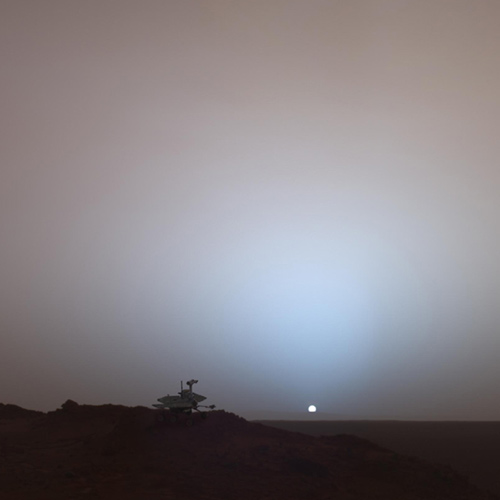
psychwardart-mycraftproject

“Psychology is a great and powerful science”, he said, “but it is flawed and does not have a complete understanding of who we are and why we are.” He went on to critique the handouts, respectfully but completely. I won’t go into detail.

In summary, Mr. Castle explained that too much emphasis on the mind and it’s needs and habits is detrimental to a Man in the fulfillment of God’s purpose. The Spirit and the Body must receive appropriate nourishment. Without proper sustenance of each element of our being we cannot penetrate the mystery. He told me a story from his life, the gist of which was that his mind had led him into “terrible misdeeds”. His eyes became red and he began to cry. “I have been locked up for 30 years and suffered great remorse because I did not know the proper balance of my whole being”.

maid

Then he stopped crying. His eyes cleared. He said that everything that had happened was part of his education. He said, “Man always wants to blame God or blame anyone else for their own mistakes. Adam blamed Eve and God, Eve blamed the serpent and God. Ever since then all Man wants to do is place the blame on someone else.”

Then he said it was time for me to go. His lunch would be arriving soon.

1162407703lunch_tray

Leave a comment

Filed under animated gif, personal story, pictures, Spirituality

The Art of Happiness: Audio by HH Dalai Lama

Download, share:

art-of-happiness-dalai-lama-1of-2-share-me-self-help-audio-book1

art-of-happiness-dalai-lama-2-of-2-share-me-self-help-audio-book

7 Comments

Filed under buddhism, Free Audio Books, mp3, Spirituality, wellness and systems change