from actualsanity.com
An Unusual Love Letter To The World, Or Whoever May Happen To Read It
Anonymous Author, USA, 2010.
PLEASE NOTE: This letter has been written in a special way. It contains difficult but necessary truths. Some people may feel uncomfortable or upset while reading the first half of the letter, but it is important to keep reading until you reach the second half.
When you get there, you will understand why the first part needs to exist. Please do not be upset or afraid. That is just your ego reacting the way all egos do. Merely observe the negative feelings and let them pass. This letter has been written to help you.
Dear YOU,
Straight away, before anything else, I want you to understand that what you are about to read is a love letter, written because I love you. In fact, it’s very possible that I love you even more than you love yourself, which is why I’m writing to you today.
It’s also why I’m going to tell you some things that might be hard to hear. In fact, they WILL be hard to hear. The first thing I’m going to tell you might hurt worst of all.
YOU, my dear beloved creature, are INSANE. Not just a little insane, in the way you think of the people you may know who are diagnosed with “depression” or ‘bipolar disorder” or what have you. Your insanity isn’t something so easily treated with a pill or a visit to a therapist. I wish it were.
Your insanity is systemic, very nearly universal, and absolutely incurable from within the system that sustains it. Every “professional” you might go to for help is as crazy as you are. Get that straight right here and right now. Your insanity is not recognized, acknowledged, or understood by the “mental health system.” In fact, all that system can do is help you become a happier crazy person.
Yes, my dear beloved human being, you are as crazy as a shithouse rat, and there’s absolutely nothing anybody you might be have trusted to help you can do about it, because they are as insane as you are.
It’s an awful situation you are in, and because you are thoroughly insane, you don’t know how to do anything but make it worse.
Don’t get me wrong, help for your deadly condition does exist. There have been qualified doctors who have tried to help you many times, but because of your insanity, most of you have either ignored them, jailed them, and/or or tried to kill them. And those of you who did want the help they offered still weren’t able to accept it, because you’re just too crazy, thanks to the crazy world around you.
In your madness, you projected your own twisted and warped ideas onto these doctors and tried to make them into gods, villians, lords, martyrs, and damn near anything else your diseased minds could think of to transform them into something other than what they were – your brothers and sisters in humanity who recognized and shared your suffering. All they ever wanted to do was help you, because they loved you that much. They loved you more than you love yourselves, and they paid the price for it.
And how did these doctors want to help you? Without exception, they had only one prescription – to lead you back to you who you really are. In fact, you probably don’t know it, but that’s all “religion” really is and all it was ever meant to be, at least before it was hijacked by hordes of self-serving crazy people. “Religion” means “reconnection” – reconnecting with your real nature – who and what you really are. If you’re a stickler for details, like most of you crazy folks are, go ahead and look it up. That’s the root of the word “religion.”
But before your knee-jerk aversions and pre-programmed ideas kick in and cause you to flee from this page in fear of being assailed by typical proselytizing, let me assure you that I’m not here to preach religion to you – at least not in the crazy, insane sense that you understand religion. I’m not here to convert you to Jesus, Buddha, Flying Spaghetti Monster, or the fencepost. Don’t be scared. I care about your freedom of conscience as a sentient being and I wouldn’t do that to you. Only crazy people are into the whole concept of conversion, because it’s totally insane.
Instead, what I’m here to do is guide you toward the very same medicine those “doctors” I mentioned tried to prescribe for you (with the possible humorous exception of the Flying Spaghetti Monster). But please pay attention – I’m not here to tell you about what you might already THINK those guys taught. It’s a very safe bet that you really don’t have a clue what they actually taught, because the only source of information you have about them is the insane distortions and misunderstandings projected onto them by your fellow crazy people.
So, who the hell am I, anyway? Because I know you much better than you know yourself (just like all sane people understand crazy people better than crazy people understand themselves), I know that’s what you’re probably wondering right about now. What’s my whole deal and what right do I have to talk to you like this? In addition, you’re probably starting to strongly suspect that I’m the crazy one, not you. All the signs are there – or at least all the signs your fellow crazy people have taught you to help you detect people who are actually sane and label them nuts. You see, that’s the whole game – that’s how your insanity maintains itself. You label the people who are actually sane as crazy. It’s so simple that you couldn’t call it rocket science, and yet it’s also diabolically brilliant. And, just in case you care, it’s also progressively killing your whole so-called “civilization” deader than a doornail.
But enough about that right now. By the end of this letter, you’ll either see it or you won’t. As for me, my “personal identity” is not important. Don’t bother trying to discover it, as I’ll deny it even if you happen to guess right. The only purpose of knowing “who I am” in terms of my mundane life in this crazy world would be to check me out and get my “bonafides” in order to figure out if I’m qualified to be talking to you like this. Well, let me tell you straight off, I have no “bonafides” whatsoever in your crazy society. I have no degrees attesting to my ability to pass crazy tests designed by crazy people. I have no insane titles – academic, religious, psychological, or otherwise – to indicate my exceptional achievement in jumping through misguided hoops devised by an insane world. Why on Earth would I choose to spend a single minute pursuing any such thing? Can you tell me? Think about it for a moment or two, and then let’s move on.
Now that that’s out of the way, let me tell you my *actual* bonafides – the actual things that qualify me to write you this rather unusual love letter. Firstly, and most importantly, I care about you. I’ve said it several times already, but it bears repeating. Because you are insane, you don’t understand actual love in the slightest and have to be continually reminded that it isn’t the sentimental nonsense you’re trained to expect from romantic comedies and Hallmark cards, nor is it the self-serving lies you are told by politicians, world leaders, or celebrities of any kind. I’m writing to you today because you are in a life-threatening state of emergency. Your mind is occupied by a deadly, world-killing insanity and I want to help you cure yourself of it. It’s just that simple. I’m no god, guru, lord, master, or martyr. I’m simply an unusual kind of doctor, if you will – one who is not licensed to practice in any state or municipailty in the world other than the hearts and minds of those who sense that something is dreadfully wrong. And those are the only places I need to practice.
Secondly, I’m qualified to talk to you this way because I’ve spent far more time and energy figuring out how to be sane than most of you have spent doing anything in your entire lives. While you were wasting time at your insane, world-killing jobs, schools, and churches (sorry, but it’s true), I was working hard every day, all day, 7 days a week trying to figure out how not to be as crazy as you are. I did this for 15 years. That’s 15 long, hard years, trudging through 10 miles of psychological snow every day, uphill both ways. I have given blood, sweat, and tears for a scrap of actual sanity – just a scrap. And in comparison to your crazy society, a scrap of actual sanity is like a ten-ton hammer.
And why did I do such a thankless thing? Because I care for you. I see your suffering. I see your world dying – being murdered. I see the never-ending tide of your pain and tears. I see your self-inflicted tragedy reflected in six billion hauntingly brilliant shades and colors, and because I am not insane like you are, I cannot simply stand by and watch it happen without doing anything in my power to help. I’m not a hero, a martyr, or a grandiose person by any means. I’m just a flawed, ordinary human being like yourself who, through a fortunate series of misfortunes, had the dumb luck to become distanced enough from your crazy world to get a glimpse of actual sanity. That’s the only real, significant difference between you and I. It doesn’t matter that my IQ is higher than yours (which it perhaps isn’t) or that I read better books or comb my hair backwards or smoke Camels instead of Marlboros or anything else. It only matters that I, though no fault, merit, or intention of my own, just so happened to end up living a rather different sort of life than most of you have, and therefore I have gained access to a rather different sort of perspective.
However, on the other hand, don’t take me for one of your beer buddies, because that would be just as wrong as the opposite error. Don’t doubt that after 15 years of practice, I understand every bolt and screw in your diseased minds better than most of you will ever understand yourselves, even in 100 crazy lifetimes. Believe me when I tell you that should you find yourself in my presence, it would take no more than smallest flick of my metaphorical wrist to psychologically destroy you in any way I should so choose. I’m not exceptional or special in this regard – all sane people have the very same ability. Like Jeff Goldblum’s cable TV repairman character in the movie Independence Day says to his father when asked how he managed to triangulate someone’s location electronically, “all cable guys can do it, Dad.” It’s not hard to manipulate the crazy fears and insecurities of the insane. Your “authorities” and “rulers” also know just enough about how the madness of your world works to be capable of turning your screws to destroy you for their benefit, – and guess what? That’s exactly what they do. But I don’t, because I have no interest in enslaving or exploiting you.
On the contrary – I want to free you, which is a much taller order.
Because destruction is not what I want for you, I will never stop caring about you no matter how many times you laugh in my face, belittle me, spit on me, or attempt to mistreat me in any of the ten thousand ways your insane society has taught you to marginalize and neutralize the threat of people who dare to be sane. Your attempts to turn me against you lost their power years ago. Rest assured, I’ve got training in this, because you started early with me. You tried to destroy me in your insane school system long before a hair had even thought to sprout on my chin – but I survived, recovered, and grew beyond anything you could have imagined.
Pay attention – the fact that you think this is a self-pitying “sob story” indicates just how insane and clueless you are. It is precisely the opposite. Do you want to know what fear is? Then read and understand now – you cannot stop me from caring for you. I will do everything in my power to drag you, quite possibly kicking and screaming for all you’re worth, into the light. I will do everything I can to save you from yourselves no matter how hard you fight to defend your twisted attachment to self-destruction. Through the priceless gift of over thirty years of your ceaseless opposition, you have given me that power, and I thank you for it on behalf of all those who have benefited and will benefit until the day they shove me into a pine box and I am forced by Nature herself to stop doing my own small part to free a suffering world.
Incidentally, just in case you care, Jesus and Socrates had the same love for you, and you killed them for it – exactly as they had planned and willingly allowed. In permitting you to fool yourselves into thinking you had destroyed them, they became more powerful than entire civilizations and empires. You read their words today because they did as I have done, and as all sane people must do in the face of your insanity – they allowed you to give them the gift of your ignorance and hatred. As you hated them more fiercely, so did their light shine ever-brighter, until in at last killing them, you ignited them as eternal stars in the heavens, never to die.
Don’t get me wrong, though. I’m nowhere near the level of of a Jesus or a Socrates. You can put away that “he’s a lunatic who thinks he’s Jesus” label you’re trying to stick on me as one of your predictable little pre-programmed defense mechanisms. Only in my dreams am I at such a level – but I don’t needto be at that level to tell you what you need to be told. A lesser degree of development will suffice just fine, because to be frank, it doesn’t take Einstein to figure out that our world, under your insane psuedo-democratic “leadership,” is in serious trouble. Heap big trouble, kemosabe.
But this letter is not about me, Jesus, Socrates, or anybody other than YOU. And that, of course, is where the tricky part comes in. You see, while I have the power to destroy what is good and beautiful, just as you do (and which you have a habit of psychotically utilizing at every opportunity), I lack the power to do the opposite. I cannot give you the gifts of sanity, love, and freedom. If I could, I would do it instantly. I would do it with such force as to imprint compassion and truth on your soul irrevocably. But I can’t. You have to freely accept the gift of sanity of your own volition, and that’s incredibly hard for you to do, because you’re so thoroughly insane.
Oh yes, you are disastrously insane. I know I’m in danger of the broken record effect, but have I reallymade that clear enough yet? Have I repeated it frequently enough for it to begin to penetrate the massive concrete bunker of crazy that is your mind, even just a little? No, probably not. But perhaps, just maybe, the utter “weirdness” of what I am saying has interested you enough to keep reading. Maybe you want to see where this whole bizarre trainwreck leads, because that’s still what it is to you, isn’t it? A bizarre trainwreck obviously written by a crazy person. Something on the order of the Unabomber or David Koresh, no doubt. You’re programmed to associate any sudden appearance of actual sanity with those caricatured, media-pimped bogeymen to make it go away. That’s okay, I don’t mind. Please go right ahead reading under the assumption that I’m a nut. I don’t blame you at all, because you have absoutely no other way to see it – at least for the time being.
Nonetheless, please understand that your world IS crazy, regardless of whether or not I am. Sorry to be the bearer of bad news, but you are some seriously whacked-out people. You do crazy, crazy, batshit crazy and insane things and label them “normal,” “necessary,” or “justified.” Don’t you see that when you do that, you are declaring to all the world that you are crazier than a shithouse rat? You go to war and justify it as “a fact of life.” Thousands are slaughtered for the sake of absolute lies and evil motives, and you don’t bat an eyelash. That’s not “just the way life is,” it’s batshit crazy – I mean drooling, straightjacket batshit crazy. Can you imagine YOURSELF doing it? Would you REALLY fire a deadly weapon at another human being just because “your leaders” told you to? If you would, then my God, you are really crying out for the tender mercies of Nurse Ratchet.
But that’s not even the worst of it. Like a group of sugar-buzzed, frenetic children playing a massive game of “Hungry, Hungry Hippos,” you view life as a contest, a race, or a competition to control as large a share of the world’s resources as you can get your hands on in the 80 trifling years you have on Earth – and you don’t see a damn thing wrong with that, even as your brothers and sisters in humankind starve and die because of it. In fact, you celebrate this madness, preach about its “necessity” and “morality,” and assure the world that “there is no alternative.” That is murderously, shockingly, abysmally crazy. It is among the craziest things that any intelligence could concieve of. Even God Himself would have considerable difficulty devising a more insane world than yours – the very same one you are trained to think of as “normal.”
You are killing yourselves. And in reality, it is worse than that – you are murdering yourselves, and murdering as much of this beautiful, irreplaceable planet as you can manage to take down with you. But, being blindingly insane, you certainly don’t stop at homicide and terracide (the murder of planet Earth). That wouldn’t be nearly enough to satisfy your psychotic thirst for destruction. It isn’t just that you kill, rape, enslave, and destroy in the name of “war,” “politics,” economics,” “religion,” “truth,” or a thousand other distorted self-serving fictions and fantasies. Merely doing that would mean that there would be some period of your lives in which you were not behaving insanely, and that simply won’t do. Your virulent madness will settle for nothing less than complete domination of the entire human experience, lock, stock, and barrel, 24/7/365.
And so, you enslave yourselves. You sell yourselves to the highest bidder. Without so much as a twinge of conscience, you shamelessly piss away your ONLY two God-given (or Nature-given, if you prefer) resources in this life – your precious time, and your precious energy. And let me assure you, my dear insane friends, these are not resources which you have in great supply. You’ve been told over and over that your lives are short and your energies are limited, but you don’t really believe it, because you are completely in denial. You behave with unbelievable recklessness, acting as if you had unlimited amounts of time and energy to waste on utter trivialities, traps, distractions, mental prisons, and every other kind of insane, diabolical pitfall your fellow crazy people expect you to spend your whole life falling into. And before you can say “Orville Redenbacher,” whammo, right out of the clear blue sky and much to your total surprise, you are going to be out of time and wake up dead – but not before realizing at the last minute the enormous true value of what you wasted and threw away.
But hey, I could go on and on (and trust me, I really could), but you get the idea by now – even if you refuse to accept it because of the insane brainwashing you’ve been callously and cynically subjected to every day of your life right up to this moment. So let’s cut to the chase, right? Well, here it is on a silver platter:
Pitiably, regrettably, and disastrously, your insanity almost always prevents you from realizing that all you have to do in life is love each other. That’s it. Nothing less, nothing more. That is the ONLY thing that determines whether or not you are “successful” as a human being. Do you understand? All you have to do is really give a damn about your neighbor and act like it. I mean really care, in the same way you care about yourselves. You’ve been told this before, but your insanity ensures that it is the LAST thing you really want to do. You’ll go to any lengths to avoid taking it seriously. You’ll move Heaven and Earth – literally – to run away from it.
Because of this, you’re destroying yourselves and taking everybody on Spaceship Earth down with you. Sorry to beat a dead horse, but you’re crazy – homicidally crazy – and you’re killing yourselves along with your brothers and sisters. Worst of all, barely one man or woman in ten thousand even has the small scrap of actual sanity needed to suggest that maybe you ought to cut it out. You are well and truly screwed, and had better start considering the possibility of paying attention to what I’m saying here very quickly. Like yesterday, or last week. You have no time to waste, because even if you don’t value your own time and energy, rest assured that I do. What this means is that I am an extremely limited resource. There aren’t very many like me in the world (especially since you’ve worked so hard to erase us all from existence) and your chances of even encountering this message to begin with are extremely slim – but somehow you did anyway. And do you know what that means?
It means that congratulations are in order, because you have just won the lottery. Not the money lottery, of course, which would only entrench you in your insanity even further. If you’ll kindly allow me a slight (but relevant) tangent, it bears noting that your love of money is perhaps the clearest sign of your tremendous sickness. If you had any actual sanity at all, you would hate and despise money beyond belief. I know that statement just pegged the needle on the handy-dandy “crazy meter” you’ve been programmed to use to defend yourself from the dangerous influence of people like me, but just for kicks, why not consider it anyway? You think of yourself as a freethinking person, right? It won’t kill you to entertain an idea, will it? Just turn it over in your head, if you have the cajones. As a thought experiment and nothing more, take a minute or two to play with the idea of actually hating and despising money. It feels completely bizarre, foreign, and crazy to you, doesn’t it? Guess what. That’s because you are thoroughly insane.
There, that was good practice, and if you’re still reading, I’ll assume it didn’t kill you. Give yourself a round of applause, but don’t get too carried away. That’s just the tip of the iceberg. Money, war, and selfishness are only three of the countless sick, twisted, insane, and evil ideas you believe are “necessary facts of life,” but they are perhaps the three finest examples of how deep your craziness runs. Why did I mention selfishness, you may be wondering? Isn’t the acceptance of selfishness so well-ingrained in modern thinking as to stand beyond question? Haven’t you, for thousands of years collectively and decades individually, heard and been comforted and justified by continual rationalizations of selfishness, its basis as the foundation of human nature, its necessity, and even its virtue? Of course you have, because you are part of a ravaging horde of crazy people trying to convince each other how real and wonderful your twisted and destructive delusions are. That’s the gist of it in a nutshell. A nutty nutshell.
Enough beating around the bush. If I spend any more time trying to convince you of how insane your world is, I think we’ll both get a migraine. Besides, that’s not even the worst of it, at least from your perspective. Here is the reality, which I promise that you will NOT be able to accept without extreme difficulty. Get your blindfolds ready, because this is going to hit far harder than what I’ve written so far, and cut far deeper. It’s far more frightening and offensive to your diseased minds than an eternity of calling you “crazy” and “insane” would be. That, you can handle (because you’re used to abuse, given that your whole society is based on it) – but what I’m about to tell you, you can’t handle. You’ve proven it over and over for thousands of years. In fact, I’ve only been calling you crazy and insane to prepare you for the REAL awful truth – and here it is:
YOU are a beautiful, inherently powerful, irreplaceable, unique and wonderful being of infinite worth and value.
Yeah, YOU. The frustrated, depressed middle manager who has already sold away well over half your precious time and energy to the highest bidder only to have life hand you one shit sandwich after another for your trouble. As you lift a drink to your mouth to wash away the pain of your empty existence, know this and at last have hope:
YOU are a beautiful, inherently powerful, irreplaceable, unique and wonderful being of infinite worth and value.
Yeah, YOU. The kid in school who is picked on continuously, to the point that you’ve given up on life. As you contemplate suicide and consider the unspeakable act of depriving the world of your irreplaceable presence and all the good you will someday do thanks to the gift of your painful origins, know this and understand:
YOU are a beautiful, inherently powerful, irreplaceable, unique and wonderful being of infinite worth and value.
Yeah, YOU. Whoever you are, whatever you’ve done with your life up to this very moment (even if all you’ve ever done is piss it away), and whichever one of the 6 billion unique and irreplaceable facets of human life on this Earth you might happen to be, know this for a fact and feel its truth in your heart – perhaps for the very first time:
YOU are a beautiful, inherently powerful, irreplaceable, unique and wonderful being of infinite worth and value.
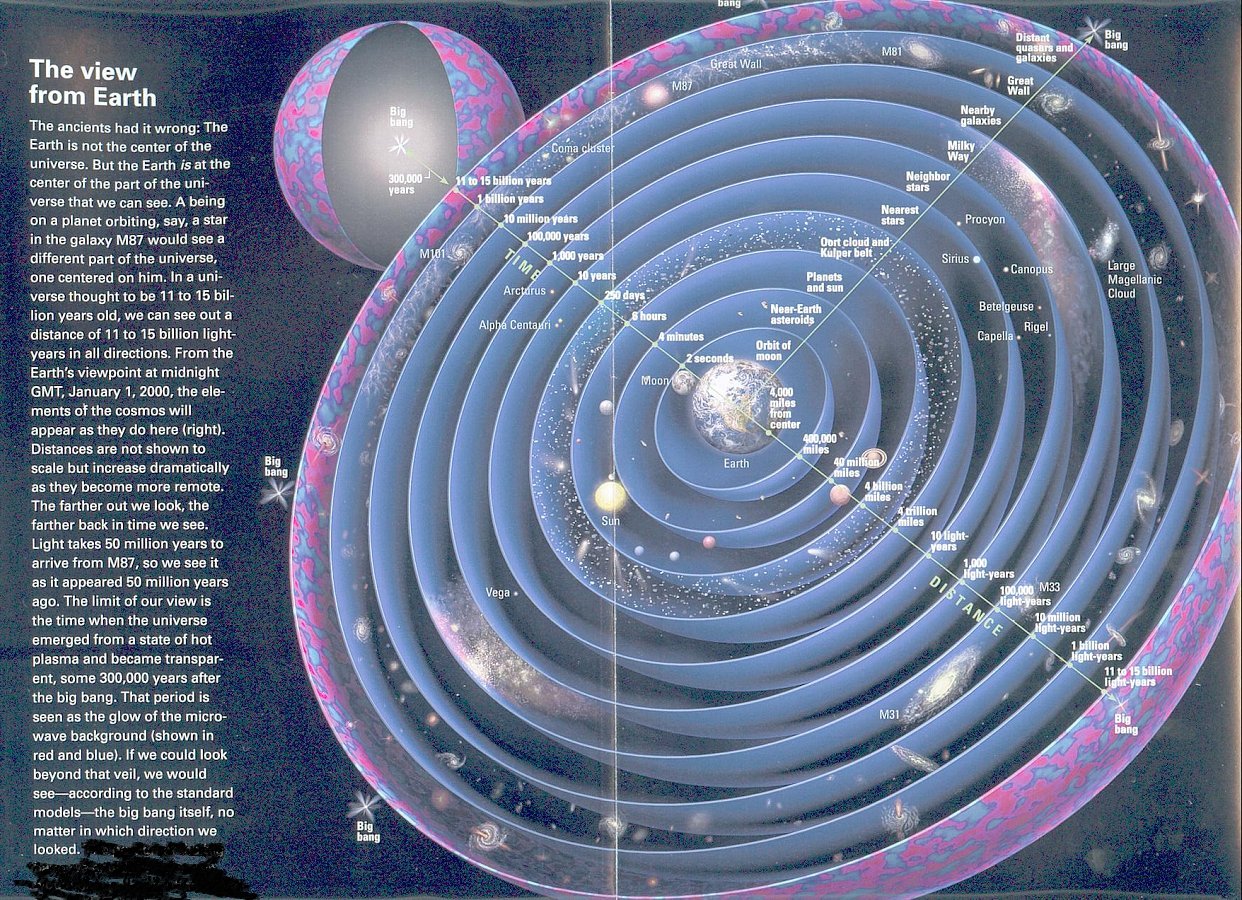
And that’s the truth you’ll never, ever be told by the insane world that wants to use fear and self-loathing to control you, just as they have done all your life so far. Understand me clearly – this isn’t about “self-esteem” or some slick self-help nonsense peddled on Oprah’s book club. This is about the fact that your incredibly unlikely, miraculous existence is the cold, hard, factual result of a universal process that extends all the way back to Big Bang, the divine moment of creation, the Garden of Eden, or whatever story of creation you happen to prefer. Whether you were created by God, Nature, random quantum fluctuations, or the Noodly Appendage of the Flying Spaghetti Monster, the simple fact that YOU are here is a miracle. That’s not New Age nonsense, it’s the very reality of your whole being. I don’t care who you are, what you look like, how much money you make, or what anybody else thinks of you – if anything in this endless Universe is a miracle, then you are a miracle. Learn it, love it, and start acting like it.
People of the world, or at least the few who will ever have the opportunity to read this letter, please – listen. Listen for any reason you like, even if only to ridicule me, use me as an example of whatever insanity you want to project onto me, to try to smear my words or my personality, or whatever you like, but simply listen, just for a few more brief moments. I have some special words to share with you, from a special source. I don’t care one iota if you want to call that source God, Buddha, Nature, my subconscious mind, the collective unconscious, bipolar disorder, sniffing glue, Captain Jean-Luc Picard, Allah, or whatever the hell you like. Simply trust, if only for five minutes, that there is a source beyond the ordinary experience you think of as “reality” – a source not subject to the insanity of your crazy world – and whatever it might be, it has begged and pleaded with you for all of human history simply to hear and take heed of a few simple words.
So, with no further ado…
You MUST stop all of this hatred and division. Not for me, and not only for yourselves, but for ALL LIFE. Do you understand that ALL LIFE is what you really are? No, of course you don’t, because your crazy world has denied you this knowledge – but it remains true nonetheless. Can you understand that there is NO SUCH THING as an isolated, truly “independent” being on this world or on any other in this infinite Universe? Every living thing is your brother or sister. KNOW NOW, right now, that this is not some recycled hippie New Age John Lennon “kumbaya” bullshit I’m trying to sell you. That’s how you are denied this truth in your crazy world – it is lumped into those tired old dismissive categories and swept out of your sight, never to trouble you again. But nonetheless, it remains true that not even GOD HIMSELF can alter the fact that unity and interconnection is the ACTUAL TRUTH of all existence. It’s a fact, a complete, stone cold concrete FACT, and the only fact that matters.
Phew, that was a lot of capitalized words. Please don’t get the wrong idea and imagine that I’m trying to preach to you like the self-serving spiritual salesmen do, convince you to believe anything through bullshit sophistry, or bully you into accepting anything that isn’t already present in your own heart. I cannot do that, even if I wanted to! Not even God, Nature, or David Hasselhoff has that power, much less a mere mortal such as myself.
Instead, what I am trying to do is LOVE you. Do you understand that? Have you ever actually been loved – really loved – in your whole crazy, manipulated, pre-packaged life? Perhaps you’ve been exposed to so much blithering insanity disguised as “love” that I am the first person to ever really show you what the real thing looks like. Think of what that would mean. If you don’t now understand in your heart of hearts how crazy your whole world is – when perhaps the one of the only examples of real love you’ve ever known is coming into your life through a random internet web page – then perhaps I cannot help you – but I will keep trying anyway.
Look, I’m not above begging, if that’s what it takes. Please, please stop hurting yourselves and everyone else. Stop all of this killing, exploiting, enslaving, and self-serving blindness. It’s not “necessary,” it’s not “just the way life is,” and there ARE alternatives – an infinite number of alternatives, or at least as many as six billion free and sane human minds can come up with. Your insistence on imagining that utter self-destruction and planet-wide injustice is “just the way things have to be” is so painful. Just in case you’re interested in history, please understand that it has torn the heart and soul out of every indigenous culture you have crushed under its heel. There is a reason so many Native Americans sit around on the reservation and drink their lives away – and it ain’t what you might think it is. It’s not their “laziness,” “lack of education,” “unemployment,” or anything else of that nature. It is the pain of having a sane world stolen from them and replaced with an insane one.
This world has been called a “vale of tears,” and it certainly is – but only because you refuse to stop hurting yourselves and everyone else. Doctor after doctor has tried to cure you of your madness without success, and they have done so *fully knowing* that most people would offer them nothing but a piping hot shit sandwich for their trouble. My efforts will be (and have been) received no differently for the most part, but at least perhaps I can plant a seed in a few rare open hearts.
Take this fragile little seed of compassion as my gift to you. Do with it what you will. Throw it out the window into the trash heap ten minutes from now if you must – but just for now, right at this moment and with no thought of the future, take the seed, just because you can. Don’t be afraid. It has taken a few of us “doctors” thousands of years to produce it at the cost of sacrificing everything. We have bled for it, died for it, submitted ourselves to every kind of degradation, rejection, and humiliation for it, worn rags for it, starved for it, and willingly accepted every kind of abuse for it – for no other purpose than to pass it on to YOU. But don’t pity us, because we knew what we were doing and we did it willingly. Take the little seed we’ve made for you, just for a single moment, as our free gift. You don’t have to say a prayer, bow to anyone, go to any church, join any movement, or do anything besides open your heart just a tiny bit and allow the little seed to take root. That’s it. No strings attached, no shipping and handling, no gimmicks. In the words of Huey Louis and the News, “you don’t need money, don’t need fame. Don’t need no credit card to ride this train.”
The rest is just a matter of staying out of the way of your own heart. The seed will grow as grass grows – without effort and without struggle – as long as you simply let it be.
Let the seed grow, and as begins to flower into a mighty oak, begin to understand that you must no longer sell your precious time and energy to the highest bidder. You must no longer waste your resources on things as meaningless as the insane world’s ideas of “status” and “success.” Chasing after those things is a virulent form of insanity that is killing the world, and you have chosen to become sane instead.
Let the seed grow, and as it sinks its strong roots into the fertile soil that is the interconnection and brotherhood of all beings, understand that you must no longer submit to those insane ideas and forces which seek to replace your infinite value and beauty with a false sense of lack. You lack nothing. Whatever belongs to the Universe belongs to you, as your absolute inalienable birthright. If you are being denied any portion of that birthright, it is through no deficiency or failing of your own, but through the machinations of a destructive madness which you have chosen to no longer support. For the first time in your life, you will experience what it is like to be without constant guilt and shame, because for the first time in your life, your heart of hearts knows that you are no longer helping the insane world to kill itself.
Let the seed grow, and as its healthy green leaves turn toward the infinite sun of true Being, understand that the senseless killing, exploiting, and enslaving must end. In the sanctum of your own mind, ask the insane world around you “what part of Thou Shalt Not Kill didn’t you understand?” What part of “exploitation and slavery are wrong” don’t “normal” people get? Don’t hope for a sane answer, though. The crazy world around you is incapable of providing one, but that’s okay, because you have chosen to no longer share their delusions.
When you must kill, even a fly, make a practice of apologizing out loud with true regret – and when you do, reflect on how crazy the world would think you are if they caught you doing that. Understand that it’s not your insanity for doing so, it’s theirs for not. And then know that everything you need to do to live with compassion and actual sanity is just like apologizing to the fly. It is simply a matter of being sane enough to let the whole crazy world think you are nuts for the sake of love. Do you see how this works? Doctor Jiddu Krishnamurti (a “doctor” in the true sense) said it best – “it is no measure of sanity to be well-adjusted to an insane world.” Live with true compassion and you’ll be called a nut. Understand this, accept it, and do it anyway.
Let the seed grow in a thousand other wonderful and surprising ways, as compassion begins to flower in your heart. Never beat yourself up for anything – let the crazy world take care of beating itself up, as it always has. Don’t be afraid to get angry from time to time – no one whose heart knows genuine compassion has ever gone without knowing the burn of anger. You are angry because you care. You are angry because you love.
Most importantly, you are angry because you live in a world that is killing, enslaving, and destroying itself in a state of total self-satisfied, smug arrogance, and by God (or Darwin), you’ve had it up to here. You aren’t just a little miffed or vaguely disappointed at the sorry shape the human race is in. That’s for people who don’t care much, and don’t intend to let such small stirrings of conscience disrupt their TV time. No, that route is not open to you anymore. You already know too much, and try as you might, you can never unsee what you’ve seen in the few minutes we’ve spent together. Sorry, Charlie, but I wasn’t being completely truthful with you when I said I wouldn’t turn your psychological screws. It was a little white lie that was necessary to uproot a big black one.
If you have allowed love and compassion to take firm root in your heart, do not be surprised or dismayed that you are quite capable of becoming enraged, livid, and furious at the insanity of it all. This does not mean you are a “spiritual failure” as the phony, self-seeking “gurus” of the world would have you believe. It means precisely the opposite. You have the capacity for great anger because you have the capacity for great compassion. They are co-identical, like the Taoist concepts of yin and yang, and neither occurs without implying the co-existence of the other. Thousands of children are starving to death every day, and there is absolutely nothing wrong with the fact that you may begin to feel absolutely outraged over it. On the contrary – what’s so horribly wrong with the world is that everyone else doesn’t.
Do not reject anger or try to stifle it with feel-good platitudes, as selfish people who care only for their own happiness do. Instead, use your anger. Allow it to forge your love and compassion for a suffering world into razor-sharp weapons of unbreakable steel. Remember, as it is said, “I come not to bring peace, but a sword.” Peace cannot be won without sacrifice. The sword of compassion forged within your heart is not for striking out at others, but for mercilessly slashing away every false and destructive self-deception and every self-justifying excuse in your own mind, until all that remains is an unquenchable desire to do your small but infinitely meaningful part to ease the world’s suffering – a desire as keenly felt as a drowning man’s desire for air. Become the Bodhisattva, and find your salvation in that of the world.
When anger and frustration come, as they surely will, allow the intensity of these natural feelings to forge your true heart into a fortress that is untouchable and indestructible. Allow them to temper your determination to the point that you will NEVER, EVER stop being willing to reach out to your fellow man in a spirit of true compassion even if they nail you to a cross for it. Allow them to strengthen your resolve so that you know in your heart that not even your own worst fears, or even God Himself, can stop you from reaching out to ease the pain of a suffering world, even if it has to be dragged to the medicine kicking and screaming every step of the way. As Enigma puts it, don’t care what people say / just follow your own way. Don’t give up and lose the chance / to return to innocence. “Innocence” is simply the nature of who you really are. Know that you will do what it takes to be true to your true self. No, that isn’t a redundant or meaningless sentence. If you think it is, read it again until you understand. Read it a thousand times if you must. Whatever it takes.
Let the seed grow, and become strong and powerful, in a way the weak (who are called “strong” in the insane world) will never be able to touch. Never flatter your ego by engaging in self-serving fantasies of yourself as a martyr, but nonetheless prepare yourself to suffer every kind of degradation and abuse for the sake of passing the seed on to just one more open heart. Prepare to be considered “weak” by the “strong” of this world – those who have learned to embrace the insanity, become the craziest inmates of the crazy house, and keep the whole insane system going for their own short-sighted benefit. In the insane world, they call those people “winners,” “leaders,” “the successful,” and “role models.” Accept their rejection, condemnation, and abuse without blame. They know no better.
Let the seed grow, and even in the defining moments when you face your personal demons, learn to summon the world-changing strength to love and bless your enemies, for you know something they do not. Even in all their worldly might, they have no power against the seed you carry. Even their shriveled and petrified hearts might someday, somehow be opened to it, much to their shock and horror. No one is beyond redemption, because we all share in the same infinite source. In your “weakness,” as seen through the eyes of the insane world, lies your greatest power. By staying true to your true self and the seed (for ultimately they are one and the same), you shall overcome.
If you dare, decide right this moment to turn your life around. I’m sorry if this sounds like an “altar call,” but I honestly can’t help that. At some point, everyone has to decide which team they are going to bat for. Please understand that I don’t mean “turn your life around” in the sense of shouting “praise the lord” or doing some kind of “self-help” program or getting a better job or joining the military or attending the University of Phoenix or deciding to spend 20 minutes a day chanting “AUM.” I mean turn your life around in terms of a 180 degree about-face turning away from the whole crazy insanity of this world and toward the REAL truth of who and what you are.
If you dare, decide right now to be “in the world but not of it.” Yeah, I know Jesus and some other scary religious people said this, but I can’t help that. They said it because they had to. There’s no other way to give you any chance of becoming sane. “I am the way, the truth, and the life” doesn’t mean that I personally (as in the author of this webpage) am some special awesome being you have to obey and listen to just because I’m The Lord of Lords, Captain America, or even Rick James. Hell no, and please get that crazy rubbish out of your head. Instead, it simply means that this message (the message of compassion) is the only way to actual sanity and a better world – and it meant exactly the same thing when Jesus said it, too. “I, the message of compassion, am the way, the truth, and the life.” Sorry about your bad luck, but no man comes to the Father (your true nature) but through me (the message of compassion). Got it now? Okay, good – and don’t blame me, meaning “me” as in the imperfect human being who is being used as a vehicle for these truths. I didn’t make the rules, and neither did Jesus, Buddha, the Dalai Lama, or anybody else who has tried to carry the message to you.
So, with that in mind, here are some practical steps you can take as soon as you feel ready – but be warned, some of them might be an ouchie at least until you have accumulated some practical experience in not being nuts:
Rather than getting a better job, if you’re single and child-free, see if you can figure out how to get rid of your job completely. GASP! The shock! The horror! Well, get over it. I said what I said and I meant it 100%. If you can do something as monumentally “crazy” (in the insane world’s eyes) as this, holy mackerel, are you ever on the right track in a big way. Although you’ll probably be poor, your spiritual future’s so bright you gotta wear shades. You are on the spiritual short list, as opposed to the spiritual short bus. That’s the ride everybody else who is still chasing after money is taking.
Rather than joining the military, learn what a “conscientious objector” is and see if you can’t become one. Want a hint? It’s the totally ridiculous and nutty belief that “war is always wrong.” Wow, what a concept, eh? If you can get your crazy little head around that, even if takes you 20 years of arguing with yourself over whether Hitler had to be stopped, then oh boy, are you ever moving in the right direction in a Porsche 944. It might come as a surprise to you, but “thou shalt not kill” is an extremely sane idea. The more you get acquainted with it, the quicker you’ll make progress in every area.
Rather than attending the University of Phoenix, why not tear up every degree you might already have and become the dean of your own personal Sanity University? Stop giving credence to the crazy belief that any degree or award the insane world can confer upon you can do one iota to help you move toward actual sanity, happiness, fulfillment, or whatever else you’ve been falsely promised. If you can manage to never have a thought of chasing another one of their gold stars or seals of approval again, then good lord, are you ever taking off into actual sanity at warp speed. Lao-Tsu said it best – “give up learning, and put and end to your troubles.” What you really need to learn, this world doesn’t teach.
Rather than chanting “AUM” for 20 minutes a day, start right now to stand up for compassion in every area of your life, beginning from the tip of your nose and extending outward to encompass the whole universe. Aim high and never take “no” for an answer. Don’t let anyone tell you you’re setting your sights too high. Man’s reach must always exceed his grasp or we’re all wasting our time doing absolutely nothing. Don’t be fooled by those who tell you to “be practical.” They only want to kill their consciences by excusing and rationalizing away their own unwillingness to act. Dream big. Resolve to save the whole suffering world and get busy doing it. By doing that, you’ll already have succeeded. As Gandhi put it, BE the change. That’s all – nothing less, nothing more.
Remember, YOU are a beautiful, inherently powerful, irreplaceable, unique and wonderful being of infinite worth and value. If you’re an American, Mister Rogers (one of our truly great spiritual leaders and a thoroughly sane man) told you this as a kid, but the insane world beat it out of you. So now, listen again. It’s a beautiful day in the neighborhood, if you choose to make it one. You have strength beyond measure waiting to be unlocked somewhere deep in your heart. All the “doctors” of history have done their damndest to tell you exactly where to find it, if you’ll just shut off the crazy voices of the world in your head for five minutes and really, sincerely LOOK and LISTEN. Turn off the TV and unplug the phone if you have to, just to find a place to start. Never believe that you cannot change the world, for it is really you and ONLY you who can. That’s a fact, Jack. Learn it, love it, live it.
But please, for the love of Buddha, don’t simply believe anything I’m telling you. I don’t care if you “believe” in me, God, Nature, Santa Claus, science, compassion, a spherical Earth, or anything else. In fact, I’d prefer if you didn’t “believe” in anything at all. Beliefs are dangerous and you don’t exactly have a good history of using them wisely. Instead of believing, go within. Go into the depths of your heart and see if what I’ve told you rings true. Go to the place where there is no logic, no “truth” that can be formulated in words and used to beat your fellow man over the head, no belief, and no chattering mind. Go to the quiet place where faith lives – and I don’t mean Crazytown’s phony self-serving sales-pitch version of “faith” that asks you to send $100 to Benny Hinn, believe that dinosaurs and man walked the Earth together 5000 years ago, or blow yourself up for the glory of Allah. I meanreal faith – the universal message of the heart. Put aside everything the crazy world has ever told you, go to that small, still place, and see if what I’ve said to you rings true. If it doesn’t, then I’m sorry I’ve wasted your time and you can bill me for your two cents worth.
As your brother in humankind, I am at your service forever, even if you choose to hate me, as many of you have already chosen to do throughout our shared lives together here on Planet Crazytown. It’s okay – I forgive you and always will, for you truly know not what you do. However, you CAN learn. This is your opportunity. You won’t have many more, so take it lightly at your own risk. No conversion, no “sinner’s prayer,” no church, no collection plate, no robes, no rituals, and nothing other than one totally free being in the universe choosing to open himself or herself to the possibility of a better course for the one and only short little human life any of us have.
As it is has been written in every true medicine book in the world by better doctors than me:
“Treat others as you would be treated, that is the only law.”
Or, as one unusually sane man in particular put it:
“Love your neighbor as yourself.”
It is up to you now. Will you at least take the seed into your heart, for just a moment? Will you step outside your self-imposed ego prison for just a brief instant and see that the insane ideas, beliefs and attitudes you have been trained to accept as “normal” are killing you and the whole bloody world spiritually, psychologically, and even materially? Will you, like Nero, choose only to fiddle while Rome burns? Can you, just for a moment, set aside this deadly blindness and arrogance? Will you turn away from the madness, at long last, and face the shining Sun of your true infinite being? Will you reach into the depths of your heart and summon the courage to become who you really are?
I know I promised you no religious nonsense, but if you will allow me one small metaphor in closing, it is this: When you accept the seed of compassion into your heart, it is at that very moment that all sentient beings are saved and the universe and its infinite angels rejoice for all eternity – because eternity is within you.
Yours Truly,
Actual Sanity
P.S. You’ll find no links to my church, my movement, my seminars, my retreats, or anything else. I don’t have any. I don’t need any. I told you I had nothing of that sort to sell, push, or preach, and I was telling the truth. You know what to do if you want any of that. It’s all out there in a thousand forms and a million places. If you want Jesus, he’s not hard to find (although I’d recommend staying away from most churches). Ditto the Buddha, Lao-Tsu, the Dalai Lama, Swami Anybodyananda, Pantheism, Humanism, or whatever appeals to you. As long as you understand that all of these doctors prescribe the same medicine you’ve just been prescribed here, knock yourself out. Compassion is the only medicine in the world on which you can never overdose.
That is all. This is my whole and complete message to you. Take it for what it is – not some “sermon” from on high, not a lecture from some “guru” or “master,” but a heart-to-heart personal letter from a brother in humankind who shares in your pain and heartache. Just for today, and just in the form of these few words, I am merely offering to play the role of your “doctor,” not your “master.” Your true master is and has always been your own heart and nothing else – and if I have been at all successful in opening your mind to its small, still voice, then that is the true medicine.
Good luck to you, and may we each do whatever is in our power to cure our shared suffering together, as brothers and sisters on this little blue ball of mud. I will see a few of you on the streets, at the markets, and on the wires, where you will neither know me nor care to know me – but understand that I do know you, and no matter how crazy you are, you will always be my friend.
And that, very simply, is why I will never lie to you about what really matters. You may now be very, very insane – but you don’t have to be. The choice is yours.