Category Archives: Free E-Books

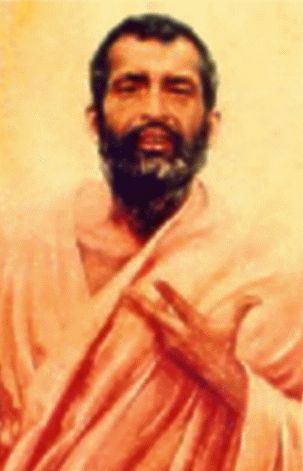
The Gospel of Sri Ramakrishna by M

Free e-book (this work is in the public domain, download at will)

But first know these things:

  1. This is huge- I mean really huge. 1260 pages huge. It has not been easy.
  2. I have not found the complete book available anywhere and so compiled it section by section. This could have led to some errors but hopefully only small ones. Teeny, insignificant in relative terms, I’m sure.
  3. I have included the original preface, introduction and other notes (a forward by Aldous Huxley, not in the original printing).
  4. I have taken the liberty of adding some photos/ pictures that were never in the original book.

Here are some excerpts, followed by the download, in doc format because that’s what the uploader will take.


HAZRA: “Does God listen to our prayer for bhakti?”

MASTER: “Surely. I can assure you of that a hundred times. But the prayer must be genuine and earnest. Do worldly-minded people weep for God as they do for wife and children? At Kamarpukur the wife of a certain man fell ill. The man thought she would not recover; he began to tremble and was about to faint. Who feels that way for God?”

Hazra was about to take the dust of the Master’s feet.

MASTER (shrinking): “What is this?”

HAZRA: “Why should I not take the dust of his feet who has so kindly kept me with him?”

MASTER: “Satisfy God and everyone will be satisfied. ‘If He is pleased the world is pleased.’ Once the Lord ate a few greens from Draupadi’s cooking-pot and said, ‘Ah, I am satisfied.’ Immediately the whole world and all its living beings were satisfied; they felt as if they had eaten their fill. But was the world satisfied or did it feel that way when the rishis ate their food?

(To Hazra) “A perfect soul, even after attaining Knowledge, practises devotions or observes religious ceremonies to set an example to others. I go to the Kali temple and I bow before the holy pictures in my room; therefore others do the same. Further, if a man has become habituated to such ceremonies, he feels restless if he does not observe them.

“One day I saw a sannyasi under the banyan-tree. He had put the salagram on the same carpet with his guru’s sandals. He was worshipping them. I said to him, ‘If you have attained Knowledge to that extent,* then why such formal worship at all?’ He replied: ‘What difference does it make? Since I do everything else, why not this too? Sometimes I offer the flowers at the guru’s feet and sometimes to God.’

“One cannot renounce work as long as one has a body. As long as there is mud at the bottom of the lake, bubbles will be produced.

(To Hazra) “If there is knowledge of one, there is also knowledge of many. What will you achieve by mere study of the scriptures? The scriptures contain a mixture of sand and sugar, as it were. It is extremely difficult to separate the sugar from the sand. Therefore one should learn the essence of the scriptures from the teacher or from a sadhu. Afterwards what does one care for books?

(To the devotees) “Gather all the information and then plunge in. Suppose a pot has dropped in a certain part of a lake. Locate the spot and dive there.

“One should learn the essence of the scriptures from the guru and then practise sadhana. If one rightly follows spiritual discipline, then one directly sees God. The discipline is said to be rightly followed only when one plunges in. What will a man gain by merely reasoning about the words of the scriptures? Ah, the fools! They reason themselves to death over information about the path. They never take the plunge. What a pity!

“You may say, even though you dive deep you are still in danger of sharks and crocodiles, of lust and anger. But dive after rubbing your bodv with turmeric powder; then sharks and crocodiles will not come near you. The turmeric, is discrimination and renunciation.

(To the devotees) “God made me pass through the disciplines of various paths. First according to the Purana, then according to the Tantra. I also followed the disciplines of the Vedas. At first I practised sadhana in the Panchavati. I made a grove of tulsi-plants and used to sit inside it and meditate. Sometimes I cried with a longing heart, ‘Mother! Mother!’ Or again, ‘Rama! Rama!’

“While repeating the name of Rama, I sometimes assumed the attitude of Hanuman and fixed a tail to the lower end of my backbone. I was in a God-intoxicated state. At that time I used to put on a silk robe and worship the Deity. What joy I experienced in that worship!

“I practised the discipline of the Tantra under the bel-tree. At that time I could see no distinction between the sacred tulsi and any other plant. In that state I sometimes ate the leavings from a jackal’s meal,* food that had been exposed the whole night, part of which might have been eaten by snakes or other creatures. Yes, I ate that stuff.

“Sometimes I rode on a dog and fed him with luchi, also eating part of the bread myself. I realized that the whole world was filled with God alone. One cannot have spiritual realization without destroying ignorance; so I would assume the attitude of a tiger and devour ignorance.

“While practising the disciplines of the Vedas, I became a sannyasi. I used to lie down in the chandni and say to Hriday: ‘I am a sannyasi. I shall take my meals here.’*

“I vowed to the Divine Mother that I would kill myself if I did not see God. I said to Her: ‘O Mother, I am a fool. Please teach me what is contained in the Vedas, the Puranas, the Tantras, and the other scriptures.’ The Mother said to me, ‘The essence of the Vedanta is that Brahman alone is real and the world illusory.’ The Satchidananda Brahman described in the Vedas is the Satchidananda Siva of the Tantra and the Satchidananda Krishna of the Purana. The essence of the Gita is what you get by repeating the word ten times. It is reversed into ‘tagi’, which indicates renunciation.

“After the realization of God, how far below lie the Vedas, the Vedanta, the Purana, the Tantra! (To Hazra) I cannot utter the word ‘Om’ in samadhi. Why is that? I cannot say ‘Om’ unless I come down very far from the state of samadhi.

“I had all the experiences that one should have, according to the scriptures, after one’s direct perception of God. I behaved like a child, like a madman, like a ghoul, and like an inert thing.

“I saw the visions described in the scriptures. Sometimes I saw the universe filled with sparks of fire. Sometimes I saw all the quarters glittering with light, as if the world were a lake of mercury. Sometimes I saw the world as if made of liquid silver. Sometimes, again, I saw all the quarters illumined as if with the light of Roman candles. So you see my experiences tally with those described in the scriptures.

“It was revealed to me further that God Himself has become the universe and all its living beings and the twenty-four cosmic principles. It is like the process of evolution and involution.*

“Oh, what a state God kept me in at that time! One experience would hardly be over before another overcame me. It was like the movement of the husking-machine: no sooner is one end down than the other goes up.

“I would see God in meditation, in the state of samadhi, and I would see the same God when my mind came back to the outer world. When looking at this side of the mirror I would see Him alone, and when looking on the reverse side I saw the same God.”

The devotees listened to these words with rapt attention.

ramakrishna-c

The Download:

the-gospel-of-sri-ramakrishna-by-m

8 Comments

Filed under Free E-Books, Mystic Poetry, pictures, Spirituality

Autobiography of a Friend

gfox2
Today’s free book: The Autobiography of George Fox, founder of the Religious Society of Friends (Quakers). And he doesn’t look at all klike the guy on the cereal box. Just who are these Quakers anyway?
Wikipedia says:  The Religious Society of Friends, also known as The Quakers, is a movement that began in England in the 17th century.The word “Quaker” means to tremble in the way of the Lord. In its early days it faced opposition and persecution; however, it continued to expand, extending into many parts of the world, especially the Americas and Africa.The Society of Friends has been influential in the history of the world. The state of Pennsylvania, in the United States, was founded by William Penn, as a safe place for Quakers to live and practice their faith. Quakers have been a significant part of the movements to abolishslavery, acknowledge the equal rights of women, and end warfare. They have also promoted education and the humane treatment of prisoners and the mentally ill, through the founding or reforming of various institutions.

During the 19th century Friends in the United States suffered a number of separations. These separations have resulted in the formation of different branches of the Society of Friends. Despite the separations, Friends remain united in their commitment to discover truth and promote it. There are perhaps 400,000 Quakers in the world today, the overwhelming majority of them Evangelicals in Africa and Latin America.

How about this George Fox character? What’s his deal? The following excerpt is from William Penn’s preface to the Autobiography of George Fox (the full preface is included with this e-book):


The blessed instrument of and in this day of God, and of whom I am now about to write, was George Fox, distinguished from another of that name, by that other’s addition of younger to his name in all his writings; not that he was so in years, but that he was so in the truth; but he was also a worthy man, witness and servant of God in his time.


……….

but, in general, when he was somewhat above twenty, he left his friends, and visited the most retired and religious people, and some there were at that time in this nation, especially in those parts, who waited for the consolation of Israel night and day, as Zacharias, Anna, and good old Simeon did of old time. To these he was sent, and these he sought out in the neighboring countries, and among them he sojourned till his more ample ministry came upon him.

At this time he taught and was an example of silence, endeavouring to bring people from self-performances, testifying and turning to the light of Christ within them, and encouraging them to wait in patience to feel the power of it to stir in their hearts, that their knowledge and worship of God might stand in the power of an endless life, which was to be found in the Light, as it was obeyed in the manifestation of it in man. “For in the Word was life, and that life was the light of men.” Life in the Word, light in men, and life too, as the light is obeyed; the children of the light living by the life of the Word, by which the Word begets them again to God, which is the regeneration and new birth, without which there is no coming unto the kingdom of God; and which, whoever comes to, is greater than John, that is, than John’s ministry which was not that of the kingdom, but the consummation of the legal, and opening of the gospel-dispensation. Accordingly, several meetings were gathered in those parts; and thus his time was employed for some years.

In 1652, he being in his usual retirement to the Lord upon a very high mountain, in some of the hither parts of Yorkshire, as I take it, his mind exercised towards the Lord, he had a vision of the great work of God in the earth, and of the way that he was to go forth to begin it. He saw people as thick as motes in the sun, that should in time be brought home to the Lord, that there might be but one Shepherd and one sheepfold in all the earth. There his eye was directed northward, beholding a great people that should receive him and his message in those parts. Upon this mountain he was moved of the Lord to sound out his great and notable day, as if he had been in a great auditory, and from thence went north, as the Lord had shewn him: and in every place where he came, if not before he came to it, he had his particular exercise and service shewn to him, so that the Lord was his leader indeed; for it was not in vain that he travelled, God in most places sealing his commission with the convincement of some of all sorts, as well publicans as sober professors of religion.

william_penn

Again from Wikipedia:

The Quakers began in England in the early 1650s as a Nonconformist movement separate from other such movements, from Anglicanism and from Roman Catholicism. Some would say that it was not precisely a “break” from any of these, but was organized outside of them. Traditionally George Fox has been taken to be the founder or at least the most important early figure, but modern scholarship suggests a more complicated picture. Most likely, a number of radical Puritans, among them Fox, James Nayler and Edward Burrough, independently came to similar positions, eventually came into contact with one another, and then began to coordinate their preaching. However, since Fox outlived most of what some Quakers have called the Valiant Sixty—a group of early Quaker evangelists—his account of the early days as recorded in his Journal, while it may exaggerate his role, is the most detailed one available.
The Valiant Sixty believed that direct experience with God was available to all people, without any mediation (e.g. through a pastor, or through sacraments). Friends have often expressed this belief by referring to “that of God in Everyone”, “inner light“, “inward Christ”, “the spirit of Christ within”, and many other terms.
Modern day Friends (as we call ourselves) are best known for their devotion to peace and consistent opposition to war. If people only knew! The Society of Friends is so different from most modern churches or sects that it can barely (if at all) be described as “organized religion. Without ministers, bishops or other religious hierarchy, the common threads of belief are referred to as “testimony”. Quakers don’t have dogma per se, but generally adhere to the principles of peace, justice, simplicity and community.
Quakers (past and present) tend to be social activists. Friends have been instrumental in the formation of many non-sectarian organizations (e.g. Oxfam, Greenpeace and Amnesty International).

Quaker meetings (called Meeting for Worship) are unprogrammed, last about an hour and consist primarily of silence, interupted only when an individual is “moved to speak”. Here’s a quote about Meeting for Worship:


“A Friend’s meeting, however silent, is at the very lowest a witness that worship is something other and deeper than words, and that it is to the unseen and eternal things that we desire to give the first place in our lives. And when the meeting…is awake and looking upwards, there is much more in it than this. In the united stillness of a truly ‘gathered’ meeting, there is a power known only by experience, and mysterious even when most familiar.” Caroline Stephen, (1908).

So, without further fuss, here is the book download- The Autobiography of George Fox:


georgefoxautobiography

Leave a comment

Filed under Free E-Books, pictures, Spirituality

Now available

From The Icarus Project:

Navigating the Space Between Brilliance and Madness

Download the pdf here.

Go to The Icarus Project site here.

Click these thumbnails for Icarus related pictures/ posters-

benefit_poster_email

support_comic_poster

youarenotalone

willhallschizophreniabike_0

donotenter

Leave a comment

Filed under CS/X movement, Free E-Books, Links: Recovery, Mental health recovery, pictures, wellness and systems change

A Spiritual Canticle of the Soul

Just another book by St. John of the Cross.

stj23004

Excerpt:

XXVIII
My soul is occupied,

And all my substance in His service;

Now I guard no flock,

Nor have I any other employment: 
My sole occupation is love.

Download the e-book:
a-spiritual-canticle-of-the-soul

Leave a comment

Filed under Free E-Books, Mystic Poetry, poetry, Spirituality

St. John of the Cross- The Dark Night of the Soul


Excerpt:

STANZAS OF THE SOUL
 
1. On a dark night, Kindled in love with yearnings--oh, happy
chance!--
I went forth without being observed, My house being now at rest.
 
2. In darkness and secure, By the secret ladder, disguised--oh,
happy chance!--
In darkness and in concealment, My house being now at rest.
 
3. In the happy night, In secret, when none saw me,
Nor I beheld aught, Without light or guide, save that which burned
in my heart.
 
4. This light guided me More surely than the light of noonday
To the place where he (well I knew who!) was awaiting me-- A place
where none appeared.
 
5. Oh, night that guided me, Oh, night more lovely than the dawn,
Oh, night that joined Beloved with lover, Lover transformed in the
Beloved!
 
6. Upon my flowery breast, Kept wholly for himself alone,
There he stayed sleeping, and I caressed him, And the fanning of the
cedars made a breeze.
 
7. The breeze blew from the turret As I parted his locks;
With his gentle hand he wounded my neck And caused all my senses to
be suspended.
 
8. I remained, lost in oblivion; My face I reclined on the Beloved.
All ceased and I abandoned myself, Leaving my cares forgotten among
the lilies.
ascent_of_mount_carmel_

Download the complete e-book:
dark-night-of-the-soul

1 Comment

Filed under Free E-Books, Mystic Poetry, poetry

The Gnostic Gospels

Jesus said, “I am the light that is over all things. I am all: from me all came forth, and to me all attained.
Split a piece of wood; I am there.
Lift up the stone, and you will find me there.”

-Gospel of Thomas

gospel-of-thomas

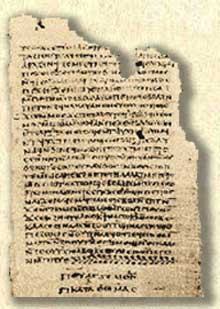
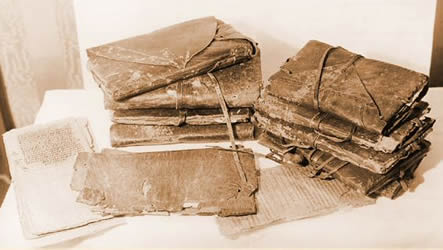
You can find all of this somewhere on the web- maybe not in the same place. The following document includes scriptures left out of the Christian Bible at the Council of Nicea. Multiple translations of the same text are presented here in order to see more clearly the intent of the writers.

gospelmary_2

This introduction is found at http://www.allaboutreligion.org/gnostic-gospels.htm

nag-hammadi

Some other links you may find useful for background and interpretation:

gnosticsoul

Some of the texts are incomplete. Some are repititious. Some appear contradictory or even just silly. All provide a fresh perspective on the early beliefs of the Jewish sect known as Christians.

To get the full text (507 pages- be warned):

the-gnostic-gospels-of-jesus

Interesting note: Gnostic art tends to look very much like Tibetan Mandala art-

Example A: Gnostic Tree of Life

cosmic_tree

Example B: Tibetan Wheel of Existence

tibetan_wheel_of_existence

Some Excerpts, particularly from the Gospel of Thomas:

The Thunder, Perfect Mind

Translated by George W. MacRae

I was sent forth from the power,
and I have come to those who reflect upon me,
and I have been found among those who seek after me.
Look upon me, you who reflect upon me,
and you hearers, hear me.
You who are waiting for me, take me to yourselves.
And do not banish me from your sight.
And do not make your voice hate me, nor your hearing.
Do not be ignorant of me anywhere or any time. Be on your guard!
Do not be ignorant of me.
For I am the first and the last.
I am the honored one and the scorned one.
I am the whore and the holy one.
I am the wife and the virgin.
I am <the mother> and the daughter.
I am the members of my mother.
I am the barren one
and many are her sons.
I am she whose wedding is great,
and I have not taken a husband.
I am the midwife and she who does not bear.
I am the solace of my labor pains.
I am the bride and the bridegroom,
and it is my husband who begot me.
I am the mother of my father
and the sister of my husband
and he is my offspring.
I am the slave of him who prepared me.
I am the ruler of my offspring.
But he is the one who begot me before the time on a birthday.
And he is my offspring in (due) time,
and my power is from him.
I am the staff of his power in his youth,
and he is the rod of my old age.
And whatever he wills happens to me.
I am the silence that is incomprehensible
and the idea whose remembrance is frequent.
I am the voice whose sound is manifold
and the word whose appearance is multiple.
I am the utterance of my name.
Why, you who hate me, do you love me,
and hate those who love me?
You who deny me, confess me,
and you who confess me, deny me.
You who tell the truth about me, lie about me,
and you who have lied about me, tell the truth about me.
You who know me, be ignorant of me,
and those who have not known me, let them know me.
For I am knowledge and ignorance.
I am shame and boldness.
I am shameless; I am ashamed.
I am strength and I am fear.
I am war and peace.
Give heed to me.
I am the one who is disgraced and the great one.
Give heed to my poverty and my wealth.
Do not be arrogant to me when I am cast out upon the earth,
and you will find me in those that are to come.
And do not look upon me on the dung-heap
nor go and leave me cast out,
and you will find me in the kingdoms.
And do not look upon me when I am cast out among those who
are disgraced and in the least places,
nor laugh at me.
And do not cast me out among those who are slain in violence.
But I, I am compassionate and I am cruel.
Be on your guard!
Do not hate my obedience
and do not love my self-control.
In my weakness, do not forsake me,
and do not be afraid of my power.
For why do you despise my fear
and curse my pride?
But I am she who exists in all fears
and strength in trembling.
I am she who is weak,
and I am well in a pleasant place.
I am senseless and I am wise.
Why have you hated me in your counsels?
For I shall be silent among those who are silent,
and I shall appear and speak,
Why then have you hated me, you Greeks?
Because I am a barbarian among the barbarians?
For I am the wisdom of the Greeks
and the knowledge of the barbarians.
I am the judgement of the Greeks and of the barbarians.
I am the one whose image is great in Egypt
and the one who has no image among the barbarians.
I am the one who has been hated everywhere
and who has been loved everywhere.
I am the one whom they call Life,
and you have called Death.
I am the one whom they call Law,
and you have called Lawlessness.
I am the one whom you have pursued,
and I am the one whom you have seized.
I am the one whom you have scattered,
and you have gathered me together.
I am the one before whom you have been ashamed,
and you have been shameless to me.
I am she who does not keep festival,
and I am she whose festivals are many.
I, I am godless,
and I am the one whose God is great.
I am the one whom you have reflected upon,
and you have scorned me.
I am unlearned,
and they learn from me.
I am the one that you have despised,
and you reflect upon me.
I am the one whom you have hidden from,
and you appear to me.
But whenever you hide yourselves,
I myself will appear.
For whenever you appear,
I myself will hide from you.
Those who have […] to it […] senselessly […].
Take me [… understanding] from grief.
and take me to yourselves from understanding and grief.
And take me to yourselves from places that are ugly and in ruin,
and rob from those which are good even though in ugliness.
Out of shame, take me to yourselves shamelessly;
and out of shamelessness and shame,
upbraid my members in yourselves.
And come forward to me, you who know me
and you who know my members,
and establish the great ones among the small first creatures.
Come forward to childhood,
and do not despise it because it is small and it is little.
And do not turn away greatnesses in some parts from the smallnesses,
for the smallnesses are known from the greatnesses.
Why do you curse me and honor me?
You have wounded and you have had mercy.
Do not separate me from the first ones whom you have known.
And do not cast anyone out nor turn anyone away

testing_thomas_2

The Gospel of Thomas:

Translated by Stephen Patterson and Marvin Meyer

These are the secret sayings that the living Jesus spoke and Didymos Judas Thomas recorded.
1. And he said, “Whoever discovers the interpretation of these sayings will not taste death.”
2. Jesus said, “Those who seek should not stop seeking until they find. When they find, they will be disturbed. When they are disturbed, they will marvel, and will reign over all. [And after they have reigned they will rest.]”
3. Jesus said, “If your leaders say to you, ‘Look, the (Father’s) kingdom is in the sky,’ then the birds of the sky will precede you. If they say to you, ‘It is in the sea,’ then the fish will precede you. Rather, the (Father’s) kingdom is within you and it is outside you.
When you know yourselves, then you will be known, and you will understand that you are children of the living Father. But if you do not know yourselves, then you live in poverty, and you are the poverty.”
4. Jesus said, “The person old in days won’t hesitate to ask a little child seven days old about the place of life, and that person will live.
For many of the first will be last, and will become a single one.”
5. Jesus said, “Know what is in front of your face, and what is hidden from you will be disclosed to you.
For there is nothing hidden that will not be revealed. [And there is nothing buried that will not be raised.]”
6. His disciples asked him and said to him, “Do you want us to fast? How should we pray? Should we give to charity? What diet should we observe?”
Jesus said, “Don’t lie, and don’t do what you hate, because all things are disclosed before heaven. After all, there is nothing hidden that will not be revealed, and there is nothing covered up that will remain undisclosed.”
7. Jesus said, “Lucky is the lion that the human will eat, so that the lion becomes human. And foul is the human that the lion will eat, and the lion still will become human.”
8. And he said, “The person is like a wise fisherman who cast his net into the sea and drew it up from the sea full of little fish. Among them the wise fisherman discovered a fine large fish. He threw all the little fish back into the sea, and easily chose the large fish. Anyone here with two good ears had better listen!”
9. Jesus said, “Look, the sower went out, took a handful (of seeds), and scattered (them). Some fell on the road, and the birds came and gathered them. Others fell on rock, and they didn’t take root in the soil and didn’t produce heads of grain. Others fell on thorns, and they choked the seeds and worms ate them. And others fell on good soil, and it produced a good crop: it yielded sixty per measure and one hundred twenty per measure.”
10. Jesus said, “I have cast fire upon the world, and look, I’m guarding it until it blazes.”
11. Jesus said, “This heaven will pass away, and the one above it will pass away.
The dead are not alive, and the living will not die. During the days when you ate what is dead, you made it come alive. When you are in the light, what will you do? On the day when you were one, you became two. But when you become two, what will you do?”
12. The disciples said to Jesus, “We know that you are going to leave us. Who will be our leader?”
Jesus said to them, “No matter where you are you are to go to James the Just, for whose sake heaven and earth came into being.”
13. Jesus said to his disciples, “Compare me to something and tell me what I am like.”
Simon Peter said to him, “You are like a just messenger.”
Matthew said to him, “You are like a wise philosopher.”
Thomas said to him, “Teacher, my mouth is utterly unable to say what you are like.”
Jesus said, “I am not your teacher. Because you have drunk, you have become intoxicated from the bubbling spring that I have tended.”
And he took him, and withdrew, and spoke three sayings to him. When Thomas came back to his friends they asked him, “What did Jesus say to you?”
Thomas said to them, “If I tell you one of the sayings he spoke to me, you will pick up rocks and stone me, and fire will come from the rocks and devour you.”
14. Jesus said to them, “If you fast, you will bring sin upon yourselves, and if you pray, you will be condemned, and if you give to charity, you will harm your spirits.
When you go into any region and walk about in the countryside, when people take you in, eat what they serve you and heal the sick among them.
After all, what goes into your mouth will not defile you; rather, it’s what comes out of your mouth that will defile you.”
15. Jesus said, “When you see one who was not born of woman, fall on your faces and worship. That one is your Father.”
16. Jesus said, “Perhaps people think that I have come to cast peace upon the world. They do not know that I have come to cast conflicts upon the earth: fire, sword, war.
For there will be five in a house: there’ll be three against two and two against three, father against son and son against father, and they will stand alone.”
17. Jesus said, “I will give you what no eye has seen, what no ear has heard, what no hand has touched, what has not arisen in the human heart.”
18. The disciples said to Jesus, “Tell us, how will our end come?”
Jesus said, “Have you found the beginning, then, that you are looking for the end? You see, the end will be where the beginning is.
Congratulations to the one who stands at the beginning: that one will know the end and will not taste death.”
19. Jesus said, “Congratulations to the one who came into being before coming into being.
If you become my disciples and pay attention to my sayings, these stones will serve you.
For there are five trees in Paradise for you; they do not change, summer or winter, and their leaves do not fall. Whoever knows them will not taste death.”
20. The disciples said to Jesus, “Tell us what Heaven’s kingdom is like.”
He said to them, “It’s like a mustard seed, the smallest of all seeds, but when it falls on prepared soil, it produces a large plant and becomes a shelter for birds of the sky.”
21. Mary said to Jesus, “What are your disciples like?”
He said, “They are like little children living in a field that is not theirs. When the owners of the field come, they will say, ‘Give us back our field.’ They take off their clothes in front of them in order to give it back to them, and they return their field to them.
For this reason I say, if the owners of a house know that a thief is coming, they will be on guard before the thief arrives and will not let the thief break into their house (their domain) and steal their possessions.
As for you, then, be on guard against the world. Prepare yourselves with great strength, so the robbers can’t find a way to get to you, for the trouble you expect will come.
Let there be among you a person who understands.
When the crop ripened, he came quickly carrying a sickle and harvested it. Anyone here with two good ears had better listen!”
22. Jesus saw some babies nursing. He said to his disciples, “These nursing babies are like those who enter the (Father’s) kingdom.”
They said to him, “Then shall we enter the (Father’s) kingdom as babies?”
Jesus said to them, “When you make the two into one, and when you make the inner like the outer and the outer like the inner, and the upper like the lower, and when you make male and female into a single one, so that the male will not be male nor the female be female, when you make eyes in place of an eye, a hand in place of a hand, a foot in place of a foot, an image in place of an image, then you will enter [the kingdom].”
23. Jesus said, “I shall choose you, one from a thousand and two from ten thousand, and they will stand as a single one.”
24. His disciples said, “Show us the place where you are, for we must seek it.”
He said to them, “Anyone here with two ears had better listen! There is light within a person of light, and it shines on the whole world. If it does not shine, it is dark.”
25. Jesus said, “Love your friends like your own soul, protect them like the pupil of your eye.”
26. Jesus said, “You see the sliver in your friend’s eye, but you don’t see the timber in your own eye. When you take the timber out of your own eye, then you will see well enough to remove the sliver from your friend’s eye.”
27. “If you do not fast from the world, you will not find the (Father’s) kingdom. If you do not observe the sabbath as a sabbath you will not see the Father.”
28. Jesus said, “I took my stand in the midst of the world, and in flesh I appeared to them. I found them all drunk, and I did not find any of them thirsty. My soul ached for the children of humanity, because they are blind in their hearts and do not see, for they came into the world empty, and they also seek to depart from the world empty.
But meanwhile they are drunk. When they shake off their wine, then they will change their ways.”
29. Jesus said, “If the flesh came into being because of spirit, that is a marvel, but if spirit came into being because of the body, that is a marvel of marvels.
Yet I marvel at how this great wealth has come to dwell in this poverty.”
30. Jesus said, “Where there are three deities, they are divine. Where there are two or one, I am with that one.”
31. Jesus said, “No prophet is welcome on his home turf; doctors don’t cure those who know them.”
32. Jesus said, “A city built on a high hill and fortified cannot fall, nor can it be hidden.”
33. Jesus said, “What you will hear in your ear, in the other ear proclaim from your rooftops.
After all, no one lights a lamp and puts it under a basket, nor does one put it in a hidden place. Rather, one puts it on a lampstand so that all who come and go will see its light.”
34. Jesus said, “If a blind person leads a blind person, both of them will fall into a hole.”
35. Jesus said, “One can’t enter a strong person’s house and take it by force without tying his hands. Then one can loot his house.”
36. Jesus said, “Do not fret, from morning to evening and from evening to morning, [about your food–what you’re going to eat, or about your clothing–] what you are going to wear. [You’re much better than the lilies, which neither card nor spin.
As for you, when you have no garment, what will you put on? Who might add to your stature? That very one will give you your garment.]”
37. His disciples said, “When will you appear to us, and when will we see you?”
Jesus said, “When you strip without being ashamed, and you take your clothes and put them under your feet like little children and trample then, then [you] will see the son of the living one and you will not be afraid.”
38. Jesus said, “Often you have desired to hear these sayings that I am speaking to you, and you have no one else from whom to hear them. There will be days when you will seek me and you will not find me.”
39. Jesus said, “The Pharisees and the scholars have taken the keys of knowledge and have hidden them. They have not entered nor have they allowed those who want to enter to do so.
As for you, be as sly as snakes and as simple as doves.”
40. Jesus said, “A grapevine has been planted apart from the Father. Since it is not strong, it will be pulled up by its root and will perish.”
41. Jesus said, “Whoever has something in hand will be given more, and whoever has nothing will be deprived of even the little they have.”
42. Jesus said, “Be passersby.”
43. His disciples said to him, “Who are you to say these things to us?”
“You don’t understand who I am from what I say to you.
Rather, you have become like the Judeans, for they love the tree but hate its fruit, or they love the fruit but hate the tree.”
44. Jesus said, “Whoever blasphemes against the Father will be forgiven, and whoever blasphemes against the son will be forgiven, but whoever blasphemes against the holy spirit will not be forgiven, either on earth or in heaven.”
45. Jesus said, “Grapes are not harvested from thorn trees, nor are figs gathered from thistles, for they yield no fruit.
Good persons produce good from what they’ve stored up; bad persons produce evil from the wickedness they’ve stored up in their hearts, and say evil things. For from the overflow of the heart they produce evil.”
46. Jesus said, “From Adam to John the Baptist, among those born of women, no one is so much greater than John the Baptist that his eyes should not be averted.
But I have said that whoever among you becomes a child will recognize the (Father’s) kingdom and will become greater than John.”
47. Jesus said, “A person cannot mount two horses or bend two bows.
And a slave cannot serve two masters, otherwise that slave will honor the one and offend the other.
Nobody drinks aged wine and immediately wants to drink young wine. Young wine is not poured into old wineskins, or they might break, and aged wine is not poured into a new wineskin, or it might spoil.
An old patch is not sewn onto a new garment, since it would create a tear.”
48. Jesus said, “If two make peace with each other in a single house, they will say to the mountain, ‘Move from here!’ and it will move.”
49. Jesus said, “Congratulations to those who are alone and chosen, for you will find the kingdom. For you have come from it, and you will return there again.”
50. Jesus said, “If they say to you, ‘Where have you come from?’ say to them, ‘We have come from the light, from the place where the light came into being by itself, established [itself], and appeared in their image.’
If they say to you, ‘Is it you?’ say, ‘We are its children, and we are the chosen of the living Father.’
If they ask you, ‘What is the evidence of your Father in you?’ say to them, ‘It is motion and rest.'”
51. His disciples said to him, “When will the rest for the dead take place, and when will the new world come?”
He said to them, “What you are looking forward to has come, but you don’t know it.”
52. His disciples said to him, “Twenty-four prophets have spoken in Israel, and they all spoke of you.”
He said to them, “You have disregarded the living one who is in your presence, and have spoken of the dead.”
53. His disciples said to him, “Is circumcision useful or not?”
He said to them, “If it were useful, their father would produce children already circumcised from their mother. Rather, the true circumcision in spirit has become profitable in every respect.”
54. Jesus said, “Congratulations to the poor, for to you belongs Heaven’s kingdom.”
55. Jesus said, “Whoever does not hate father and mother cannot be my disciple, and whoever does not hate brothers and sisters, and carry the cross as I do, will not be worthy of me.”
56. Jesus said, “Whoever has come to know the world has discovered a carcass, and whoever has discovered a carcass, of that person the world is not worthy.”
57 Jesus said, “The Father’s kingdom is like a person who has [good] seed. His enemy came during the night and sowed weeds among the good seed. The person did not let the workers pull up the weeds, but said to them, ‘No, otherwise you might go to pull up the weeds and pull up the wheat along with them.’ For on the day of the harvest the weeds will be conspicuous, and will be pulled up and burned.”
58. Jesus said, “Congratulations to the person who has toiled and has found life.”
59. Jesus said, “Look to the living one as long as you live, otherwise you might die and then try to see the living one, and you will be unable to see.”
60. He saw a Samaritan carrying a lamb and going to Judea. He said to his disciples, “that person … around the lamb.” They said to him, “So that he may kill it and eat it.” He said to them, “He will not eat it while it is alive, but only after he has killed it and it has become a carcass.”
They said, “Otherwise he can’t do it.”
He said to them, “So also with you, seek for yourselves a place for rest, or you might become a carcass and be eaten.”
61. Jesus said, “Two will recline on a couch; one will die, one will live.”
Salome said, “Who are you mister? You have climbed onto my couch and eaten from my table as if you are from someone.”
Jesus said to her, “I am the one who comes from what is whole. I was granted from the things of my Father.”
“I am your disciple.”
“For this reason I say, if one is whole, one will be filled with light, but if one is divided, one will be filled with darkness.”
62. Jesus said, “I disclose my mysteries to those [who are worthy] of [my] mysteries.
63. Jesus said, “There was a rich person who had a great deal of money. He said, ‘I shall invest my money so that I may sow, reap, plant, and fill my storehouses with produce, that I may lack nothing.’ These were the things he was thinking in his heart, but that very night he died. Anyone here with two ears had better listen!”
64. Jesus said, “A person was receiving guests. When he had prepared the dinner, he sent his slave to invite the guests.
The slave went to the first and said to that one, ‘My master invites you.’ That one said, ‘Some merchants owe me money; they are coming to me tonight. I have to go and give them instructions. Please excuse me from dinner.’
The slave went to another and said to that one, ‘My master has invited you.’ That one said to the slave, ‘I have bought a house, and I have been called away for a day. I shall have no time.’
The slave went to another and said to that one, ‘My master invites you.’ That one said to the slave, ‘My friend is to be married, and I am to arrange the banquet. I shall not be able to come. Please excuse me from dinner.’
The slave went to another and said to that one, ‘My master invites you.’ That one said to the slave, ‘I have bought an estate, and I am going to collect the rent. I shall not be able to come. Please excuse me.’
The slave returned and said to his master, ‘Those whom you invited to dinner have asked to be excused.’ The master said to his slave, ‘Go out on the streets and bring back whomever you find to have dinner.’
Buyers and merchants [will] not enter the places of my Father.”
65. He said, “A […] person owned a vineyard and rented it to some farmers, so they could work it and he could collect its crop from them. He sent his slave so the farmers would give him the vineyard’s crop. They grabbed him, beat him, and almost killed him, and the slave returned and told his master. His master said, ‘Perhaps he didn’t know them.’ He sent another slave, and the farmers beat that one as well. Then the master sent his son and said, ‘Perhaps they’ll show my son some respect.’ Because the farmers knew that he was the heir to the vineyard, they grabbed him and killed him. Anyone here with two ears had better listen!”
66. Jesus said, “Show me the stone that the builders rejected: that is the keystone.”
67. Jesus said, “Those who know all, but are lacking in themselves, are utterly lacking.”
68. Jesus said, “Congratulations to you when you are hated and persecuted; and no place will be found, wherever you have been persecuted.”
69. Jesus said, “Congratulations to those who have been persecuted in their hearts: they are the ones who have truly come to know the Father.
Congratulations to those who go hungry, so the stomach of the one in want may be filled.”
70. Jesus said, “If you bring forth what is within you, what you have will save you. If you do not have that within you, what you do not have within you [will] kill you.”
71. Jesus said, “I will destroy [this] house, and no one will be able to build it […].”
72. A [person said] to him, “Tell my brothers to divide my father’s possessions with me.”
He said to the person, “Mister, who made me a divider?”
He turned to his disciples and said to them, “I’m not a divider, am I?”
73. Jesus said, “The crop is huge but the workers are few, so beg the harvest boss to dispatch workers to the fields.”
74. He said, “Lord, there are many around the drinking trough, but there is nothing in the well.”
75. Jesus said, “There are many standing at the door, but those who are alone will enter the bridal suite.”
76. Jesus said, “The Father’s kingdom is like a merchant who had a supply of merchandise and found a pearl. That merchant was prudent; he sold the merchandise and bought the single pearl for himself.
So also with you, seek his treasure that is unfailing, that is enduring, where no moth comes to eat and no worm destroys.”
77. Jesus said, “I am the light that is over all things. I am all: from me all came forth, and to me all attained.
Split a piece of wood; I am there.
Lift up the stone, and you will find me there.”

emblem

1 Comment

Filed under Free E-Books, Mystic Poetry, pictures, poetry, Spirituality

Three Books by Rabindranath Tagore

Tagore has had a profound influence on my life.

I have provided excerpts before from works by Tagore. Today I would like to offer these 3 complete books for you to download, free. These are all in the public domain since 1992. They are:

Gitanjali,

Stray Birds and

The Hungry Stones

If you are new to his work, you are in for a treat, also I am providing the following excerpts with the download for the entire book at the end of each section. I think you will want to read all of these, from the first word to the last.

(Note: I have already provided a download of the e-book Sadhana- The Realization of Life here. Also, I have included a free audio book of Sadhana at the end of this post.)

Gitanjali- Song Offerings

If thou speakest not I will fill my heart with thy silence and endure it. I will keep still and wait like the night with starry vigil and its head bent low with patience.

The morning will surely come, the darkness will vanish, and thy voice pour down in golden streams breaking through the sky.

Then thy words will take wing in songs from every one of my birds’ nests, and thy melodies will break forth in flowers in all my forest groves.

On the day when the lotus bloomed, alas, my mind was straying, and I knew it not. My basket was empty and the flower remained unheeded.

Only now and again a sadness fell upon me, and I started up from my dream and felt a sweet trace of a strange fragrance in the south wind.

That vague sweetness made my heart ache with longing and it seemed to me that is was the eager breath of the summer seeking for its completion.

I knew not then that it was so near, that it was mine, and that this perfect sweetness had blossomed in the depth of my own heart.

I must launch out my boat. The languid hours pass by on the shore—Alas for me!

The spring has done its flowering and taken leave. And now with the burden of faded futile flowers I wait and linger.

The waves have become clamorous, and upon the bank in the shady lane the yellow leaves flutter and fall.

What emptiness do you gaze upon! Do you not feel a thrill passing through the air with the notes of the far-away song floating from the other shore?

In the deep shadows of the rainy July, with secret steps, thou walkest, silent as night, eluding all watchers.

Today the morning has closed its eyes, heedless of the insistent calls of the loud east wind, and a thick veil has been drawn over the ever-wakeful blue sky.

The woodlands have hushed their songs, and doors are all shut at every house. Thou art the solitary wayfarer in this deserted street. Oh my only friend, my best beloved, the gates are open in my house—do not pass by like a dream.

Art thou abroad on this stormy night on thy journey of love, my friend? The sky groans like one in despair.

I have no sleep tonight. Ever and again I open my door and look out on the darkness, my friend!

I can see nothing before me. I wonder where lies thy path!

By what dim shore of the ink-black river, by what far edge of the frowning forest, through what mazy depth of gloom art thou threading thy course to come to me, my friend?

If the day is done, if birds sing no more, if the wind has flagged tired, then draw the veil of darkness thick upon me, even as thou hast wrapt the earth with the coverlet of sleep and tenderly closed the petals of the drooping lotus at dusk.

From the traveller, whose sack of provisions is empty before the voyage is ended, whose garment is torn and dustladen, whose strength is exhausted, remove shame and poverty, and renew his life like a flower under the cover of thy kindly night.

In the night of weariness let me give myself up to sleep without struggle, resting my trust upon thee.

Let me not force my flagging spirit into a poor preparation for thy worship.

It is thou who drawest the veil of night upon the tired eyes of the day to renew its sight in a fresher gladness of awakening.

He came and sat by my side but I woke not. What a cursed sleep it was, O miserable me!

He came when the night was still; he had his harp in his hands, and my dreams became resonant with its melodies.

Download:

gitanjali-by-rabindranath-tagore

The verses in Stray Birds are short but full. Each one is a meditation. Read them slowly, savor their images and find the meaning they call out from your own heart.

Stray Birds

THE mist, like love, plays upon the heart of the hills and brings out surprises of beauty.


75

WE read the world wrong and say that it deceives us.


76

THE poet wind is out over the sea and the forest to seek his own voice.


77

EVERY child comes with the message that God is not yet discouraged of man.


78

THE grass seeks her crowd in the earth.

The tree seeks his solitude of the sky.


79

MAN barricades against himself.


80

YOUR voice, my friend, wanders in my heart, like the muffled sound of the sea among these listening pines.


81

WHAT is this unseen flame of darkness whose sparks are the stars?


82

LET life be beautiful like summer flowers and death like autumn leaves.


88

HE who wants to do good knocks at the gate; he who loves finds the gate open.


84

IN death the many becomes one; in life the one becomes many.

Download:

stray-birds-by-rabindranath-tagore

The Hungry Stones and other stories

this story is titled

THE DEVOTEE

I

AT a time, when my unpopularity with a part of my readers had reached the nadir of its glory, and my name had become the central orb of the journals, to be attended through space with a perpetual rotation of revilement, I felt the necessity to retire to some quiet place and endeavour to forget my own existence.

I have a house in the country some miles away from Calcutta, where I can remain unknown and unmolested. The villagers there have not, as yet, come to any conclusion about me. They know I am no mere holiday-maker or pleasure-seeker; for I never outrage the silence of the village nights with the riotous noises of the city. Nor do they regard me as an ascetic, because the little acquaintance they have of me carries the savour of comfort about it. I am not, to them, a traveller; for, though I am a vagabond by nature, my wandering through the village fields is aimless. They are hardly even quite certain whether I am married or single; for they have never seen me with my children. So, not being able to classify me in any animal or vegetable kingdom that they know, they have long since given me up and left me stolidly alone.

But quite lately I have come to know that there is one person in the village who is deeply interested in me. Our acquaintance began on a sultry afternoon in July. There had been rain all the morning, and the air was still wet and heavy with mist, like eyelids when weeping is over.

I sat lazily watching a dappled cow grazing on the high bank of the river. The afternoon sun was playing on her glossy hide. The simple beauty of this dress of light made me wonder idly at man’s deliberate waste of money in setting up tailors’ shops to deprive his own skin of its natural clothing.

While I was thus watching and lazily musing, a woman of middle age came and prostrated herself before me, touching the ground with her forehead. She carried in her robe some bunches of flowers, one of which she offered to me with folded hands. She said to me, as she offered it: “This is an offering to my God.”

She went away. I was so taken aback as she uttered these words, that I could hardly catch a glimpse of her before she was gone. The whole incident was entirely simple, but it left a deep impression on my mind; and as I turned back once more to look at the cattle in the field, the zest of life in the cow, who was munching the lush grass with deep breaths, while she whisked off the flies, appeared to me fraught with mystery. My readers may laugh at my foolishness, but my heart was full of adoration. I offered my worship to the pure joy of living, which is God’s own life. Then, plucking a tender shoot from the mango tree, I fed the cow with it from my own hand, and as I did this I had the satisfaction of having pleased my God.

The next year when I returned to the village it was February. The cold season still lingered on. The morning sun came into my room, and I was grateful for its warmth. I was writing, when the servant came to tell me that a devotee, of the Vishnu cult, wanted to see me. I told him, in an absent way, to bring her upstairs, and went on with my writing. The Devotee came in, and bowed to me, touching my feet. I found that she was the same woman whom I had met, for a brief moment, a year ago.

I was able now to examine her more closely. She was past that age when one asks the question whether a woman is beautiful or not. Her stature was above the ordinary height, and she was strongly built; but her body was slightly bent owing to her constant attitude of veneration. Her manner had nothing shrinking about it. The most remarkable of her features were her two eyes. They seemed to have a penetrating power which could make distance near.

With those two large eyes of hers, she seemed to push me as she entered.

“What is this?” she asked. “Why have you brought me here before your throne, my God? I used to see you among the trees; and that was much better. That was the true place to meet you.”

She must have seen me walking in the garden without my seeing her. For the last few days, however, I had suffered from a cold, and had been prevented from going out. I had, perforce, to stay indoors and pay my homage to the evening sky from my terrace. After a silent pause the Devotee said to me: “O my God, give me some words of good.”

I was quite unprepared for this abrupt request, and answered her on the spur of the moment:

Good words I neither give nor receive. I simply open my eyes and keep silence, and then I can at once both hear and see, even when no sound is uttered. Now, while I am looking at you, it is as good as listening to your voice.

The Devotee became quite excited as I spoke, and exclaimed: “God speaks to me, not only with His mouth, but with His whole body.”

I said to her: “When I am silent I can listen with my whole body. I have come away from Calcutta here to listen to that sound.”

The Devotee said: “Yes, I know that, and therefore I have come here to sit by you.”

Before taking her leave, she again bowed to me, and touched my feet. I could see that she was distressed, because my feet were covered. She wished them to be bare.

Early next morning I came out, and sat on my terrace on the roof. Beyond the line of trees southward I could see the open country chill and desolate. I could watch the sun rising over the sugar-cane in the East, beyond the clump of trees at the side of the village. Out of the deep shadow of those dark trees the village road suddenly appeared. It stretched forward, winding its way to some distant villages on the horizon, till it was lost in the grey of the mist.

That morning it was difficult to say whether the sun had risen or not. A white fog was still clinging to the tops of the trees. I saw the Devotee walking through the blurred dawn, like a mist-wraith of the morning twilight. She was singing her chant to God, and sounding her cymbals.

The thick haze lifted at last; and the sun, like the kindly grandsire of the village, took his seat amid all the work that was going on in home and field.

When I had just settled down at my writing-table, to appease the hungry appetite of my editor in Calcutta, there came a sound of footsteps on the stair, and the Devotee, humming a tune to herself, entered. and bowed before me. I lifted my head from my papers.

She said to me: “My God, yesterday I took as sacred food what was left over from your meal.”

I was startled, and asked her how she could do that.

“Oh,” she said, “I waited at your door in the evening, while you were at dinner, and took some food from your plate when it was carried out.”

This was a surprise to me, for every one in the village knew that I had been to Europe, and had eaten with Europeans. I was a vegetarian, no doubt, but the sanctity of my cook would not bear investigation, and the orthodox regarded my food as polluted.

The Devotee, noticing my sign of surprise, said: “My God, why should I come to you at all, if I could not take your food?”

I asked her what her own caste people would say. She told me she had already spread the news far and wide all over the village. The caste people had shaken their heads, but agreed that she must go her own way.

I found out that the Devotee came from a good family in the country, and that her mother was well-to-do, and desired to keep her daughter. But she preferred to be a mendicant. I asked her how she made her living. She told me that her followers had given her a piece of land, and that she begged her food from door to door. She said to me: “The food which I get by begging is divine.”

After I had thought over what she said, I understood her meaning. When we get our food precariously as alms, we remember God the giver. But when we receive our food regularly at home, as a matter of course, we are apt to regard it as ours by right.

I had a great desire to ask her about her husband. But as she never mentioned him even indirectly, I did not question her.

I found out very soon that the Devotee had no respect at all for that part of the village where the people of the higher castes lived.

“They never give,” she said, “a single farthing to God’s service; and yet they have the largest share of God’s glebe. But the poor worship and starve.”

I asked her why she did not go and live among these godless people, and help them towards a better life. “That,” I said with some unction, “would be the highest form of divine worship.”

I had heard sermons of this kind from time to time, and I am rather fond of copying them myself for the public benefit, when the chance comes.

But the Devotee was not at all impressed. She raised her big round eyes, and looked straight into mine, and said:

“You mean to say that because God is with the sinners, therefore when you do them any service you do it to God? Is that so?”

“Yes,” I replied, “that is my meaning.”

“Of course,” she answered almost impatiently, “of course, God is with them: otherwise, how could they go on living at all? But what is that to me? My God is not there. My God cannot be worshipped among them; because I do not find Him there. I seek Him where I can find Him.”

As she spoke, she made obeisance to me. What she meant to say was really this. A mere doctrine of God’s omnipresence does not help us. That God is all-pervading,–this truth may be a mere intangible abstraction, and therefore unreal to ourselves. Where I can see Him, there is His reality in my soul.

I need not explain that all the while she showered her devotion on me she did it to me not as an individual. I was simply a vehicle of her divine worship. It was not for me either to receive it or to refuse it: for it was not mine, but God’s.

When the Devotee came again, she found me once more engaged with my books and papers.

“What have you been doing,” she said, with evident vexation, “that my God should make you undertake such drudgery? Whenever I come, I find you reading and writing.”

“God keeps his useless people busy,” I answered; “otherwise they would be bound to get into mischief. They have to do all the least necessary things in life. It keeps them out of trouble.”

The Devotee told me that she could not bear the encumbrances, with which, day by day, I was surrounded. If she wanted to see me, she was not allowed by the servants to come straight upstairs. If she wanted to touch my feet in worship, there were my socks always in the way. And when she wanted to have a simple talk with me, she found my mind lost in a wilderness of letters.

This time, before she left me, she folded her hands, and said: “My God! I felt your feet in my breast this morning. Oh, how cool! And they were bare, not covered. I held them upon my head for a long time in worship. That filled my very being. Then, after that, pray what was the use of my coming to you yourself? Why did I come? My Lord, tell me truly,–wasn’t it a mere infatuation?”

There were some flowers in my vase on the table. While she was there, the gardener brought some new flowers to put in their place. The Devotee saw him changing them.

“Is that all?” she exclaimed. “Have you done with the flowers? Then give them to me.”

She held the flowers tenderly in the cup of her hands, and began to gaze at them with bent head. After a few moments’ silence she raised her head again, and said to me: “You never look at these flowers; therefore they become stale to you. If you would only look into them, then your reading and writing would go to the winds.”

She tied the flowers together in the end of her robe, and placed them, in an attitude of worship, on the top of her head, saying reverently: “Let me carry my God with me.”

While she did this, I felt that flowers in our rooms do not receive their due meed of loving care at our hands. When we stick them in vases, they are more like a row of naughty schoolboys standing on a form to be punished.

The Devotee came again the same evening, and sat by my feet on the terrace of the roof.

“I gave away those flowers,” she said, “as I went from house to house this morning, singing God’s name. Beni, the head man of our village, laughed at me for my devotion, and said: ‘Why do you waste all this devotion on Him? Don’t you know He is reviled up and down the countryside?’ Is that true, my God? Is it true that they are hard upon you?”

For a moment I shrank into myself. It was a shock to find that the stains of printers’ ink could reach so far.

The Devotee went on: “Beni imagined that he could blow out the flame of my devotion at one breath! But this is no mere tiny flame: it is a burning fire. Why do they abuse you, my God?”

I said: “Because I deserved it. I suppose in my greed I was loitering about to steal people’s hearts in secret.”

The Devotee said: “Now you see for yourself how little their hearts are worth. They are full of poison, and this will cure you of your greed.”

“When a man,” I answered, “has greed in his heart, he is always on the verge of being beaten. The greed itself supplies his enemies with poison.”

“Our merciful God,” she replied, “beats us with His own hand, and drives away all the poison. He who endures God’s beating to the end is saved.”

II

That evening the Devotee told me the story of her life. The stars of evening rose and set behind the trees, as she went on to the end of her tale.

“My husband is very simple. Some people think that he is a simpleton; but I know that those who understand simply, understand truly. In business and household management he was able to hold his own. Because his needs were small, and his wants few, he could manage carefully on what we had. He would never meddle in other matters, nor try to understand them.

“Both my husband’s parents died before we had been married long, and we were left alone. But my husband always needed some one to be over him. I am ashamed to confess that he had a sort of reverence for me, and looked upon me as his superior. But I am sure that he could understand things better than I, though I had greater powers of talking.

“Of all the people in the world he held his Guru Thakur (spiritual master) in the highest veneration. Indeed it was not veneration merely but love; and such love as his is rare.

“Guru Thakur was younger than my husband. Oh! how beautiful he was!

“My husband had played games with him when he was a boy; and from that time forward he had dedicated his heart and soul to this friend of his early days. Thakur knew how simple my husband was, and used to tease him mercilessly.

“He and his comrades would play jokes upon him for their own amusement; but he would bear them all with long-suffering.

“When I married into this family, Guru Thakur was studying at Benares. My husband used to pay all his expenses. I was eighteen years old when he returned home to our village.

“At the age of fifteen I had my child. I was so young I did not know how to take care of him. I was fond of gossip, and liked to be with my village friends for hours together. I used to get quite cross with my boy when I was compelled to stay at home and nurse him. Alas! my child-God came into my life, but His playthings were not ready for Him. He came to the mother’s heart, but the mother’s heart lagged behind. He left me in anger; and ever since I have been searching for Him up and down the world.

“The boy was the joy of his father’s life. My careless neglect used to pain my husband. But his was a mute soul. He has never been able to give expression to his pain.

“The wonderful thing was this, that in spite of my neglect the child used to love me more than any one else. He seemed to have the dread that I would one day go away and leave him. So even when I was with him, he would watch me with a restless look in his eyes. He had me very little to himself, and therefore his desire to be with me was always painfully eager. When I went each day to the river, he used to fret and stretch out his little arms to be taken with me. But the bathing ghat was my place for meeting my friends, and I did not care to burden myself with the child.

“It was an early morning in August. Fold after fold of grey clouds had wrapped the mid-day round with a wet clinging robe. I asked the maid to take care of the boy, while I went down to the river. The child cried after me as I went away.

“There was no one there at the bathing ghat when I arrived. As a swimmer, I was the best among all the village women. The river was quite full with the rains. I swam out into the middle of the stream some distance from the shore.

“Then I heard a cry from the bank, ‘Mother!’ I turned my head and saw my boy coming down the steps, calling me as he came. I shouted to him to stop, but he went on, laughing and calling. My feet and hands became cramped with fear. I shut my eyes, afraid to see. When I opened them, there, at the slippery stairs, my boy’s ripple of laughter had disappeared for ever.

“I got back to the shore. I raised him from the water. I took him in my arms, my boy, my darling, who had begged so often in vain for me to take him. I took him now, but he no more looked in my eyes and called ‘Mother.’

“My child-God had come. I had ever neglected Him. I had ever made Him cry. And now all that neglect began to beat against my own heart, blow upon blow, blow upon blow. When my boy was with me, I had left him alone. I had refused to take him with me. And now, when he is dead, his memory clings to me and never leaves me.

“God alone knows all that my husband suffered. If he had only punished me for my sin, it would have been better for us both. But he knew only how to endure in silence, not how to speak.

“When I was almost mad with grief, Guru Thakur came back. In earlier days, the relation between him and my husband had been that of boyish friendship. Now, my husband’s reverence for his sanctity and learning was unbounded. He could hardly speak in his presence, his awe of him was so great.

“My husband asked his Guru to try to give me some consolation. Guru Thakur began to read and explain to me the scriptures. But I do not think they had much effect on my mind. All their value for me lay in the voice that uttered them. God makes the draught of divine life deepest in the heart for man to drink, through the human voice. He has no better vessel in His hand than that; and He Himself drinks His divine draught out of the same vessel.

“My husband’s love and veneration for his Guru filled our house, as incense fills a temple shrine. I showed that veneration, and had peace. I saw my God in the form of that Guru. He used to come to take his meal at our house every morning. The first thought that would come to my mind on waking from sleep was that of his food as a sacred gift from God. When I prepared the things for his meal, my fingers would sing for joy.

“When my husband saw my devotion to his Guru, his respect for me greatly increased. He noticed his Guru’s eager desire to explain the scriptures to me. He used to think that he could never expect to earn any regard from his Guru himself, on account of his stupidity; but his wife had made up for it.

“Thus another five years went by happily, and my whole life would have passed like that; but beneath the surface some stealing was going on somewhere in secret. I could not detect it; but it was detected by the God of my heart. Then came a day when, in a moment our whole life was turned upside down.

“It was a morning in midsummer. I was returning home from bathing, my clothes all wet, down a shady lane. At the bend of the road, under the mango tree, I met my Guru Thakur. He had his towel on his shoulder and was repeating some Sanskrit verses as he was going to take his bath. With my wet clothes clinging all about me I was ashamed to meet him. I tried to pass by quickly, and avoid being seen. He called me by my name.

“I stopped, lowering my eyes, shrinking into myself. He fixed his gaze upon me, and said: ‘How beautiful is your body!’

“All the universe of birds seemed to break into song in the branches overhead. All the bushes in the lane seemed ablaze with flowers. It was as though the earth and sky and everything had become a riot of intoxicating joy.

“I cannot tell how I got home. I only remember that I rushed into the room where we worship God. But the room seemed empty. Only before my eyes those same gold spangles of light were dancing which had quivered in front of me in that shady lane on my way back from the river.

“Guru Thakur came to take his food that day, and asked my husband where I had gone. He searched for me, but could not find me anywhere.

“Ah! I have not the same earth now any longer. The same sunlight is not mine. I called on my God in my dismay, and He kept His face turned away from me.

“The day passed, I know not how. That night I had to meet my husband. But the night is dark and silent. It is the time when my husband’s mind comes out shining, like stars at twilight. I had heard him speak things in the dark, and I had been surprised to find how deeply he understood.

“Sometimes I am late in the evening in going to rest on account of household work. My husband waits for me, seated on the floor, without going to bed. Our talk at such times had often begun with something about our Guru.

“That night, when it was past midnight, I came to my room, and found my husband sleeping on the floor. Without disturbing him I lay down on the ground at his feet, my head towards him. Once he stretched his feet, while sleeping, and struck me on the breast. That was his last bequest.

“Next morning, when my husband woke up from his sleep, I was already sitting by him. Outside the window, over the thick foliage of the jack-fruit tree, appeared the first pale red of the dawn at the fringe of the night. It was so early that the crows had not yet begun to call.

“I bowed, and touched my husband’s feet with my forehead. He sat up, starting as if waking from a dream, and looked at my face in amazement. I said:

“‘I have made up my mind. I must leave the world. I cannot belong to you any longer. I must leave your home.’

“Perhaps my husband thought that he was still dreaming. He said not a word.

‘Ah! do hear me!’ I pleaded with infinite pain. ‘Do hear me and understand! You must marry another wife. I must take my leave.’

“My husband said: ‘What is all this wild, mad talk? Who advises you to leave the world?’

“I said: ‘My Guru Thakur.’

“My husband looked bewildered. ‘Guru Thakur!’ he cried. ‘When did he give you this advice?’

“‘In the morning,’ I answered, ‘yesterday, when I met him on my way back from the river.’

His voice trembled a little. He turned, and looked in my face, and asked me: ‘Why did he give you such a behest?’

“‘I do not know,’ I answered. ‘Ask him! He will tell you himself, if he can.’

“My husband said: ‘It is possible to leave the world, even when continuing to live in it. You need not leave my home. I will speak to my Guru about it.’

‘Your Guru,’ I said, ‘may accept your petition; but my heart will never give its consent. I must leave your home. From henceforth, the world is no more to me.’

“My husband remained silent, and we sat there on the floor in the dark. When it was light, he said to me: ‘Let us both come to him.’

“I folded my hands and said: ‘I shall never meet him again.’

“He looked into my face. I lowered my eyes. He said no more. I knew that, somehow, he had seen into my mind, and understood what was there. In this world of mine, there were only two who loved me best–my boy and my husband. That love was my God, and therefore it could brook no falsehood. One of these two left me, and I left the other. Now I must have truth, and truth alone.”

She touched the ground at my feet, rose and bowed to me, and departed.

Download:

the-hungry-stones-and-other-stories-by-rabindranath-tagore

More Tagore pictures (click small pictures for full size) –

Two pictures of Tagore with Gandhi
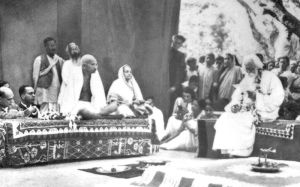
Tagore- Gandhi

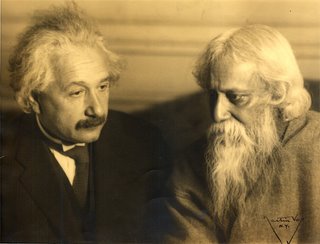
Two pictures of Tagore with Albert Einstein

A letter Tagore wrote from the Netherlands

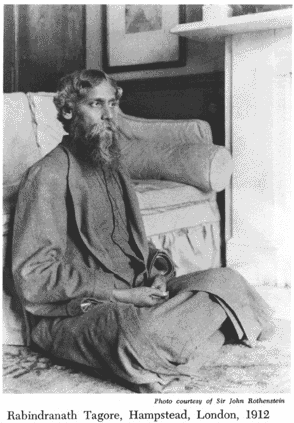
Tagore Portrait (click for full size)

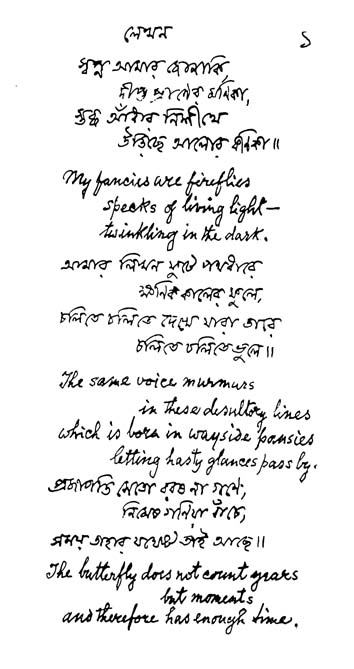
Hand written page from Gitanjali

Extra Special Treat!

For your listening pleasure- Free Download of the Audio-Book of

sadhana-the-realization-of-life



2 Comments

Filed under Free Audio Books, Free E-Books, mp3, Mystic Poetry, pictures, poetry, Spirituality