Tang Dynasty Poems, Part 4

4th in projected set of 10

This week’s edition, short but sweet,

will be selections from Wei Yingwu and Li Bai.

1os-00654

Wei Yingwu

ENTERTAINING LITERARY MEN IN MY
OFFICIAL RESIDENCE ON A RAINY DAY


Outside are insignia, shown in state;
But here are sweet incense-clouds, quietly ours.
Wind and rain, coming in from sea,
Have cooled this pavilion above the lake
And driven the feverish heat away
From where my eminent guests are gathered.
…Ashamed though I am of my high position
While people lead unhappy lives,
Let us reasonably banish care
And just be friends, enjoying nature.
Though we have to go without fish and meat,
There are fruits and vegetables aplenty.
…We bow, we take our cups of wine,
We give our attention to beautiful poems.
When the mind is exalted, the body is lightened
And feels as if it could float in the wind.
…Suzhou is famed as a centre of letters;
And all you writers, coming here,
Prove that the name of a great land
Is made by better things than wealth.


Wei Yingwu

SETTING SAIL ON THE YANGZI waterlilies
TO SECRETARY YUAN


Wistful, away from my friends and kin,
Through mist and fog I float and float
With the sail that bears me toward Loyang.
In Yangzhou trees linger bell-notes of evening,
Marking the day and the place of our parting….
When shall we meet again and where?
…Destiny is a boat on the waves,
Borne to and fro, beyond our will.

Wei Yingwu

A POEM TO A TAOIST HERMIT
CHUANJIAO MOUNTAIN


My office has grown cold today;
And I suddenly think of my mountain friend
Gathering firewood down in the valley
Or boiling white stones for potatoes in his hut….
I wish I might take him a cup of wine
To cheer him through the evening storm;
But in fallen leaves that have heaped the bare slopes,
How should I ever find his footprints!


Wei Yingwu

ON MEETING MY FRIEND FENG ZHU
IN THE CAPITAL


Out of the east you visit me,
With the rain of Baling still on your clothes,
I ask you what you have come here for;
You say: “To buy an ax for cutting wood in the mountains”
…Hidden deep in a haze of blossom,
Swallow fledglings chirp at ease
As they did when we parted, a year ago….
How grey our temples have grown since them!

Wei Yingwu

MOORING AT TWILIGHT IN YUYI DISTRICT


Furling my sail near the town of Huai,
I find for harbour a little cove
Where a sudden breeze whips up the waves.
The sun is growing dim now and sinks in the dusk.
People are coming home. The bright mountain-peak darkens.
Wildgeese fly down to an island of white weeds.
…At midnight I think of a northern city-gate,
And I hear a bell tolling between me and sleep. 517-149x567


Wei Yingwu

EAST OF THE TOWN


From office confinement all year long,
I have come out of town to be free this morning
Where willows harmonize the wind
And green hills lighten the cares of the world.
I lean by a tree and rest myself
Or wander up and down a stream.
…Mists have wet the fragrant meadows;
A spring dove calls from some hidden place.
…With quiet surroundings, the mind is at peace,
But beset with affairs, it grows restless again….
Here I shall finally build me a cabin,
As Tao Qian built one long ago.


Wei Yingwu

TO MY DAUGHTER
ON HER MARRIAGE INTO THE YANG FAMILY


My heart has been heavy all day long
Because you have so far to go.
The marriage of a girl, away from her parents,
Is the launching of a little boat on a great river.
…You were very young when your mother died,
Which made me the more tender of you.
Your elder sister has looked out for you,
And now you are both crying and cannot part.
This makes my grief the harder to bear;
Yet it is right that you should go.
…Having had from childhood no mother to guide you,
How will you honour your mother-in-law?
It’s an excellent family; they will be kind to you,
They will forgive you your mistakes —
Although ours has been so pure and poor
That you can take them no great dowry.
Be gentle and respectful, as a woman should be,
Careful of word and look, observant of good example.
…After this morning we separate,
There’s no knowing for how long….
I always try to hide my feelings —
They are suddenly too much for me,
When I turn and see my younger daughter
With the tears running down her cheek.


Li Bai

THE MOON AT THE FORTIFIED PASS


The bright moon lifts from the Mountain of Heaven
In an infinite haze of cloud and sea,
And the wind, that has come a thousand miles,
Beats at the Jade Pass battlements….
China marches its men down Baideng Road
While Tartar troops peer across blue waters of the bay….
And since not one battle famous in history
Sent all its fighters back again,
The soldiers turn round, looking toward the border,
And think of home, with wistful eyes,
And of those tonight in the upper chambers
Who toss and sigh and cannot rest.

Li Bai

BALLADS OF FOUR SEASONS: SPRING


The lovely Lo Fo of the western land
Plucks mulberry leaves by the waterside.
Across the green boughs stretches out her white hand;
In golden sunshine her rosy robe is dyed.
“my silkworms are hungry, I cannot stay.
Tarry not with your five-horse cab, I pray.”


Li Bai

BALLADS OF FOUR SEASONS: SUMMER


On Mirror Lake outspread for miles and miles,
The lotus lilies in full blossom teem.
In fifth moon Xi Shi gathers them with smiles,
Watchers o’erwhelm the bank of Yuoye Stream.
Her boat turns back without waiting moonrise
To yoyal house amid amorous sighs.


Li Bai

A SONG OF AN AUTUMN MIDNIGHT


A slip of the moon hangs over the capital;
Ten thousand washing-mallets are pounding;
And the autumn wind is blowing my heart
For ever and ever toward the Jade Pass….
Oh, when will the Tartar troops be conquered,
And my husband come back from the long campaign!

1-10-120

Li Bai

BALLADS OF FOUR SEASONS: WINTER


The courier will depart next day, she’s told.
She sews a warrior’s gown all night.
Her fingers feel the needle cold.
How can she hold the scissors tight?
The work is done, she sends it far away.
When will it reach the town where warriors stay?


Li Bai

A SONG OF CHANGGAN


My hair had hardly covered my forehead.
I was picking flowers, paying by my door,
When you, my lover, on a bamboo horse,
Came trotting in circles and throwing green plums.
We lived near together on a lane in Ch’ang-kan,
Both of us young and happy-hearted.
…At fourteen I became your wife,
So bashful that I dared not smile,
And I lowered my head toward a dark corner
And would not turn to your thousand calls;
But at fifteen I straightened my brows and laughed,
Learning that no dust could ever seal our love,
That even unto death I would await you by my post
And would never lose heart in the tower of silent watching.
…Then when I was sixteen, you left on a long journey
Through the Gorges of Ch’u-t’ang, of rock and whirling water.
And then came the Fifth-month, more than I could bear,
And I tried to hear the monkeys in your lofty far-off sky.
Your footprints by our door, where I had watched you go,
Were hidden, every one of them, under green moss,
Hidden under moss too deep to sweep away.
And the first autumn wind added fallen leaves.
And now, in the Eighth-month, yellowing butterflies
Hover, two by two, in our west-garden grasses
And, because of all this, my heart is breaking
And I fear for my bright cheeks, lest they fade.
…Oh, at last, when you return through the three Pa districts,
Send me a message home ahead!
And I will come and meet you and will never mind the distance,
All the way to Chang-feng Sha.


libai2

Leave a comment

Filed under Chinese poetry, pictures, poetry, Spirituality

Don Berry and the Darsana Mala

First, maybe you should stop reading this

and go directly to Don Berry’s website here.

Who is Don Berry? From Wikipedia:

Don Berry (1931-2001) was an American artist and author best known for his historical novels early settlers in the Oregon Country.

He was born in Minnesota but moved to Oregon as a young man and came to think of himself as a native of that state. He attended Reed College in Portland, Oregon. During college his housemates included the poet Gary Snyder, who shared Berry’s interest in Eastern metaphysics.

In 1960 he published Trask, a historical novel about Elbridge Trask, an Oregon settler in the 1840s who was the first white homesteader on Tillamook Bay. It was followed by two sequels, Moontrap and To Build a Ship. The novels have collectively become known as the “Trask novels.” His other works include A Majority of Scoundrels, a history of the fur trade in the Rocky Mountains. Besides writing, his lifelong artistic pursuits included bronze sculpture, sumi painting, and blues guitar playing.

Berry was also an early adopter of the use of the Internet for writing, creating a large body of literature that exists only in cyberspace.

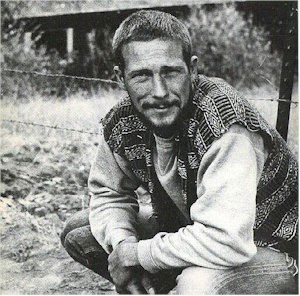
berry1

My experience of Don Berry was limited to enjoying his 3 published novels set in the Oregon Territory, books he wrote early in his career. My favorite was the book Trask- a very moving and spiritually stimulating story based on the life of an Oregon trader who opened up the the area now known as Tillamook to white trade with the native people there. Grab that book and read it.

I was pleased to find recently that Berry, before he died a few years back, put up a website with all of his later work, all available for free. It is a treasure trove. To get you hooked on Berry I am going to re-print a portion of his translation of Darsana Mala- a mystical poem from India previously unavailable in the west. Berry’s rendition is beautiful, stunning and goes straight to the heart.

The poem is also a clear explanation of the philosophy of Tantra Yoga, very similar to what I was taught as a young man initiated into meditation. It resonates with me and with the teachings I received when I was 16-28 years old.

What follows is first the section titled Provenance- which explains his interest in the poem and some background. Next I will share the first 3 chapters. For more you have to go to Berry’s site, the link at the top of this post.

The Darsana Mala, or Garland of Visions, was one of the last major works of Narayana Guru, dictated about 1916. His disciple, Swami Vidyananda, transcribed the dictation and made a short commentary on each verse. The commentary was read to, and corrected by, Narayana himself, though he characterized it as being “for children.”

The original dictation was in Sanskrit, but the work was published only in the Malayalam language of Kerala State, S. India, Narayana’s home. In 1976 an English translation was included in AN ANTHOLOGY OF THE POEMS OF NARAYANA GURU, published by the Narayana Gurukula in Kerala.

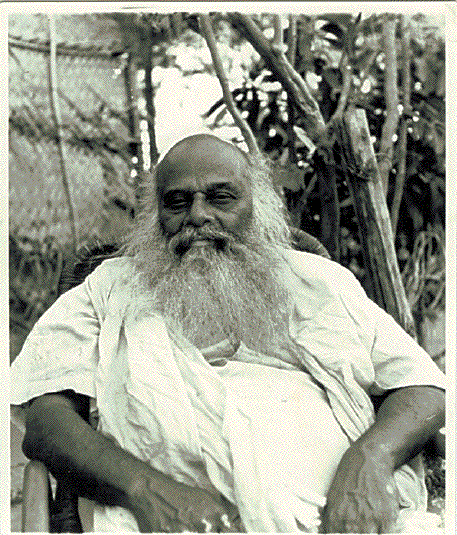
natarajaguru

Narayana Guru’s successor was Nataraja Guru. At Narayana’s instigation, Nataraja received a Western education at the Sorbonne as well as his training in the ancient wisdom-school represented by Narayana himself. in 1948-49 Nataraja Guru undertook the translation of the Darsana Mala into English, and it was this translation included in the ANTHOLOGY. Nataraja Guru also made the Darsana Mala the philosophical frame-work for his own monumental work, the three- volume INTEGRATED SCIENCE OF THE ABSOLUTE, which he completed in 1968. At this writing one volume has been published in Kerala, and the other two are in preparation.

Shortly after Nataraja Guru’s death in 1973, four notebooks were discovered in his quarters at the Ooty Gurukula in the Nilgiri Hills of Tamilnadu. Nos. II & III were his working notes from 1948-49, and contained all the trial translations and corrections of the Darsana Mala, except for the first seven stanzas of Chapter VI, the Karma Darsana. These notebooks were edited and put into typescript by Mark and Judy Albert. They contain anywhere from two to fifteen variations on each stanza.

Sources used in preparing these English prose renderings were: Vol. I, INTEGRATED SCIENCE OF THE ABSOLUTE, containing word-notes, translation, and the Vidyananda Commentary on Chapters I-III. THE PSYCHOLOGY OF THE DARSANA MALA, (manuscript) by Guru Nitya Chaitanya Yati, successor to Nataraja Guru and current Guru of the Narayana Gurukula, for translation, word-notes and commentary on Chapters IV & V. For Chapters VI & VII, word-notes and translations in Nataraja’s hand, written on the back of academic papers in 1948-49. A typescript of the Vidyananda Commentary with word-notes for Chapters VIII-X. For the complete work, the Nataraja Notebooks, v. II & III as noted above.

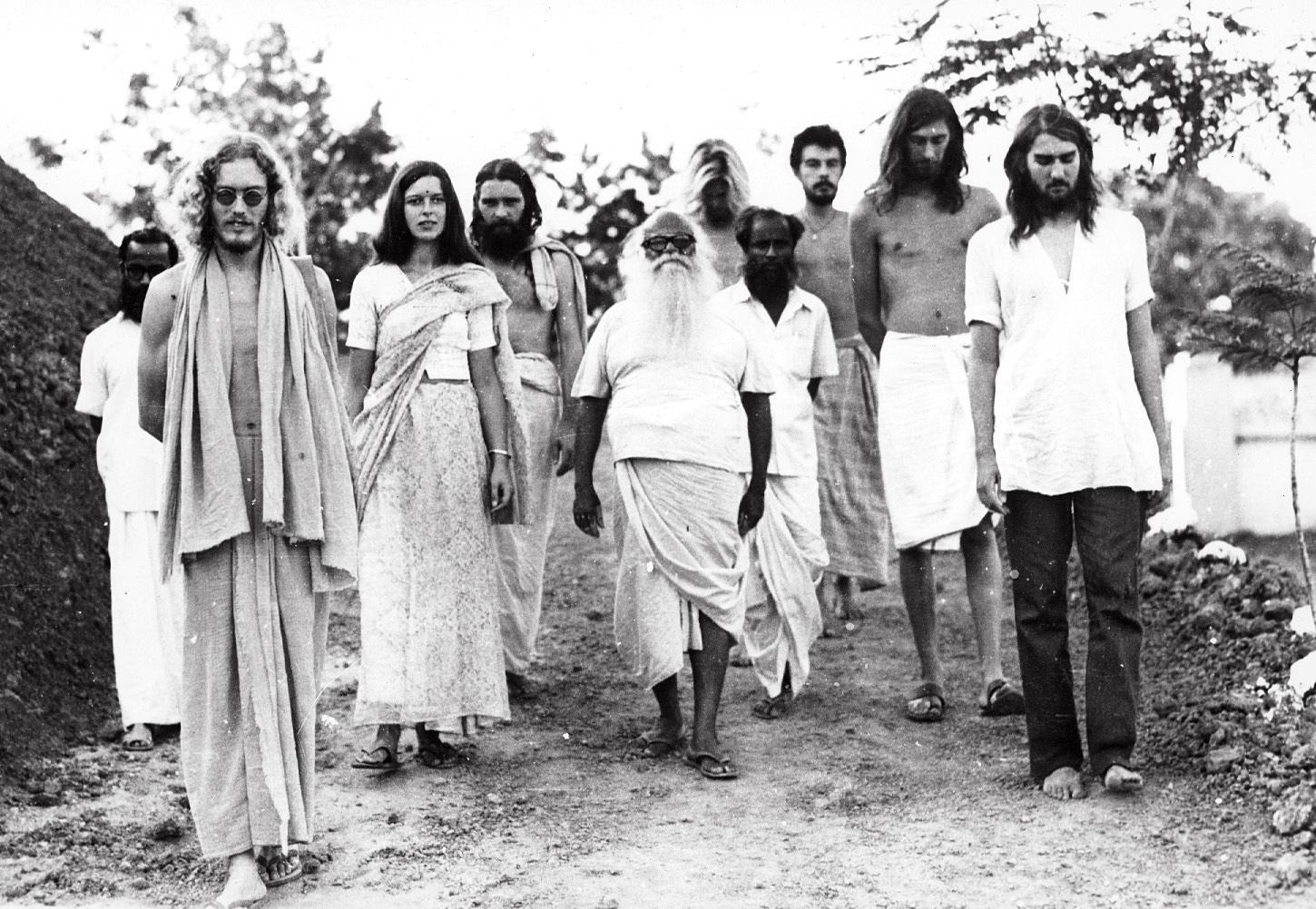
For the most part these source materials were obtained for me through the kindness of the American sadhu/ scholar Johnny Stallings, long time student and companion to both Nataraja Guru anatarajaguruandfriendsnd Guru Nitya.

For many years I have been indebted to Guru Nitya for his unfailing friendship and generosity in making available to me his own works, as well as those of his predecessors in the parampara. My deepest gratitude to him.

These renderings were made by Don Berry in the Fall of 1979 for the meditation of his son, Duncan.


AUM TAT SAT

CHAPTER ONE

Adhyaropa Darsana / Metaphors of Creation

1

At its origin this world

existed as nothingness, dreamlike.

Thereafter the Absolute Being created

everything existent by willing.

2

At its origin this world

existed as latent function.

Thereafter the Absolute Being created everything

through his own power of MAYA,

like a magician creating an illusion.

3

At its origin this world

was latent in the Absolute Being

as a sprout is latent in a seed.

Thereafter it manifested itself of its own power.

4

This power is to be known as two kinds,

brightness and heaviness. As in the case of light and dark,

they are polar opposites,and there is no co-existence.

5

At its origin this world

was like a picture in the mind.

Thereafter the Absolute Being realized it

in all its variety, like an artist.

6

At its origin this world existed as PRAKRITI, the matrix of possibility.

Thereafter the Absolute Being worked out its powers like a Yogi.

7

When knowledge of the Absolute Self is veiled, AVIDYA (ignorance)

arises. Then the name-and-form world looms ghostlike.

8

This world is emptiness, like some ghostly city.

Thus did the Absolute Being create

this whole universe — a marvel!

9

If this world evolved in a series of stages

from the sun, then it is not at all from the Supreme Self.

But everything was manifested at a single stroke,

of its own inner vitality, as though

the universe were waking from sleep.

10

That from which all this world

is manifested like a fig tree from a seed,

That is Brahma, That is Siva, That is Vishnu.

That is the Transcendent.

Indeed, everything is That alone.

CHAPTER TWO

Apavada Darsana / Logic of Causality

1

This world, material, non-material and spiritual,

has all come to be in and from living intelligence.

When existent, everything is Real as Being (SAT).

When non-existent, everything remains Real as Intelligence (CIT).

2

An effect cannot have existence independent of its cause.

Therefore, how can there be an origination of non-Being?

And how can there be re-absorption

of something un-originated?

3

That which is not subject to origin and re-absorption

is the transcendent Absolute alone.

The idea of origin and re-absorption as present in the Self

is the veiling effect of MAYA.

4

As the effect is non-different from its cause,

how can Being arise? And in the same way,

how can there be non-Being for the cause itself?

5

Because it is an effect, this world

does not have primary reality.

The Absolute alone, as cause, is Real.

Unclear minds mistake it as un-Real.

6

The One Alone is the Real.

Where can another exist?

If we say “in existence,” it is a tautology.

If we say “in non-existence,” it is a contradiction.

7

Having carefully analyzed the component parts of existence,

one sees that the whole world is not other

than the Intelligence of the Absolute.

It is as if MAYA had been banished.

8

Pure Intelligence alone shines.

There is nothing whatever beyond Pure Intelligence.

That which does not shine is un-Real,

and that which is un-Real does not shine.

9

ANANDA indeed is the Real, and nothing else.

The whole world is of the form of ANANDA.

Apart from ANANDA, nothing else exists.

10

Indeed, everything is SAT-CIT-ANANDA.

(Being, Intelligence, Value.)

There is not a trace of plurality in this.

He who sees this as if pluralistic,

goes from death to death.

CHAPTER THREE

Asatya Darsana / The Illusion of the un-Real

1

This world is all mind-maya.

But the mind is not in any specific place.

The world is seen in the Self

as the blue is seen in the sky.

2

This apparent world is an image, created in the mind

by AVIDYA, the veiling ignorance.

When this is re-absorbed by VIDYA, the clear knowledge,

it is as though the whole world were a mere configuration.

3

To a coward, the ghost looming in the darkness seems real.

To the wise man, the wakeful state is seen

as such a dream-world.

4

This world is seen as willed images.

It is seen only when willing is present,

as when a rope is mistaken for a snake.

5

There is no difference whatever

between the willed images and the mind.

That AVIDYA-darkness state (which is the mind),

is a marvel like Indra’s magic.

6

To the wise man, this world shines in the Self like a mirage.

To an infant, by confusion, even a reflection

may seem real.

7

As milk remains milk even when churned,

The Absolute Self does not change into some other form.

Therefore, the whole world exists only as an image in the Self,

as if created by Indra’s magic. (Indriyas = the senses.)

8

MAYA herself is the fundamental cause of the apparent world.

Everything here is only the maya-maker

creating with magical, un-Real effects.

9

To the mature mind, this universe

seems like a sky-forest mirage in the Self.

But a child sees even a puppet-form as real.

10

One alone is Real, not a second.

What is un-Real seems indeed to be Real.

But the Siva-lingam is stone only,

not a second made by the mason.

2 Comments

Filed under Mystic Poetry, poetry, Spirituality

Radio Program- Mad Liberation by Moonlight

Mad Liberation By

MoonLight


This Friday! On KBOO Radio 90.7 FM

1- 2 a.m. Late Friday night

(yes, I know that it is technically Saturday morning-

relax, it’s just a radio show)

January 16th, 2009


 radio-tower-225

This show is dedicated to Everyone

*who has ever been given a psychiatric label *who experiences mental health challenges

And, of course, to

*anybody who has the misfortune (or good fortune) of being awake at that hour


You can participate!

Call in at (503) 231-8187


Special guests are anticipated! How about you?

moonwink

Aren’t you special? Better call in.

 (Set your alarm if you aren’t usually up at that time or write an email to fullmoonradio@yahoo.com)


Friday nights from 1 am to 2 am usually following the full-moon, will be a segment on KBOO radio (90.7 on your fm dial, to the left of NPR), also streamed on the internet on their website, http://www.kboo.fm/index.php will be time for of Mad Lib by Moonlight. The program is part of the usual Friday night show, The Outside World. Shows are no archived in mp3 format at

https://rickpdx.wordpress.com/mad-liberation-by-moonlight-archives/


Updates can also be found on my website, https://rickpdx.wordpress.com/ on the interweb & at http://fullmoonradio.wordpress.com/

Leave a comment

Filed under Uncategorized

Goodnight Bird

My bird, Daisy, died yesterday. I loved “that stupid bird” (as she was known by everyone in the family but me). We don’t know why she died. She was only 6 years old- very young for a parrot. She has been eating fine, has been more well behaved than usual lately.

I raised Daisy, hand fed her when she was a baby chick. She thought I was her mother.

When I was out of work I spent a lot of time with her. Lately I realize how much I relied on her for support. Over the past 6 years she has also been with me regularly at my jobs when I was working. In my new job she couldn’t come with me and she had to spend a lot more time by herself than she was used to. She was mad at me and had some behavior problems related to being by herself (parrots are very emotional animals). So I have given her lots of attention when I’m home and got into the habit of making sure she spent time with me before I went to work- which required me to get up a half an hour earlier (my job involves a vanpool commute that has me out of the house by 5:45 am and home around 7 pm).
The last week or so she seemed to be adjusting. She has been happier.
The night before last she was so sweet. She was especially affectionate, wanted her head rubbed but not being obnoxious at all. She talked up a storm, mostly “Hi!” or “Hello Bird! Are you a bird?” or about being a good bird, a pretty bird or asking questions of a similar nature (are you a good bird? are you a pretty bird?) and near bedtime she spent some time singing in her tone deaf way “I love love love good daisy bird, daisy is a pretty good girl, love love love”.
I always loved the songs she made up when she was sleepy- they were so bad.
Then yesterday morning when I got up at 4:30 she was dead.

I’ve realized that I was very used to having her around.

I loved that stupid bird.

goodnight-bird

(click if the picture doesn’t animate)

1 Comment

Filed under animated gif, animation, personal story, pictures

Part 3- Poems of the T’ang Dynasty (Han Shan)

I’ve talked myself into doing chunks of this that  have some commonality. Today I’ve culled poems attributed to Han Shan, poet-mystic of the early T’ang. First, excerpts from the wikipedia article about Han Shan (for the full article go here):

Hanshan (Chinese: 寒山; pinyin: Hánshān; literally “Cold Mountain”, fl. 9th century) was a legendary figure associated with a collection of poems from the Chinese Tang Dynasty in the Taoist and Chan tradition. He is honored as an incarnation of the Bodhisattva -figure Manjusri in Zen lore. In Japanese and Chinese paintings he is often depicted together with his sidekick ShideFenggan another monk with legendary attributes.

The collection of poems attributed to Hanshan may span the entire Tang Dynasty as Edwin G. Pulleyblank asserts in his study Linguistic Evidence for the Date of Hanshan.[1] identifies him as the monk Chiyan (智岩, 577 – 654), but that has been disputed by Paul Demiéville among others. The Encyclopedia of China gives his date as around 712 and after 793. Jia Jinhua came to the conclusion, after a study of Chan phrases in some 50 of the poems, that this particular group of poems may be attributable to the Chan monk Caoshan Benji (840-901).

Personally, I think a great place to start is the collection of Cold Mountain Poems by Gary Snyder, one of the great beatnik era poets often associated with other poets and writers of that cultural phenomenon. Snyder was a very complimentary voice to bring Han Shan to America. Without further ado, I’ll just insert the Snyder Cold Mountain Poems here:

HAN SHAN, THE COLD MOUNTAIN POEMS, tr. Gary Snyder

Preface to the Poems of Han-shan

by Lu Ch’iu-yin, Governor of T’ai Prefecture

No one knows what sort of man Han-shan was. There are old people who knew him: they say he was a poor man, a crazy character. He lived alone seventy Li (23 miles) west of the T’ang-hsing district of T’ien-t’ai at a place called Cold Mountain. He often went down to the Kuo-ch’ing Temple. At the temple lived Shih’te, who ran the dining hall. He sometimes saved leftovers for Han-shan, hiding them in a bamboo tube. Han-shan would come and carry it away; walking the long veranda, calling and shouting happily, talking and laughing to himself. Once the monks followed him, caught him, and made fun of him. He stopped, clapped his hands, and laughed greatly – Ha Ha! – for a spell, then left.

He looked like a tramp. His body and face were old and beat. Yet in every word he breathed was a meaning in line with the subtle principles of things, if only you thought of it deeply. Everything he said had a feeling of Tao in it, profound and arcane secrets. His hat was made of birch bark, his clothes were ragged and worn out, and his shoes were wood. Thus men who have made it hide their tracks: unifying categories and interpenetrating things. On that long veranda calling and singing, in his words of reply Ha Ha! – the three worlds revolve. Sometimes at the villages and farms he laughed and sang with cowherds. Sometimes intractable, sometimes agreeable, his nature was happy of itself. But how could a person without wisdom recognize him?

I once received a position as a petty official at Tan-ch’iu. The day I was to depart, I had a bad headache. I called a doctor, but he couldn’t cure me and it turned worse. Then I met a Buddhist Master named Feng-kan, who said he came from the Kuo-ch’ing Temple of T’ien-t’ai especially to visit me. I asked him to rescue me from my illness. He smiled and said, “The four realms are within the body; sickness comes from illusion. If you want to do away with it, you need pure water.” Someone brought water to the Master, who spat it on me. In a moment the disease was rooted out. He then said, “There are miasmas in T’ai prefecture, when you get there take care of yourself.” I asked him, “Are there any wise men in your area I could look on as Master?” He replied, “When you see him you don’t recognize him, when you recognize him you don’t see him. If you want to see him, you can’t rely on appearances. Then you can see him. Han-shan is a Manjusri (one who has attained enlightenment and, in a future incarnation, will become Buddha) hiding at Kuo-sh’ing. Shih-te is a Samantabbhadra (Bodhisattva of love). They look like poor fellows and act like madmen. Sometimes they go and sometimes they come. They work in the kitchen of the Kuo-ch’ing dining hall, tending the fire.” When he was done talking he left.

I proceeded on my journey to my job at T’ai-chou, not forgetting this affair. I arrived three days later, immediately went to a temple, and questioned an old monk. It seemed the Master had been truthful, so I gave orders to see if T’ang-hsing really contained a Han-shan and Shih-te. The District Magistrate reported to me: “In this district, seventy li west, is a mountain. People used to see a poor man heading from the cliffs to stay awhile at Kuo-ch’ing. At the temple dining hall is a similar man named Shih-te.” I made a bow, and went to Kuo-ch’ing. I asked some people around the temple, “There used to be a Master named Feng-kan here, Where is his place? And where can Han-shan and Shih-te be seen?” A monk named T’ao-ch’iao spoke up: “Feng-kan the Master lived in back of the library. Nowadays nobody lives there; a tiger often comes and roars. Han-shan and Shih-te are in the kitchen.” The monk led me to Feng-kan’s yard. Then he opened the gate: all we saw was tiger tracks. I asked the monks Tao-ch’iao and Pao-te, “When Feng-kan was here, what was his job?” The monks said, :He pounded and hulled rice. At night he sang songs to amuse himself.” Then we went to the kitchen, before the stoves. Two men were facing the fire, laughing loudly. I made a bow. The two shouted Ho! at me. They struck their hands together -Ha Ha! – great laughter. They shouted. Then they said, “Feng-kan – loose-tounged, loose-tounged. You don’t recognize Amitabha, (the Bodhisattva of mercy) why be courteous to us?” The monks gathered round, surprise going through them. “”Why has a big official bowed to a pair of clowns?” The two men grabbed hands and ran out of the temple. I cried, “Catch them” – but they quickly ran away. Han-shan returned to Cold Mountain. I asked the monks, “Would those two men be willing to settle down at this temple?” I ordered them to find a house, and to ask Han-shan and Shih-te to return and live at the temple.

I returned to my district and had two sets of clean clothes made, got some incense and such, and sent it to the temple – but the two men didn’t return. So I had it carried up to Cold Mountain. The packer saw Han-shan, who called in a loud voice, “Thief! Thief!” and retreated into a mountain cave. He shouted, “I tell you man, strive hard” – entered the cave and was gone. The cave closed of itself and they weren’t able to follow. Shih-te’s tracks disappeared completely..

I ordered Tao-ch’iao and the other monks to find out how they had lived, to hunt up the poems written on bamboo, wood, stones, and cliffs – and also to collect those written on the walls of people’s houses. There were more than three hundred. On the wall of the Earth-shrine Shih-te had written some gatha (Buddhist verse or song). It was all brought together and made into a book.

I hold to the principle of the Buddha-mind. It is fortunate to meet with men of Tao, so I have made this eulogy.

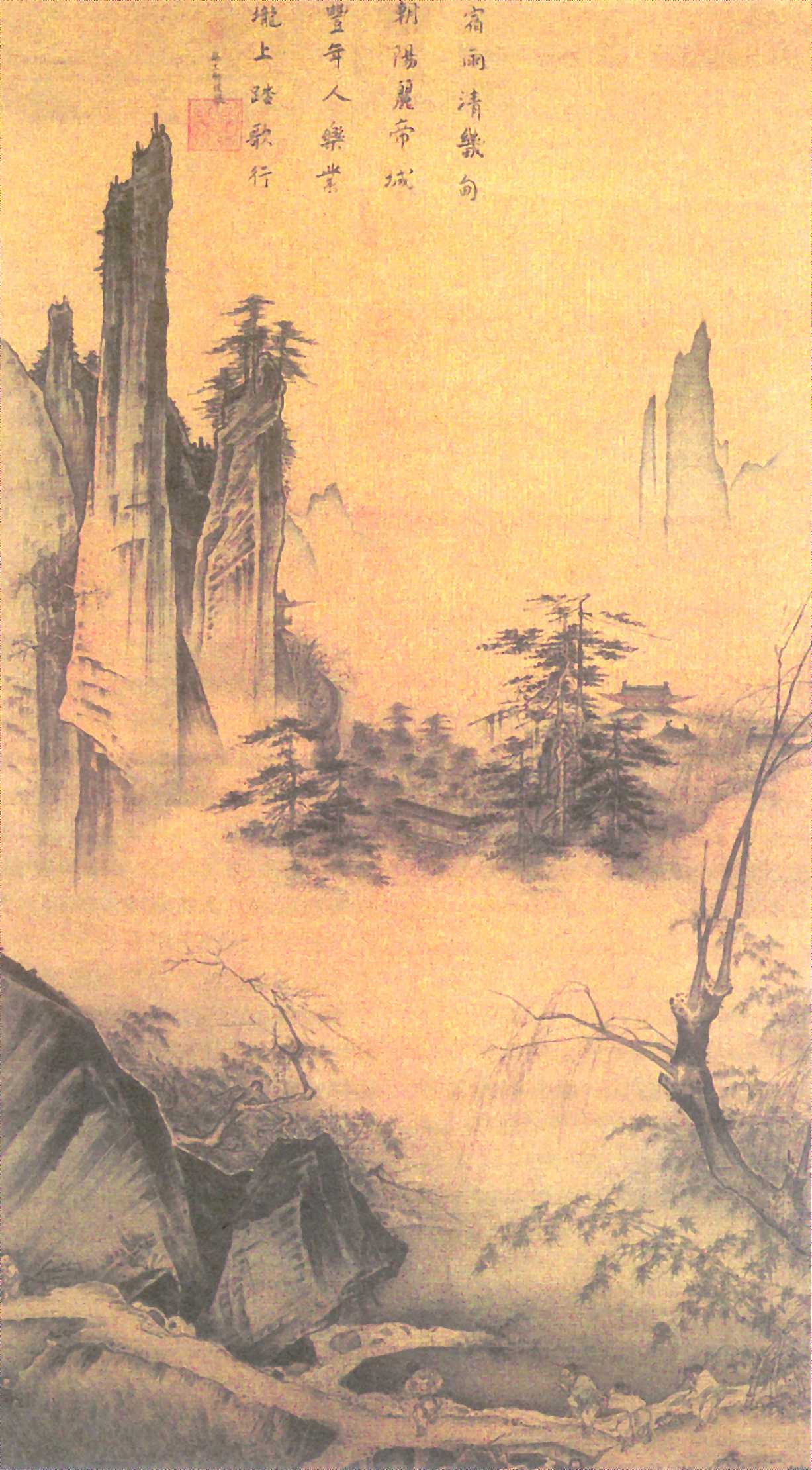
song-ma-yuen-1
(big picture- click for full size)

THE COLD MOUNTAIN POEMS, tr. Gary Snyder

1

The path to Han-shan’s place is laughable,

A path, but no sign of cart or horse.

Converging gorges – hard to trace their twists

Jumbled cliffs – unbelievably rugged.

A thousand grasses bend with dew,

A hill of pines hums in the wind.

And now I’ve lost the shortcut home,

Body asking shadow, how do you keep up?

2

In a tangle of cliffs, I chose a place –

Bird paths, but no trails for me.

What’s beyond the yard?

White clouds clinging to vague rocks.

Now I’ve lived here – how many years –

Again and again, spring and winter pass.

Go tell families with silverware and cars

“What’s the use of all that noise and money?”

3

In the mountains it’s cold.

Always been cold, not just this year.

Jagged scarps forever snowed in

Woods in the dark ravines spitting mist.

Grass is still sprouting at the end of June,

Leaves begin to fall in early August.

And here I am, high on mountains,

Peering and peering, but I can’t even see the sky.

4

I spur my horse through the wrecked town,

The wrecked town sinks my spirit.

High, low, old parapet walls

Big, small, the aging tombs.

I waggle my shadow, all alone;

Not even the crack of a shrinking coffin is heard.

I pity all those ordinary bones,

In the books of the Immortals they are nameless.

5

I wanted a good place to settle:

Cold Mountain would be safe.

Light wind in a hidden pine –

Listen close – the sound gets better.

Under it a gray haired man

Mumbles along reading Huang and Lao.

For ten years I havn’t gone back home

I’ve even forgotten the way by which I came.

6

Men ask the way to Cold Mountain

Cold Mountain: there’s no through trail.

In summer, ice doesn’t melt

The rising sun blurs in swirling fog.

How did I make it?

My heart’s not the same as yours.

If your heart was like mine

You’d get it and be right here.

7

I settled at Cold Mountain long ago,

Already it seems like years and years.

Freely drifting, I prowl the woods and streams

And linger watching things themselves.

Men don’t get this far into the mountains,

White clouds gather and billow.

Thin grass does for a mattress,

The blue sky makes a good quilt.

Happy with a stone under head

Let heaven and earth go about their changes.

8

Clambering up the Cold Mountain path,

The Cold Mountain trail goes on and on:

The long gorge choked with scree and boulders,

The wide creek, the mist blurred grass.

The moss is slippery, though there’s been no rain

The pine sings, but there’s no wind.

Who can leap the word’s ties

And sit with me among the white clouds?

9

Rough and dark – the Cold Mountain trail,

Sharp cobbles – the icy creek bank.

Yammering, chirping – always birds

Bleak, alone, not even a lone hiker.

Whip, whip – the wind slaps my face

Whirled and tumbled – snow piles on my back.

Morning after morning I don’t see the sun

Year after year, not a sign of spring.

10

I have lived at Cold Mountain

These thirty long years.

Yesterday I called on friends and family:

More than half had gone to the Yellow Springs.

Slowly consumed, like fire down a candle;

Forever flowing, like a passing river.

Now, morning, I face my lone shadow:

Suddenly my eyes are bleared with tears.

11

Spring water in the green creek is clear

Moonlight on Cold Mountain is white

Silent knowledge – the spirit is enlightened of itself

Contemplate the void: this world exceeds stillness.

12

In my first thirty years of life

I roamed hundreds and thousands of miles.

Walked by rivers through deep green grass

Entered cities of boiling red dust.

Tried drugs, but couldn’t make Immortal;

Read books and wrote poems on history.

Today I’m back at Cold Mountain:

I’ll sleep by the creek and purify my ears.

13

I can’t stand these bird songs

Now I’ll go rest in my straw shack.

The cherry flowers are scarlet

The willow shoots up feathery.

Morning sun drives over blue peaks

Bright clouds wash green ponds.

Who knows that I’m out of the dusty world

Climbing the southern slope of Cold Mountain?

14

Cold Mountain has many hidden wonders,

People who climb here are always getting scared.

When the moon shines, water sparkles clear

When the wind blows, grass swishes and rattles.

On the bare plum, flowers of snow

On the dead stump, leaves of mist.

At the touch of rain it all turns fresh and live

At the wrong season you can’t ford the creeks.

15

There’s a naked bug at Cold Mountain

With a white body and a black head.

His hand holds two book scrolls,

One the Way and one its Power.

His shack’s got no pots or oven,

He goes for a long walk with his shirt and pants askew.

But he always carries the sword of wisdom:

He means to cut down sensless craving.

16

Cold Mountain is a house

Without beans or walls.

The six doors left and right are open

The hall is sky blue.

The rooms all vacant and vague

The east wall beats on the west wall

At the center nothing.

Borrowers don’t bother me

In the cold I build a little fire

When I’m hungry I boil up some greens.

I’ve got no use for the kulak

With hs big barn and pasture –

He just sets uo a prison for himself.

Once in he can’t get out.

Think it over –

You know it might happen to you.

17

If I hide out at Cold Mountain

Living off mountain plants and berries –

All my lifetime, why worry?

One follows his karma through.

Days and months slip by like water,

Time is like sparks knocked off flint.

Go ahead and let the world change –

I’m happy to sit among these cliffs.

18

Most T’ien-t’ai men

Don’t know Han-shan

Don’t know his real thought

And call it silly talk.

19

Once at Cold Mountain, troubles cease –

No more tangled, hung up mind.

I idly scribble poems on the rock cliff,

Taking whatever comes, like a drifting boat.

20

Some critic tried to put me down –

“Your poems lack the Basic Truth of Tao.”

And I recall the old timers

Who were poor and didn’t care.

I have to laugh at him,

He misses the point entirely,

Men like that

Ought to stick to making money.

21

I’ve lived at Cold Mountain – how many autumns.

Alone, I hum a song – utterly without regret.

Hungry, I eat one grain of Immortal medicine

Mind solid and sharp; leaning on a stone.

22

On top of Cold Mountain the lone round moon

Lights the whole clear cloudless sky.

Honor this priceless natural treasure

Concealed in five shadows, sunk deep in the flesh.

23

My home was at Cold Mountain from the start,

Rambling among the hills, far from trouble.

Gone, and a million things leave no trace

Loosed, and it flows through galaxies

A fountain of light, into the very mind –

Not a thing, and yet it appears before me:

Now I know the pearl of the Buddha nature

Know its use: a boundless perfect sphere.

24

When men see Han-shan

They all say he’s crazy

And not much to look at –

Dressed in rags and hides.

They don’t get what I say

And I don’t talk their language.

All I can say to those I meet:

“Try and make it to Cold Mountain.”

snydergary

Next, here are some different translations, some have slight differences from the same ones translated by Snyder. You can decide what resonates the most for you. I’m not sure where I found these and can’t identify the translator. Maybe somebody will sue me and I’ll know then.

Introduction

Han-shan, the Master of Cold Mountain, and his friend Shi-te, lived in the late-eighth to early-ninth century AD, in the sacred T’ien-t’ai Mountains of Chekiang Province, south of the bay of Hangchow. The two laughing friends, holding hands, come and go, but mostly go, dashing into the wild, careless of others’ reality, secure in their own. As Han-shan himself says, his Zen is not in the poems. Zen is in the mind.


The Poems

1.

Don’t you know the poems of Han-shan?

They’re better for you than scripture-reading.

Cut them out and paste them on a screen,

Then you can gaze at them from time to time.

han-shan

2.

Where’s the trail to Cold Mountain?

Cold Mountain? There’s no clear way.

Ice, in summer, is still frozen.

Bright sun shines through thick fog.

You won’t get there following me.

Your heart and mine are not the same.

If your heart was like mine,

You’d have made it, and be there!

3.

Cold Mountain’s full of strange sights.

Men who go there end by being scared.

Water glints and gleams in the moon,

Grasses sigh and sing in the wind.

The bare plum blooms again with snow,

Naked branches have clouds for leaves.

When it rains, the mountain shines –

In bad weather you’ll not make this climb.

4.

A thousand clouds, ten thousand streams,

Here I live, an idle man,

Roaming green peaks by day,

Back to sleep by cliffs at night.

One by one, springs and autumns go,

Free of heat and dust, my mind.

Sweet to know there’s nothing I need,

Silent as the autumn river’s flood.

hanshan003

5.

High, high, the summit peak,

Boundless the world to sight!

No one knows I am here,

Lone moon in the freezing stream.

In the stream, where’s the moon?

The moon’s always in the sky.

I write this poem: and yet,

In this poem there is no Zen.

6

Thirty years in this world

I wandered ten thousand miles,

By rivers, buried deep in grass,

In borderlands, where red dust flies.

Tasted drugs, still not Immortal,

Read books, wrote histories.

Now I’m back at Cold Mountain,

Head in the stream, cleanse my ears.

7.

Bird-song drowns me in feeling.

Back to my shack of straw to sleep.

Cherry-branches burn with crimson flower,

Willow-boughs delicately trail.

Morning sun flares between blue peaks,

Bright clouds soak in green ponds.

Who guessed I’d leave that dusty world,

Climbing the south slope of Cold Mountain?

8.

I travelled to Cold Mountain:

Stayed here for thirty years.

Yesterday looked for family and friends.

More than half had gone to Yellow Springs.

Slow-burning, life dies like a flame,

Never resting, passes like a river.

Today I face my lone shadow.

Suddenly, the tears flow down.

coldmountain

9.

Alive in the mountains, not at rest,

My mind cries for passing years.

Gathering herbs to find long life,

Still I’ve not achieved Immortal.

My field’s deep, and veiled in cloud,

But the wood’s bright, the moon’s full.

Why am I here? Can’t I go?

Heart still tied to enchanted pines!

10.

If there’s something good, delight!

Seize the moment while it flies!

Though life can last a hundred years,

Who’s seen their thirty thousand days?

Just an instant then you’re gone.

Why sit whining over things?

When you’ve read the Classics through,

You’ll know quite enough of death.

11.

The peach petals would like to stay,

But moon and wind blow them on.

You won’t find those ancient men,

Those dynasties are dead and gone.

Day by day the blossoms fall,

Year by year the people go.

Where the dust blows through these heights,

There once shone a silent sea.

12.

Men who see the Master

Of Cold Mountain, say he’s mad.

A nothing face,

Body clothed in rags.

Who dare say what he says?

When he speaks we can’t understand.

Just one word to you who pass –

Take the trail to Cold Mountain!
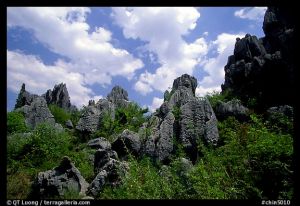
upcoldmountain-hanshan

13.

Han-shan has his critics too:

‘Your poems, there’s nothing in them!’

I think of men of ancient times,

Poor, humble, but not ashamed.

Let him laugh at me and say:

‘It’s all foolishness, your work!’

Let him go on as he is,

All his life lost making money.

14.

Cold Mountain holds a naked bug,

Its body’s white, its head is black.

In its hands a pair of scrolls,

One the Way and one its Power.

It needs no pots or stove.

Without clothes it wanders on,

But it carries Wisdom’s blade,

To cut down mindless craving.

15.

I’m on the trail to Cold Mountain.

Cold Mountain trail never ends.

Long clefts thick with rock and stones,

Wide streams buried in dense grass.

Slippery moss, but there’s been no rain,

Pine trees sigh, but there’s no wind.

Who can leap the world’s net,

Sit here in the white clouds with me?

16.

Men ask the way through the clouds,

The cloud way’s dark, without a sign.

High summits are of naked rock.

In deep valleys sun never shines.

Behind you green peaks, and in front,

To east the white clouds, and to west –

Want to know where the cloud way lies?

It’s there, in the centre of the Void!

17.

Sitting alone by folded rocks,

Mist swirling even at noon,

Here, inside my room, it’s dark.

Mind is bright, clear of sound.

Through the shining gate in dream.

Back by the stone bridge, mind returns.

Where now the things that troubled me?

Wind-blown gourd rattling in the tree.

18.

Far-off is the place I chose to live.

High hills make for silent tongues.

Gibbons screech in valley cold

My gate of grass blends with the cliff.

A roof of thatch among the pines,

I dig a pool, feed it from the stream.

No time now to think about the world,

The years go by, shredding ferns.

19.

Level after level, falls and hills,

Blue-green mist clasped by clouds.

Fog wets my flimsy cap,

Dew soaks my coat of straw.

A pilgrim’s sandals on my feet,

An old stick grasped in my hand.

Gazing down towards the land of dust,

What is that world of dreams to me?

20.

What a road the Cold Mountain road!

Not a sign of horse or cart.

Winding gorges, tricky to trace.

Massive cliffs, who knows how high?

Where the thousand grasses drip with dew,

Where the pine trees hum in the wind.

Now the path’s lost, now it’s time

For body to ask shadow: ‘Which way home?’

21.

Always it’s cold on this mountain!

Every year, and not just this.

Dense peaks, thick with snow.

Black pine-trees breathing mist.

It’s summer before the grass grows,

Not yet autumn when the leaves fall.

Full of illusions, I roam here,

Gaze and gaze, but can’t see the sky.

22.

No knowing how far it is,

This place where I spend my days.

Tangled vines move without a breeze,

Bamboo in the light shows dark.

Streams down-valley sob for whom?

Mists cling together, who knows why?

Sitting in my hut at noon,

Suddenly, I see the sun has risen.

23.

The everyday mind: that is the way.

Buried in vines and rock-bound caves,

Here it’s wild, here I am free,

Idling with the white clouds, my friends.

Tracks here never reach the world;

No-mind, so what can shift my thought?

I sit the night through on a bed of stone,

While the moon climbs Cold Mountain.

24.

I was off to the Eastern Cliff.

Planned that trip for how long?

Dragged myself up by hanging vines,

Stopped halfway, by wind and fog.

Thorn snatched my arm on narrow tracks,

Moss so deep it drowned my feet,

So I stopped, under this red pine.

Head among the clouds, I’ll sleep.

25.

Bright water shimmers like crystal,

Translucent to the furthest depth.

Mind is free of every thought

Unmoved by the myriad things.

Since it can never be stirred

It will always stay like this.

Knowing, this way, you can see,

There is no within, no without.

fioredilotorosso

26.

Are you looking for a place to rest?

Cold Mountain’s good for many a day.

Wind sings here in the black pines,

Closer you are, the better it sounds.

There’s an old man sitting by a tree,

Muttering about the things of Tao.

Ten years now, it’s been so long

This one’s forgotten his way home.

27.

Cold rock, no one takes this road.

The deeper you go, the finer it is.

White clouds hang on high crags.

On Green Peak a lone gibbon’s cry.

What friends do I need?

I do what pleases me, and grow old.

Let face and body alter with the years,

I’ll hold to the bright path of mind.

A few more, various translators. I ask myself: What is the true heart of Han Shan? I studies Chinese to get a better idea but it only made me more confused. These other poets do a much better job of reading than I do.

Birth and Death. Day and Night.
Running water, stagnant pool.
Bud and fading flower.
Can I find the point at which they change
From one into the other?
Can my nostrils turn upwards?

When the mind keeps tumbling
How can vision be anything but blurred?
Stop the mind even for a moment
And all becomes transparently clear!
The moving mind is polishing mud bricks.
In stillness find the mirror!

–   Han Shan Te’-Ch’ing, 1600
Selected Poems by Han-Shan (Silly Mountain)

I laugh at my failing strength in old age,
Yet still dote on pines and crags, to wander there in solitude.
How I regret that in all these past years until today,
I’ve let things run their course like an unanchored boat.

–   Shih-te, 750
Translated by James Hargett

after late spring rain the falling petals swirl
weightlessly celestial scent covers my patched robe
a simple vacant mind has no place to go
resting on the peak I watch the clouds return

–  Han Shan Te’-Ch’ing, 1600
Translated by Red Pine
Echoes of Eternity

Thirty years ago I was born into the world.
A thousand, ten thousand miles I’ve roamed,
By rivers where the green grass lies thick,
Beyond the border where the red sands fly.
I brewed potions in a vain search for life everlasting,
I read books, I sang songs of history,
And today I’ve come home to Cold Mountain
To pillow my head on the stream and wash my ears.

–   Han Shan, 750
Translated by Burton Watson
Cold Mountain: One Hundred Poems

Mountains in China

I think of the past twenty years,
When I used to walk home quietly from the Kuo-ch’ing;
All the people in the Kuo-ch’ing monastery-
They say, “Han-shan is an idiot.”
“Am I really an idiot:” I reflect.
But my reflections fail to solve the question:
for I myself do not know who the self is,
And how can others know who I am?

–   Han Shan, 750
Translated by D. T. Suzuki
Essays in Zen Buddhism, Third Series, 1953

Great accomplishments are composed of minute details.
Those who succeed in attaining the Whole
have attended carefully to each tiny part.
Those who fail have ignored or taken too lightly
what they deemed to be insignificant.
The enlightened person overlooks nothing.

–   Han Shan Te’-ch’ing, 1600
The Maxims of Master Han Shan Te’-Ch’ing
Translated by Grandmaster Jy Din Shakya

Ha ha ha.
If I show joy and ease my troubled mind,
Worldly troubles into joy transform.
Worry for others–it does no good in the end.
The great Dao, all amid joy, is reborn.
In a joyous state, ruler and subject accord,
In a joyous home, father and son get along.
If brothers increase their joy, the world will flourish.
If husband and wife have joy, it’s worthy of song.
What guest and host can bear a lack of joy?
Both high and low, in joy, lose their woe before long.
Ha ha ha.

–   Han Shan, 750
Translated by Mary Jacob

outside my door
blue mountains bouquet
before the window
yellow leaves rustle
I sit in meditation
without the least word
and look back to see
my illusions completely gone

–   Han Shan Te’-Ch’ing, 1600
Translated by J. P. Seaton
Mountain Living

Hanshan came specially to see me,
Shihte too, a rare visitor.
We spoke unaffectedly and with without reserve
of the Mind,
How vast and free the Great Emptinesss,
How boundless the universe,
Each thing containing within itself all things.

–   Feng Kan (Big Stick), 750
Translated by R. H. Blyth
Zen and Zen Classics, p 131

This is my resting place;
Now that I know the best retreat.
The breeze blows through the pines,
Sounding better the nearer it is.
Under a tree I’m reading
Lao-tzu, quietly perusing.
Ten years not returning,
I forgot the way I had come.

–   Han Shan, 750
Translated by Katsuki Sekida

Kyozan asked a monk,
“Where are you from?”
“Cold Mountain,” answered the monk.
“Have you reached the Five Peaks of Cold Mountain?”
“No, not yet,” said the monk.
Kyozan said, “You are not from Cold Mountain.”

Later, Ummon said, “This talk of Kyozan was
falling into the weeds,
all out of kindness.”

Setcho’s Verse:

Falling or not falling, who can tell?
White clouds piling up,
Bright sun shining down,
Faultless the left, mature the right.
Don’t you know Han Shan?
He went very fast;
Ten years not returning,
He forgot the way he had come.

–   The Blue Cliff Records, Case 34
Two Zen Classics: Mumonkan and Hekiganroku (1977)
Translated by Katsuki Sekida

cm-hanshan_


good night

3 Comments

Filed under buddhism, Chinese poetry, Mystic Poetry, pictures, poetry, Spirituality

Part 2, Poems of the Tang Dynasty

For introduction see Part 1. What? No illustrations. Maybe next time. I’ll throw in some unrelated pictures at the end for your consolation prize.

These are some of my favorites.

Li Bai

BIDDING A FRIEND FAREWELL AT JINGMEN FERRY


Sailing far off from Jingmen Ferry,
Soon you will be with people in the south,
Where the mountains end and the plains begin
And the river winds through wilderness….
The moon is lifted like a mirror,
Sea-clouds gleam like palaces,
And the water has brought you a touch of home
To draw your boat three hundred miles.

Li Bai

A FAREWELL TO A FRIEND


With a blue line of mountains north of the wall,
And east of the city a white curve of water,
Here you must leave me and drift away
Like a loosened water-plant hundreds of miles….
I shall think of you in a floating cloud;
So in the sunset think of me.
…We wave our hands to say good-bye,
And my horse is neighing again and again.

Li Bai

ON HEARING JUN THE BUDDHIST MONK
FROM SHU PLAY HIS LUTE


The monk from Shu with his green silk lute-case,
Walking west down Omei Mountain,
Has brought me by one touch of the strings
The breath of pines in a thousand valleys.
I hear him in the cleansing brook,
I hear him in the icy bells;
And I feel no change though the mountain darken
And cloudy autumn heaps the sky.

Li Bai

THOUGHTS OF OLD TIME FROM A NIGHT-MOORING
UNDER MOUNT NIU-ZHU


This night to the west of the river-brim
There is not one cloud in the whole blue sky,
As I watch from my deck the autumn moon,
Vainly remembering old General Xie….
I have poems; I can read;
He heard others, but not mine.
…Tomorrow I shall hoist my sail,
With fallen maple-leaves behind me.

Du Fu

ON A MOONLIGHT NIGHT


Far off in Fuzhou she is watching the moonlight,
Watching it alone from the window of her chamber-
For our boy and girl, poor little babes,
Are too young to know where the Capital is.
Her cloudy hair is sweet with mist,
Her jade-white shoulder is cold in the moon.
…When shall we lie again, with no more tears,
Watching this bright light on our screen?

Du Fu

A SPRING VIEW


Though a country be sundered, hills and rivers endure;
And spring comes green again to trees and grasses
Where petals have been shed like tears
And lonely birds have sung their grief.
…After the war-fires of three months,
One message from home is worth a ton of gold.
…I stroke my white hair. It has grown too thin
To hold the hairpins any more.

Du Fu

A NIGHT-VIGIL IN THE LEFT COURT OF THE PALACE


Flowers are shadowed, the palace darkens,
Birds twitter by for a place to perch;
Heaven’s ten thousand windows are twinkling,
And nine cloud-terraces are gleaming in the moonlight.
…While I wait for the golden lock to turn,
I hear jade pendants tinkling in the wind….
I have a petition to present in the morning,
All night I ask what time it is.
Du Fu

TAKING LEAVE OF FRIENDS ON MY WAY TO HUAZHOU


In the second year of Zhide, I escaped from the capital through the Gate of Golden Light and went to Fengxiang. In the first year of Qianyuan, I was appointed as official to Huazhou from my former post of Censor. Friends and relatives gathered and saw me leave by the same gate. And I wrote this poem.

This is the road by which I fled,
When the rebels had reached the west end of the city;
And terror, ever since, has clutched at my vitals
Lest some of my soul should never return.
…The court has come back now, filling the capital;
But the Emperor sends me away again.
Useless and old, I rein in my horse
For one last look at the thousand gates.

Du Fu

REMEMBERING MY BROTHERS ON A MOONLIGHT NIGHT


A wanderer hears drums portending battle.
By the first call of autumn from a wildgoose at the border,
He knows that the dews tonight will be frost.
…How much brighter the moonlight is at home!
O my brothers, lost and scattered,
What is life to me without you?
Yet if missives in time of peace go wrong —
What can I hope for during war?

Du Fu

TO LI BAI AT THE SKY SEND


A cold wind blows from the far sky….
What are you thinking of, old friend?
The wildgeese never answer me.
Rivers and lakes are flooded with rain.
…A poet should beware of prosperity,
Yet demons can haunt a wanderer.
Ask an unhappy ghost, throw poems to him
Where he drowned himself in the Milo River.

Du Fu

A FAREWELL AT FENGJI STATION TO GENERAL YAN


This is where your comrade must leave you,
Turning at the foot of these purple mountains….
When shall we lift our cups again, I wonder,
As we did last night and walk in the moon?
The region is murmuring farewell
To one who was honoured through three reigns;
And back I go now to my river-village,
Into the final solitude.

Du Fu

ON LEAVING THE TOMB OF PREMIER FANG


Having to travel back now from this far place,
I dismount beside your lonely tomb.
The ground where I stand is wet with my tears;
The sky is dark with broken clouds….
I who played chess with the great Premier
Am bringing to my lord the dagger he desired.
But I find only petals falling down,
I hear only linnets answering.

Du Fu

A NIGHT ABROAD


A light wind is rippling at the grassy shore….
Through the night, to my motionless tall mast,
The stars lean down from open space,
And the moon comes running up the river.
…If only my art might bring me fame
And free my sick old age from office! —
Flitting, flitting, what am I like
But a sand-snipe in the wide, wide world!

Du Fu

ON THE GATE-TOWER AT YOUZHOU


I had always heard of Lake Dongting —
And now at last I have climbed to this tower.
With Wu country to the east of me and Chu to the south,
I can see heaven and earth endlessly floating.
…But no word has reached me from kin or friends.
I am old and sick and alone with my boat.
North of this wall there are wars and mountains —
And here by the rail how can I help crying?

Wang Wei

A MESSAGE FROM MY LODGE AT WANGCHUAN
TO PEI DI


The mountains are cold and blue now
And the autumn waters have run all day.
By my thatch door, leaning on my staff,
I listen to cicadas in the evening wind.
Sunset lingers at the ferry,
Supper-smoke floats up from the houses.
…Oh, when shall I pledge the great Hermit again
And sing a wild poem at Five Willows?

Wang Wei

AN AUTUMN EVENING IN THE MOUNTAINS


After rain the empty mountain
Stands autumnal in the evening,
Moonlight in its groves of pine,
Stones of crystal in its brooks.
Bamboos whisper of washer-girls bound home,
Lotus-leaves yield before a fisher-boat —
And what does it matter that springtime has gone,
While you are here, O Prince of Friends?

Wang Wei

BOUND HOME TO MOUNT SONG


The limpid river, past its bushes
Running slowly as my chariot,
Becomes a fellow voyager
Returning home with the evening birds.
A ruined city-wall overtops an old ferry,
Autumn sunset floods the peaks.
…Far away, beside Mount Song,
I shall close my door and be at peace.

Wang Wei

MOUNT ZHONGNAN


Its massive height near the City of Heaven
Joins a thousand mountains to the corner of the sea.
Clouds, when I look back, close behind me,
Mists, when I enter them, are gone.
A central peak divides the wilds
And weather into many valleys.
…Needing a place to spend the night,
I call to a wood-cutter over the river.

Wang Wei

ANSWERING VICE-PREFECT ZHANG


As the years go by, give me but peace,
Freedom from ten thousand matters.
I ask myself and always answer:
What can be better than coming home?
A wind from the pine-trees blows my sash,
And my lute is bright with the mountain moon.
You ask me about good and evil fortune?….
Hark, on the lake there’s a fisherman singing!

Wang Wei

TOWARD THE TEMPLE OF HEAPED FRAGRANCE


Not knowing the way to the Temple of Heaped Fragrance,
Under miles of mountain-cloud I have wandered
Through ancient woods without a human track;
But now on the height I hear a bell.
A rillet sings over winding rocks,
The sun is tempered by green pines….
And at twilight, close to an emptying pool,
Thought can conquer the Passion-Dragon.

Wang Wei

A MESSAGE TO COMMISSIONER LI AT ZIZHOU


From ten thousand valleys the trees touch heaven;
On a thousand peaks cuckoos are calling;
And, after a night of mountain rain,
From each summit come hundreds of silken cascades.
…If girls are asked in tribute the fibre they weave,
Or farmers quarrel over taro fields,
Preside as wisely as Wenweng did….
Is fame to be only for the ancients?

Wang Wei

A VIEW OF THE HAN RIVER


With its three southern branches reaching the Chu border,
And its nine streams touching the gateway of Jing,
This river runs beyond heaven and earth,
Where the colour of mountains both is and is not.
The dwellings of men seem floating along
On ripples of the distant sky —
These beautiful days here in Xiangyang
Make drunken my old mountain heart!

Wang Wei

MY RETREAT AT MOUNT ZHONGNAN


My heart in middle age found the Way.
And I came to dwell at the foot of this mountain.
When the spirit moves, I wander alone
Amid beauty that is all for me….
I will walk till the water checks my path,
Then sit and watch the rising clouds —
And some day meet an old wood-cutter
And talk and laugh and never return.

Unrelated pictures, as promised- click for full size or animation when appropriate.

mt-st-helens

cell-it-just-makes-sense

1910-cowgirl

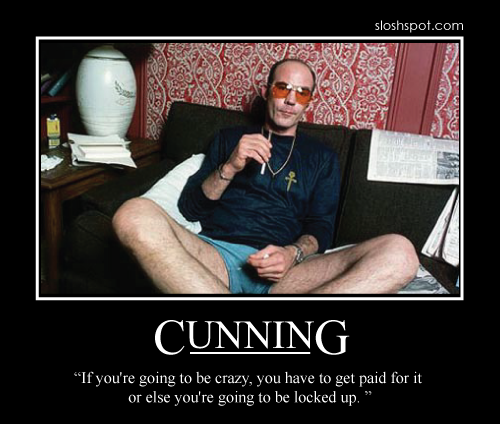
cunning

ani-bad-day

justin_pillowdeath

eskimoburglar

tao_of_kitties

dodo

us-to-break-up

ferret-bath

poor_foke

Leave a comment

Filed under animated gif, Chinese poetry

Poems of the Tang Dynasty, Part 1 of 10

I’ve set a little project for myself- I want to post a compilation of some of the best poems/ poets of the Chinese classical period. The Tang Dynasty produced many if not most of the greatest poets in all of Chinese literature. My interest in classical Chinese poetry goes wayyy back. My Bachelors degree (1977) was in Arts and letters with my primary coursework in Chinese poetry, Chinese language (so I could learn to read the poems in their original form) and the history of Chinese literature.

I’ve already drafted a list of the poems I want to include. The number will be between 275 and 350, depending on when I get tired of it. It is unfortunate that I’m ending up including only a few  each from some of my favorite poets. This is hard because some individuals wrote hundreds of poems that have survived and almost all of them are really good. But my purpose here is to present a collection that shows the depth and variety of poetry of that period. Maybe someday I will do a comprehensive collection of just Li Bai or Wang Wei or Du Fu.

When I’m done with Part 10 I will post a download of the entire collection in MS doc format. (Always click pictures for full size or animation when applicable.)

tang_pottery

First, Background, from Wikipedia, the source of many good things:

The Tang Dynasty (Chinese: 唐朝; pinyin: Táng Cháo; Middle Chinese: dhɑng)[1] (June 18, 618 – June 4, 907) was an imperial dynasty of China preceded by the Sui Dynasty and followed by the Five Dynasties and Ten Kingdoms Period. It was founded by the Li () family, who seized power during the decline and collapse of the Sui Empire. The dynasty was interrupted briefly by the Second Zhou Dynasty (October 16, 690 – March 3, 705) when Empress Wu Zetian seized the throne, becoming the first and only Chinese empress regnant, ruling in her own right.

The Tang Dynasty, with its capital at Chang’an (present-day Xi’an), the most populous city in the world at the time, is regarded by historians as a high point in Chinese civilization—equal to or surpassing that of the earlier Han Dynasty—as well as a golden age of cosmopolitan culture. Its territory, acquired through the military campaigns of its early rulers, was greater than that of the Han period, and rivaled that of the later Yuan Dynasty and Qing Dynasty. The enormous Grand Canal of China, built during the previous Sui Dynasty, facilitated the rise of new urban settlements along its route as well as increased trade between mainland Chinese markets. The canal is to this day the longest in the world. In two censuses of the 7th and 8th centuries, the Tang records stated that the population (by number of registered households) was about 50 million people.[2][3][4]a[›] However, even when the central government was breaking down and unable to compile an accurate census of the population in the 9th century, it is estimated that the population in that century had grown to the size of about 80 million people.[5][6] With its large population base, the dynasty was able to raise professional and conscripted armies of hundreds of thousands of troops to contend with nomadic powers in dominating Inner Asia and the lucrative trade routes along the Silk Road. Various kingdoms and states paid tribute to the Tang court, while the Tang also conquered or subdued several regions which it indirectly controlled through a protectorate system. Besides political hegemony, the Tang also exerted a powerful cultural influence over neighboring states such as those in Korea and Japan.

In Chinese history, the Tang Dynasty was largely a period of progress and stability, except during the An Shi Rebellion and the decline of central authority in the latter half of the dynasty. Like the previous Sui Dynasty, the Tang Dynasty maintained a civil service system by drafting officials through standardized examinations and recommendations to office. This civil order was undermined by the rise of regional military governors known as jiedushi during the 9th century. Chinese culture flourished and further matured during the Tang era; it is considered the greatest age for Chinese poetry.[7] Two of China’s most famous historical poets, Du Fu and Li Bai, belonged to this age, as well as the poets Meng Haoran, Du Mu, and Bai Juyi. Many famous visual artists lived during this era, such as the renowned painters Han Gan, Zhang Xuan, and Zhou Fang. There was a rich variety of historical literature compiled by scholars, as well as encyclopedias and books on geography. There were many notable innovations during the Tang, including the development of woodblock printing, the escapement mechanism in horology, the government compilations of materia medicas, improvements in cartography and the application of hydraulics to power air conditioning fans. The religious and philosophical ideology of Buddhism became a major aspect of Chinese culture, with native Chinese sects becoming the most prominent. However, Buddhism would eventually be persecuted by the state and would decline in influence. Although the dynasty and central government were in decline by the 9th century, art and culture continued to flourish. The weakened central government largely withdrew from managing the economy, but the country’s mercantile affairs stayed intact and commercial trade continued to thrive regardless.

The Tang period was a golden age of Chinese literature and art. There are over 48,900 poems penned by some 2,200 Tang authors that have survived until modern times.[183][184] Perfecting one’s skills in the composition of poetry became a required study for those wishing to pass imperial examinations,[185] while poetry was also heavily competitive; poetry contests amongst esteemed guests at banquets and courtiers of elite social gatherings was common in the Tang period.[186] Poetry styles that were popular in the Tang included gushi and jintishi, with the renowned Tang poet Li Bai (701–762) famous for the former style, and Tang poets like Wang Wei (701–761) and Cui Hao (704–754) famous for their use of the latter. Jintishi poetry, or regulated verse, is in the form of eight-line stanzas or seven characters per line with a fixed pattern of tones that required the second and third couplets to be antithetical (although the antithesis is often lost in translation to other languages).[187] Tang poems in particular remain the most popular out of every historical era of China. This great emulation of Tang era poetry began in the Song Dynasty period, as it was Yan Yu (active 1194–1245) who asserted that he was the first to designate the poetry of the High Tang (c. 713–766) era as the orthodox material with “canonical status within the classical poetic tradition.”[188] At the pinnacle of all the Tang poets, Yan Yu had reserved the position of highest esteem for that of Du Fu (712–770),[188] a man who would not be viewed as such in his own era of poetic competitors, and branded by his peers as an anti-traditional rebel.[189] Below is an example of Du Fu’s poetry, To My Retired Friend Wei (Chinese: 贈衛八處士). Like many other poems in the Tang it featured the theme of a long parting between friends, which was often due to officials being frequently transferred to the provinces:[183]

Written calligraphy of Emperor Taizong on a Tang stele

人生不相見, It is almost as hard for friends to meet

動如參與商。 As for the morning and evening stars.

今夕復何夕, Tonight then is a rare event,

共此燈燭光。 Joining, in the candlelight,

少壯能幾時, Two men who were young not long ago

鬢髮各已蒼。 But now are turning grey at the temples.

訪舊半為鬼, To find that half our friends are dead

驚呼熱中腸。 Shocks us, burns our hearts with grief.

焉知二十載, We little guessed it would be twenty years

重上君子堂。 Before I could visit you again.

昔別君未婚, When I went away, you were still unmarried;

兒女忽成行。 But now these boys and girls in a row

怡然敬父執, Are very kind to their father’s old friend.

問我來何方。 They ask me where I have been on my journey;

問答乃未已, And then, when we have talked awhile,

兒女羅酒漿。 They bring and show me wines and dishes,

夜雨翦春韭, Spring chives cut in the night-rain

新炊間黃粱。 And brown rice cooked freshly a special way.

主稱會面難, My host proclaims it a festival,

一舉累十觴。 He urges me to drink ten cups –

十觴亦不醉, But what ten cups could make me as drunk

感子故意長。 As I always am with your love in my heart?

明日隔山嶽, Tomorrow the mountains will separate us;

世事兩茫茫。 After tomorrow – who can say?

Du Fu[190]


Zhang Jiuling

THOUGHTS I


A lonely swan from the sea flies,
To alight on puddles it does not deign.

Nesting in the poplar of pearls
It spies and questions green birds twain:
“Don’t you fear the threat of slings,
Perched on top of branches so high?
Nice clothes invite pointing fingers,
High climbers god’s good will defy.
Bird-hunters will crave me in vain,
For I roam the limitless sky.”

Zhang Jiuling

ORCHID AND ORANGE I


Tender orchid-leaves in spring
And cinnamon- blossoms bright in autumn
Are as self- contained as life is,
Which conforms them to the seasons.
Yet why will you think that a forest-hermit,

Allured by sweet winds and contented with beauty,
Would no more ask to-be transplanted
THan Would any other natural flower?

6d0faa104647aa3e001b0f28d0019998

Zhang Jiuling

THOUGHTS III


The hermit in his lone abode
Nurses his thoughts cleansed of care,
Them he projects to the wild goose
For it to his distant Sovereign to bear.
Who will be moved by the sincerity
Of my vain day-and-night prayer?
What comfort is for my loyalty
When fliers and sinkers can compare?

Zhang Jiuling

ORCHID AND ORANGE II


Here, south of the Yangzi, grows a red orangetree.
All winter long its leaves are green,
Not because of a warmer soil,
But because its’ nature is used to the cold.
Though it might serve your honourable guests,
You leave it here, far below mountain and river.
Circumstance governs destiny.
Cause and effect are an infinite cycle.
You plant your peach-trees and your plums,
You forget the shade from this other tree.

tnc0011111fa1560626b184rz8

Li Bai

DOWN ZHONGNAN MOUNTAIN
TO THE KIND PILLOW AND BOWL OF HUSI


Down the blue mountain in the evening,
Moonlight was my homeward escort.
Looking back, I saw my path
Lie in levels of deep shadow….
I was passing the farm-house of a friend,
When his children called from a gate of thorn
And led me twining through jade bamboos
Where green vines caught and held my clothes.
And I was glad of a chance to rest
And glad of a chance to drink with my friend….
We sang to the tune of the wind in the pines;
And we finished our songs as the stars went down,
When, I being drunk and my friend more than happy,
Between us we forgot the world.

Li Bai

DRINKING ALONE WITH THE MOON


From a pot of wine among the flowers
I drank alone. There was no one with me —
Till, raising my cup, I asked the bright moon
To bring me my shadow and make us three.
Alas, the moon was unable to drink
And my shadow tagged me vacantly;
But still for a while I had these friends
To cheer me through the end of spring….
I sang. The moon encouraged me.
I danced. My shadow tumbled after.
As long as I knew, we were boon companions.
And then I was drunk, and we lost one another.
…Shall goodwill ever be secure?
I watch the long road of the River of Stars.


419850

Li Bai

IN SPRING


Your grasses up north are as blue as jade,
Our mulberries here curve green-threaded branches;
And at last you think of returning home,
Now when my heart is almost broken….
O breeze of the spring, since I dare not know you,
Why part the silk curtains by my bed?


Du Fu

A VIEW OF TAISHAN


What shall I say of the Great Peak? —
The ancient dukedoms are everywhere green,
Inspired and stirred by the breath of creation,
With the Twin Forces balancing day and night.
…I bare my breast toward opening clouds,
I strain my sight after birds flying home.
When shall I reach the top and hold
All mountains in a single glance?


10080w

Du Fu

TO MY RETIRED FRIEND WEI


It is almost as hard for friends to meet
As for the morning and evening stars.
Tonight then is a rare event,
Joining, in the candlelight,
Two men who were young not long ago
But now are turning grey at the temples.
…To find that half our friends are dead
Shocks us, burns our hearts with grief.
We little guessed it would be twenty years
Before I could visit you again.
When I went away, you were still unmarried;
But now these boys and girls in a row
Are very kind to their father’s old friend.
They ask me where I have been on my journey;
And then, when we have talked awhile,
They bring and show me wines and dishes,
Spring chives cut in the night-rain
And brown rice cooked freshly a special way.
…My host proclaims it a festival,
He urges me to drink ten cups —
But what ten cups could make me as drunk
As I always am with your love in my heart?
…Tomorrow the mountains will separate us;
After tomorrow-who can say?

Du Fu

ALONE IN HER BEAUTY


Who is lovelier than she?
Yet she lives alone in an empty valley.
She tells me she came from a good family
Which is humbled now into the dust.
…When trouble arose in the Kuan district,
Her brothers and close kin were killed.
What use were their high offices,
Not even shielding their own lives? —
The world has but scorn for adversity;
Hope goes out, like the light of a candle.
Her husband, with a vagrant heart,
Seeks a new face like a new piece of jade;
And when morning-glories furl at night
And mandarin-ducks lie side by side,
All he can see is the smile of the new love,
While the old love weeps unheard.
The brook was pure in its mountain source,
But away from the mountain its waters darken.
…Waiting for her maid to come from selling pearls
For straw to cover the roof again,
She picks a few flowers, no longer for her hair,
And lets pine-needles fall through her fingers,
And, forgetting her thin silk sleeve and the cold,
She leans in the sunset by a tall bamboo.

li_bai_du_fu_images_22

Du Fu

SEEING Li Bai IN A DREAM I


There are sobs when death is the cause of parting;
But life has its partings again and again.
…From the poisonous damps of the southern river
You had sent me not one sign from your exile —
Till you came to me last night in a dream,
Because I am always thinking of you.
I wondered if it were really you,
Venturing so long a journey.
You came to me through the green of a forest,
You disappeared by a shadowy fortress….
Yet out of the midmost mesh of your snare,
How could you lift your wings and use them?
…I woke, and the low moon’s glimmer on a rafter
Seemed to be your face, still floating in the air.
…There were waters to cross, they were wild and tossing;
If you fell, there were dragons and rivermonsters.

dufu

Du Fu

SEEING Li Bai IN A DREAM II


This cloud, that has drifted all day through the sky,
May, like a wanderer, never come back….
Three nights now I have dreamed of you —
As tender, intimate and real as though I were awake.
And then, abruptly rising to go,
You told me the perils of adventure
By river and lake-the storms, the wrecks,
The fears that are borne on a little boat;
And, here in my doorway, you rubbed your white head
As if there were something puzzling you.
…Our capital teems with officious people,
While you are alone and helpless and poor.
Who says that the heavenly net never fails?
It has brought you ill fortune, old as you are.
…A thousand years’ fame, ten thousand years’ fame-
What good, when you are dead and gone.


(This next poem, one of my favorites, I once spent a week in seclusion, writing it in the original form onto a delicate pressed leaf and gave it to a friend as a gift- he was leaving the state and I didn’t expect to see him again.)

Wang Wei

AT PARTING

247797071-395x400I dismount from my horse and I offer you wine,
And I ask you where you are going and why.
And you answer: “I am discontent
And would rest at the foot of the southern mountain.
So give me leave and ask me no questions.
White clouds pass there without end.”


Wang Wei

TO QIWU QIAN BOUND HOME
AFTER FAILING IN AN EXAMINATION


In a happy reign there should be no hermits;
The wise and able should consult together….
So you, a man of the eastern mountains,
Gave up your life of picking herbs
And came all the way to the Gate of Gold —
But you found your devotion unavailing.
…To spend the Day of No Fire on one of the southern rivers,
You have mended your spring clothes here in these northern cities.
I pour you the farewell wine as you set out from the capital —
Soon I shall be left behind here by my bosomfriend.
In your sail-boat of sweet cinnamon-wood
You will float again toward your own thatch door,
Led along by distant trees
To a sunset shining on a far-away town.
…What though your purpose happened to fail,
Doubt not that some of us can hear high music.


spring_villagesm_fsWang Wei

A GREEN STREAM


I have sailed the River of Yellow Flowers,
Borne by the channel of a green stream,
Rounding ten thousand turns through the mountains
On a journey of less than thirty miles….
Rapids hum over heaped rocks;
But where light grows dim in the thick pines,
The surface of an inlet sways with nut-horns
And weeds are lush along the banks.
…Down in my heart I have always been as pure
As this limpid water is….
Oh, to remain on a broad flat rock
And to cast a fishing-line forever!

Wang Wei

A FARM-HOUSE ON THE WEI RIVER


In the slant of the sun on the country-side,
Cattle and sheep trail home along the lane;
And a rugged old man in a thatch door
Leans on a staff and thinks of his son, the herdboy.
There are whirring pheasants? full wheat-ears,
Silk-worms asleep, pared mulberry-leaves.
And the farmers, returning with hoes on their shoulders,
Hail one another familiarly.
…No wonder I long for the simple life
And am sighing the old song, Oh, to go Back Again!

bamboo_grove_fsWang Wei

THE BEAUTIFUL XI SHI


Since beauty is honoured all over the Empire,
How could Xi Shi remain humbly at home? —
Washing clothes at dawn by a southern lake —
And that evening a great lady in a palace of the north:
Lowly one day, no different from the others,
The next day exalted, everyone praising her.
No more would her own hands powder her face
Or arrange on her shoulders a silken robe.
And the more the King loved her, the lovelier she looked,
Blinding him away from wisdom.
…Girls who had once washed silk beside her
Were kept at a distance from her chariot.
And none of the girls in her neighbours’ houses
By pursing their brows could copy her beauty.


Meng Haoran

ON CLIMBING ORCHID MOUNTAIN
IN THE AUTUMN TO ZHANG


On a northern peak among white clouds
You have found your hermitage of peace;
And now, as I climb this mountain to see you,
High with the wildgeese flies my heart.
The quiet dusk might seem a little sad
If this autumn weather were not so brisk and clear;
I look down at the river bank, with homeward-bound villagers
Resting on the sand till the ferry returns;
There are trees at the horizon like a row of grasses
And against the river’s rim an island like the moon
I hope that you will come and meet me, bringing a basket of wine —
And we’ll celebrate together the Mountain Holiday.

180px-meng_haoranMeng Haoran

IN SUMMER AT THE SOUTH PAVILION
THINKING OF XING

The mountain-light suddenly fails in the west,
In the east from the lake the slow moon rises.
I loosen my hair to enjoy the evening coolness
And open my window and lie down in peace.
The wind brings me odours of lotuses,
And bamboo-leaves drip with a music of dew….
I would take up my lute and I would play,
But, alas, who here would understand?
And so I think of you, old friend,
O troubler of my midnight dreams !

Meng Haoran

AT THE MOUNTAIN-LODGE

OF THE BUDDHIST PRIEST YE
WAITING IN VAIN FOR MY FRIEND DING


Now that the sun has set beyond the western range,
Valley after valley is shadowy and dim….
And now through pine-trees come the moon and the chill of evening,
And my ears feel pure with the sound of wind and water
Nearly all the woodsmen have reached home,
Birds have settled on their perches in the quiet mist….
And still — because you promised — I am waiting for you, waiting,
Playing lute under a wayside vine.

bz_0004

Wang Changling

WITH MY BROTHER AT THE SOUTH STUDY
THINKING IN THE MOONLIGHT OF VICE-PREFECT
CUI IN SHANYIN


Lying on a high seat in the south study,
We have lifted the curtain-and we see the rising moon
Brighten with pure light the water and the grove
And flow like a wave on our window and our door.
It will move through the cycle, full moon and then crescent again,
Calmly, beyond our wisdom, altering new to old.
…Our chosen one, our friend, is now by a limpid river —
Singing, perhaps, a plaintive eastern song.
He is far, far away from us, three hundred miles away.
And yet a breath of orchids comes along the wind.

That’s it for this installment. I will post the other 9 at a rate of at least 1 per month. Check in- I may be faster sometimes.

Happy 2009! May it not suck so very badly!

2008tc3train7_elhassan

New Year’s Gifts for You- Mississippi John Hurt

candy-man

coffee-blues

goodnight-irene

7 Comments

Filed under Chinese poetry, Free Music, mp3, Music, pictures, poetry

BTW-

Check the Space page- over 100 full resolution space pictures from various sources.

Leave a comment

Filed under Uncategorized

Excellent!

First- a Mind Freedom News Alert:

(click pics for animation, full size etc.)

filepile-enforcers

MindFreedom International – please forward
Human Rights in Mental Health – 26 Dec. 2008

BELOW, the main weekly newspaper in Eugene, Oregon, USA — home of
MindFreedom International — published a brief article about how
psychiatrist Darrel A. Regier is a link between revising the “label
bible” of psychiatry and the drug industry.

Dr. Regier is in charge of preparing the new, fifth version of the
American Psychiatric Association’s (APA) powerful “Diagnostic and
Statistical Manual” (DSM). Dr. Regier has forced psychiatrists
participating in the DSM process sign a secrecy agreement, and he has
refused to respond to contacts from organizations such as
MindFreedom, despite encouragement from World Health Organization.

Dr. Regier is also head of the APA’s “APIRE,” their research arm that
collects millions of dollars in psychiatric drug company donations to
psychiatry.

In the article, MindFreedom’s director David W. Oaks says that
democracy needs to get hands on with psychiatry in order to “green”
the mental health system.

AT BOTTOM is more info, including a web page of links to how Dr.
Regier connects the dots between the DSM and psychiatric drug
industry corruption.

~~~~~~~

Eugene Weekly, Oregon, USA – 24 December 2008

Greening of Mental Health?

by Ted Taylor, Editor

Psychiatrists are wrestling with changes in definitions and diagnoses
that will be included in the fifth edition of the Diagnostic and
Statistical Manual of Mental Disorders
(DSM). The final edition will
have consequences for insurance reimbursement, research and
individuals’ psychological identity for years to come, according to a
Dec. 18 story by Benedict Carey in The New York Times. But will the
content reflect any input from millions of mental health patients?

“We definitely tried to have input and dialogue, and there was none
allowed. Period,” says David Oaks, executive director of MindFreedom
International
, based in Eugene.

MindFreedom was founded [in 1986] to advocate against forced
medication, physical restraints and involuntary electroconvulsive
therapy
, says Oaks. Members worldwide identify themselves as
survivors of human rights violations in a mental health system
heavily influenced by outdated practices and pharmaceutical interests.

[Oaks] says Dr. Darrel A. Regier, a key figure in the new DSM, is
also head of the special “research” wing of the American Psychiatric
Association
. APIRE, an independent component of the APA, [led initial
planning for] the DSM and “tends to get millions upon millions of
drug company dollars.”

“Even though Dr. Regier got federal money to hold international
seminars on the ‘future of psychiatric diagnosis,’ he has absolutely
refused to even respond to civil inquiries from anyone outside his
closed-door process,” says Oaks.

Oaks says a prominent official with the World Health Organization’s
mental health section, “has twice personally asked Dr. Regier to
respond to requests from MindFreedom about having mental health
consumer input in the re-writing of the DSM,” and was told “no.” “So
these few hundred unelected mainly rich, mainly white males are
cooking up behavioral guidelines for us all, with zero input from the
public who is impacted by these rules.”

MindFreedom is working to break the undemocratic domination of mental
health care
by the medical establishment, says Oaks. “Our issue is
kind of like where energy policy was in the 1950s, totally dominated
by the system. Now we’re pushing for ‘greening of mental health,’ to
allow for more holistic, empowering, non-chemical approaches, and
especially direct involvement by citizens in helping to plan mental
and emotional well-being programs.”

The revised DSM, due out in about three years, is expected to reflect
some public pressures. Early editions of the book defined
homosexuality as a mental disorder. Protests by gay activists
provoked a scientific review, and the diagnosis was dropped in 1973,
replaced by “sexual orientation disturbance,” and then “ego-dystonic
homosexuality.” Homosexuality as a disorder was dropped from the book
in 1987. Some GLBTQ activists are now lobbying for similar changes
regarding gender identity issues, but others are wanting to keep
transgender identity as a formal diagnosis so that treatment or
surgery can be covered by insurance.

The story can be found by a web search for “NYTimes DSM,” and
MindFreedom International’s website is www.mindfreedom.org — Ted
Taylor, Editor, Eugene Weekly

– end –

original article [corrections bracketed]
http://www.eugeneweekly.com/2008/12/24/news.html#1

APIRE is the repository for much of the millions of dollars that the
psychiatric drug industry pours into the American Psychiatric
Association and its related organizations. As director of APIRE, Dr.
Regier also is in charge of the new DSM.

For a version of above with links at bottom to more info about APA,
DSM, Dr. Regier and APIRE:
http://www.mindfreedom.org/campaign/media/mf/greening-mental-health

congressman-lets-c

ACTIONS:

** Ask your Congressperson to investigate the links between Dr.
Regier, APIRE, APA, psychiatric drug industry, and DSM.

** Mark your calendar: MindFreedom plans another protest of APA
Annual Meeting in San Francisco, May 2009! Attend, or plan actions
wherever you are from May to July.

** Join MindFreedom! For information about joining MindFreedom today,
click here:

http://www.mindfreedom.org/join-donate

~~~~~~~~~~~~~~

PLEASE FORWARD THIS NEWS!

~~~~~~~~~~~~~~

MindFreedom International Office:

454 Willamette, Suite 216 – POB 11284; Eugene, OR 97440-3484 USA

web site: http://www.mindfreedom.org
e-mail: office@mindfreedom.org
MFI member services phone: (541) 345-9106
MFI member services toll free: 1-877-MAD-PRIDe or 1-877-623-7743
fax: (480) 287-8833

(click the pic)

ani-lightning-bolt

Next- News you can really use-

The very best link ever (not an exageration):

http://www.gethuman.com/

Leave a comment

Filed under animated gif, Links: Recovery, Mental health recovery, mindfreedom news, wellness and systems change

Hey! Check this out!!

First- I want to introduce you to a service offered by someone I know.

From her web page:

Welcome to Blue Pacem.  We offer creative and quality video communication services to empower community at affordable prices.

Ann is own of the most creative people I know. Plus she is a beutiful person with the highest possible integrity. If you need help putting together high quality media presentations and want to reach your community in a way that is unique and strikes the chord that needs to be heard, contact Blue Pacem at http://www.bluepacem.com/index.html

Other things:

MindFreedom News- The Ray ECT Campaign

By David Oaks


23 December 2008

Dear readers of the MindFreedom News Public Alerts:

Ray Sandford phoned the MindFreedom office this morning, as he does
most days.

As you probably know, Ray has received about 35 involuntary
electroshocks. MindFreedom’s Ray Campaign has activated hundreds of
people like you to support Ray. This won Ray national publicity and a
new hearing last week.

Ray gave me the bad news that the judge ruled against him. Again.

That means Ray is scheduled for another of his every-other-Wednesday
involuntary electroshocks tomorrow, 24 December 2008.

Christmas Eve.

Ray says, “I’m really disappointed in that.” Ray thought that maybe
his family’s holiday get togethers would delay this week’s forced shock.

But Ray said that instead of the gathering, “I’ll be having tacos
with my aunt tonight to celebrate Christmas.”

So tomorrow morning Ray will be woken up early in his group home, and
escorted to a forced shock.

Ray told me this morning:

“It’s a painful awful experience. Every time. It takes away memory
viciously. It is scary as hell every time I go.”

Ray says he always objects.

“I say, ‘I don’t want to do this, I don’t want to do this,’ which
I’ve known since the first time. Everyone figures I’m totally nuts.”

Ray is not giving up.

So we are not giving up.

We ask that you not give up.

Eye-witnesses at Ray’s hearing, held in a dreary hospital basement,
knew he did not have much of a chance.

Ray’s court-appointed attorney, Jon Duckstad, refused to call any
expert witness to testify for Ray’s side. (See MFI Blog for more on
the hearing.) Mr. Duckstad has refused to respond to any offers of
help from MindFreedom, including a number of skilled attorneys we’ve
found who offered to assist for free.

Ray is keeping his spirits up.

Ray is so grateful to MindFreedom members and supporters for speaking
out. Ray is proud that even a relative in Alaska heard him oppose his
forced shock on National Public Radio (click on http://
www.mindfreedom.org/ray to hear that, and read more about Ray).

I am deeply impacted by Ray’s ongoing psychiatric torture out in the
community.

All abuse is bad, but severe outpatient abuse is traumatizing to all
of us, like me, who have experienced mental health system human
rights violations. It means none of us are safe, even in our homes.


MindFreedom International – please forward
http://www.mindfreedom.org/ray
Human Rights in Mental Health – Ray Alert #8

~~~~~~~~~~~~~~

521

Christmas Eve 2008

What Would Jesus Do About Forced Electroshock?

An Open Letter to the Lutheran Church [ELCA] from MindFreedom
International [MFI]

by David W. Oaks, Executive Director, MFI

As we send you this, we understand Ray Sandford of Minnesota is
receiving another involuntary electroshock this Christmas Eve
morning, 24 December 2008.

As you know, your agency Lutheran Social Services of Minnesota
(LSSMN) is charged with being General Guardian for Ray. This is a
reply to your recent misleading public statement about the
MindFreedom Campaign to End Ray Sandford’s Forced Electroshock
(copied at bottom).

Regularly for months — presently every other week — attendants wake
Ray up early in his group home, Victory House. He is escorted the few
miles to a hospital. Under court order and against his repeated and
clear objections, Ray is put under anesthesia, electricity is run
through brain head, and he is given another electroshock, also known
as electroconvulsive therapy or ECT.

Ray has received about 35 so far.

Ray calls our office most days, and it’s always good to hear from
him. He told me yesterday, “It’s a painful, awful experience. Every
time. It takes away memory viciously. It is scary as hell every time
I go.”

Ray says he always objects. “I say, ‘I don’t want to do this. I don’t
want to do this,’ which I’ve known since the first time. Everyone
figures I’m totally nuts.”

One day Ray asked his local library about groups working on human
rights in mental health, and Ray contacted MindFreedom International.
Ray asked us to start a public campaign to support his right to say
“no” to electroshock.

I had hoped your church would be an ally in Ray’s campaign. Instead,
I have found you to stand by silently with arms folded, or even worse
your spokespeople appear to at times oppose Ray’s campaign.

In my 32 years of human rights activism, Ray is one of the most
focused individuals I’ve ever encountered in his persistent and
reasonable requests to end his forced electroshock. The fact that his
forced shock is outpatient and ongoing is especially outrageous.

Ray’s heroism has moved me and many others. Countless people have
responded to support the Ray Campaign, and Ray reached millions of
people on National Public Radio.

On 16 December 2008, the “Evangelical Lutheran Church in
America” [ELCA] issued a reply to a number of people who have
expressed concern about Ray as a result of MindFreedom’s human rights
alerts. (See below.)

It is significant for ELCA to issue a public statement about a
MindFreedom International campaign. With more more than four million
baptized members, ELCA is the largest Lutheran denomination and one
of the largest Christian denominations in the USA. We at MindFreedom
are eager for dialogue with ELCA.

Unfortunately, Miriam L. Woolbert of ELCA’s Communication Services
replied to those contacting ELCA that groups like MindFreedom are
“misdirecting you and many other people.”

Ms. Woolbert did not provide any example or quote of such
“misdirecting.” Her main points appear to be that ELCA is not a
“participant” in any involuntary electroshock, and that ELCA cannot
speak about Ray because of confidentiality.

MindFreedom’s alerts never claimed that ELCA is in charge of the
involuntary electroshock of Ray. MindFreedom International encourages
people to contact ELCA to ask you “to stand with Ray.”

Even if ELCA representatives feel you cannot speak specifically about
Ray, we ask ELCA to stand shoulder to shoulder with all their agency
clients, like Ray, who are receiving involuntary electroshock. ELCA
could at least begin by expressing concern or joining in dialogue.

We continue to encourage all people who care to contact ELCA, and
ELCA’s local congregations, with strong but civil messages.

Because of ELCA’s misleading statement about the Ray Campaign this
action is especially urgent, including for those who have already
contacted you.

Most importantly, Ray is asking us all to take this action.

300_221267

~~~~~~~~~~~~

* ACTION * ACTION * ACTION *

People may e-mail ELCA headquarters at info@elca.org or use their web
form:

http://archive.elca.org/mailto.asp?to=info@elca.org

We also encourage all concerned people in the USA to contact local
ELCA congregations, which they can find by entering their postal code
here:

http://www.elca.org/ELCA/Search/Find-a-Congregation.aspx

~~~~~~~~~~~~

MindFreedom Suggested Message to ELCA and Local Congregations [your
own words from the heart are best]:

I am not being misdirected by MindFreedom International or anyone else.

I am not saying you are in charge of anyone’s forced electroshock.

I am not asking you to break confidentiality of any client.

I am simply asking:

Will you stand now with Ray Sandford, and all those who are oppressed
by extreme psychiatric abuse?

What is ELCA’s position on the forced, outpatient, maintenance
electroshock of clients you and your agencies are charged to guard?

Why isn’t ELCA expressing concern about these human rights
violations, which amount to torture?

How can ELCA use this opportunity to seek dialogue on human right and
alternatives in the mental health system?

[your name & contact]

[Please copy your e-mail to news@mindfreedom.org; selected e-mails
will be published on the web and/or mailed to Ray.]

~~~~~~~~~~~~

brain

For more info the Ray Campaign see:

http://www.mindfreedom.org/ray

The MindFreedom Board of Directors includes several individuals who
have personally experienced the unimaginable horror of an involuntary
electroshock.

The board endorses this public statement to ELCA, and asked me to
quote from the famous letter written by Rev. Martin Luther King, Jr.
in the Birmingham Jail on 16 April 1963.

Forty-five years ago, Rev. King was responding to church leaders who
discouraged his own activist campaign:

“…I felt we would be supported by the white church. I felt that the
white ministers, priests and rabbis of the South would be among our
strongest allies. Instead, some have been outright opponents,
refusing to understand the freedom movement and misrepresenting its
leaders; and too many others have been more cautious than courageous
and have remained silent behind the anesthetizing security of stained-
glass windows…

“So often the contemporary church is a weak, ineffectual voice with
an uncertain sound. So often it is an archdefender of the status quo.
Far from being disturbed by the presence of the church, the power
structure of the average community is consoled by the church’s silent
and often even vocal sanction of things as they are.”

ect-bw

[More excerpts below.]

~~~~~~~~~~~~

For those who would like more detail about this exchange between
MindFreedom and ELCA about the Ray Campaign:

FREQUENTLY ASKED QUESTIONS about Lutheran Church [ELCA] and Forced
Electroshock of Ray Sandford

*** How does Ray Sandford’s feel about Lutheran Social Services of
Minnesota (LSSMN)?

Ray has approved this alert, and asks everyone to contact the
Lutheran Church [ELCA]. Ray knows that their agency LSSMN is not
directly in charge of his forced shock. Ray said, “In some ways
Lutheran Social Services is compassionate and helpful. They’ve
visited me and are a support system. They manage my finances my
fairly. But Lutheran Social Services does not listen to me. They
don’t see you. They asked me to not do this campaign. They should
support the person who doesn’t want electroshock. Tell them I don’t
want shock!”

*** Does ELCA oversee Ray’s forced electroshock?

To repeat, ELCA is not directly in charge of Ray’s forced
electroshock. We can understand ELCA being sensitive to this
question. Media are starting to pay attention, and National Public
Radio covered Ray’s story.

The legal jargon can get complicated. On 16 December, television
station WCCO-TV in Minnesota mis-reported that Ray’s “guardian ad
litem” Terri Bradley, who is the court-appointed person specifically
and narrowly in charge of overseeing Ray’s forced electroshock, and
who testified in court for Ray’s forced shock, works for LSSMN. WCCO-
TV has since issued a public retraction.

Legally speaking, LSSMN is “general guardian” for Ray, but not
“guardian ad litem” specifically on the electroshock.

*** What has ELCA said about forced electroshock?

Representatives of Luthern Social Services of Minnesota (LSSMN), an
agency that is sponsored by ELCA, have refused to speak out about the
abuse of their clients like Ray by repeated, “maintenance” forced
oupatient electroshock.

On the contrary, LSSMN representatives, including their employee
Tonya Wilhelm, have sought to discourage Ray and advocates such as
myself from speaking out publicly about Ray’s abuse. My first contact
with Ms. Wilhelm ended with her laughing loudly, saying this would be
between our lawyers, and hanging up.

Helpful MindFreedom voluteers in Minnesota are now prohibited from
even visiting Ray. Ray is kept from a follow-up visit to the
Minnesota Center for Independent Living. Ray is not being offered
humane alternatives to electroshock. Mail sent to Ray is re-directed
to LSSMN for screening. LSSMN attorney George Borer wrote MFI on 1
December “emphasizing” that they do not consent to MFI disseminating
info that Ray provided for the campaign that they consider “private.”

In a newspaper report on 18 November, Eric Jonstaard, director of
LSSMN, did speak out about Ray to a reporter. Unfortunately, Mr.
Jonstaard took the opportunity to chastise MindFreedom for using
Ray’s full name in the Ray Campaign, as Ray has specifically and
repeatedly authorized MindFreedom and NPR to do.

For more info on the Ray Campaign see:

http://www.mindfreedom.org/ray

*** What is ELCA’s link to LSSMN?

Through his bravery, Ray has offered us all an opportunity to create
dialogue. Instead, Mr. Jonstaard seeks to distance ELCA from the
situation by saying that ELCA is “not related to the situation”
except for a “loose” sponsorship of LSSMN.

Not related?

Loose?

ELCA’s sponsorship of LSSMN is official, financial, legal, direct,
public and documented.

LSSMN’s web site states that LSSMN is “owned” by six Minnesota synods
of ELCA, and credits ELCA as one of its “primary” funding sources for
their 2009 budget of $90 million.

Owned? A primary funding source?

How is that “loose”? Perhaps a lack of close oversight is part of the
problem.

This dialogue should not be about technical quibbling. ELCA has a
deep moral obligation to address oppression of any of their clients,
or any human being for that matter. ELCA’s agencies receive millions
of dollars in scarce taxpayer funding to guard these clients.

In Minnesota alone, Mr. Jonstaard says that LSSMN is responsible for
800 “vulnerable adults.” How many have experienced involuntary
psychiatric drugging and electroshock? LSSMN’s Tonya Wilhelm told
MindFreedom’s David Oaks that involuntary electroshock of LSSMN
clients like Ray in Minnesota is “not uncommon.”

The moral failure of involuntary electroshock over the expressed
wishes of the individual is not only committed by the individual
flipping the switch, but by all those aware of the torture but who
remain silent.

*** What about Ray’s confidentiality?

First and foremost, Ray has repeatedly, consistently, and
passionately spoken out, as he puts it so clearly, for “No more shock
for Ray.” He has signed a release of information form. He approved
MFI and National Public Radio using his full name in a broadcast that
reached an estimated two million people. LSSMN’s attorney admits the
First Amendment protects the rights of this campaign.

The ELCA statement claims that “confidentiality” keeps them from
addressing Ray specifically. In MindFreedom’s opinion, agencies such
as LSSMN have the legal discretion and moral obligation to speak out
about abuse of their clients to legislators, media, and the public if
they choose. Ray has asked for LSSMN to do this.

At what point does confidentiality become cover-up?

However anyone interprets privacy laws, everyone admits it is
completely legal for ELCA and LSSMN to speak out in general to the
media and legislators about the policy of involuntary electroshock
itself, which can impact a number of their agency’s clients.

ELCA has addressed other tough issues over the years. For instance,
one of ELCA’s predecessor churches ordained female pastors as early
as 1970. ELCA publicly wrestles with other controversial topics
including abortion and homosexual pastors.

So what about joining a discussion about issues impacting people
diagnosed with psychiatric disabilities? Isn’t it time? Isn’t it past
time?

*** Isn’t ELCA right that this is a matter entirely up to the courts?

According to eye witnesses, and Ray himself, his most recent court
hearing on 16 December, held in a hospital basement, was a mockery of
justice. Ray was not able to secure a better attorney. His court-
appointed attorney, Jon Duckstad, who Ray says has barely
communicated with him, did not call one independent expert witness to
defend Ray, and has refused offers of free help from other attorneys.

Social justice requires not just courts, but a sense of individual
and group moral responsibility.

Washing ones hands as Ray is escorted to a forced shock on Christmas
Eve is not acceptable.

*** Where else can people raise concerns with the ELCA community?

You may choose to bring this matter up with your own faith community,
and ask them to begin to address these topics themselves and contact
local ELCA congregations.

Also, by coincidence, the next ELCA Churchwide Assembly will take
place 17 to 23 August 2009 in Minneapolis, the very region where Ray
is receiving his regular, outpatient, forced electroshock.

It is time for all religious organizations to dialogue about the
human rights and dignity of some of society’s most oppressed
citizens, people who experience psychiatric atrocities.

One would expect many of ELCA’s participants would want to lead the
faith community on the neglected social justice issue of human rights
in mental health, rather than silence public discussion.

To quote ELCA’s web site about their church:

“It’s a story of a powerful and patient God who has boundless love
for all people of the world, who brings justice for the oppressed.”

*** Why do you quote a civil rights leader such as Martin Luther
King, Jr. about psychiatric oppression?

The civil rights movement was the inspiration for many social change
movements, including the movement led by survivors of psychiatric
abuse that began in the USA in 1970.

Other relevant quotes by MLK from his letter from a Birminham Jail
include the following:

MLK:

“I am cognizant of the interrelatedness of all communities and
states. I cannot sit idly by in Atlanta and not be concerned about
what happens in Birmingham. Injustice anywhere is a threat to justice
everywhere. We are caught in an inescapable network of mutuality,
tied in a single garment of destiny. Whatever affects one directly,
affects all indirectly….

“An unjust law is a human law that is not rooted in eternal law and
natural law. Any law that uplifts human personality is just. Any law
that degrades human personality is unjust. All segregation statues
are unjust because segregation distorts the soul and damages the
personality…

“You may well ask, ‘Why direct action? Why sit-ins, marches, and so
forth? Isn’t negotiation a better path?’ You are quite right in
calling for negotiation. Indeed, this is the very purpose of direct
action. Nonviolent direct action seeks to create such a crisis and
foster such a tension that a community which has constantly refused
to negotiate is forced to confront the issue…

“I have almost reached the regrettable conclusion that the Negro’s
great stumbling block in his stride toward freedom is not the White
Citizen’s Counciler or the Ku Klux Klanner, but the white moderate,
who is more devoted to ‘order’ than to justice; who prefers a
negative peace which is the absence of tension to a positive peace
which is the presence of justice; who constantly says: ‘I agree with
you in the goal you seek, but I cannot agree with your methods of
direct action’; who paternalistically believes he can set the
timetable for another man’s freedom; who lives by a mythical concept
of time and who constantly advises the Negro to wait for a ‘more
convenient season.’ Shallow understanding from people of good will is
more frustrating than absolute misunderstanding from people of ill
will. Lukewarm acceptance is much more bewildering than outright
rejection.”

~~~~~~~~~~~~

Here is the reply ELCA has been sending to many people who have
expressed concern about Ray:

Statement from Evangelical Lutheran Church in America [ELCA] About
Campaign Against Forced Electroshock of Ray Sandford

electrocon

~~~~~~~~~~~~

From: Info@elca.org

Date: December 16, 2008 7:36:03 AM PST

Thank you for writing concerning a story you have heard or seen in
the public media. The ELCA is not related to the situation, except as
a sponsor of Lutheran Social Service of Minnesota, one of 280 such
organizations in the Lutheran Services in America network.
Sponsorship is a fairly loose term from a churchwide perspective, and
usually means that people in the area of the affiliated agency
represent the church on the agency’s board, and individuals and
congregations may also contribute some funding to the agency.

Here is a response from Lutheran Services in America which explains
the situation about which you are concerned:

To respond to your inquiry and comments regarding a recent story
about the medical situation of a vulnerable adult under a civil
commitment proceeding, who also has a court appointed guardian:

As a guardian, Lutheran Social Service has both a legal and ethical
duty to keep the specific details of clients’ care and treatment
confidential. While we can’t discuss the client specifically, we can
speak in general about how we carry out our work.

Lutheran Social Service is appointed by the court to serve as a
guardian or conservator to over 800 vulnerable adults in Minnesota.
We are court-appointed to take on this role when individuals lack the
capacity to make decisions about their affairs and there are no
family members who are either able or willing to take on that
responsibility.

A civil commitment is a separate proceeding in the State of
Minnesota. When a person is civilly committed, a decision to impose
electroconvulsive therapy (“ECT”) is a decision made by a commitment
court and not the court appointed Guardian. In the commitment process
someone, normally a health care professional, brings a petition for
ECT treatment for the individual. The individual is assigned an
attorney and a guardian ad litem (not Lutheran Social Service) who
act as advocates either to oppose or to consent to the petition. The
commitment court hears evidence from medical professionals and then
makes a decision on whether to impose the ECT treatment. The court
decision is then appealable by the client and the client’s attorney.
Under Minnesota Statute §524.5-313, a general guardian such as
Lutheran Social Service has no authority to impose ECT treatment
against the known conscientious, religious or moral beliefs of the
individual. The general guardian is not a participant in the civil
commitment process regarding the forced imposition of ECT treatment.

Lutheran Social Service of Minnesota has a long tradition of serving
vulnerable children and adults, and careful systems are in place to
ensure that decisions are made with the person’s best interest in mind.

Sincerely,
Eric Jonsgaard, Senior Director
LSS Guardianship Options

I hope this helps you understand the situation, and that you will
tell whoever suggested that writing to the Evangelical Lutheran
Church in America might help make a difference that they are
misdirecting you and many other people.

Miriam L. Woolbert
ELCA Communication Services

~~~~~~~~~~~~~~

The above was sent by ELCA to a number of people in response to Ray
Alert #7 about National Public Radio coverage of Ray’s campaign,
which you can hear or read here:

http://www.mindfreedom.org/shield/ray/alert-7-sandford

For more information on the Ray Campaign see:

http://www.mindfreedom.org/ray

electricity_is_your_friend


Oregon Consumer/ Survivor Coalition


Health and disability forum


Hi All,

WowDHEC (Women with Disabilities Health Equity Coalition, www.wowdhec.org) is a dynamic non-hierarchical group that I belong to and we are gathering information for the Obama-Biden Team. Please join us on 1/30/08 in Portland for the forum. Men are welcome too!

If you can’t make it, please fill out the survey at
http://www.surveymonkey.com/s.aspx?sm=Qh2E4sc3d9ffNEp7CHyt9A_3d_3d

warm greetings,

Ann
www.bluepacem.com
evolve.
_____________________________________________________________________________

Are you a person with a disability or know someone who is?

Is it hard for you to be healthy, because of conditions in society and the health care system?

Well, here?s your chance to do something about it!

(For those that can?t attend, please fill out a short Health and Disability survey at http://www.surveymonkey.com/s.aspx?sm=Qh2E4sc3d9ffNEp7CHyt9A_3d_3d)??

We would love to hear your opinions!

WowDHEC (Women with Disabilities Health Equity Coalition) http://www.wowdhec.org
is hosting a Health and Disability Forum to talk about the negative effects
of our health system on people with disabilities and to brainstorm solutions.?

We want to hear from as many voices within the disability community as
possible! We are a cross-disability group that includes people with visible and ?invisible? disabilities (mental health issues, cognitive disabilities, etc.)? Our aim is to be as inclusive as possible.?

This is urgent!?
Right now President-elect Obama is asking for feedback about how to improve our health system — and the Obama Transition Team is asking people around the country to hold community discussions through Dec. 31st.

What we learn from you will be shared with the Obama Transition Team and used to advocate for policy change locally and statewide.

Please join us and pass this along to others in the disability community.? To get a head count, an RSVP is appreciated, but not required.

To RSVP or if you have any other accommodation needs, questions or concerns,

contact Marcia
Muench at muenchm@ohsu.edu
or 503-494-2685.

____________________________________________________________________________
QUESTIONS

1. What conditions in your life do you believe affect your health? (for example, support from friends and family, your economic status, how you are treated by others, etc.)

2. What conditions make it harder or easier for you to protect your health?

3. What needs to change in your life conditions in order for you to be healthier?

4. What do you perceive is the biggest problem in the health system?

5. How do you choose a doctor or hospital? What are your sources of information? How should public policy promote quality health care providers?

6. Have you or your family members ever experienced difficulty paying medical bills? What do you think policy makers can do to address this problem?

7. In addition to employer-based coverage, would you like the option to purchase a private plan through an insurance-exchange or a public plan like Medicare?

8. Do you know how much you or your employer pays for health insurance? What should an employer’s role be in a reformed health care system?

9. Have you gotten the prevention health services you should have? If not, how can public policy help?

10. How can public policy promote healthier lifestyles?

Marjorie McGee, M.S., L.P.C.
Director

Women with Disabilities Health Equity Coalition (WowDHEC)
3181 SW Sam Jackson Park Road, UHN 50
Portland, Oregon 97239-3098
Ph.503-494-2685
Email: mcgeem@ohsu.edu (best)
www.wowdhec.org


EFT and Trauma

Emotional Freedom Technique

Studies show that up to 97% of those of us who carry a diagnosis of mental illness are trauma survivors. I asked 100 people who have been so labeled and all of them had significant trauma history with most being traumatized over and over again through the agencies and hospitals that are supposed to help them. I also asked each one:

“Have you ever received treatment for trauma as part of your mental health treatment?”

Out of 100 people I had 3 who told me they had formal treatment for trauma. Two said they had experienced EMDR (Eye Movement Desensitizing Reprocessing) and one said they had both EMDR and EFT (see below). I myself had very good results from EMDR but I have found EFT to be a much more useful tool because I don’t need a therapist to use it. I don’t even have to buy (another) self-help book.

EFT is a self-therapy that I have found especially useful in dealing with my own trauma history- Emotional Freedom Technique is available free, there is a free download-able manual, free ongoing information and forums. Download the manual here.

Pictures of Macaques:

or, haven’t you always wanted a monkey (click for full size)

close-view-of-a-baby-macaque

babyboybonnetmacaque

baby_barbary_macaque

baby_macaque

nursingbarbary_macaque_baby

babymacaque_withbirdfriend

macaques-grooming

tibetan-macaque-macaca_thibetana

ostoo-00000026-001japanese-macaques-or-snow-monkeys-three-monkeys-in-hot-spring-with-infant-in-the-middle-japan-posters1infant_rhesus

Other pictures

brb-jesus1

handofharmony

redwood-national-park

jess-blog-20061127052253715

m81_1920

bye for now

1 Comment

Filed under animated gif, CS/X movement, Mental health recovery, mindfreedom news, pictures, silly