Yearly Archives: 2008

Various and Sundry

I would have to say that the last couple weeks have not been the best I’ve had. They have probably been the most unpleasant by far for quite a while. It’s not all bad, even so. It’s just that much of the time lately I am confronted with visceral, ugly feelings in myself. I want to push them away but also know they are here to reach me something(s).

One thing about pain, especially the animal level of pain, even emotional, it presents a kind of clarity that cuts through other things that would otherwise seem important. It doesn’t necessarily provide a clear view- it can obscure the the things that you most need to understand. I see the image of Manjushri- the Buddha depicted with a sword, who cuts away delusion. The problem is that if you cling to the delusion, you feel like you are dying.

I cling and let go alternately, back and forth, sometimes see some balance as it swings by.

I am finding challenges in both my personal life and my work that seem to work together to make me feel confused. So, what is there to do with hard feelings? With gut level pain? With uncertainty?

Here is my image that I am cultivating. Instead of pushing away the thing that hurts or causes stress, I try to touch it- feel it in my body and heart, and hold it up to the light. By holding it up to the light I mean that I try to see it’s origins, purpose, meaning. Much of the time I find that it has at it’s roots a kind of lie- or at least a clinging to that which is untrue. It may represent the dying of an act of grasping that has no basis in reality. At the same time, I try to see it with some tenderness- grasping and clinging to things is human and a basis for our grief. Knowing this doesn’t make it less painful. Tenderness may even make it more painful- if I’m really open to the experience.

Then, after holding it tenderly in the light, I try to put it down gently. And let go.

It’s a process that happens many times through my day. It is like the directions on the shampoo bottle- Rinse, repeat. It often provides a few moments of near-joy (I haven’t mastered it enough to get that last part very well but I am inching toward it).

I’m working on a new song. I haven’t written a song in years. I don’t know much about it yet but I feel it coming.

Today my work was satisfying mostly but ended on an overwhelmed note. Then I went to an Interactive Theater workshop (From the Inside Out/ Theater for all). I went because I knew I’d benefit from being around people. Part of me was reluctant- like it was maybe some bad tasting medicine. Like I’m a social misfit and I need to get out and be around people as some kind of treatment. Two odd things happened (or three).

First I got a call from the workshop organizer asking me to pick up someone who couldn’t get to the workshop by herself. The address where she lives is far on the other side of being on my way. I was told that I could say no; I was told that if I didn’t pick her up she would miss the workshop and it was important to her. I agreed. It meant that I had to leave an hour earlier than I would have otherwise. It meant that I would not see my wife when she got home. I went.

About halfway there I got another call saying that I didn’t have to pick her up after all. That someone who lived closer to her could do it. I was already well on my way and I went ahead- driving to the address I was given. When I got there it was familiar. Then I realized that the person I was picking up was someone who I had met and worked with years ago. Someone I had helped. I felt a very positive sense of synchronicity/ congruence talking with her on the way.

At the workshop I ran into another person who I had met at previous events. It’s someone who every time I see him I find out more stuff that we have in common. His name is Tom Widdick and he is sort of famous in the mental health consumer movement as one of the founders of possibly the first modern psychiatric rights group- the Insane Liberation Front, back in 1969 or so. I just met him a few months back but I have since found that we went to the same high school (one that no longer exists), used to sell the same underground newspaper, both have diabetes, both have mental problems, know a bunch of the same people. Tonight I learned that he attends the Bridge City Friends Meeting- a sister community to the Multnomah Monthly Meeting of which I am a member. Wild. “Am I going to the family retreat this month?” he asked. “I’m not sure we can afford to go,” I said.

Oh, yes, this Friday night is MLBM- Mad Liberation by Moonlight. 1 a.m. on KBOO 90.7 or streamed at KBOO.org

All that aside- my latest favorite Rumi poem (I’ve left out the last lines because I am too tired to type it all):

No Room for Form

On the night when you cross the street

from your shop and your house

to the cemetery,

you’ll hear me hailing you from inside

the open grave, and you’ll realize

how we’ve always been together.

I am the clear consciousness-core

of your being, the same in

ecstasy as in self-hating fatigue.

That night, when you escape the fear of snakebite

and all irritation with ants, you’ll hear

my familiar voice, see the candle being lit,

smell the incense, the suprise meal fixed

by the lover inside all your other lovers.

This heart tumult is my signal

to you igniting in the tomb.

So don’t fuss about the shroud

and the graveyard road dust.

Those get ripped open and washed away

in the music of our final meeting.

And don’t look for me in a human shape. I am inside your looking. No room

for form with love this strong.

bodymindspirit.gif

Leave a comment

Filed under Uncategorized

Life, Death and Poetry

I had a scary experience today-

I’m a type one diabetic and take two different insulins to live. One of them is a slow-release, 24 hour shot (Lantus, 48 units in the morning), that provides a background level of insulin that helps keep things level from the sugar that my liver naturally adds to my blood throughout the day. The other is a fast acting insulin that helps me deal with food intake (Humalog). In using the Humalog I may over the course of the day approximate the same amount as the Lantus but it depends on my food intake and other factors. Since I generally don’t eat a lot of breakfast, my morning Humalog is in the neighborhood of 6-8 units.

Today I got them mixed up. I was distracted. Partly it was because I was reading a poem I really like to my wife- a devotional poem by the Persian mystic, Rumi. Partly I was distracted because I’ve been under a lot of stress (don’t want to go into that now- very complicated). Basically, I took an accidental overdose of the Humalog. I wasn’t really sure what I had done, still distracted, but noticed that the vials were not in the “order/ position” where they should be when I have just taken Lantus. I couldn’t be sure if I had taken the wrong insulin or if I had just messed up my usual practice of how I kept the vials(my strategy for avoiding this kind of mix-up). I felt fine- my blood sugar level had been moderately high this morning- 220 just before I took the insulin. I took a shower, my wife left for work. I figured I would know soon enough if I had made a mistake.

While in the shower I was thinking of this passage from the Teachings of Don Juan. Not that I have that great a memory (hadn’t read those books for almost 40 years) but I remembered the gist of a certain passage. I really don’t recall the exact words but the point was that death is your constant companion; “Always standing to your left, an arms length away. Usually you don’t notice him until he taps you on the shoulder.”

What I remembered was the description of how this companion could be an ally in times of confusion or indecision. The advice went something like this: “When you find yourself in doubt about how to behave/ decide in a certain situation, look to your left and ask your companion. Sometimes you will hear what he has to say and can learn something about how to respond. If instead you find that your companion turns and looks your way, you will know in a moment the triviality of your problem.”

Thinking along this line I was going about my business of the morning. Very suddenly I became disoriented, sweaty, weak- I knew what had happened and I knew I was in some serious trouble. I grabbed a liter of Sprite that I keep in the fridge for blood-sugar emergencies. I started slamming in while simultaneously dialing 911 and trying to take a blood sugar reading. I was becoming so dizzy I wasn’t sure I would be conscious for long. I got through to 911 immediately, they were very helpful, very fast and said that an ambulance would arrive soon because one was in my neighborhood. I managed to wake my son so that he could let in the EMTs when they arrived if I was incapacitated. Before I was done waking him, they were at the door. By this time I was barely conscious. and had consumed most of the Sprite.

Next thing I knew I was in the hospital with an IV getting pumped full of sugar. I was beginning to feel okay, my blood sugar readings were climbing at an acceptable rate. They kept me there for as long as it took to know that the Humalog had been depleted from my body- several boring hours. My wife Julie left work and came to keep me company. This had never happened before but we figured out a strategy to make it even more unlikely in the future. I missed work for the day, my boss/ co-worker had to cancel my appointments.

Most of the experience was boring but there was that brief moment when my “companion” turned toward me and made everything I’ve been worried about seem very trivial.

Here’s the rest. The poem I was reading to Julie when I mixed up my insulin vials:

Rumi: The Seed Market

Can you find another market like this?

Where,

With your one rose

You can buy hundreds of rose gardens?

Where,

For one seed

You get a whole wilderness?

For one weak breath,

The divine wind?

You’ve been fearful

Of being absorbed in the ground,

Or drawn up into the air.

Now, your waterbead lets go

And drops into the ocean,

Where it came from.

It no longer has the form it had,

But it is still water.

The essence is the same.

This giving up is not repenting.

It’s a deep honoring of yourself.

When the ocean comes to you as a lover,

Marry at once, quickly,

For God’s sake!

Don’t postpone it!

Existence has no better gift.

A perfect falcon, for no reason,

Has landed on your shoulder,

And become yours.

and I may as well throw in a stupid animated gif:

Breaking the rules

4 Comments

Filed under Uncategorized

PSA from Mind Freedom

WHAT:  Live interview on KBOO-FM radio about an Oregon state-wide 
coalition of Mental Health Consumer & Psychiatric Survivor groups.

WHO:  David Oaks, Director, MindFreedom will be interviewed by KBOO-
FM radio journalist Marliese Franklin.

WHEN:  This Wed., 13 February 2008, at 10:30 am PST

WHERE: KBOO-FM Radio

HOW:  Listen in Portland 90.7 fm; Corvallis 100.7 fm; Columbia Gorge 
91.9 fm

        *or* listen anywhere live online at http://www.kboo.fm

WHY:  Support the state-wide voice of people on receiving end of 
mental health care in Oregon!

Leave a comment

Filed under Uncategorized

Happy Sunday

Here is a page with a nice collection of space pictures:

http://heritage.stsci.edu/gallery/gallery_category.html

Some interesting medical animation:

http://www.gcarlson.com/

An animation I made back when W was running for president:

following_the_money.gif

Leave a comment

Filed under Uncategorized

The Washington Post addresses forced treatment

Proposals to Force More Involuntary Treatment Stir Debate

By Tom Jackman

Washington Post Staff Writer

Thursday, February 7, 2008; B04

http://www.washingtonpost.com/wp-dyn/content/article/2008/02/06/
AR2008020604102_pf.html

In the debate over Virginia’s mental health system, they’re called
“consumers.” Some of them call themselves survivors.

They are mentally ill people who have been through the system and
didn’t like it. They criticize the humiliation of being handcuffed,
the forced administration of antipsychotic drugs or the debilitating
side effects of the drugs. And they don’t think the government is
best suited to choose their treatment.

Rather than forcing more people into involuntary treatment by
lowering the legal criteria or enforcing outpatient treatment —
approaches that Virginia’s General Assembly is considering —
consumers and their supporters say they think the money for those
approaches would be better spent on counseling, housing and jobs for
the majority of the mentally ill, who aren’t dangerous or helpless.

Since the Virginia Tech shootings in April, which were committed by a
mentally ill student who did not receive mandated treatment, many
mental health advocates have called for a lower standard for
involuntary treatment and easier access to patient records for
determining a person’s treatment. Under Virginia laws, some of the
most stringent in the country, a mentally ill person can be committed
only if he poses an “imminent danger to self or others” or
demonstrates an “inability to care for” himself.

But a group of consumers is fighting back. They say they think that
changing the imminent-danger standard is a bad idea and that opening
patient records will discourage people from seeking treatment.

As the debate heats up in Richmond over how to fix Virginia’s mental
health system, consumers are lobbying legislators and testifying at
hearings. A consumers’ rally outside the state Capitol last week
attracted more than 650 supporters and a number of legislators, said
organizer David Mangano of Chesterfield County.

“The problem has much more to do with the system’s failures, not with
the language of the law,” said Mangano, a consumer and family
advocate for Chesterfield Mental Health Support Services. “The actual
number of people who are great safety risks and great risk to the
community are very small compared to the number who need services. If
you start changing practices, changing the code, to try to catch
those people [who are risks], what really have you done with all the
people who don’t belong there and have really good reasons not to
comply with treatment?”

Consumers say that providing counseling, peer support, housing and
jobs should take precedence over forced treatment. Michael Allen, a
lawyer formerly with the Bazelon Center for Mental Health Law in
Washington, said: “The problem in Virginia is not [revising] what
standard is used to treat people against their will. The question is,
do we make mental health services available in a timely fashion? Do
we make it comprehensive and holistic or wait until they fall to the
bottom?”

Some consumers have had positive experiences with treatment and are
also fighting to revise Virginia’s system. Jonathan Stanley said that
in his 20s, he spent three years in a cycle of increasingly psychotic
episodes, ending with an incident in which he stood naked in a New
York City deli and was forcibly hospitalized for seven weeks.

He said doctors determined the proper medication for him. He finished
college and law school, and now works for the Treatment Advocacy
Center in Arlington County. He is lobbying for change in Richmond,
including modifying the existing imminent-danger criteria, which he
called “the most restrictive in the country.”

Stanley is seeking support for more mandatory outpatient treatment,
modeled after New York’s Kendra’s Law. He said that 80 percent of
people emerging from such programs “say their coerced treatment has
helped them get and stay well. Those are the consumer voices that I
listen to the most.”

Most mentally ill people are functional and want to make their own
choices but need help, many consumers say.

Yaakob Hakohane of Arlington had been through decades of legal and
mental health experiences. In the early 1990s, he helped create a
group to advocate on behalf of the mentally ill. But even he said he
was amazed by how easily he was involuntarily committed to a mental
hospital last summer.

Hakohane, who suffered a brain injury as a teenager, said he fell and
hit his head on a sidewalk one afternoon in July in Crystal City. He
became disoriented and said police and paramedics who responded “were
kicking and poking me,” so he decided not to talk to them.

Hakohane was also suspicious of the people who treated him in the
emergency room. He remained silent and was temporarily detained. When
he went to a civil commitment hearing two days later, despite the
testimony of two people who said he was perfectly rational, he was
ordered into treatment for up to six months.

“It seems obvious from this experience [that] it’s not hard to commit
people,” said his friend Diane Engster, who attended the hearing.

“It’s easy,” Hakohane said. “Anybody can commit anybody else.” He
said he cooperated with his doctors and was released in a week.

Consumers such as Engster, who founded the Northern Virginia Mental
Health Consumers Association with Hakohane, are also troubled by
attempts to open up patients’ records. Special justices who decide
whether to commit a person typically do not have access to
psychiatric histories, and legislation is pending to allow that.

Alison Hymes, a Charlottesville consumer advocate who served on a
state Supreme Court task force on mental health law reform, writes a
blog about such issues. She wrote that if the state requires mental
health providers to turn over patient records, “mental health
practice in this state will never be the same. Patients/clients/
consumers will not be able to trust their secret thoughts and
feelings with their clinicians. Clinicians will not be able to abide
by the ethical standards of their professions. People will not seek
help and those who are already receiving therapy, such as myself,
will quit.”

Virginia is going through an unprecedented examination of its mental
health system after the slayings at Virginia Tech. This is one in an
occasional series of reports about problems in the system.

9 Comments

Filed under Uncategorized

Not my best week

I haven’t much to say. What I do have to say, I don’t want to talk about it.

So, here arte some links to things I’ve been reading:

Two articles about trauma from the National Empowerment Center

http://www.power2u.org/articles/trauma/coping-tragedy.html

http://www.power2u.org/articles/trauma/ment_cope.html

And a link to Car;l Sandburg’s Rootabaga Stories

http://www.josephperry.net/rootabaga/

Have a nice weekend. Here’s a cute kitty (thanks, Nyomi):

kitty.jpg

Leave a comment

Filed under Uncategorized

Goodnight Moo

First, check out the UDF Skywalker/ Hubble Deep Field explorer:

http://www.aip.de/groups/galaxies/sw/udf/swudfV1.0.html

Next,expand your mind:

http://bethe.cornell.edu/

Then:

cows.mp3

Now, don’t you feel better? Go to bed now.

Leave a comment

Filed under Uncategorized

Mad news and views

This reprinted from Ron Unger’s blog today:

Posted by Ron Unger on January 31st, 2008

Below is the first paragraph of an exerpt from a recent book review, followed by some of my thoughts about the problems caused by looking at experiences as the result of an “illness” rather than as the workings of a mind that could eventually be better understood and worked with until they become something positive: Book Review Essay: An exploration of manic depression. Bipolar Expeditions: Mania and Depression in American Culture By Emily Martin Princeton University Press, 2007. Reviewer: Sander L Gilman The Lancet 2008; 371:293-294Emily Martin is “mad”—she uses this term in the preface of her book to
provide a context for her account of bipolar disorder/manic depression
in the USA today. Clinically diagnosed as bipolar, in this serious and
engaging book she repeatedly documents the symptoms of her illness.
Martin has hallucinations, including that of the “sinister figure, a
cold gray gargoyle, perched tenaciously on my shoulder, looking at
what I was writing…and muttering a devastatingly negative commentary”,
which haunted the very act of her writing. What that “cold gray
gargoyle” is reading over her shoulder is her study of “mania…a new
continent with a distant frontier, whose receding horizon invites
exploration and development”.
My comments:

My comments:To me, “illness” is an inadequate metaphor to describe what goes on with depression and mania and creativity etc. It just seems inadequate to describe say the “cold gray gargoyle” as being sourced in an “illness” – mood and imagination involve so much more than that. Instead, I tend to see it as about self regulation – creativity involves going out of control to some extent but those who are successful with it learn how to make their way around in that world, to make their way back if they get “too far out” in any particular direction. So if they create a cold gray gargoyle, they also find their way to a counter-figure or some resource that allows them to deal with it, and overall they eventually end up enriched instead of oppressed. Rather than let their creativity ruin their life as some do in mania, they rein it in when necessary, but also let it take them to the edge or even a bit over at times so they find new worlds.
The sad thing about teaching people to think of themselves as having “bipolar disorder” or other such things is that they learn to think of the less ruly parts of their mind as an illness, a defect, rather than as a resource which they could possibly learn to use. We seem to have no notion within psychiatry about the development of wisdom, so the idea that one could learn to have better judgment about when to take those “manic” risks doesn’t occur to us. Nevertheless, despite official denials that any such thing is possible, it isn’t that hard to find people who have been told they were “bipolar” (or schizophrenic, or schizoaffective) decades ago and yet they are doing fine now, without medications. (I know, ” but they still could relapse in the future.” Hey, even many of us who never had a manic episode might still have one in the future, but the existence of this possibility does not justify diagnosis of an “illness.”)

From MindFreedom International:

Save the Date!

Free Panel and Public Forum in Portland, Oregon, USA on:

Forming a New State-Wide Coalition in OREGON
of Mental Health Consumers and Psychiatric Survivors!

All are welcome and invited!

~~~~~~~~~~~~

DATE:

Friday, 15 February 2008

~~~~~~~~~~~~

TIME:

3:00 pm to 4:30 pm

~~~~~~~~~~~~

WHERE:

Main Public Meeting Room
Multnomah County Central Library
801 S.W. 10th Avenue
Portland, Oregon, USA

~~~~~~~~~~~~

WHO:

A panel will speak briefly about how mental health consumer/
psychiatric survivor groups can work together in Oregon and
throughout the USA.

Then we hear from YOU in a moderated public forum — your questions,
comments, experiences, input!

PANELISTS:

* DAN FISHER, MD, PhD. of Massachusetts.

After a diagnosis of schizophrenia and psychiatric
institutionalization, Dan became a psychiatrist. He now directs the
National Empowerment in Center in Massachusetts which he co-founded
in 1992. Dan helped launch The National Coalition of Mental Health
Consumer
Survivor Organizations. About half of USA states now have
state-wide organizations that belong to this new coalition.

* DAVID OAKS of Eugene, Oregon

David directs MindFreedom International which unites 100 grassroots
groups in an independent coalition to win human rights and
alternatives in the mental health system. David is a psychiatric
survivor.

* ROLLIN SHELTON is a long-time leader for transformation in the
mental health system who has been diagnosed with a psychiatric
disability. Rollin is director of the nonprofit organization Peer
LiNC Oregon (formerly OCTA)/MHAO based at Portland State University’s
Regional Research Institute.

* AMY ZULICH of Multnomah County, Oregon

Amy develops self-directed supports and planning for mental health
consumers
. She works as a mental health peer advocate and program
coordinator for Empowerment Initiatives (EI). EI currently serves 25
people annually with brokerage-style self-directed supports. EI is in
the process of helping people with mental health labels transfer out
of group homes and foster care homes into more independent living.
Amy identifies herself as “a person who has experienced psychiatric
labels.”

* YOU! All are invited! Mental health consumers, psychiatric
survivors, mental health workers, family members, advocates and
concerned members of the public. Your questions, feedback, concerns,
ideas are welcome.

~~~~~~~~~~~~

WHY:

It is time for mental health consumers and psychiatric survivors to
unite for a strong state-wide voice!

It is time to support the principles of empowerment, self-
determination, recovery, human rights and a full range of
alternatives and choices for our well being throughout Oregon!

It is time for all who care about these important issues to support
this voice!

One year ago a number of mental health consumer and psychiatric
survivor groups supported the adoption of a mission statement and
tenets for an Oregon Consumer/Survivor Coalition (OCSC).

A dozen groups have joined, OCSC is now incorporated, and draft
bylaws are being prepared, all without funding from the State of Oregon.

This year it is time to launch OCSC. Let us hear your ideas,
enthusiasm, suggestions, feedback and questions. Bring a friend!

~~~~~~~~~~~~

MORE INFO:

Free. Wheelchair accessible. Free refreshments.

For more information about OCSC contact Mark Fisher at mfisher88@msn.com

See web folder:

http://www.mindfreedom.org/as/act/us/or/ocsc

To receive updates about OCSC please join this free, private, one-
way, no-spam e-mail announcement list:

http://www.intenex.net/lists/listinfo/ocsc-news

For more information about the 15 February 2008 meeting contact the
MindFreedom Oregon office at (541) 345-9106 or lane@mindfreedom.org.

polaris_1500wide.jpg

Leave a comment

Filed under Uncategorized

Take a moment

laughing children

Leave a comment

Filed under Uncategorized

The 1913 Italian Hall Massacre

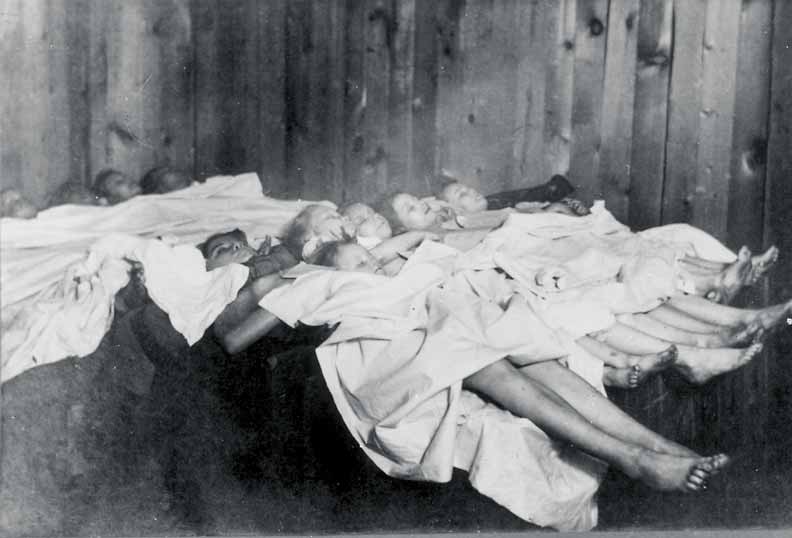
The copper strike of 1913-14 started in July and lasted nine months. It was one of Michigan’s most bitter labor actions. The introduction of the one-man drill triggered the strike. Miners feared cutbacks on the number of jobs and working alone. Strikers also demanded recognition of the Western Federation of Miners as their bargaining agent, a reduction from a 10-hour to an 8-hour work day, and $3.50 per day wages. The mining companies refused to recognize the union or to return to the two-man drill, but did, in the end, cut hours and increase wages. Miners who returned to work found themselves alongside men who had been hired as strikebreakers. In the following years, many experienced miners left the Copper Country for the auto factories of Detroit, mining jobs inthe western U. S. or military service with the outbreak of World War I in 1917. The strike was a bitter struggle. Michigan state militia, on horseback, was deployed against the strikers. Strike leaders, lead by “Big” Annie Clemenic, rallied the strikers by hosting a Christmas party at the Italian hall. While the miners’ families were celebrating Christmas Eve at Italian Hall in Calumet someone yelled, “Fire!” In panic, the crowd rushed to get out of the second-floor hall. They could not open the door to the outside, and 73 people–mostly children–died in the crush.There was no fire. Many miners believed that the mine companies had sent the person who caused the panic, although this could never proved it seems the most likely explaination. Eye witnesses saw company agents in the area but could not identify them. The crime remains unsolved.

In recent times the hall fell on disrepair. Local Unions, including the North West Upper Peninsula Labor Council, and a variety of volunteers, purchased the site and the surrounding land. They restored it and preserved it as a monument to Michigan’s workers. These individuals kept the incident and the site from fading into the mists of history.

BeforeBefore

Mother Jones marches with the strikers before the masscreMother Jones marches with the strikers

The victimsThe victims
Woody Guthrie’s song about this event

7 Comments

Filed under Uncategorized