
Jesus said, “I am the light that is over all things. I am all: from me all came forth, and to me all attained.
Split a piece of wood; I am there.
Lift up the stone, and you will find me there.”
-Gospel of Thomas
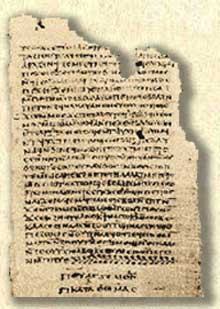
You can find all of this somewhere on the web- maybe not in the same place. The following document includes scriptures left out of the Christian Bible at the Council of Nicea. Multiple translations of the same text are presented here in order to see more clearly the intent of the writers.

This introduction is found at http://www.allaboutreligion.org/gnostic-gospels.htm
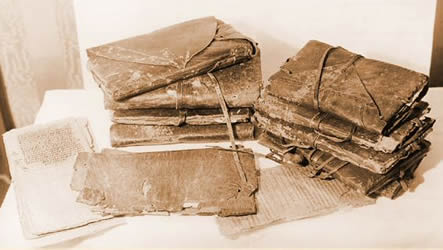
Some other links you may find useful for background and interpretation:

Some of the texts are incomplete. Some are repititious. Some appear contradictory or even just silly. All provide a fresh perspective on the early beliefs of the Jewish sect known as Christians.
To get the full text (507 pages- be warned):
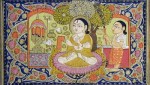
Interesting note: Gnostic art tends to look very much like Tibetan Mandala art-
Example A: Gnostic Tree of Life

Example B: Tibetan Wheel of Existence

Some Excerpts, particularly from the Gospel of Thomas:
The Thunder, Perfect Mind
Translated by George W. MacRae
I was sent forth from the power,
and I have come to those who reflect upon me,
and I have been found among those who seek after me.
Look upon me, you who reflect upon me,
and you hearers, hear me.
You who are waiting for me, take me to yourselves.
And do not banish me from your sight.
And do not make your voice hate me, nor your hearing.
Do not be ignorant of me anywhere or any time. Be on your guard!
Do not be ignorant of me.
For I am the first and the last.
I am the honored one and the scorned one.
I am the whore and the holy one.
I am the wife and the virgin.
I am <the mother> and the daughter.
I am the members of my mother.
I am the barren one
and many are her sons.
I am she whose wedding is great,
and I have not taken a husband.
I am the midwife and she who does not bear.
I am the solace of my labor pains.
I am the bride and the bridegroom,
and it is my husband who begot me.
I am the mother of my father
and the sister of my husband
and he is my offspring.
I am the slave of him who prepared me.
I am the ruler of my offspring.
But he is the one who begot me before the time on a birthday.
And he is my offspring in (due) time,
and my power is from him.
I am the staff of his power in his youth,
and he is the rod of my old age.
And whatever he wills happens to me.
I am the silence that is incomprehensible
and the idea whose remembrance is frequent.
I am the voice whose sound is manifold
and the word whose appearance is multiple.
I am the utterance of my name.
Why, you who hate me, do you love me,
and hate those who love me?
You who deny me, confess me,
and you who confess me, deny me.
You who tell the truth about me, lie about me,
and you who have lied about me, tell the truth about me.
You who know me, be ignorant of me,
and those who have not known me, let them know me.
For I am knowledge and ignorance.
I am shame and boldness.
I am shameless; I am ashamed.
I am strength and I am fear.
I am war and peace.
Give heed to me.
I am the one who is disgraced and the great one.
Give heed to my poverty and my wealth.
Do not be arrogant to me when I am cast out upon the earth,
and you will find me in those that are to come.
And do not look upon me on the dung-heap
nor go and leave me cast out,
and you will find me in the kingdoms.
And do not look upon me when I am cast out among those who
are disgraced and in the least places,
nor laugh at me.
And do not cast me out among those who are slain in violence.
But I, I am compassionate and I am cruel.
Be on your guard!
Do not hate my obedience
and do not love my self-control.
In my weakness, do not forsake me,
and do not be afraid of my power.
For why do you despise my fear
and curse my pride?
But I am she who exists in all fears
and strength in trembling.
I am she who is weak,
and I am well in a pleasant place.
I am senseless and I am wise.
Why have you hated me in your counsels?
For I shall be silent among those who are silent,
and I shall appear and speak,
Why then have you hated me, you Greeks?
Because I am a barbarian among the barbarians?
For I am the wisdom of the Greeks
and the knowledge of the barbarians.
I am the judgement of the Greeks and of the barbarians.
I am the one whose image is great in Egypt
and the one who has no image among the barbarians.
I am the one who has been hated everywhere
and who has been loved everywhere.
I am the one whom they call Life,
and you have called Death.
I am the one whom they call Law,
and you have called Lawlessness.
I am the one whom you have pursued,
and I am the one whom you have seized.
I am the one whom you have scattered,
and you have gathered me together.
I am the one before whom you have been ashamed,
and you have been shameless to me.
I am she who does not keep festival,
and I am she whose festivals are many.
I, I am godless,
and I am the one whose God is great.
I am the one whom you have reflected upon,
and you have scorned me.
I am unlearned,
and they learn from me.
I am the one that you have despised,
and you reflect upon me.
I am the one whom you have hidden from,
and you appear to me.
But whenever you hide yourselves,
I myself will appear.
For whenever you appear,
I myself will hide from you.
Those who have […] to it […] senselessly […].
Take me [… understanding] from grief.
and take me to yourselves from understanding and grief.
And take me to yourselves from places that are ugly and in ruin,
and rob from those which are good even though in ugliness.
Out of shame, take me to yourselves shamelessly;
and out of shamelessness and shame,
upbraid my members in yourselves.
And come forward to me, you who know me
and you who know my members,
and establish the great ones among the small first creatures.
Come forward to childhood,
and do not despise it because it is small and it is little.
And do not turn away greatnesses in some parts from the smallnesses,
for the smallnesses are known from the greatnesses.
Why do you curse me and honor me?
You have wounded and you have had mercy.
Do not separate me from the first ones whom you have known.
And do not cast anyone out nor turn anyone away

The Gospel of Thomas:
Translated by Stephen Patterson and Marvin Meyer
These are the secret sayings that the living Jesus spoke and Didymos Judas Thomas recorded.
1. And he said, “Whoever discovers the interpretation of these sayings will not taste death.”
2. Jesus said, “Those who seek should not stop seeking until they find. When they find, they will be disturbed. When they are disturbed, they will marvel, and will reign over all. [And after they have reigned they will rest.]”
3. Jesus said, “If your leaders say to you, ‘Look, the (Father’s) kingdom is in the sky,’ then the birds of the sky will precede you. If they say to you, ‘It is in the sea,’ then the fish will precede you. Rather, the (Father’s) kingdom is within you and it is outside you.
When you know yourselves, then you will be known, and you will understand that you are children of the living Father. But if you do not know yourselves, then you live in poverty, and you are the poverty.”
4. Jesus said, “The person old in days won’t hesitate to ask a little child seven days old about the place of life, and that person will live.
For many of the first will be last, and will become a single one.”
5. Jesus said, “Know what is in front of your face, and what is hidden from you will be disclosed to you.
For there is nothing hidden that will not be revealed. [And there is nothing buried that will not be raised.]”
6. His disciples asked him and said to him, “Do you want us to fast? How should we pray? Should we give to charity? What diet should we observe?”
Jesus said, “Don’t lie, and don’t do what you hate, because all things are disclosed before heaven. After all, there is nothing hidden that will not be revealed, and there is nothing covered up that will remain undisclosed.”
7. Jesus said, “Lucky is the lion that the human will eat, so that the lion becomes human. And foul is the human that the lion will eat, and the lion still will become human.”
8. And he said, “The person is like a wise fisherman who cast his net into the sea and drew it up from the sea full of little fish. Among them the wise fisherman discovered a fine large fish. He threw all the little fish back into the sea, and easily chose the large fish. Anyone here with two good ears had better listen!”
9. Jesus said, “Look, the sower went out, took a handful (of seeds), and scattered (them). Some fell on the road, and the birds came and gathered them. Others fell on rock, and they didn’t take root in the soil and didn’t produce heads of grain. Others fell on thorns, and they choked the seeds and worms ate them. And others fell on good soil, and it produced a good crop: it yielded sixty per measure and one hundred twenty per measure.”
10. Jesus said, “I have cast fire upon the world, and look, I’m guarding it until it blazes.”
11. Jesus said, “This heaven will pass away, and the one above it will pass away.
The dead are not alive, and the living will not die. During the days when you ate what is dead, you made it come alive. When you are in the light, what will you do? On the day when you were one, you became two. But when you become two, what will you do?”
12. The disciples said to Jesus, “We know that you are going to leave us. Who will be our leader?”
Jesus said to them, “No matter where you are you are to go to James the Just, for whose sake heaven and earth came into being.”
13. Jesus said to his disciples, “Compare me to something and tell me what I am like.”
Simon Peter said to him, “You are like a just messenger.”
Matthew said to him, “You are like a wise philosopher.”
Thomas said to him, “Teacher, my mouth is utterly unable to say what you are like.”
Jesus said, “I am not your teacher. Because you have drunk, you have become intoxicated from the bubbling spring that I have tended.”
And he took him, and withdrew, and spoke three sayings to him. When Thomas came back to his friends they asked him, “What did Jesus say to you?”
Thomas said to them, “If I tell you one of the sayings he spoke to me, you will pick up rocks and stone me, and fire will come from the rocks and devour you.”
14. Jesus said to them, “If you fast, you will bring sin upon yourselves, and if you pray, you will be condemned, and if you give to charity, you will harm your spirits.
When you go into any region and walk about in the countryside, when people take you in, eat what they serve you and heal the sick among them.
After all, what goes into your mouth will not defile you; rather, it’s what comes out of your mouth that will defile you.”
15. Jesus said, “When you see one who was not born of woman, fall on your faces and worship. That one is your Father.”
16. Jesus said, “Perhaps people think that I have come to cast peace upon the world. They do not know that I have come to cast conflicts upon the earth: fire, sword, war.
For there will be five in a house: there’ll be three against two and two against three, father against son and son against father, and they will stand alone.”
17. Jesus said, “I will give you what no eye has seen, what no ear has heard, what no hand has touched, what has not arisen in the human heart.”
18. The disciples said to Jesus, “Tell us, how will our end come?”
Jesus said, “Have you found the beginning, then, that you are looking for the end? You see, the end will be where the beginning is.
Congratulations to the one who stands at the beginning: that one will know the end and will not taste death.”
19. Jesus said, “Congratulations to the one who came into being before coming into being.
If you become my disciples and pay attention to my sayings, these stones will serve you.
For there are five trees in Paradise for you; they do not change, summer or winter, and their leaves do not fall. Whoever knows them will not taste death.”
20. The disciples said to Jesus, “Tell us what Heaven’s kingdom is like.”
He said to them, “It’s like a mustard seed, the smallest of all seeds, but when it falls on prepared soil, it produces a large plant and becomes a shelter for birds of the sky.”
21. Mary said to Jesus, “What are your disciples like?”
He said, “They are like little children living in a field that is not theirs. When the owners of the field come, they will say, ‘Give us back our field.’ They take off their clothes in front of them in order to give it back to them, and they return their field to them.
For this reason I say, if the owners of a house know that a thief is coming, they will be on guard before the thief arrives and will not let the thief break into their house (their domain) and steal their possessions.
As for you, then, be on guard against the world. Prepare yourselves with great strength, so the robbers can’t find a way to get to you, for the trouble you expect will come.
Let there be among you a person who understands.
When the crop ripened, he came quickly carrying a sickle and harvested it. Anyone here with two good ears had better listen!”
22. Jesus saw some babies nursing. He said to his disciples, “These nursing babies are like those who enter the (Father’s) kingdom.”
They said to him, “Then shall we enter the (Father’s) kingdom as babies?”
Jesus said to them, “When you make the two into one, and when you make the inner like the outer and the outer like the inner, and the upper like the lower, and when you make male and female into a single one, so that the male will not be male nor the female be female, when you make eyes in place of an eye, a hand in place of a hand, a foot in place of a foot, an image in place of an image, then you will enter [the kingdom].”
23. Jesus said, “I shall choose you, one from a thousand and two from ten thousand, and they will stand as a single one.”
24. His disciples said, “Show us the place where you are, for we must seek it.”
He said to them, “Anyone here with two ears had better listen! There is light within a person of light, and it shines on the whole world. If it does not shine, it is dark.”
25. Jesus said, “Love your friends like your own soul, protect them like the pupil of your eye.”
26. Jesus said, “You see the sliver in your friend’s eye, but you don’t see the timber in your own eye. When you take the timber out of your own eye, then you will see well enough to remove the sliver from your friend’s eye.”
27. “If you do not fast from the world, you will not find the (Father’s) kingdom. If you do not observe the sabbath as a sabbath you will not see the Father.”
28. Jesus said, “I took my stand in the midst of the world, and in flesh I appeared to them. I found them all drunk, and I did not find any of them thirsty. My soul ached for the children of humanity, because they are blind in their hearts and do not see, for they came into the world empty, and they also seek to depart from the world empty.
But meanwhile they are drunk. When they shake off their wine, then they will change their ways.”
29. Jesus said, “If the flesh came into being because of spirit, that is a marvel, but if spirit came into being because of the body, that is a marvel of marvels.
Yet I marvel at how this great wealth has come to dwell in this poverty.”
30. Jesus said, “Where there are three deities, they are divine. Where there are two or one, I am with that one.”
31. Jesus said, “No prophet is welcome on his home turf; doctors don’t cure those who know them.”
32. Jesus said, “A city built on a high hill and fortified cannot fall, nor can it be hidden.”
33. Jesus said, “What you will hear in your ear, in the other ear proclaim from your rooftops.
After all, no one lights a lamp and puts it under a basket, nor does one put it in a hidden place. Rather, one puts it on a lampstand so that all who come and go will see its light.”
34. Jesus said, “If a blind person leads a blind person, both of them will fall into a hole.”
35. Jesus said, “One can’t enter a strong person’s house and take it by force without tying his hands. Then one can loot his house.”
36. Jesus said, “Do not fret, from morning to evening and from evening to morning, [about your food–what you’re going to eat, or about your clothing–] what you are going to wear. [You’re much better than the lilies, which neither card nor spin.
As for you, when you have no garment, what will you put on? Who might add to your stature? That very one will give you your garment.]”
37. His disciples said, “When will you appear to us, and when will we see you?”
Jesus said, “When you strip without being ashamed, and you take your clothes and put them under your feet like little children and trample then, then [you] will see the son of the living one and you will not be afraid.”
38. Jesus said, “Often you have desired to hear these sayings that I am speaking to you, and you have no one else from whom to hear them. There will be days when you will seek me and you will not find me.”
39. Jesus said, “The Pharisees and the scholars have taken the keys of knowledge and have hidden them. They have not entered nor have they allowed those who want to enter to do so.
As for you, be as sly as snakes and as simple as doves.”
40. Jesus said, “A grapevine has been planted apart from the Father. Since it is not strong, it will be pulled up by its root and will perish.”
41. Jesus said, “Whoever has something in hand will be given more, and whoever has nothing will be deprived of even the little they have.”
42. Jesus said, “Be passersby.”
43. His disciples said to him, “Who are you to say these things to us?”
“You don’t understand who I am from what I say to you.
Rather, you have become like the Judeans, for they love the tree but hate its fruit, or they love the fruit but hate the tree.”
44. Jesus said, “Whoever blasphemes against the Father will be forgiven, and whoever blasphemes against the son will be forgiven, but whoever blasphemes against the holy spirit will not be forgiven, either on earth or in heaven.”
45. Jesus said, “Grapes are not harvested from thorn trees, nor are figs gathered from thistles, for they yield no fruit.
Good persons produce good from what they’ve stored up; bad persons produce evil from the wickedness they’ve stored up in their hearts, and say evil things. For from the overflow of the heart they produce evil.”
46. Jesus said, “From Adam to John the Baptist, among those born of women, no one is so much greater than John the Baptist that his eyes should not be averted.
But I have said that whoever among you becomes a child will recognize the (Father’s) kingdom and will become greater than John.”
47. Jesus said, “A person cannot mount two horses or bend two bows.
And a slave cannot serve two masters, otherwise that slave will honor the one and offend the other.
Nobody drinks aged wine and immediately wants to drink young wine. Young wine is not poured into old wineskins, or they might break, and aged wine is not poured into a new wineskin, or it might spoil.
An old patch is not sewn onto a new garment, since it would create a tear.”
48. Jesus said, “If two make peace with each other in a single house, they will say to the mountain, ‘Move from here!’ and it will move.”
49. Jesus said, “Congratulations to those who are alone and chosen, for you will find the kingdom. For you have come from it, and you will return there again.”
50. Jesus said, “If they say to you, ‘Where have you come from?’ say to them, ‘We have come from the light, from the place where the light came into being by itself, established [itself], and appeared in their image.’
If they say to you, ‘Is it you?’ say, ‘We are its children, and we are the chosen of the living Father.’
If they ask you, ‘What is the evidence of your Father in you?’ say to them, ‘It is motion and rest.'”
51. His disciples said to him, “When will the rest for the dead take place, and when will the new world come?”
He said to them, “What you are looking forward to has come, but you don’t know it.”
52. His disciples said to him, “Twenty-four prophets have spoken in Israel, and they all spoke of you.”
He said to them, “You have disregarded the living one who is in your presence, and have spoken of the dead.”
53. His disciples said to him, “Is circumcision useful or not?”
He said to them, “If it were useful, their father would produce children already circumcised from their mother. Rather, the true circumcision in spirit has become profitable in every respect.”
54. Jesus said, “Congratulations to the poor, for to you belongs Heaven’s kingdom.”
55. Jesus said, “Whoever does not hate father and mother cannot be my disciple, and whoever does not hate brothers and sisters, and carry the cross as I do, will not be worthy of me.”
56. Jesus said, “Whoever has come to know the world has discovered a carcass, and whoever has discovered a carcass, of that person the world is not worthy.”
57 Jesus said, “The Father’s kingdom is like a person who has [good] seed. His enemy came during the night and sowed weeds among the good seed. The person did not let the workers pull up the weeds, but said to them, ‘No, otherwise you might go to pull up the weeds and pull up the wheat along with them.’ For on the day of the harvest the weeds will be conspicuous, and will be pulled up and burned.”
58. Jesus said, “Congratulations to the person who has toiled and has found life.”
59. Jesus said, “Look to the living one as long as you live, otherwise you might die and then try to see the living one, and you will be unable to see.”
60. He saw a Samaritan carrying a lamb and going to Judea. He said to his disciples, “that person … around the lamb.” They said to him, “So that he may kill it and eat it.” He said to them, “He will not eat it while it is alive, but only after he has killed it and it has become a carcass.”
They said, “Otherwise he can’t do it.”
He said to them, “So also with you, seek for yourselves a place for rest, or you might become a carcass and be eaten.”
61. Jesus said, “Two will recline on a couch; one will die, one will live.”
Salome said, “Who are you mister? You have climbed onto my couch and eaten from my table as if you are from someone.”
Jesus said to her, “I am the one who comes from what is whole. I was granted from the things of my Father.”
“I am your disciple.”
“For this reason I say, if one is whole, one will be filled with light, but if one is divided, one will be filled with darkness.”
62. Jesus said, “I disclose my mysteries to those [who are worthy] of [my] mysteries.
63. Jesus said, “There was a rich person who had a great deal of money. He said, ‘I shall invest my money so that I may sow, reap, plant, and fill my storehouses with produce, that I may lack nothing.’ These were the things he was thinking in his heart, but that very night he died. Anyone here with two ears had better listen!”
64. Jesus said, “A person was receiving guests. When he had prepared the dinner, he sent his slave to invite the guests.
The slave went to the first and said to that one, ‘My master invites you.’ That one said, ‘Some merchants owe me money; they are coming to me tonight. I have to go and give them instructions. Please excuse me from dinner.’
The slave went to another and said to that one, ‘My master has invited you.’ That one said to the slave, ‘I have bought a house, and I have been called away for a day. I shall have no time.’
The slave went to another and said to that one, ‘My master invites you.’ That one said to the slave, ‘My friend is to be married, and I am to arrange the banquet. I shall not be able to come. Please excuse me from dinner.’
The slave went to another and said to that one, ‘My master invites you.’ That one said to the slave, ‘I have bought an estate, and I am going to collect the rent. I shall not be able to come. Please excuse me.’
The slave returned and said to his master, ‘Those whom you invited to dinner have asked to be excused.’ The master said to his slave, ‘Go out on the streets and bring back whomever you find to have dinner.’
Buyers and merchants [will] not enter the places of my Father.”
65. He said, “A […] person owned a vineyard and rented it to some farmers, so they could work it and he could collect its crop from them. He sent his slave so the farmers would give him the vineyard’s crop. They grabbed him, beat him, and almost killed him, and the slave returned and told his master. His master said, ‘Perhaps he didn’t know them.’ He sent another slave, and the farmers beat that one as well. Then the master sent his son and said, ‘Perhaps they’ll show my son some respect.’ Because the farmers knew that he was the heir to the vineyard, they grabbed him and killed him. Anyone here with two ears had better listen!”
66. Jesus said, “Show me the stone that the builders rejected: that is the keystone.”
67. Jesus said, “Those who know all, but are lacking in themselves, are utterly lacking.”
68. Jesus said, “Congratulations to you when you are hated and persecuted; and no place will be found, wherever you have been persecuted.”
69. Jesus said, “Congratulations to those who have been persecuted in their hearts: they are the ones who have truly come to know the Father.
Congratulations to those who go hungry, so the stomach of the one in want may be filled.”
70. Jesus said, “If you bring forth what is within you, what you have will save you. If you do not have that within you, what you do not have within you [will] kill you.”
71. Jesus said, “I will destroy [this] house, and no one will be able to build it […].”
72. A [person said] to him, “Tell my brothers to divide my father’s possessions with me.”
He said to the person, “Mister, who made me a divider?”
He turned to his disciples and said to them, “I’m not a divider, am I?”
73. Jesus said, “The crop is huge but the workers are few, so beg the harvest boss to dispatch workers to the fields.”
74. He said, “Lord, there are many around the drinking trough, but there is nothing in the well.”
75. Jesus said, “There are many standing at the door, but those who are alone will enter the bridal suite.”
76. Jesus said, “The Father’s kingdom is like a merchant who had a supply of merchandise and found a pearl. That merchant was prudent; he sold the merchandise and bought the single pearl for himself.
So also with you, seek his treasure that is unfailing, that is enduring, where no moth comes to eat and no worm destroys.”
77. Jesus said, “I am the light that is over all things. I am all: from me all came forth, and to me all attained.
Split a piece of wood; I am there.
Lift up the stone, and you will find me there.”












































 moon soup