
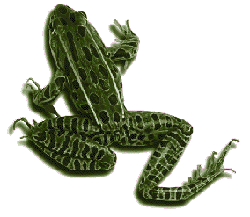
 (Typical local tree-frog that spawns around Powell Butte- they range in color from green, striped to mud-brown)
Today I went exploring the south side of Powell Butte- near the Springwater Corridor- to look for alternate access to the nature preserve. What I found was some excellent swamp/wetlands/ ponds already, in some cases, filled with frog-egg-scum. Nearby there was a sign announcing that the area had been part of the Kelly Creek Restoration and Flood Mitigation Project.
The area is around where Kelly Creek flows into Johnson Creek. I have know since I was a kid that this was a neighborhood plagued by floods. In fact, from looking at the surroundings of Kelly Creek and it’s larger friend, Johnson, you can see that part of the trouble is that wetland, swamps and ponds have been filled in order to build homes and yards. Our forefathers in their “wisdom” thought that they could replace the natural wetlands with houses and get away with it by building concrete walls around the creeks and/ or shunting them into underground pipes. The nearly annual flooding of these areas is nature’s response.
And, of course, elimination of salmon and other aquatic life is the result as well.
Somebody a couple years ago got the idea that they might be able to move this particular clock backward. This is from an article written by “Interfluve”- a company that conducts habitat restoration in wetlands:
More than 70 years ago, the confluence
of Kelley Creek and Johnson
Creek in Southeast Portland was a natural
habitat that thrived. A project in the
1930s to move flood waters through the
basin more quickly straightened and
lined the creeks with rock walls and
severely degraded the habitat and water
quality in both creeks.
So the project aimed to restore creek-fed swamps and ponds while taking out the concrete barriers and re-building the creek-beds. Also:
Crews also create(d) two backwater
channels along Johnson Creek and one
along Kelley Creek. These channels will
provide wetland habitat, more high and
fast flow refuge for fish and floodwater
storage.
“Old channel scars fill up during storm
events like a bathtub and drain as flow
decreases,” said Corsale.“This creates more
of a refuge (for fish) from high flows and
fast flows.”
Crews (have) also (placed) a lot of large,
woody debris into the channels to create
pools and cover for fish, and they are optimizing
the slope of the creek for a spawning
channel. At the same time, Greenworks
PC is working on a watershed re-vegetation
program and will create four different plant
communities.
Since the project is completed (as far as current funds allow) a good deal of improvement is already visible. I didn’t have my camera today but I saw many areas where aquatic habitat is flourishing. The following pictures are archival.
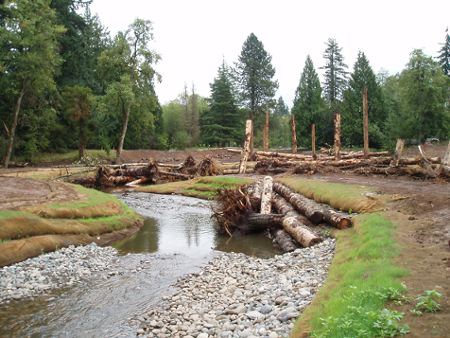
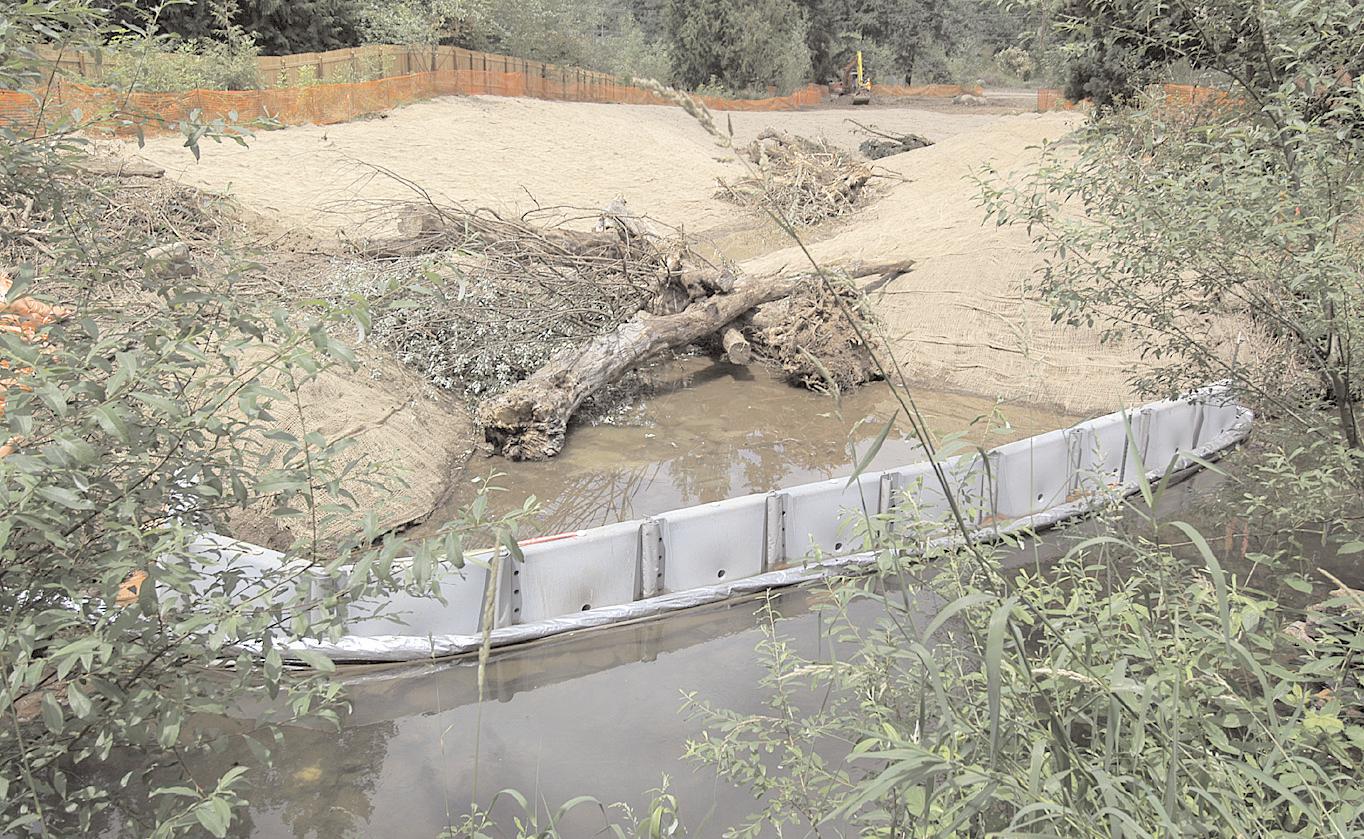
I rescue tadpoles from drying puddles every year and raise them into frogs and set them loose. This is an attempted scan of a tadpole about halfway turned into a frog (poor quality):
Better picture of tadpoles typical of the ones I find in the Powell Butte drainage ditches:
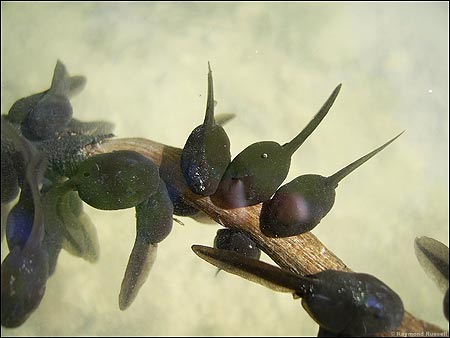
Sometimes we find newt tadpoles- they start out a little bigger, are more colorful and quickly develop these gills you see in the picture below:

Then they grow stubby legs and don’t look at all like frogs.


















































 moon soup