
Category Archives: Re-blogged
Alone on my wild island
Filed under poetry, Re-blogged
Tomorrow I go back to work
Since March 14th I’ve been on disability leave, endured and been given a lot of changes (e.g. gotta move, can’t afford to live in my awful basement apartment), pain (tempered and made somehow worse by using powerful prescribed narcotic pain meds), poverty (well, that’s just basic- no frills), new life with a new friend (lover, sweetheart), surgery, hospital, inability to walk, blah blah blah. This will be my first major new post since I’ve been on this journey. It will be my last before I return to work.
Here is my new bag to take to work-

This is me before surgery-

This is me after surgery:

Here is my new hat-

So much stuff-
First, here is my friend Steve’s MySpace music page. He’s one of my favorite musicians, one of my oldest friends. There was a time we wrote together and made music for friends. He has always been great, he has gotten even better and he is a terrific person.

My friend, Dr. Jack, is continuing his fight against the Beast as a now retired, former employee who doesn’t have to keep his mouth shut. I have so much from Jack that I hesitate to post anything. e writes to me about daily. Here is an excerpt from one email. No names are used.

The old building. Everything is all better now, since we have a bright shiny, new, cramped, walled, horizon-free, super-secure new Beast.


If ever there’s a time for youngsters to understand what’s happening to their brain during puberty, it’s now.
The founder of Life Education, Trevor Grice, says the pressure of society, the increase in youth suicide and easy access to drugs and alcohol make it essential for young people to understand what’s going on inside their heads.
However he says it must be explained to them using today’s technology and in a language they relate to.
As a result the Life Education Trust is developing a digital brain that youngsters can look inside, see what happens during puberty and how drugs, alcohol, peer pressure and relationships affect how it works.
This year Life Education is celebrating its 25th anniversary in New Zealand and has committed itself to developing the latest technology to engage with primary and intermediate students.
At its annual conference last month the latest mobile classroom – its 45th – was unveiled which the Trust considers will propel it into the next 25 years as a relevant and essential player in the health curriculum.
The technology demonstrated to John Key, who opened the conference, replicated his skeleton and organs and demonstrated to him how they work so he can have a greater understanding of his own body.
To this technology, which will be rolled out into every mobile classroom, Trevor Grice intends to introduce the digital brain.

New HUD Olmstead Guidance Step in Right Direction
Examples of integrated settings include scattered-site apartments providing supportive housing, rental subsidies that enable individuals with disabilities to obtain housing on the open market, and apartments for individuals with disabilities scattered throughout housing developments. “By contrast,” the guidance states, “segregated settings are occupied exclusively or primarily by individuals with disabilities.”
The guidance is intended to better educate state and local housing agencies, housing developers, and housing providers on their obligations under the “integration mandate” of the Americans with Disabilities Act (ADA). To make real the promise of the ADA, the guidance instructs, “additional integrated housing options scattered throughout the community” are needed.
In issuing the guidance, HUD Secretary Shaun Donovan recognized that the “Olmsteaddecision-and subsequent voluntary Olmstead planning and implementation, litigation by groups representing individuals with disabilities, and Department of Health and Human Services and Department of Justice enforcement efforts-is creating a dramatic shift in the way services are delivered to individuals with disabilities.” He affirmed that “HUD is committed to offering housing options that enable individuals with disabilities to live in the most integrated settings possible and to fully participate in community life.”
“We are encouraged by the issuance of this guidance and its important recognition that HUD-subsidized housing must afford people with disabilities the chance to live in the most integrated setting,” said Jennifer Mathis, director of programs for the Judge David L. Bazelon Center for Mental Health Law. “The vast majority of people with disabilities want to live in ordinary housing. We hope this guidance will spark development across the country of mainstream housing for people with disabilities.”
http://portal.hud.gov/hudportal/documents/huddoc?id=OlmsteadGuidnc060413.pdf
###
The Bazelon Center for Mental Health Law (www.bazelon.org) is the leading national legal-advocacy organization representing people with mental disabilities. It promotes laws and policies that enable people with psychiatric or intellectual disabilities to exercise their life choices and access the resources they need to participate fully in their communities.
For media inquiries, please contact Dominic Holt at mailto:Dominic@bazelon.org or 202.467.5730, ext. 311.


Teh Bad Margarita at Newport Bay Restaurant




reaction


balance stick

![[ani]Home_made_Whisky](https://moon-soup.com/wp-content/uploads/2013/08/anihome_made_whisky.gif)

![[caturday] training the cat](https://moon-soup.com/wp-content/uploads/2013/08/caturday-training-the-cat.jpg)







Filed under animated gif, cats, comedy relief, CS/X movement, mp3, Music, Mystic Poetry, personal story, pictures, poetry, Re-blogged
What is going on?
First, here’s a link from Jacek on “who’s got your back?”. And, according to same, best blues singer ever.
A day late, Digitizing a Movement from Harvard Gazette.
*
”
To many modern Christians, words like “meditation,” “mystic,” and “mysticism” bring to mind Eastern religions, not Christianity. Certainly Eastern religions are known for their mysticism; however, mysticism is not only a vital part of the Christian heritage as well, but it is actually the core of Christian spirituality. Mysticism simply means the spirituality of the direct experience of God. It is the adventure of “the wild things of God.”
The direct experience of God is a kind of knowing, which goes beyond intellectual understanding. It is not a matter of “belief.” It is marked by love and joy, but it is not “emotional experience.” In many ways, it is better described by what it is not. To describe what it is, we must use metaphors—the marriage of the soul to Christ, the death of the “old man” and birth of the “new man,” being the “body of Christ.”
Jesus proclaimed “I and the Father are one,” (Jn. 10.30) showing the world what the union of God and man can be. Christian mysticism is about nothing else but this transforming union.
”
Or:
“Preach the word; be ready in season and out of season; reprove, rebuke, exhort, with great patience and instruction. For the time will come when they will not endure sound doctrine; but wanting to have their ears tickled, they will accumulate for themselves teachers in accordance to their own desires; and will turn away their ears from the truth, and will turn aside to myths.” (2 Timothy 4:2-4)

*
I have spent my life. driven by an inner. undeniable need, trying to find my way closer and closer to God: it is not a trivial thing. I was from an early age full of a loneliness and desire that I could not name. I can’t live any other way. The only thing that satisfies me is to keep making the spiritual effort, Sadhana, without it I may as well not exist.
My life has been full of visions, voices, indescribable encounters with the ultimate and Un-Nameable One. And I still have no dog in the fight between the various wings of the Christian churches from the most liberal Quaker Meeting to the most Fundamentalist Church. I mat sometimes slip but I want mostly to remain open because I know only tht I don’t know. So I can’t, in good concience, argue dogma or anti-dogma. I have my feelings and the things that are closest to beliefs but I can’t say who is right or wrong, if anyone is.
I suspect that none can speak the truth because by it’s very nature, truth is unspeakable.
*
Coffee Hacks:

*

Who coyld resist a laser-heated cesium chamber in your pocket!
*

This is not the atomic watch, but rather the “Atomic Punks”, an obviously classy act.
*
A New Hope (click if it doesn’t animate, huge file, but what do you expect when you get to see essentially the movie in just a few minutes.
![[ani] A New Hope Outline](https://moon-soup.com/wp-content/uploads/2013/05/ani-a-new-hope-outline.gif)
*
Enough! from the Procrastitorian
*
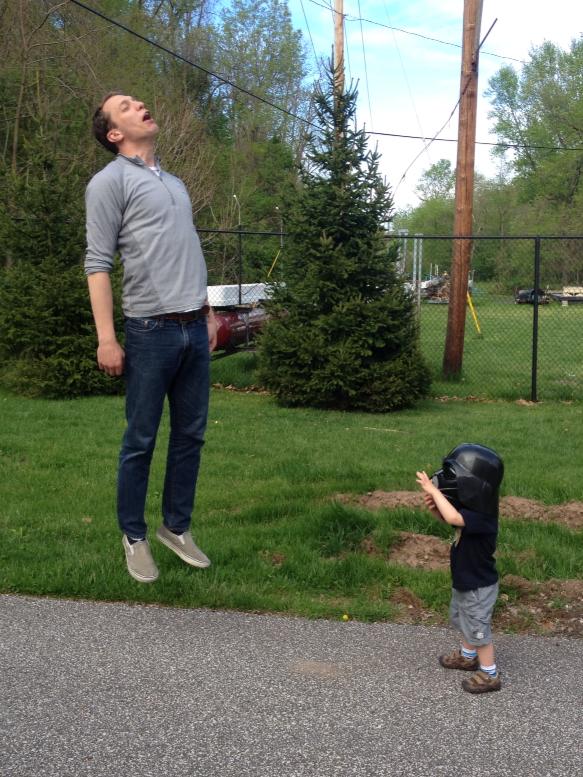
The world’s best dad.
*
Cristian Mihai, On Letting Go
*
(From Maitripa College) H.H. Sakya Trizin, Lama Etiquette:
 Maitripa wants to know your questions for His Holiness. Some will be selected for the Q&A!
In This Issue HH Sakya Trizin Lama Etiquette Summit Security In the News Ask the Dalai Lama Sold Out! Classical Tibetan Language Earn you MA or MDiv Degree
Visit Us
If you live in, or plan to visit, the Portland, area and have an interest in Tibetan Buddhism, Buddhist scholarship, or meditation, please attend one of our events, take a class, or contact us for a tour.
Maitripa College1119 SE Market St.
(cross street SE 11th;
3 blocks S. of Hawthorne)
Portland, Oregon 97214email: info@maitripa.org
website: www.maitripa.org
Work tools
Metal containers
Plastic bottles
Large bags or backpacks
Outside food or drinkNo video/audio recording is allowed, and no professional camera lenses or flash photography are permittedBecause there are no storage facilities available and these prohibited items can not pass through the security screening, please leave these and similar items at home.PLEASE ARRIVE EARLY TO ALLOW TIME TO GO THROUGH SECURITY AND TAKE YOUR SEAT. Doors will open at least two hours prior to the start time of each event/session.
We would like to hear from members of the Maitripa Community (and beyond!)! Submit your question for His Holiness the Dalai Lama!
A limited number of questions will be posted on the event website, and some will be selected for the Q&A sessions during public events on May 9 or May 11, 2013 in Portland, Oregon.
Applications currently being accepted!Questions: studentservices@maitripa.orgAdmissions Deadline for Fall Entry: June 8, 2013



Filed under animated gif, animation, buddhism, pictures, Re-blogged, silly, Spirituality
And,
I received this link from Jacek, my favorite pschologist. It is not as good a recommendation as it really should be; there aren’t many psychologists I’m too fond of, but Jacek is a good people. And, when I did my radio program for years in the middle of the night on KBOO, he was the only “professional” who ever showed up. Not that many people would show up for a program held in the middle of the night on the Friday before the full moon.
Also, on a lighter note? This is from Dr. Jacek as well. Who knew that you could get treated to a good meal at Hooters just by being a shrink?
Also, and, another late entry from the good doctor, The Problem with How…
*
New info from Henry Lem. Great blog, too, here’s an introduction- Fighting the Flu and Long Distance Jogging.
*

*
*
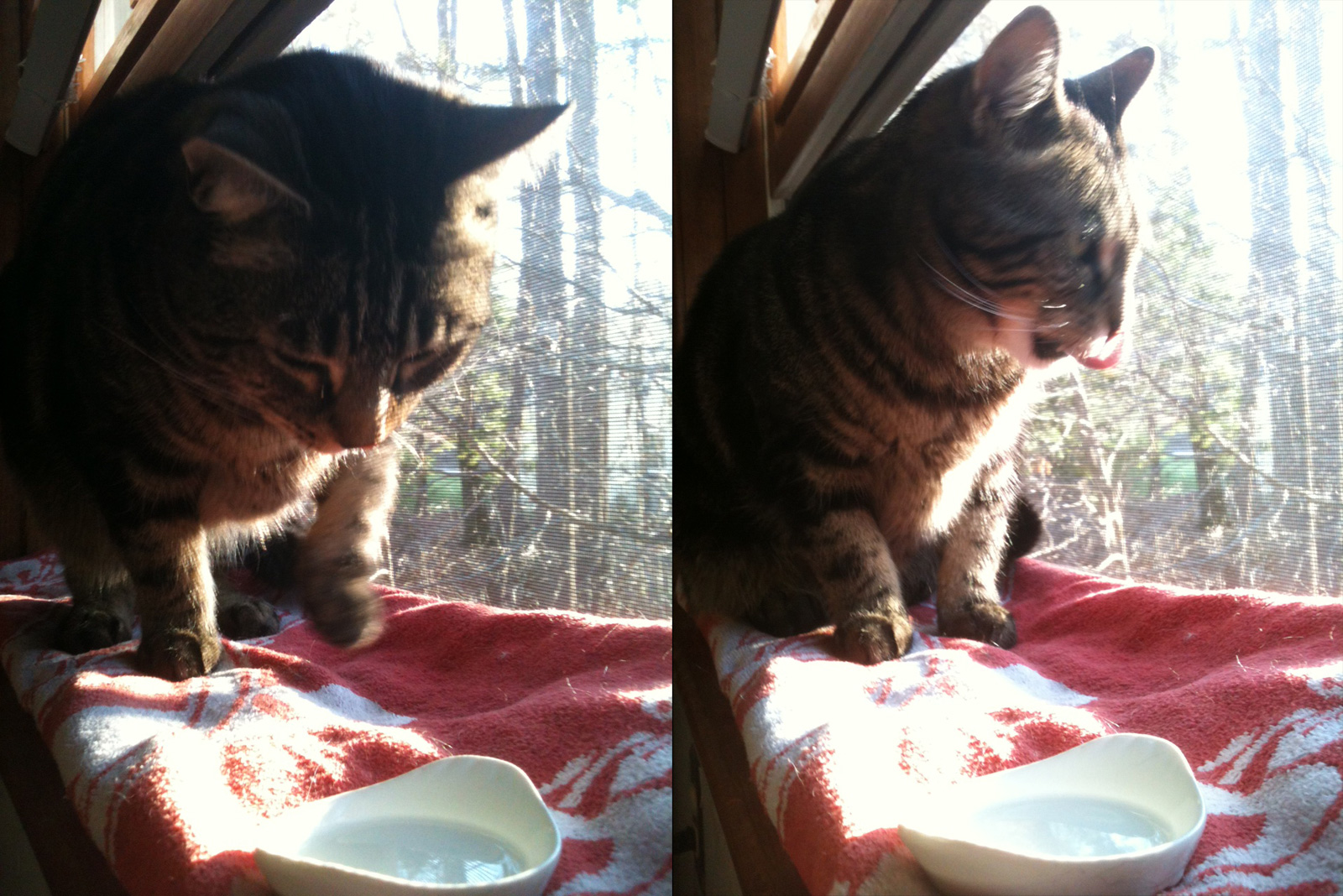
Late, post-Caturday posting. I just saw a wonderful blog here: Cancer Killing Recipe. You know, I have so much more respect for anyone who knows what a real problem is and who chooses life anyway. God bless you, oneanna65.
May your life be sweet,
Rick
Filed under cats, Nature, Re-blogged, Uncategorized
‘A reflection of us all’ – John Lennon
Filed under Re-blogged
The Legacy Project
My friend Jack turned me on to this.
This is what’s showing today:
Worry Wastes Your Life
What do older people regret when they look back over their lives? I asked hundreds of the oldest Americans that question. I hadexpected big-ticket items: an affair, a shady business deal, addictions — that kind of thing. I was therefore unprepared for the answer they often gave:
I wish I hadn’t spent so much of my life worrying.
Over and over, as the 1,200 elders in our Legacy Project reflected on their lives, I heard versions of “I would have spent less time worrying” and “I regret that I worried so much about everything.” Indeed, from the vantage point of late life, many people felt that if given a single “do-over” in life, they would like to have all the time back they spent fretting anxiously about the future.
Their advice on this issue is devastatingly simple and direct: Worry is an enormous waste of your precious and limited lifetime. They suggested training yourself to reduce or eliminate worrying as the single most positive step you can make toward greater happiness. The elders conveyed, in urgent terms, that worry is an unnecessary barrier to joy and contentment. And it’s not just what they said — it’s how they said it.
John Alonzo, 83, is a man of few words, but I quickly learned that what he had to say went straight to the point. A construction worker, he had battled a lifetime of financial insecurity. But he didn’t think twice in giving this advice:
Don’t believe that worrying will solve or help anything. It won’t. So stop it.
That was it. His one life lesson was simply to stop worrying.
James Huang, 87, put it this way:
Why? I ask myself. What possible difference did it make that I kept my mind on every little thing that might go wrong? When I realized that it made no difference at all, I experienced a freedom that’s hard to describe. My life lesson is this: Turn yourself from frittering away the day worrying about what comes next and let everything else that you love and enjoy move in.
This surprised me. Indeed, I thought that older people would endorse a certain level of worry. It seemed reasonable that people who had experienced the Great Depression would want to encourage financial worries; who fought or lost relatives in World War II would suggest we worry about international issues; and who currently deal with increasing health problems would want us to worry about our health.
The reverse is the case, however. The elders see worry as a crippling feature of our daily existence and suggest that we do everything in our power to change it. Why is excessive worry such a big regret? Because, according to the elders,worry wastes your very limited and precious lifetime. By poisoning the present moment, they told me, you lose days, months, or years that you can never recover.
Betty, 76, expressed this point with a succinct example:
I was working, and we learned that there were going to be layoffs in my company in three months. I did nothing with that time besides worry. I poisoned my life by worrying obsessively, even though I had no control over what would happen. Well — I wish I had those three months back.
Life is simply too short, the oldest Americans tell us, to spend it torturing yourself over outcomes that may never come to pass.
How should we use this lesson, so that we don’t wind up at the end of our lives longing to get back the time we wasted worrying? The elders fortunately provide us with some concrete ways of thinking differently about worry and moving beyond it as we go through our daily lives.
Tip 1: Focus on the short term rather than the long term.
Eleanor is a delightful, positive 102-year-old who has had much to worry about in her long life. Her advice is to avoid the long view when you are consumed with worry and to focus instead on the day at hand. She told me:
Well, I think that if you worry, and you worry a lot, you have to stop and think to yourself, “This too will pass.” You just can’t go on worrying all the time because it destroys you and life, really. But there’s all the times when you think of worrying and you can’t help it — then just make yourself stop and think: it doesn’t do you any good. You have to put it out of your mind as much as you can at the time. You just have to take one day at a time. It’s a good idea to plan ahead if possible, but you can’t always do that because things don’t always happen the way you were hoping they would happen. So the most important thing is one day at a time.
Tip 2: Instead of worrying, prepare.
The elders see a distinct difference between worry and conscious, rational planning, which greatly reduces worry. It’s the free-floating worry, after one has done everything one can about a problem, which seems so wasteful to them.
Joshua Bateman, 74, summed up the consensus view:
If you’re going to be afraid of something, you really ought to know what it is. At least understand why. Identify it. ‘I’m afraid of X.’ And sometimes you might have good reason. That’s a legitimate concern. And you can plan for it instead of worrying about it.
Tip 3: Acceptance is an antidote to worry
The elders have been through the entire process many times: worrying about an event, having the event occur and experiencing the aftermath. Based on this experience, they recommend an attitude of acceptance as a solution to the problem of worry. However, we tend to see acceptance as purely passive, not something we can actively foster. In addition to focusing on the day at hand and being prepared as cures for worry, many of the elders also recommend actively working toward acceptance. Indeed this was most often the message of the oldest experts.
Sister Clare, a 99-year-old nun, shared a technique for reducing worry through pursuing acceptance:
There was a priest that said mass for us, and at a certain time of his life, something happened, and it broke his heart. And he was very angry — he just couldn’t be resigned, he couldn’t get his mind off it. Just couldn’t see why it had happened.So he went to an elderly priest and said, “What shall I do? I can’t get rid of it.” And the priest said, “Every time it comes to your mind, say this.” And the priest said very slowly, “Just let it be, let it be.” And this priest told us, “I tried that and at first it didn’t make any difference, but I kept on. After a while, when I pushed it aside, let it be, it went away. Maybe not entirely, but it was the answer.”
Sister Clare, one of the most serene people I have ever met, has used this technique for well over three-quarters of a century.
So many things come to your mind. Now, for instance, somebody might hurt your feelings. You’re going to get back at him or her — well, just let it be. Push it away. So I started doing that. I found it the most wonderful thing because everybody has uncharitable thoughts, you can’t help it. Some people get on your nerves and that will be there until you die. But when they start and I find myself thinking, “Well, now, she shouldn’t do that. I should tell her that . . .” Let it be. Often, before I say anything, I think, “If I did that, then what?” And let it be. Oh, so many times I felt grateful that I did nothing. That lesson has helped me an awful lot.
Worry is endemic to the experience of most modern-day human beings, so much so that following this piece of elder wisdom may seem impossible to some of you. But what the elders tell us is consistent with research findings. The key characteristic of worry, according to scientists who study it, is that it takes place in the absence of actual stressors; that is, we worry when there is actually nothing concrete to worry about. This kind of worry — ruminating about possible bad things that may happen to us or our loved ones — is entirely different from concrete problem solving. When we worry, we are dwelling on possible threats to ourselves rather than simply using our cognitive resources to figure a way out of a difficult situation.
A critically important strategy for regret reduction, according to our elders, is increasing the time spent on concrete problem solving and drastically eliminating time spent worrying. One activity enhances life, whereas down the road the other is deeply regretted as a waste of our all-too-short time on Earth.

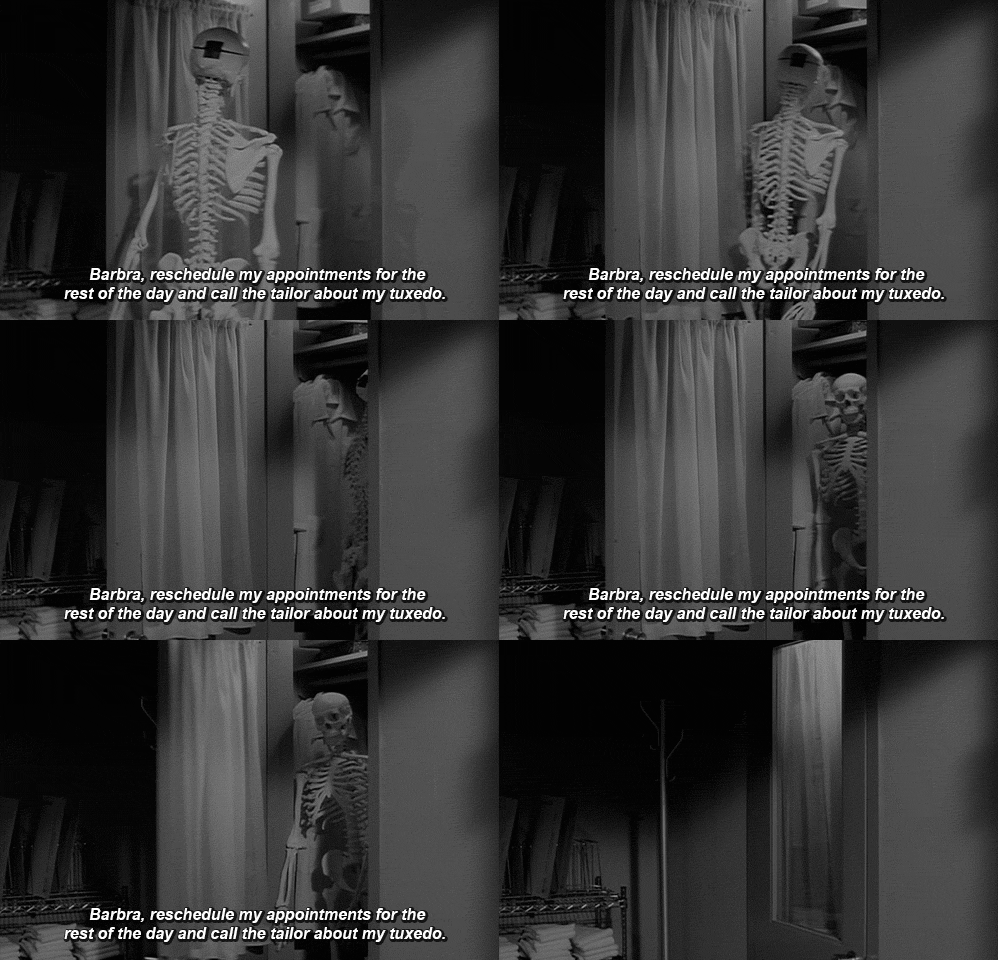
current status- click if it doesn’t animate
same here

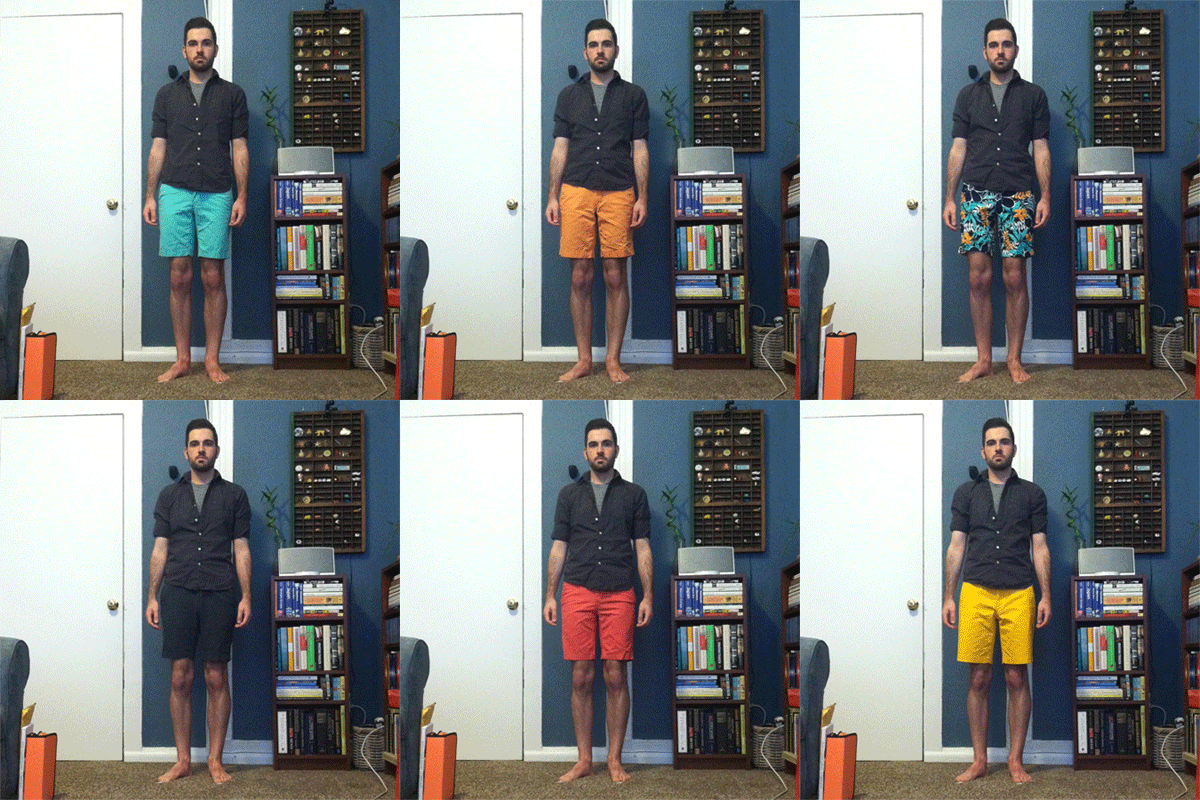
this kind of thing requires patience and dedication
Today’s sound:
Filed under animated gif, animation, Re-blogged, sound bite, Uncategorized











































 moon soup